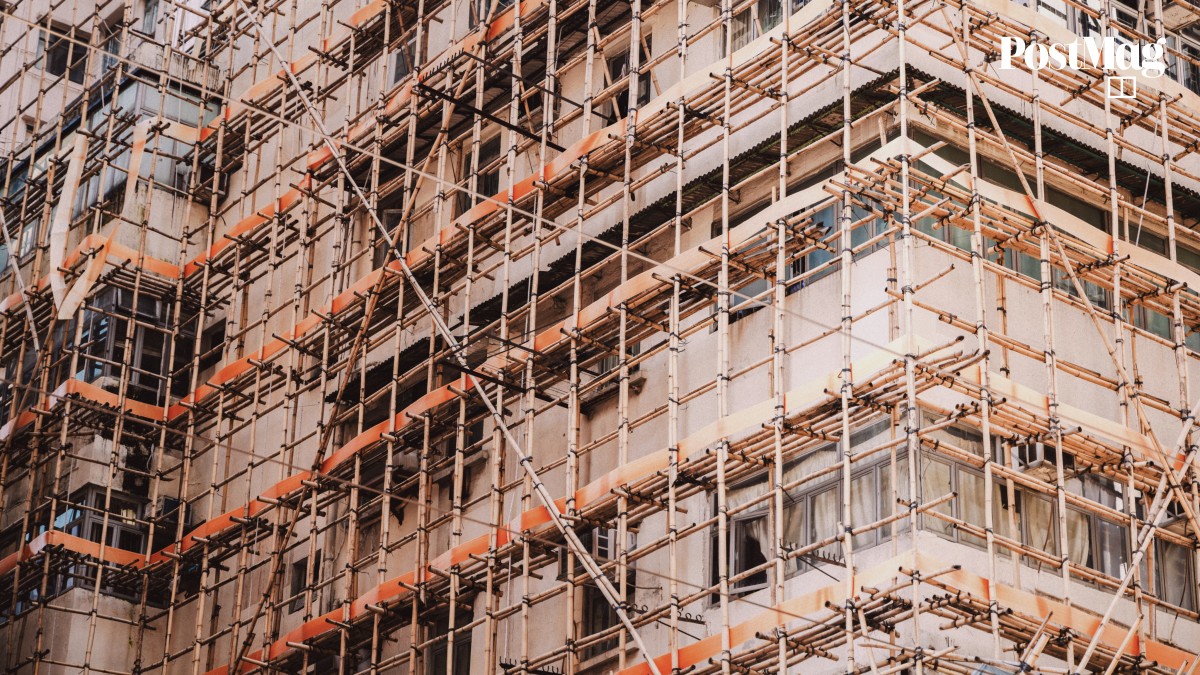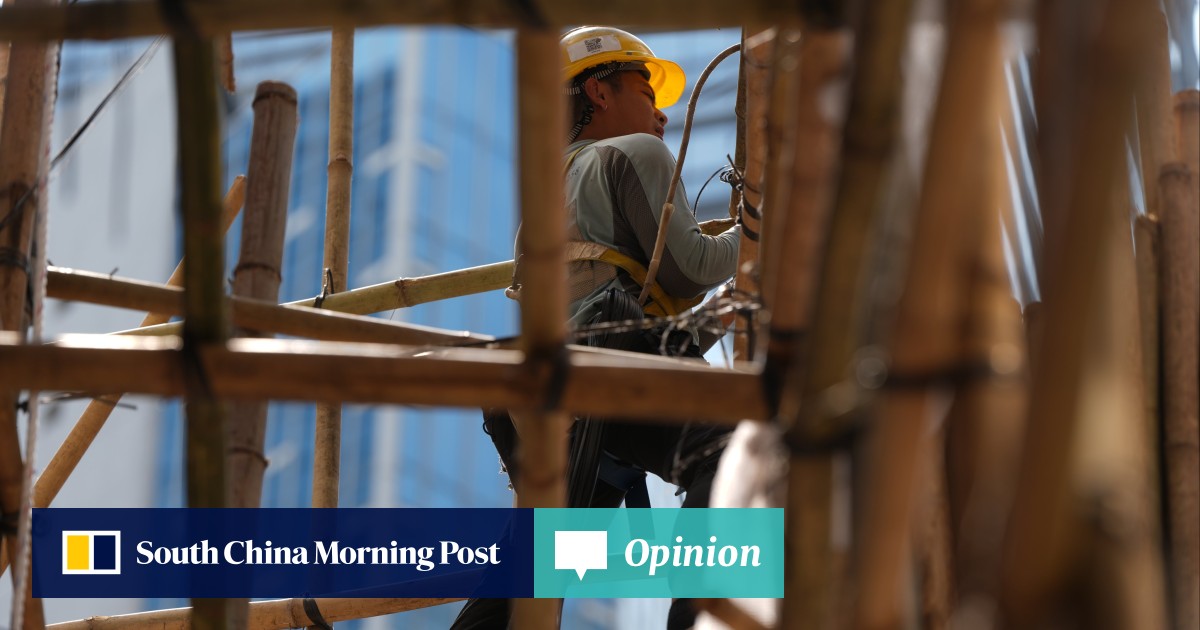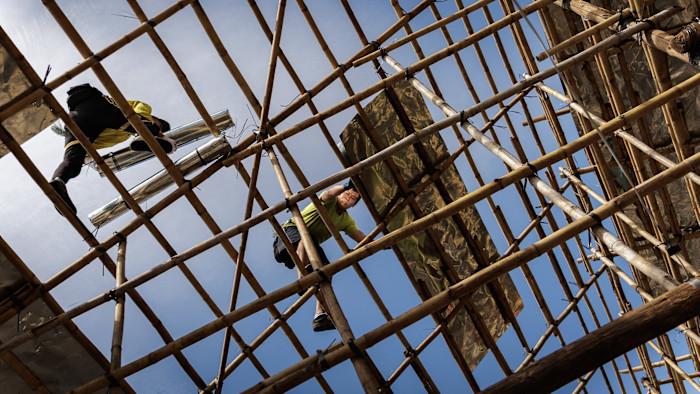
When he was a boy, Kenny Lee never thought much about bamboo, let alone what it symbolised in Hong Kong. But soon after entering the scaffolding industry in 1989 — first as a construction worker, later specialising in building open-air theatres for festivals and Cantonese operas — he realised that bamboo was an inescapable part of the city’s landscape. One can see traces of it everywhere: wrapped around buildings of all shapes and sizes, from Hong Kong’s smallest village houses to the soaring skyscrapers that make up the skyline.
“It’s distinctive to the city,” said Lee, now 57 and a licensed “master” craftsman who has spent the past two decades specialising in bamboo theatres, which are constructed without any blueprints and rely completely on the builder’s skills. The number of artisans who focus on this niche has halved to only about 40 since Lee started, he says. “The craft has been passed down for over a thousand years. It would be a pity if it became extinct.”
Master craftsmen Kenny Lee has spent much of the last 20 years constructing bamboo theatres in Hong Kong © May James
With about 2,500 bamboo scaffolding masters currently registered in the city, Hong Kong is one of the last places in the world where the ancient technique is still used in modern construction. But its future is increasingly precarious.