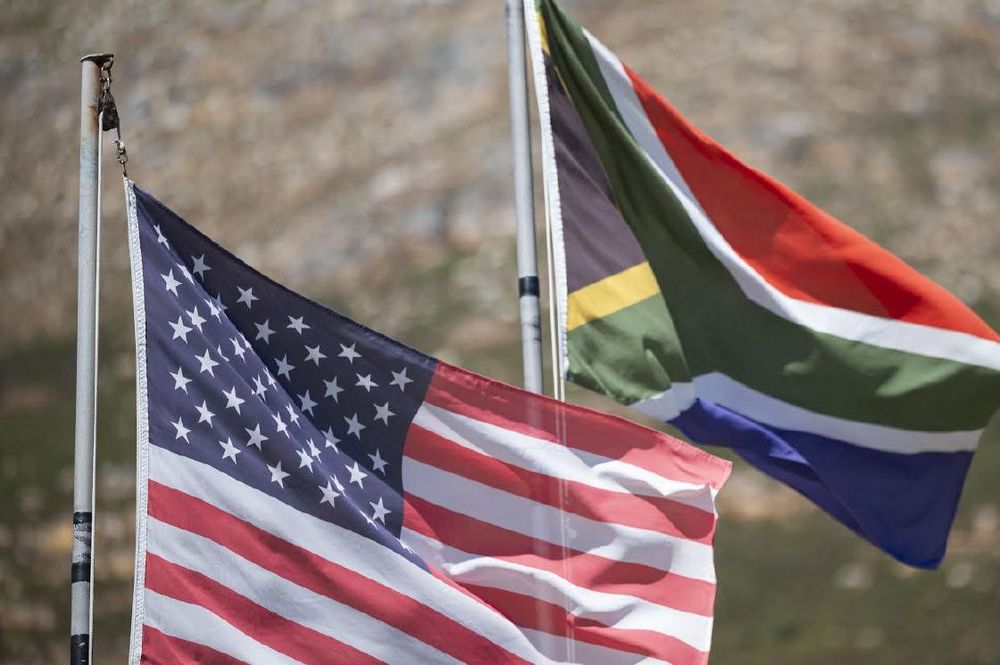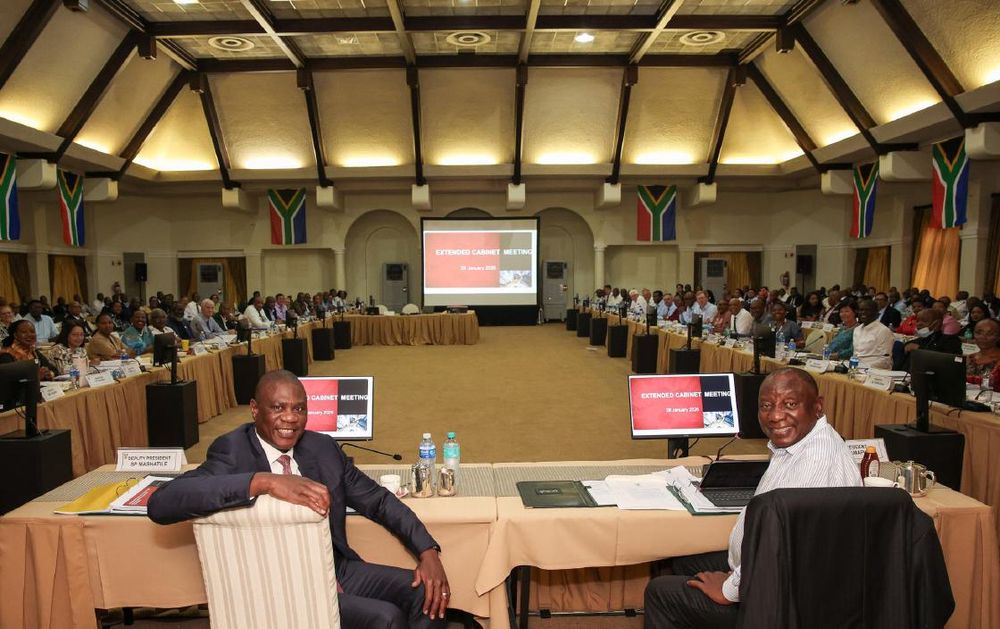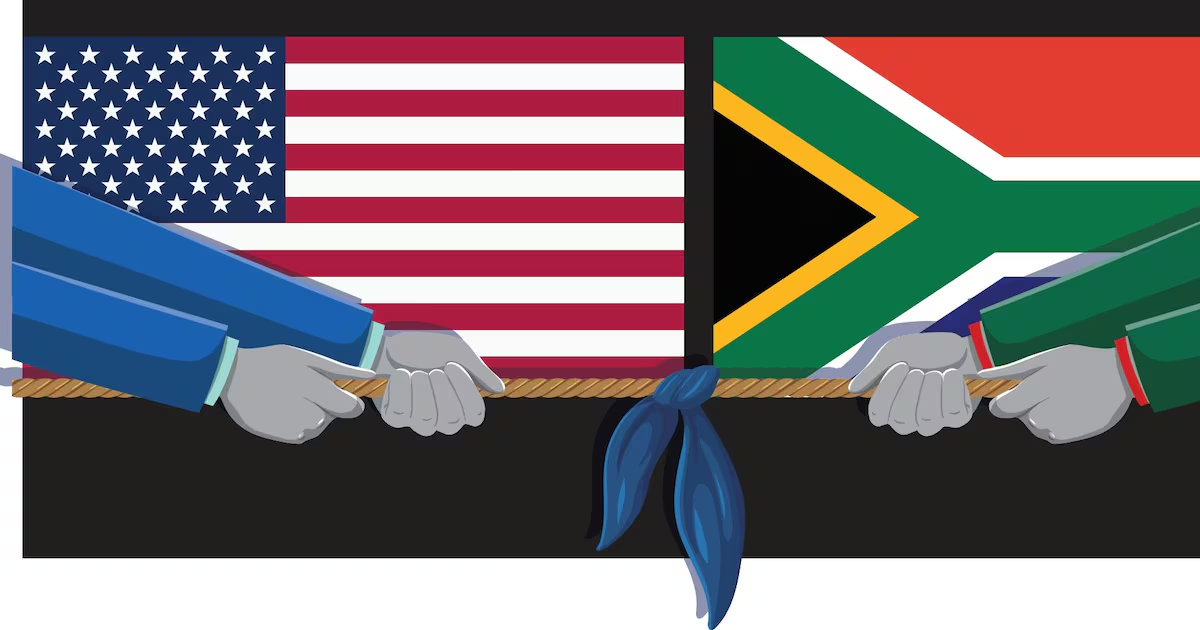
Just as the dust had seemingly begun to settle around the diplomatic strife between South Africa and the US, a stark reminder emerged of the age of realpolitik in which we now find ourselves. The US ambassador to South Africa, Leo Brent Bozell, recently took to X to criticise deputy president Paul Mashatile’s visit to Beijing, alongside the Iranian deputy foreign minister’s visit to Pretoria, arguing that these engagements were inconsistent with the country’s nonaligned foreign policy.Nonalignment, at its core, is the principle of strategic independence. International relations minister Ronald Lamola captured it particularly well when he said: “We engage all partners, make case-by-case decisions using constitutional values and international law, and refuse bloc allegiance.” Measured against South Africa’s own definition of nonalignment, Bozell’s remarks do not hold water. If anything, the examples he listed could be read as evidence of Pretoria practising precisely the kind of foreign policy it claims to pursue.But the value of being technically correct has fast eroded in today’s climate. There is a more difficult question beneath the immediate diplomatic dispute: is nonalignment truly sustainable?If we trace South Africa’s policy of nonalignment to its roots, we find that it predates the democratic republic. Its intellectual foundations can be located in the ANC’s liberation-era internationalism and its ties to the Non-Aligned Movement before the policy became more firmly embedded in South Africa’s postapartheid foreign policy outlook. It would later become entrenched in the South African zeitgeist and for a time it made considerable sense.After the fall of apartheid, South Africa possessed significant soft power. The Rainbow Nation carried a moral authority that afforded it a degree of diplomatic leniency. As the country matured as a democracy, it maintained close ties with allies that had supported the liberation struggle while simultaneously building the relationships required to ascend to the existing liberal world order. South Africa, therefore, benefited economically and diplomatically from relationships spanning the geopolitical divide.Yet a less frequently reported fact is that South Africa’s nonaligned stance in its present form has also produced tangible benefits. Since then, however, the liberal world order as we have known it has rapidly eroded, while South Africa no longer commands the same level of soft power it once did. As global volatility has increased and the US has adopted a more neorealist, America-First approach, Pretoria has found itself far more intimately acquainted with the stick than the carrot.This has come at an undeniable cost. US-imposed tariffs against South Africa have placed pressure on key industries. This pressure was reinforced by the proposed US–South Africa Bilateral Relations Review Act of 2025. Diplomatic tensions have also contributed to Pretoria’s exclusion from the US-hosted 2026 G20 proceedings and reportedly played a role in South Africa’s absence from the G7 guest list. The ramifications extend far beyond foreign policy circles with tangible consequences for the economy, business, and, ultimately, citizens.Yet a less frequently reported fact is that South Africa’s nonaligned stance in its present form has also produced tangible benefits. Consider, for example, the proposed $1bn loan from the New Development Bank for municipal infrastructure priorities under the Metro Trading Services Grant banner. In late 2025, the World Bank approved $925m through its Programme-for-Results framework to support the same broader reform and grant programme. This is one example of how South Africa has been able to access financing from institutions associated with different centres of the global financial system.However, access should not be confused with leverage. South Africa remains considerably more vulnerable to decisions taken in Washington, Brussels and Beijing than any of those capitals is to decisions taken in Pretoria. Its dependence on foreign markets, external capital and development finance means that strategic independence becomes costly when larger powers choose to interpret neutrality as hostility.Two things may therefore be true at once. South Africa may be correct in defending its engagement with all partners while lacking the influence needed to shield that choice from external pressure. Strategic leverage can be found closer to home. Deeper regional trade, stronger continental value chains and more co-ordinated African positions would give Pretoria greater room to manoeuvre while reducing its exposure to pressure from any single external power. This is easier said than done. Southern Africa and the wider continent still face implementation challenges. Yet, successful models of private-sector participation and regional energy integration show that collective action can deliver catalytic results when governments turn policy into practice.Bozell’s comments may not capture the full reality, but they still reveal the pressure South Africa faces. Pretoria’s engagement with Beijing and Tehran does not, by itself, contradict nonalignment. However, it exposes how little tolerance remains for countries that refuse to take sides. This places the onus squarely on Pretoria to continue making progress in building the country’s economic resilience and diplomatic consistency so that nonalignment can mean strategic leverage rather than a hidden risk. • De Kluiver is political economy lead at Africa International Advisors.
JANA DE KLUIVER | To align or not to align: is that the question?
SA may be correct in defending its engagement with all partners while lacking the influence needed to shield that choice from external pressure
TL;DRAI
US pressure on South Africa—tariffs, G20/G7 exclusion—exposes nonalignment's unsustainability as global blocs harden. Tech leaders face geopolitical risk in nonaligned markets: capital scarcity, volatility, weak leverage require regional diversification.
816 words~4 min read