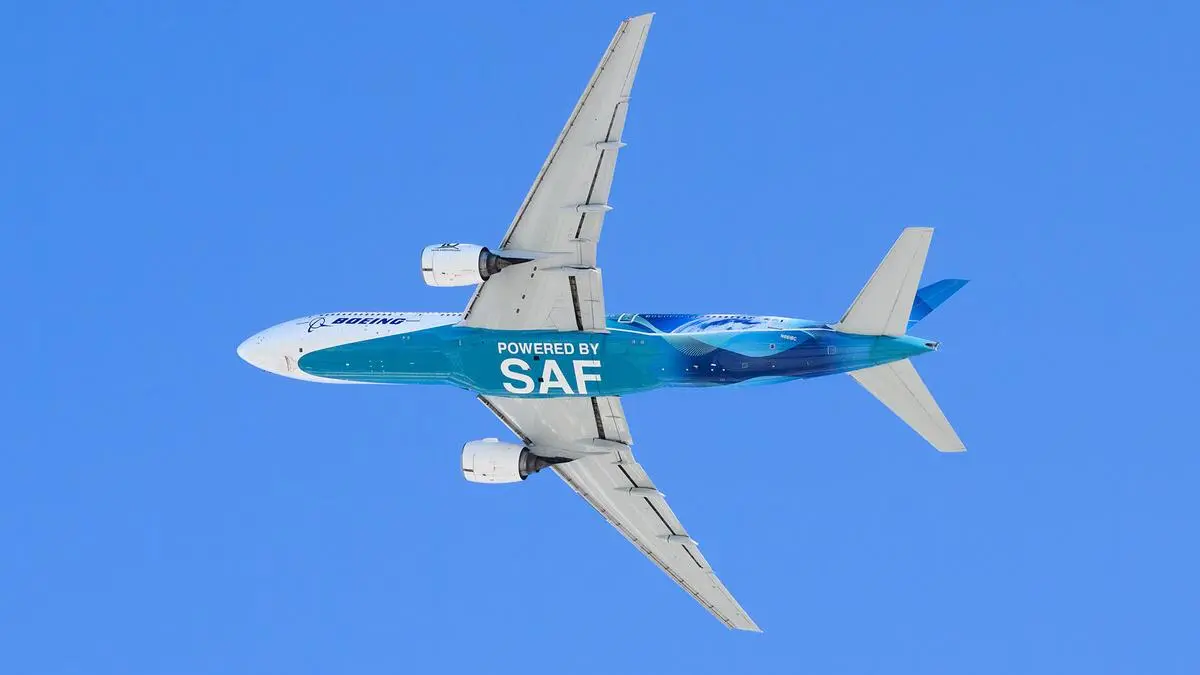
Around 200 sustainable aviation fuel (SAF) projects have been announced globally, representing up to 30 million tonnes of production capacity by 2030. However, only around 60 per cent of this capacity is expected to materialise.Many projects remain at an early stage and risk being delayed or cancelled. At present, as little as 35 per cent of announced capacity is operational or under construction. Actual SAF capacity is estimated to reach around 20 MT by 2030. Hence, nearly one-third of the announced projects are unlikely to take off. Insufficient policy support and the related limited access to funding are part of the root causes.Jet fuel woes worsen outlook for airlinesFitch Ratings has revised its 2026 outlook for the global airline sector to ‘deteriorating’ from ‘stable’, reflecting profitability pressures from the sharp rise in jet fuel prices, a rising risk of demand destruction driven by higher ticket prices and macroeconomic pressures that create downside risks for the industry. Jet fuel prices have risen from $2.3–2.4 per gallon before the US-Iran conflict to about $3.5 per gallon currently. Fitch is considering a base case scenario and alternative case scenario in 2026 with fuel prices averaging $3.2 and $3.85 per gallon, respectively, up from $2.4 prior to the conflict.The West Asia conflict continues to affect the sector unevenly. The impact is more severe for carriers with direct exposure to the region or weak financial profiles before the rise in jet fuel costs. Some carriers, particularly in the US, are unhedged and remain vulnerable to rapid price spikes.“We expect credit metrics to degrade materially in 2026, and the trajectory for rating actions will depend heavily on the duration of the conflict and the pace of any fuel price normalisation. Fitch’s base case assumes the Strait of Hormuz will reopen mid-year and crude oil prices will decline gradually. However, confidence in that timing has diminished. Issuers with limited leverage headroom or direct exposure to the conflict region remain vulnerable to negative rating actions, particularly if the conflict extends beyond our base case timeline,” Fitch said.Published on June 29, 2026
SAF projects struggle to take off
Sustainable aviation fuel projects face delays, with only 60% of announced capacity expected to materialize by 2030.
343 words~2 min read