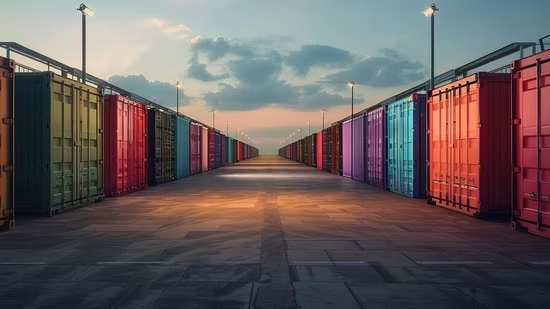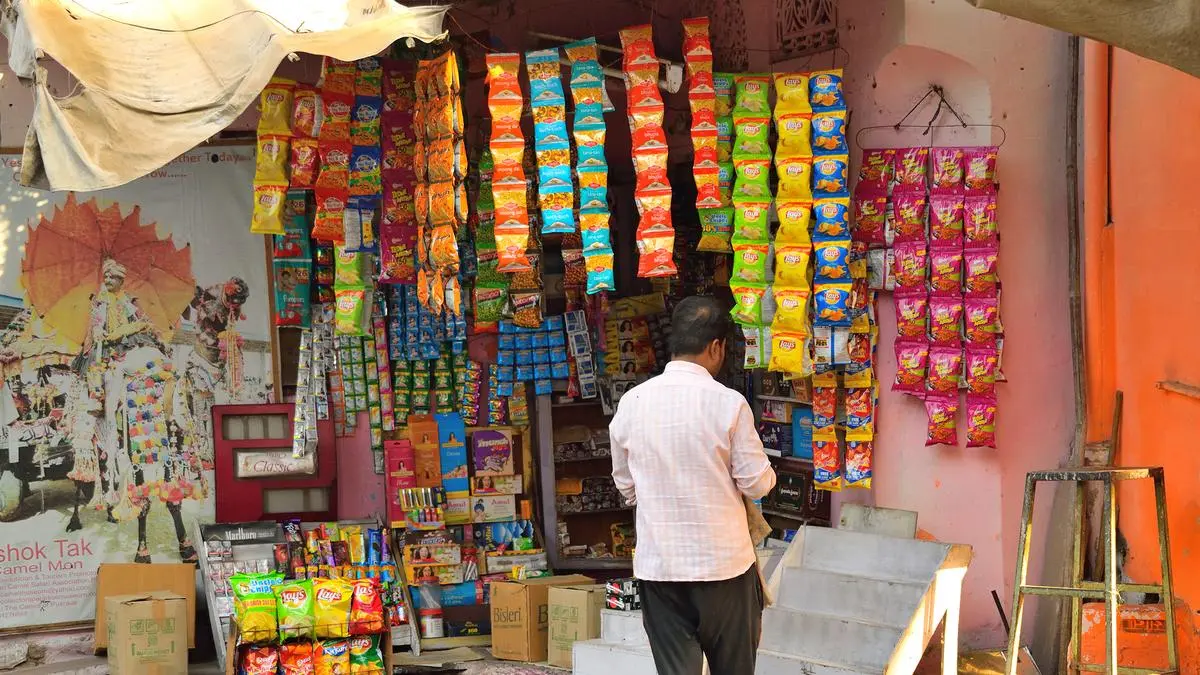
HOISTING THE ECONOMY. The toil of millions of logistics workers keeps supply lines moving 24/7
| Photo Credit:
Debjit Chakraborty
Yesterday, June 28, was Logistics Day. Observed since 2019, it acknowledges the vital role played by this network in day-to-day life. It includes everything from the last-mile movement of couriers, e-commerce agents and truck drivers to the vast network of heavy infrastructure like highways and trains hauling immense industrial bulk to ships. This ecosystem also includes warehouses. Ultimately, logistics relies on the relentless, 24/7 toil of millions of workers who keep the world’s supply lines moving seamlessly through a robust infrastructure.India’s own ambitions gathered pace when the government launched the landmark National Logistics Policy (NLP) in 2022. It provided a clear, unified direction to a historically fragmented sector by aiming to slash high costs, boost global competitiveness and integrate multimodal networks through digital transformation.Since the policy’s implementation, India’s logistics ecosystem has undergone a paradigm shift, validated by its climb to the 38th rank (from 54th in 2014) in the World Bank’s Logistics Performance Index. This advancement, driven by infrastructural strides like the PM GatiShakti National Master Plan and the Unified Logistics Interface Platform (ULIP), has optimised port turnaround time and supply chain tracking, boosting the country’s manufacturing capabilities.Multimodal strengthsThe momentum continued during the 2025–26 fiscal period, evidenced by media and government reports of multimodal execution across India. A major cornerstone is the operational growth of Vizhinjam International Seaport, which handled over two million TEUs while securing approvals to develop adjacent multimodal logistics parks (MMLPs). India’s major ports collectively handled a record 915.17 million tonnes of cargo in FY2025–26, while average vessel turnaround time plummeted below 50 hours.On land, the western and eastern dedicated freight corridors became over 96 per cent operational, along 2,741 km of track, accelerating freight speeds and decongesting traditional rail lines. Complementing this is the expansion in the aviation and maritime sectors, marked by trial cargo flights at the new Noida International Airport and inland waterways cargo skyrocketing to over 180 million tonnes, respectively.Further, the Ministry of Road Transport and Highways has revamped the model concession agreement for MMLPs to fast-track public-private partnerships. The MMLP at Jogighopa became fully operational in 2025, with a growing potential for inland trade to Bhutan and Bangladesh. The MMLP at Mappedu, Chennai, embarked on the first phase of operation in 2026; work has started on MMLPs in Bengaluru, Indore and Nagpur.Simultaneously, highway construction sped up under the Bharatmala Pariyojana, expanding the National Highway network to 1,46,572 km by March 2026, which includes the inauguration of the 213-km Delhi–Dehradun economic corridor. Parallelly, Indian Railways hauled an all-time high of 1,670 million tonnes of freight, reinforced by 35 new Gati Shakti cargo terminals.Even as the NLP continues to make an impact across the States, several State-level logistics policies are being chalked up with ambitious targets. An occasion like Logistics Day affords an opportunity to salute the 20-25 million men and women who power the logistics sector, which accounts for 15-20 per cent of GDP, valued around $350 billion and boasting a CAGR above 8 per cent.