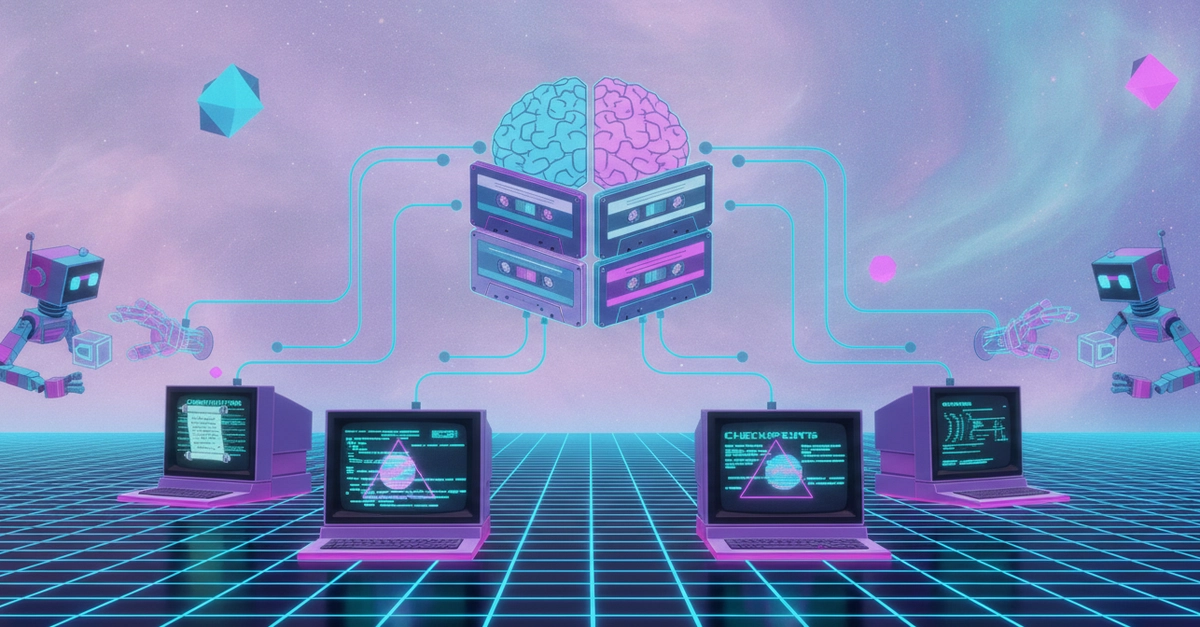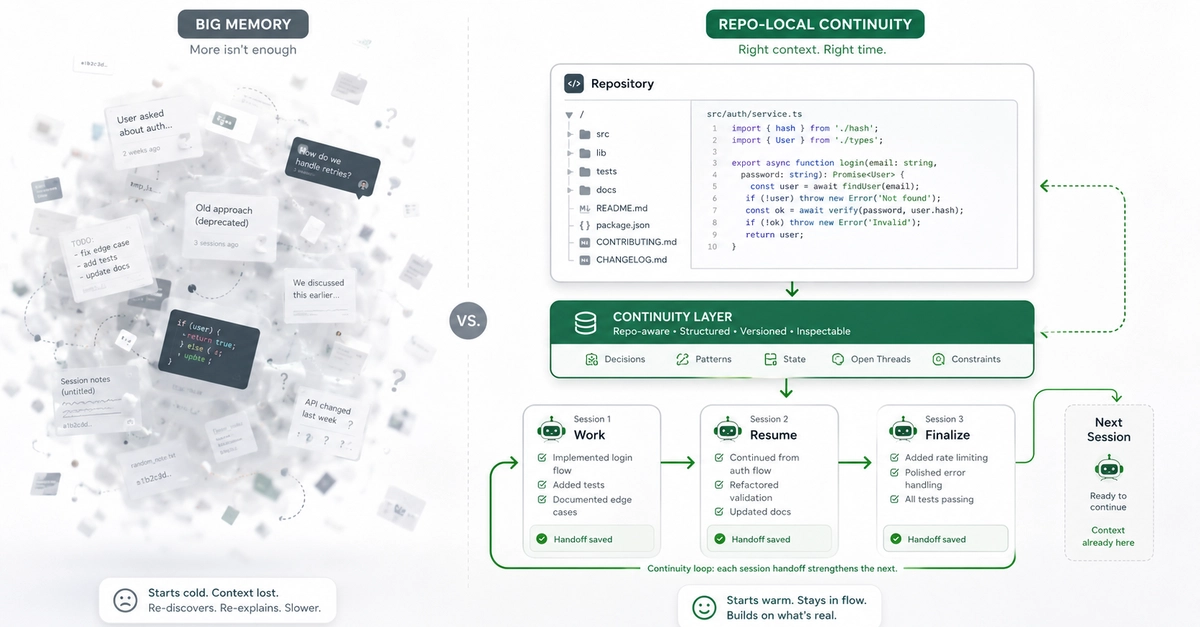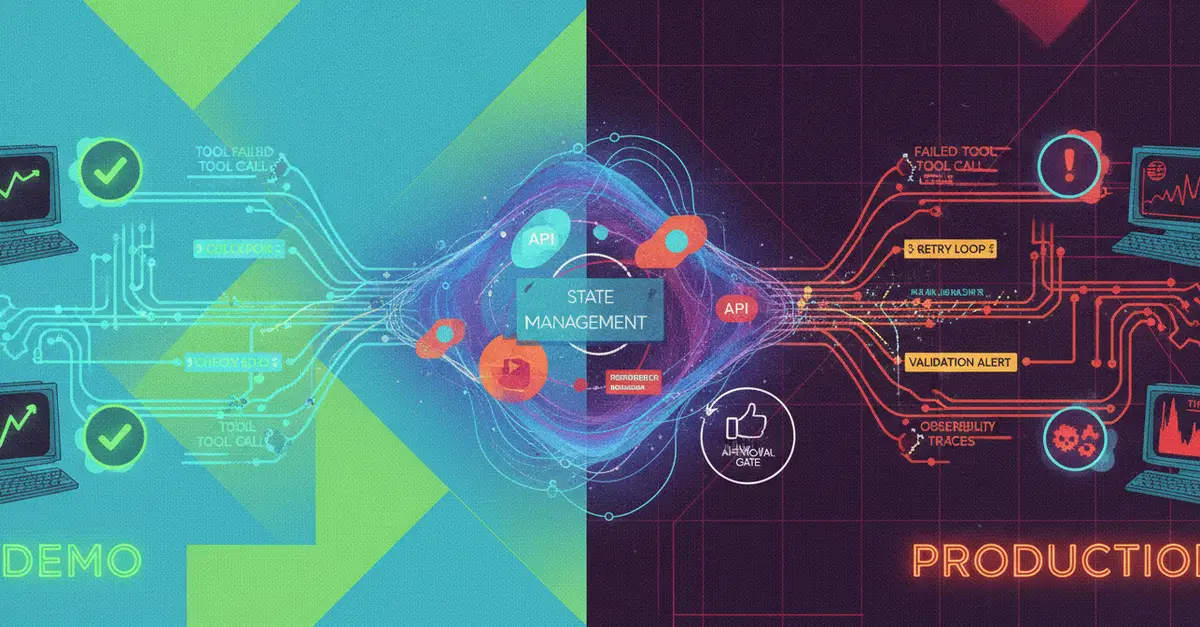
Give a capable coding agent a real, multi-week project and watch what breaks. It isn't intelligence. It's continuity. Every session starts cold or half-remembered. Context windows fill up and compact. The thread of what we decided, what's true, and what's done starts to fray. Over a long horizon the same failures keep coming back: the agent claims state it never actually verified, reports something done with no proof it ran, quietly drifts from the project's conventions, and loses hard-won context that lived only in the last session's head. Bigger context windows don't fix this. They just postpone it.
We've been building a real product with a forgetful agent as the primary engineer for weeks now, and the thing that made it work isn't a clever prompt. It's a simple recognition: transmission across a stateless agent needs two channels, and most setups only build one.
The first channel is structure, which is discipline made un-forgettable. These are the deterministic guards that run whether or not the agent remembers to care: a pre-commit check that refuses a "done" without a real, verifiable artifact; a hook that blocks a sloppy search and points at the right tool instead; a scan that won't let a secret reach a transcript; a status snapshot generated from the repository's actual state instead of hand-kept prose that quietly goes stale. The rule we keep coming back to is that a guard is the system's discipline made un-forgettable. A fresh session follows the hard-won lessons without having to remember them, because the structure enforces them at the moment of action.