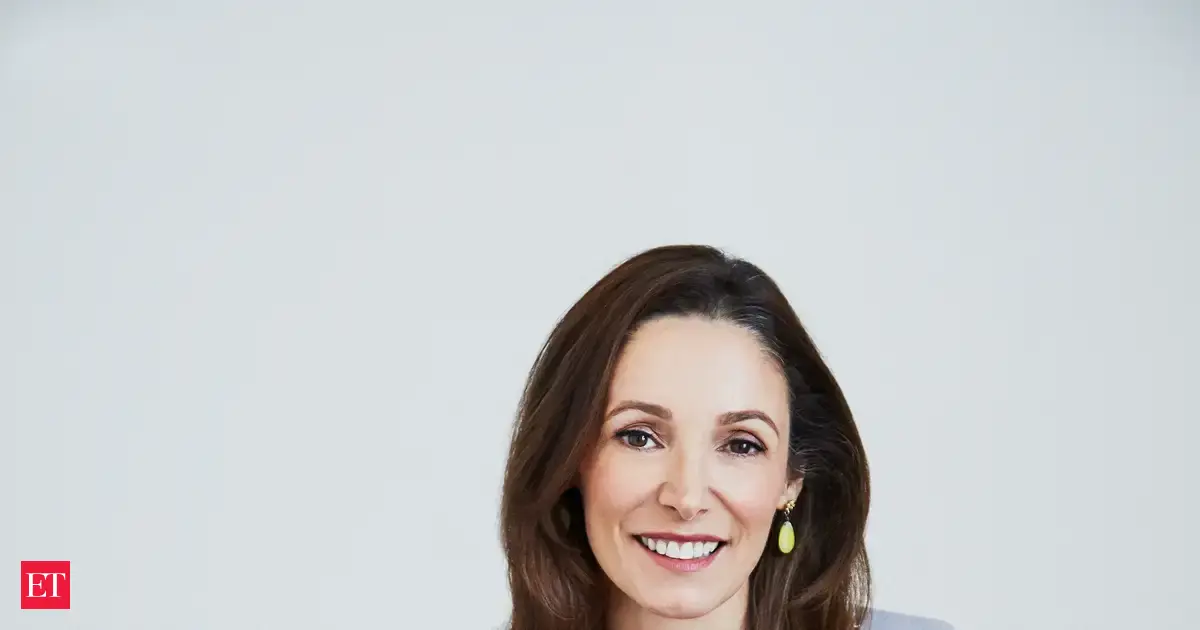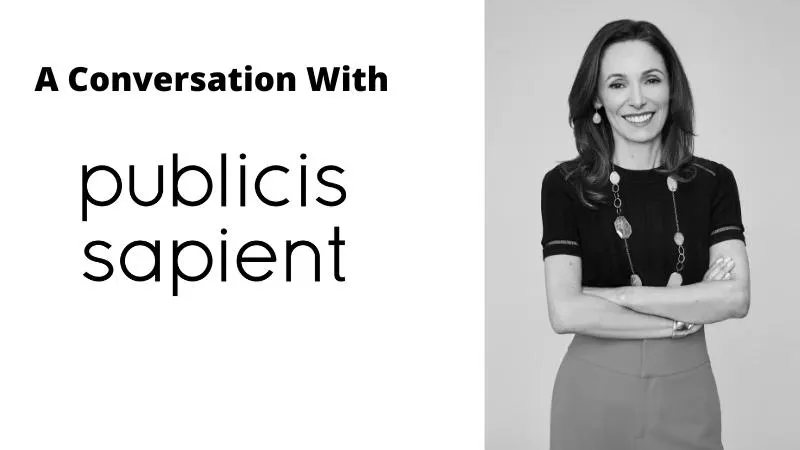
Teresa Barreira On The Need For CMOs To Embrace Fear While Leveraging AIBillee HowardCMO confidence is at an all-time low during a period in which marketing has never been more important to an organization’s growth trajectory. In order to succeed today, CMOs need to always be moving at a velocity that keeps them well ahead of what’s coming on the horizon. To do this, requires taking calculated risks and reimagining what it means to be a marketing leader. The key issue? Today’s top marketers are often plagued by paralysis as they fear change will lead to job loss. As a result, they are often finding themselves out of alignment with the rest of the C-Suite. This point is growing more and more acute as the age of AI ensues and new and bold critical thinking is expected from the CMO, particularly around finding the right balance between technological innovation and human touch.For my most recent column, I wanted to speak to a transformational leader who understands best practices for working to disrupt the CMO role. Her focus is always on positioning herself and her organization ahead of both trend and culture in ways that embrace human led innovation. Teresa Barreira is CMO of Publicis Sapient. She is a digital marketing pioneer with decades of experience at brands such as IBM and Deloitte. Following is a recap of our conversation: Billee Howard: Great to have you back, Teresa. When we spoke over five years ago, you called CMOs cyclists and suggested they need to always be moving at a velocity that keeps them well ahead of what’s coming on the horizon. That concept today is even more pressing now than it was then. Tell me how CMOs can work to keep their brands more ahead of the market and culture? Teresa Barreira: The cyclist image has stayed with me because it captures something most leaders don't want to admit you cannot stand still and stay upright. The physics don't allow it. And neither does the market. Many CMOs I know are executing against a strategy that was right 18 months ago. They're pedaling hard, but they've stopped steering. And by the time the finish line catches up with them, it's too late to accelerate. What I've learned is that velocity is not the same as speed. Speed is doing more, faster. Velocity is moving in the right direction and adjusting that direction constantly. The brands that stay ahead aren't moving faster than everyone else. They're reading the curve earlier. I force myself and my team to hold two timeframes simultaneously. Not 80/20 because that math implies you can schedule insight. It's more like we never fully leave the future conversation, no matter how urgent today feels.And this is where AI actually changes the equation, but not in the way people think. AI handles execution speed. That should be freeing up CMOs to do the one thing AI cannot do which is look at what hasn't happened yet and have a point of view on it. If your AI transformation is just making you faster at the same things, you've missed the point entirely.Howard: CMOs also need to take more risks than ever before but often become immobilized as they fear change will lead to job loss. How should CMOs be thinking differently and please share an example of how you have done this. Barreira: The “fearful CMO” is a bit of a paradox. The most important job of a CMO is to bravely lead by example, to paint the vision of a future and motivate people to achieve that vision. If you are fearful and cautious, you are not acting as a leader because there is no such thing as “future proofing.” Whether we like it or not, the shape of the future is constantly changing, and you need to constantly change along with it. The worst way to face the imperative for change is to do it dragging your feet, because then you have no say in how it’s going to go. If you jump in with both feet, you have an opportunity not just to adapt to the future, but to play an active role in shaping what it’s going to look like. What I've learned is that CMOs who play it safe to protect their jobs are the ones who lose them anyway because caution is invisible until it's catastrophic. You don't get fired for one bold move; you get replaced because nobody could tell what you stood for.The risk I took was making three documentary films. No client asked for them. No brief called for them. The CEO didn’t request them. The ROI case on paper was not clear. Yet, I believed our work was making a meaningful difference in people’s lives. Rather than featuring the work we did for our clients, we wanted to showcase the impact that work had on people. We chose to do that through non-branded documentaries. The result was bigger than anything we’ve ever done. CNBC profiled the company, our documentary was accepted into the Tribeca Festival, client engagement increased and we won three Clio Awards. We had a human story that came from a point of view, not a playbook. So, the risk wasn't really the films. The risk would have been continuing to do what everyone else was doing and hoping that was enough.My philosophy is simple. Change before you're forced to. If you wait until the pressure is unbearable, you've already lost the ability to shape what change looks like. Jump first, and you get to decide where you land.Howard: The age of AI has actually put a fine point on the need for more humanity and emotional understanding in everything from marketing to digital transformation. Tell me your thinking here.Barreira: I couldn’t agree more. Anything AI can do for you; it can do for your competitor. That’s the part people aren't sitting with long enough. In the age of AI, anything that can be automated will become commoditized. So, for instance, tracking trends and surfacing cultural insights. While AI can help you do this faster and more effectively than ever before, the same AI is helping your competitors do the same thing. That means that what AI is doing is throwing everything into relief, except for the special advantages that you bring as a human being. It’s not the trends you surface; it’s the ones that you judge to be most important. It’s not a summary of what’s happening now, but your intuition about what will happen next. It’s not insights about what’s happening in culture, it’s having the taste to know what to participate in and where to sit out. What AI is doing is leveling the playing field on execution. What this means is the only things that differentiate you now are the things that were always hardest to develop: curiosity, taste, lived experiences and the courage to act on your instincts when the data doesn’t fully support you yet. I've made some of my best calls that way. My worst ones came from deferring to consensus when I knew something different.Howard: You are a great example of a fluid and agile transformational leader—always on to what’s next. You are currently evolving Publicis Sapient to be a product and people organization. Tell me more. Barreira: We are evolving into a people and products model because the traditional services model no longer works. Most services companies are trying to add AI to their existing operating model. We're redesigning the model itself. That's a completely different proposition. The traditional services model was built on one assumption. You scale by adding people. That math doesn't hold anymore. What scales now is the combination of people and platforms; and the question is how you architect that combination to create exponentially more value than any one of those two could alone.That's what people plus products means. Not people versus products. Products bring speed, scale, repeatability. People bring judgment, expertise, the ability to read what a client actually needs versus what they asked for. You need both, working together, or you get neither at full power.And we've lived it in our marketing team. We turned marketers into builders. They built AI assistants, those assistants became embedded in our workflows, and those workflows became part of larger systems. What started as a marketing transformation is now something clients are asking us to replicate for them. That's the proof point I care about most. Not the theory, but the fact that we did it ourselves.
A Conversation With Publicis Sapient’s Teresa Barreira On The Need For CMOs To Embrace Fear While Leveraging AI To Unlock The Human Special Advantages Required To Drive Distinction + Growth
Teresa Barreira On The Need For CMOs To Embrace Fear While Leveraging AI
1,421 words~6 min read