In my first post about this project I described repeated-poker-analysis: a small, abstract toolkit for studying repeated poker spots as a commitment-analysis problem. It is a research and learning project, not a poker solver and not real-money advice.
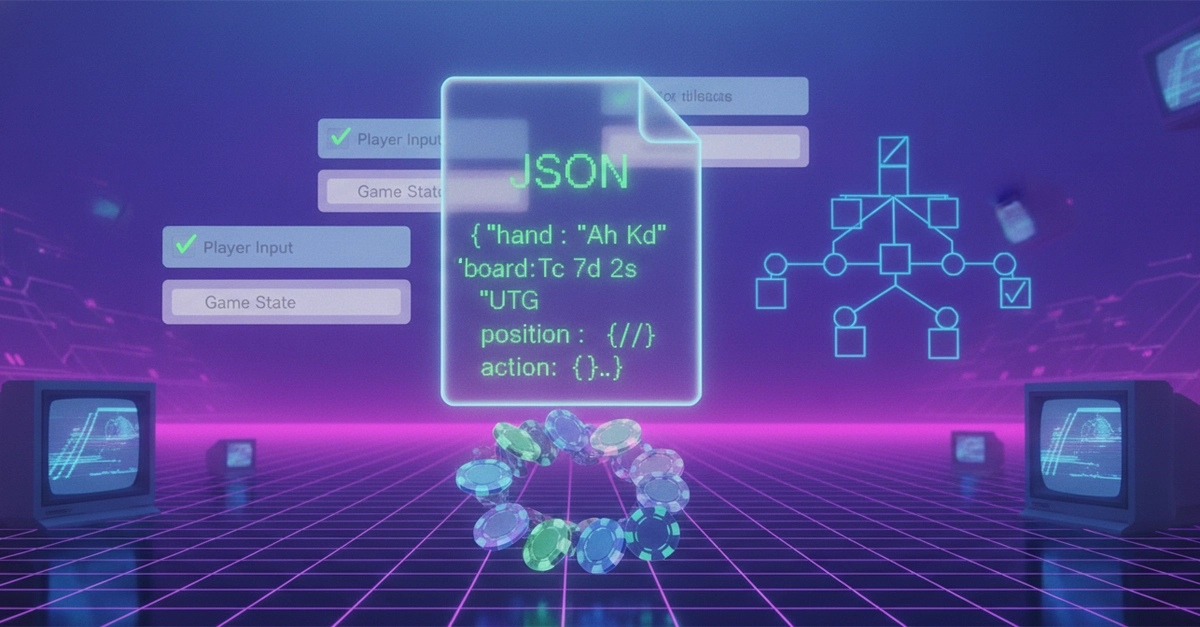
That post ended on the analysis side, with a hand-built toy game where committing to a fixed strategy beats the one-shot baseline. I planned to spend the next stretch on the algorithm. In practice I spent most of it on input, validation, and saving — the layer the algorithm sits on. This post is about that part, and about the abstract model growing a bit at the same time.
This describes the project on the feat/single-hand-form-edit-cli branch at the time of writing, so details may move after it is merged.
What changed since the last post
Last time, scenarios were small fixed examples and helper functions inside the code. To analyze anything new, I edited Python.