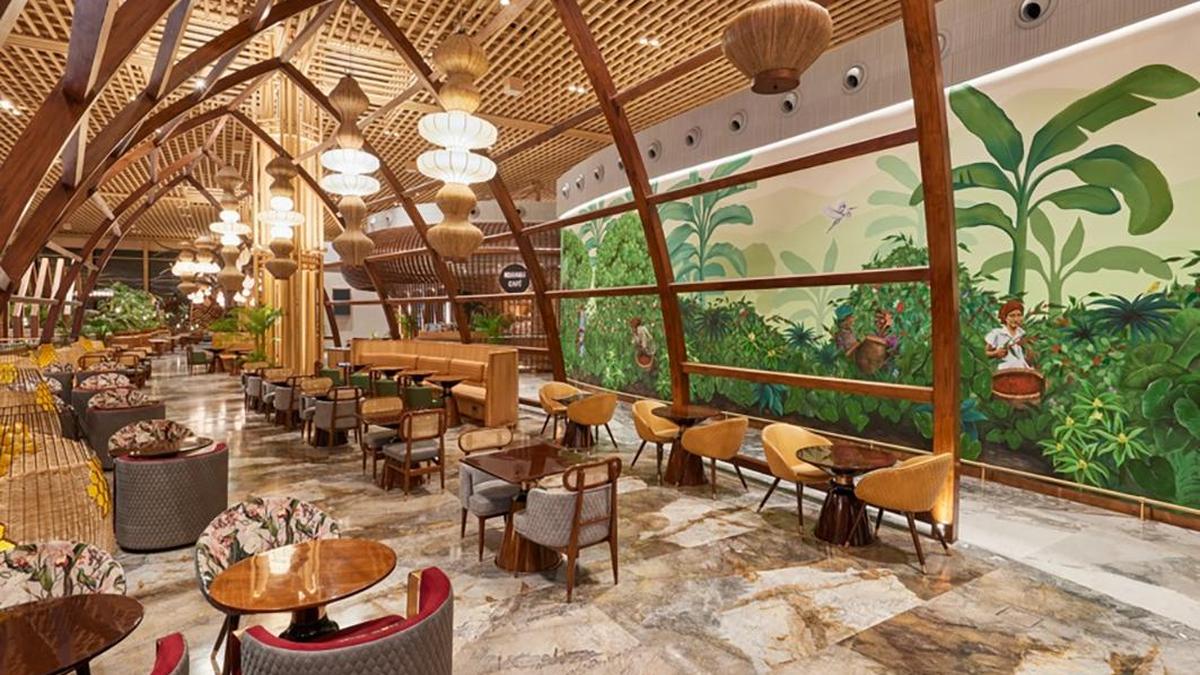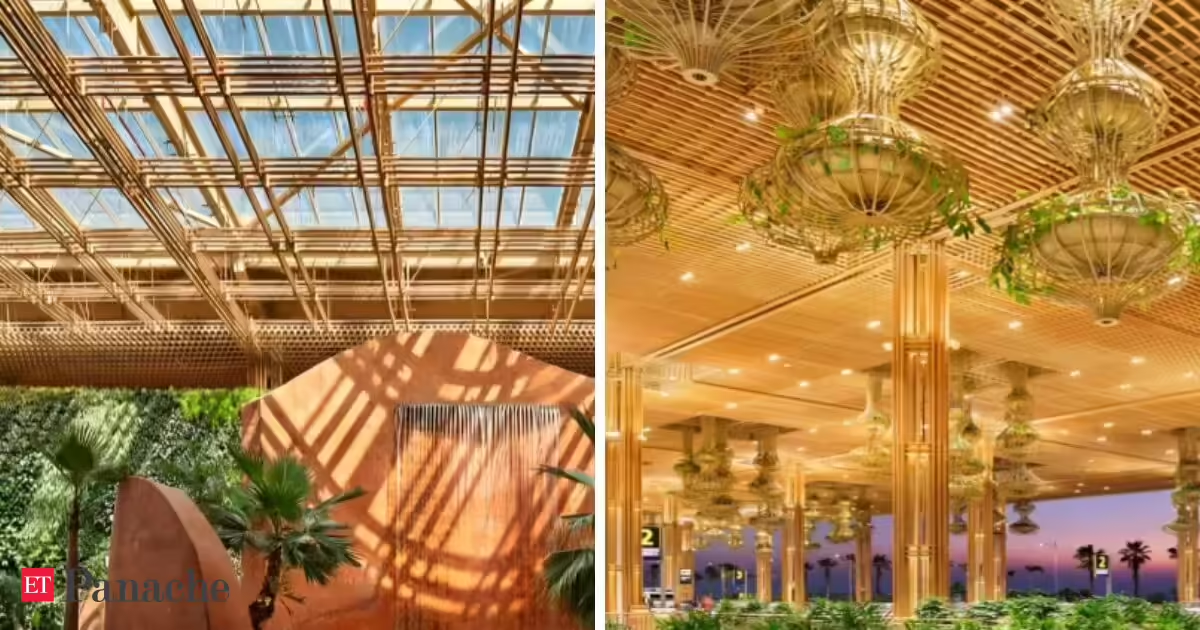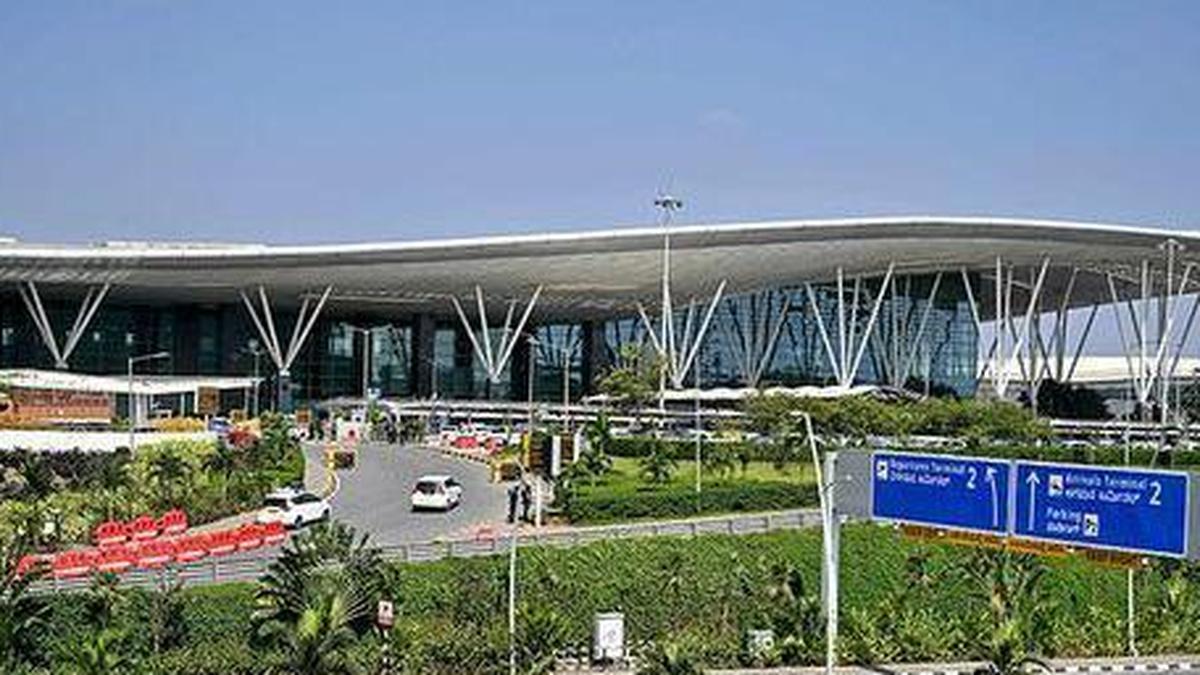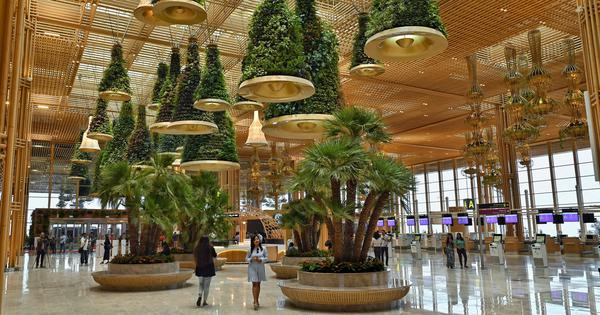
Bengaluru Airport’s newly renovated, much-discussed Terminal-2 features lush landscaping that draws on the city’s heritage as a “garden city” to brand itself the “terminal in a garden”.The ambitious plans for the green spaces developed by the UK- and Singapore-based landscape architecture firm Grant Associates make nature ubiquitous in the experience of the airport.Nature is everywhere.There are plants suspended from bell-shaped scaffolds to massive green walls that snake their way through the airport. There are double-height foyers and vestibules through which palms and skinny trees perforate the built-space. There is an impressive two-storeyed waterfall that provides a panoramic background to the baggage-claim belts.This is not only landscape design, say the executive designers, Landscape Accord. This is choreography.The impact is almost that of visiting a museum and seeing dioramas behind glass cases: an endless parade of carefully curated vistas that not only delight, but impress and inform.The average passer-by may not give the dramatic spectacles of nature any importance above aesthetic appreciation, but as architect Balkrishna Doshi said, “I talk to nature, and nature talks back to me.” The nature that designers create and curate also talks back to users, and reinforces narratives and ideas of what nature and beauty are.Vertical gardens and a fountain at Terminal 2 at the Kempegowda International Airport in Bengaluru in November 2022. Credit: AFP.However, in the case of Bengaluru airport, those narratives seem far removed from their local, or even their regional context.As travellers walk through the airport, the plantings tell the story of verdant tropical plantings conjuring images of a per-humid climate like that of a dense tropical forest. Ecologically, this is consonant with rainforest ecosystems like the Western Ghats of those in South East Asia. Aesthetically, this draws on tropical landscape aesthetics typical of modern landscapes in Singapore, Malaysia, and Thailand.Seeing the portfolio of high-profile projects previously designed by Grant Associates such as the Gardens by the Bay and the Grant Hyatt Hotel in Singapore, this is in line with their aesthetic vocabulary. Apart from being an entirely imported aesthetic divorced from its local or historical context, the design implies that this is what nature looks like in this part of the world.
Bengaluru T2’s tropical aesthetic is out of place – a bit like the ‘Garden City’ moniker
Urban designers seem unaware of what nature looks like in this part of the world while relying on imported flora that projects the idea of a ‘world-class’ city.
1,030 words~5 min read