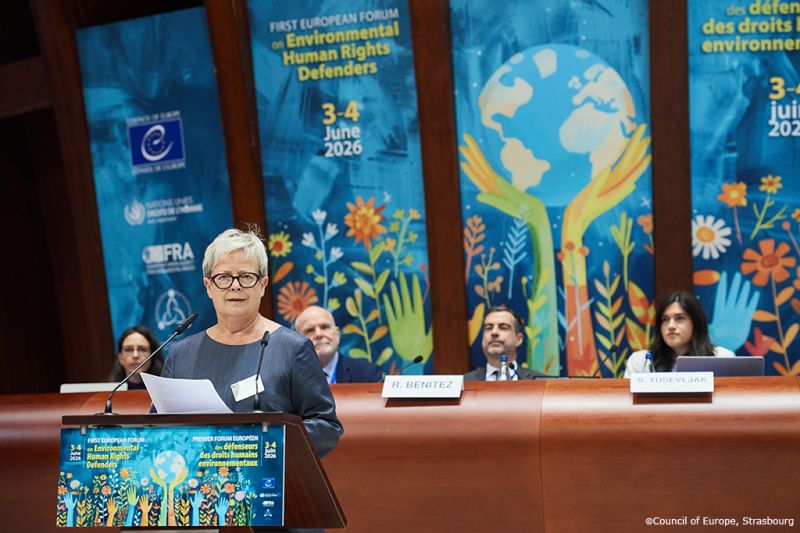
On Wednesday (24 June), Sirpa Rautio, director of the European Agency for Fundamental Rights (FRA) was in Brussels. She came in from Vienna to present in the European Parliament this year’s (2025) Fundamental Rights Report.
Before the presentation in front of the parliamentary committee on civil liberties, justice and home affairs (LIBE), she answered questions for EUobserver.
It has been 25 years since the proclamation of the Charter of Fundamental Rights of the European Union. Is the problem still the content of the charter, or rather its uneven implementation across member states?
The content of the charter is good. It gathers all human rights that had been in existence at the time of the proclamation. So it has very few new elements. It is a good instrument which binds the EU itself and member states within the scope. The content is not a problem in my view. As always with human rights, the implementation is the problem. The implementation is uneven, but also lawmaking can be a problem itself.
It is something we need to be very vigilant about. Implementation to me means that you already have a directive which has been transposed, or you have national law, and then you are implementing it. But the actual lawmaking, whether it is at the EU level or the national level, can also be problematic if there are not enough fundamental rights, assessment or safeguards.