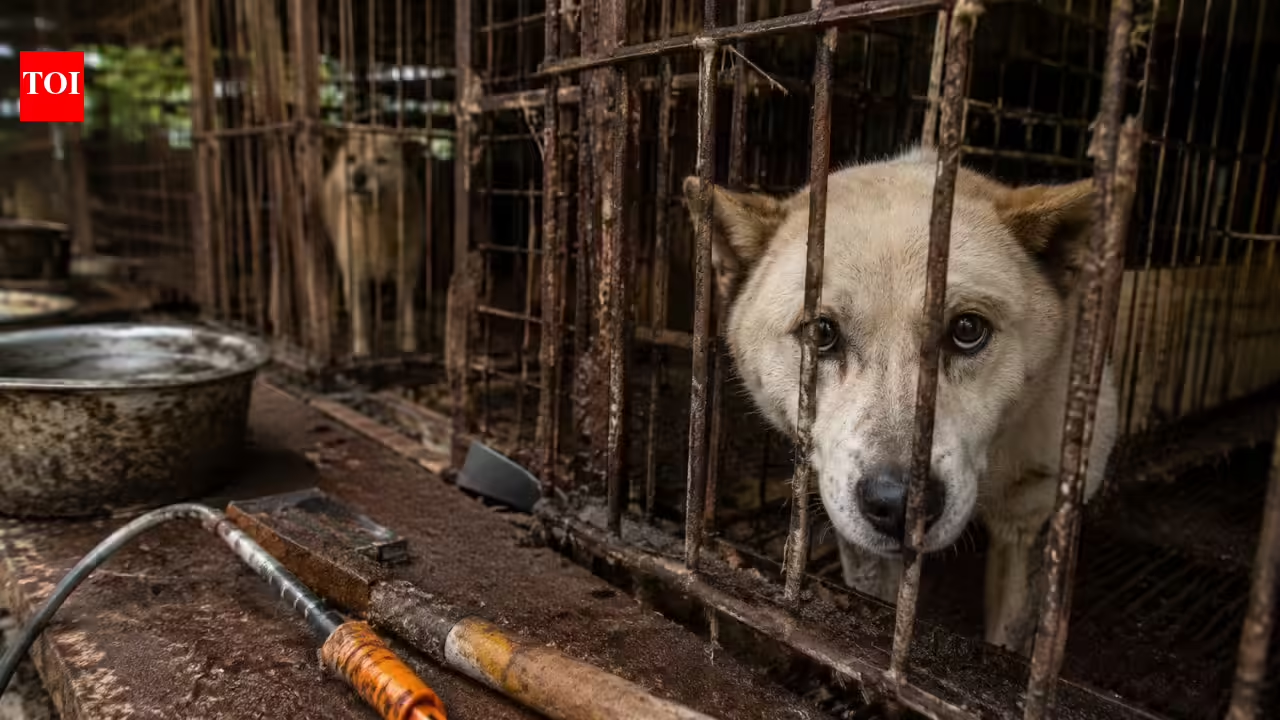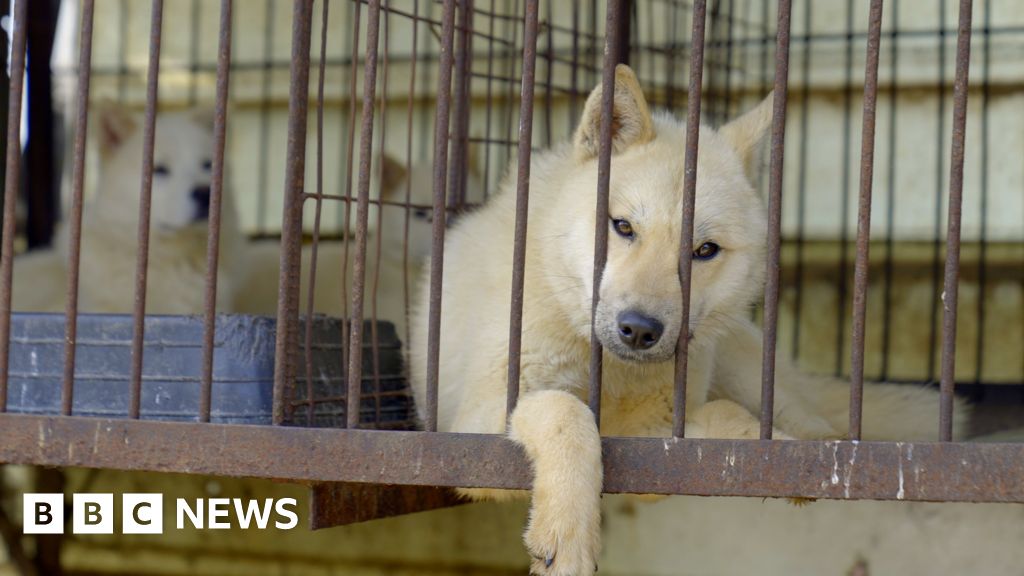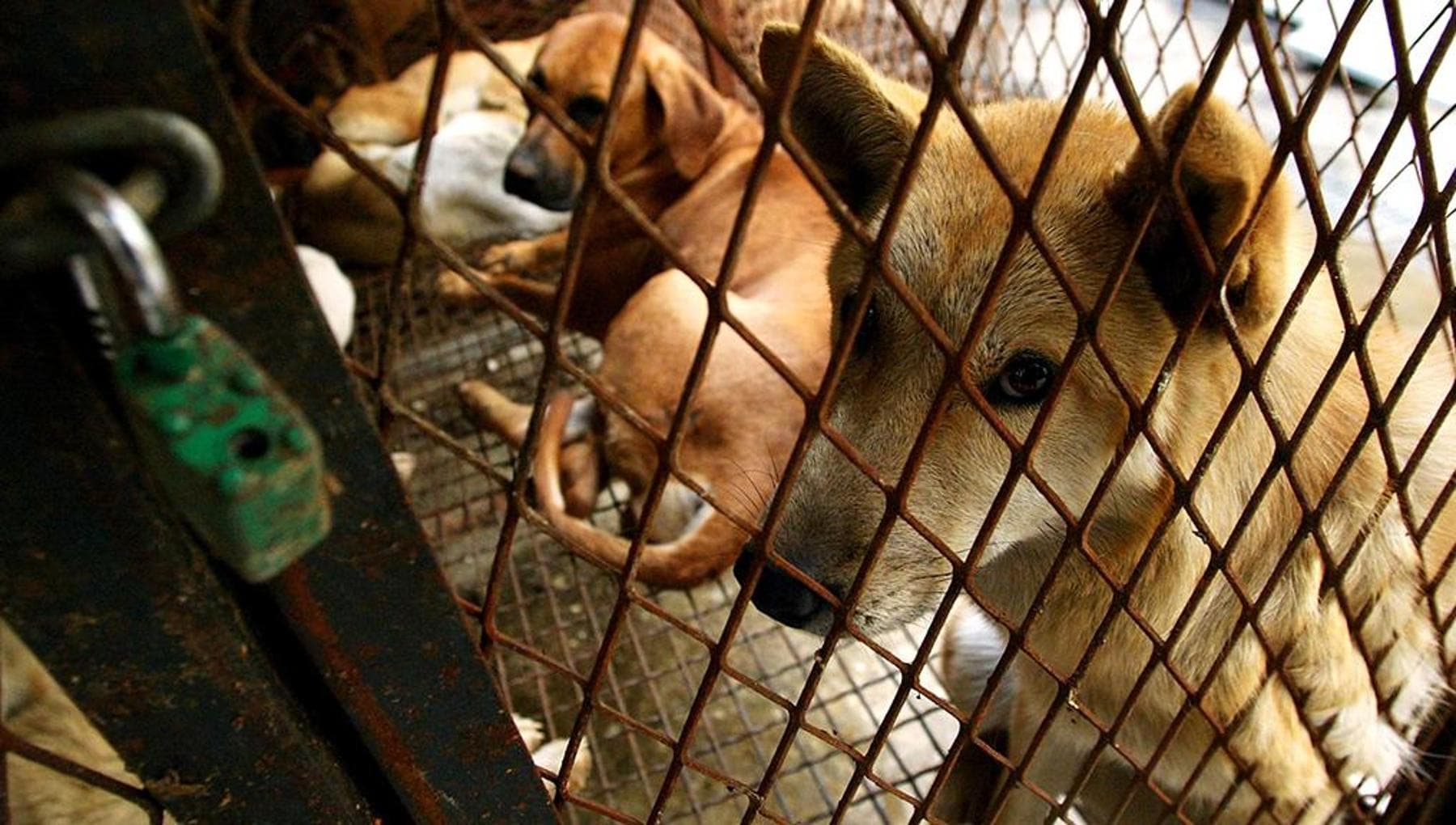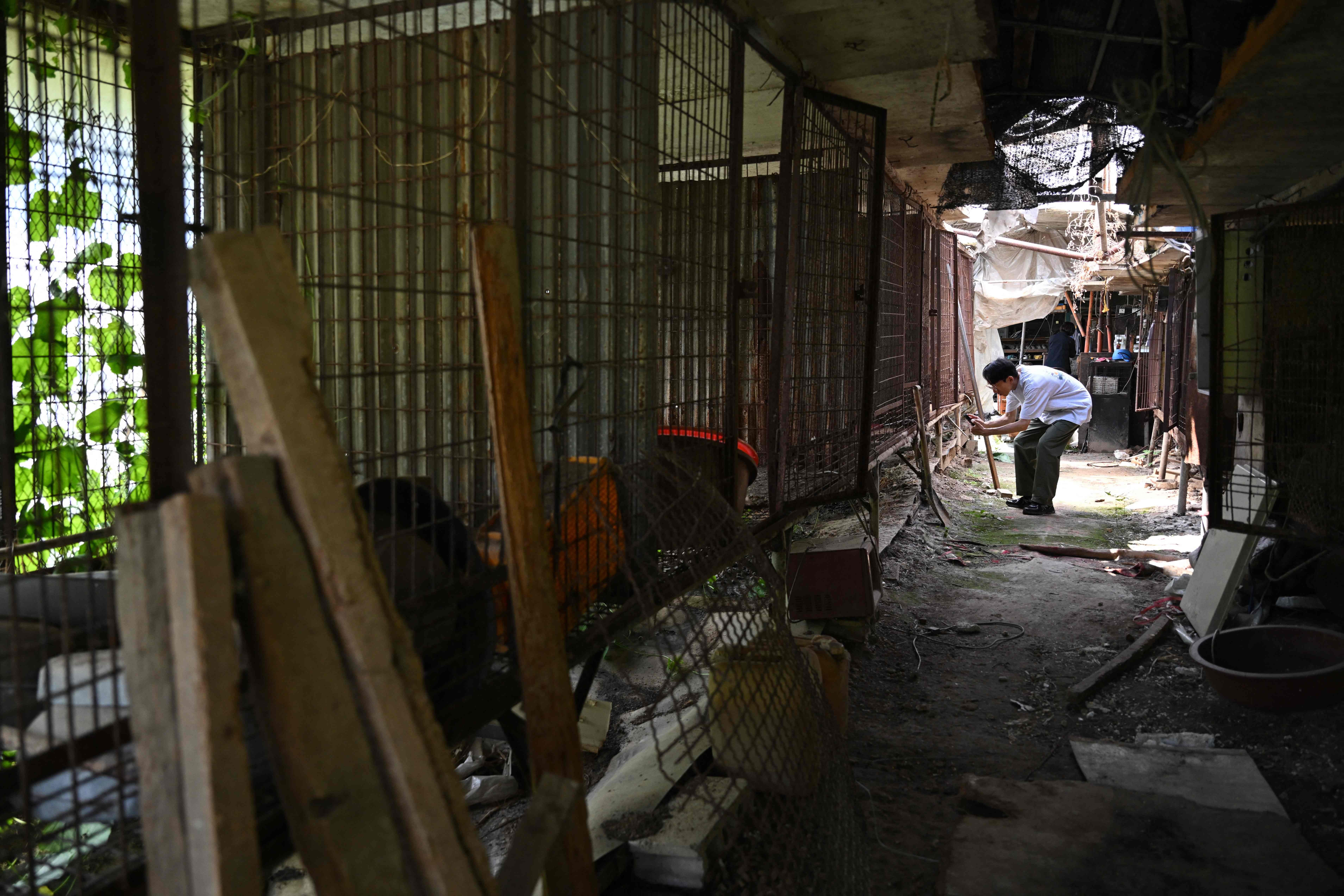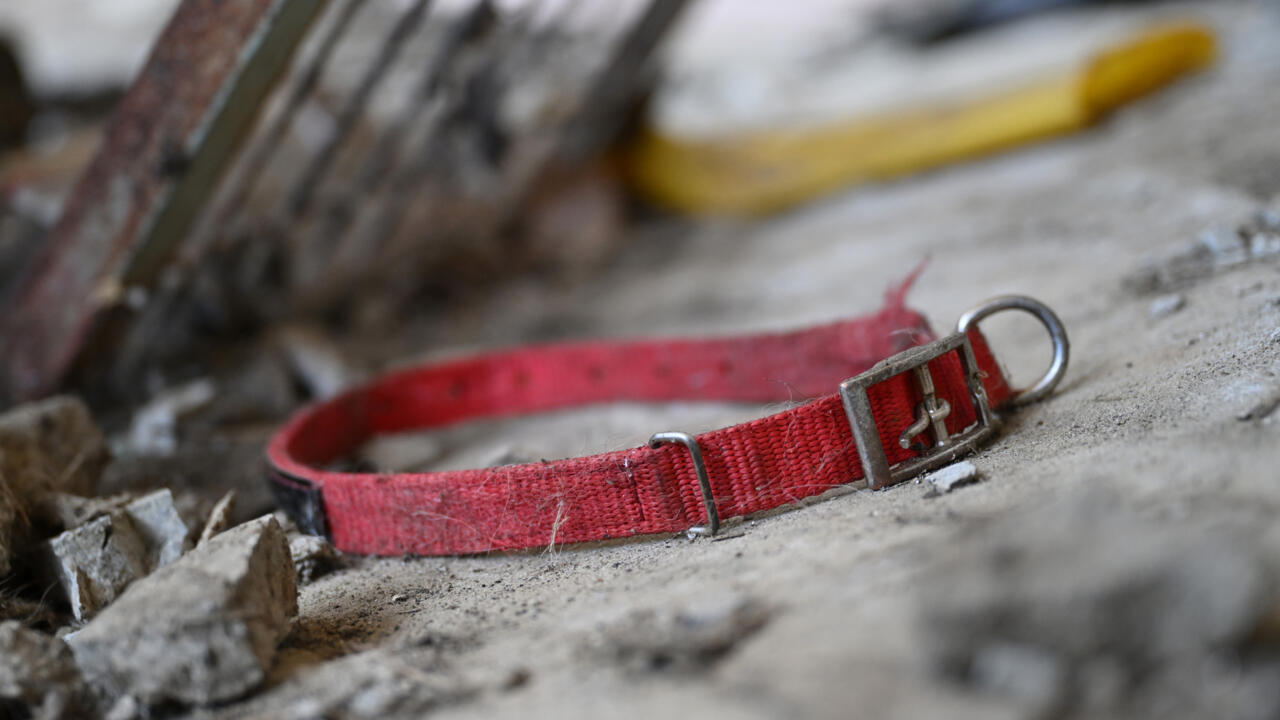
Pyeongtaek (South Korea) (AFP) – Electric prods rest against the wall near rusty cages containing dog skulls in an abandoned canine slaughterhouse in a South Korean town.
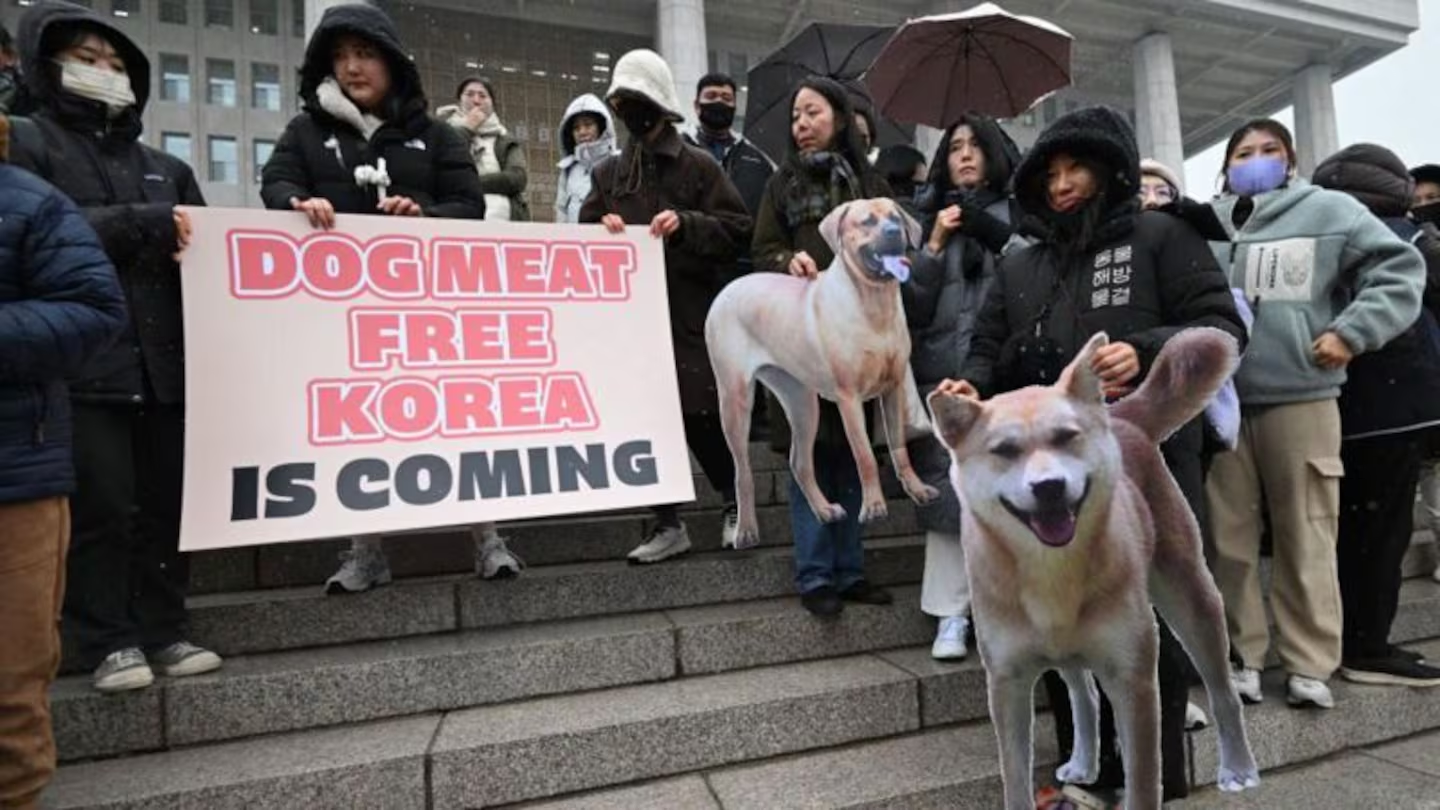
The deserted site in Pyeongtaek, south of Seoul, offers a glimpse into an industry rapidly disappearing as South Korea's landmark dog meat ban enters into force next year. It also begs a question: what happened to the hundreds of thousands of dogs once bred for human consumption?Historically regarded as a summer stamina booster -- particularly among older and rural people -- dog meat has steadily fallen out of favour as younger Koreans embrace dogs as pets and public attitudes shift.In January 2024, the country passed a law banning the breeding, slaughter and sale of dogs for food. Once it takes effect next February, violators will risk prison sentences of up to three years.As the ban looms, the industry is disappearing much faster than many expected.
An animal rights activist checks empty cages at an abandoned dog slaughter facility in Pyeongtaek © Jung Yeon-je / AFP
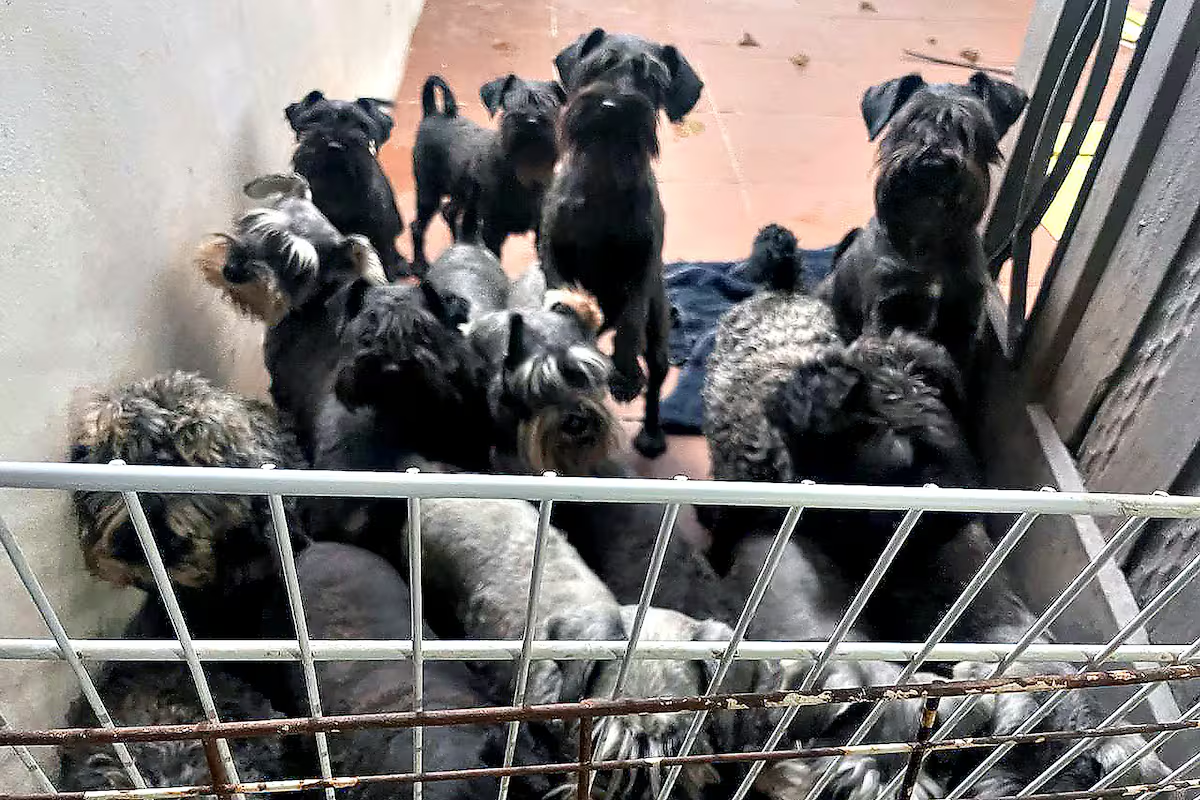
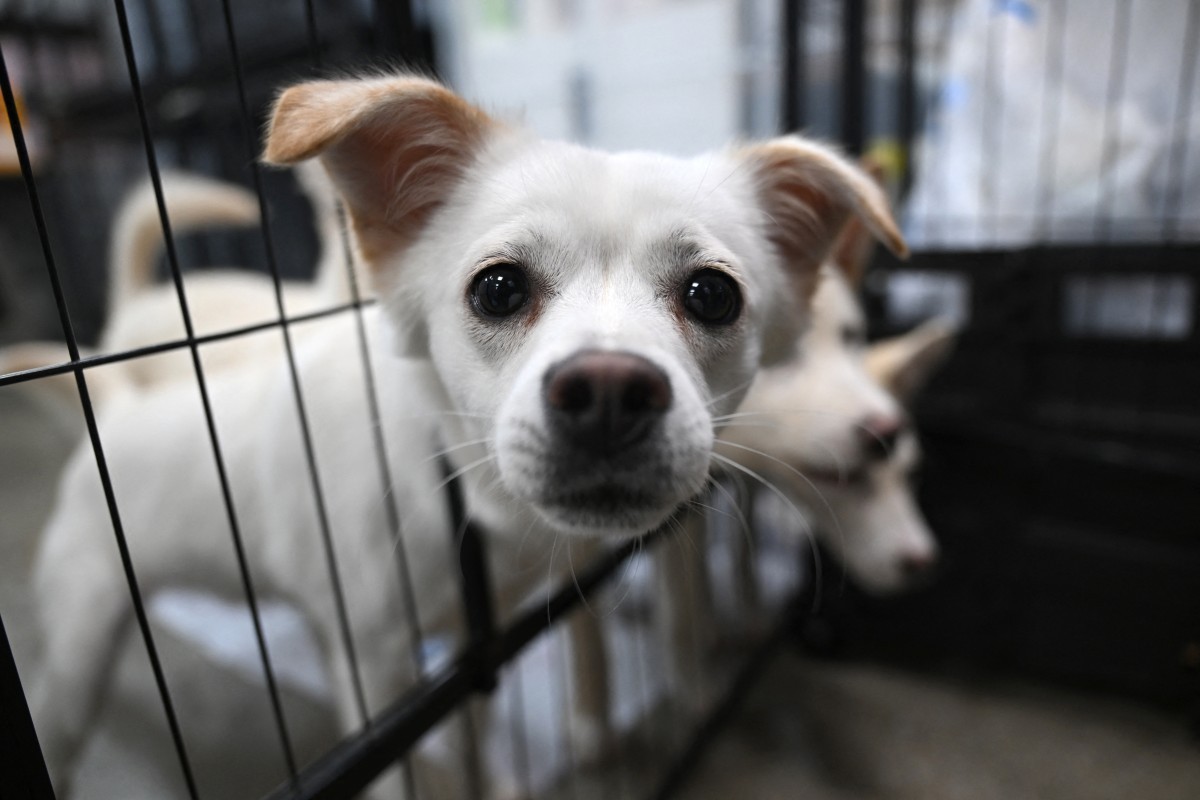
Government figures show between 400,000 and 450,000 dogs were being raised for meat in 2024. Today, the agriculture ministry estimates just 20,000 remain on farms.There are no statistics on dog meat consumption trends, but it is widely accepted to be popular among only a small minority of South Korea's 51 million people.To help farmers transition, the government offered up to 600,000 won (about $390) for every dog they got rid of.But where the animals went was not tracked."Our role is to verify that dogs are no longer present at farms or slaughter facilities before providing compensation," a ministry inspector told AFP on condition of anonymity."We are not involved in what was done with the dogs," he said.'Already eaten'Data obtained by a lawmaker showed that by February just 623 dogs had been adopted, and just under 500 were sent to shelters.Most of the rest were likely killed, animal welfare groups and former farmers believe.