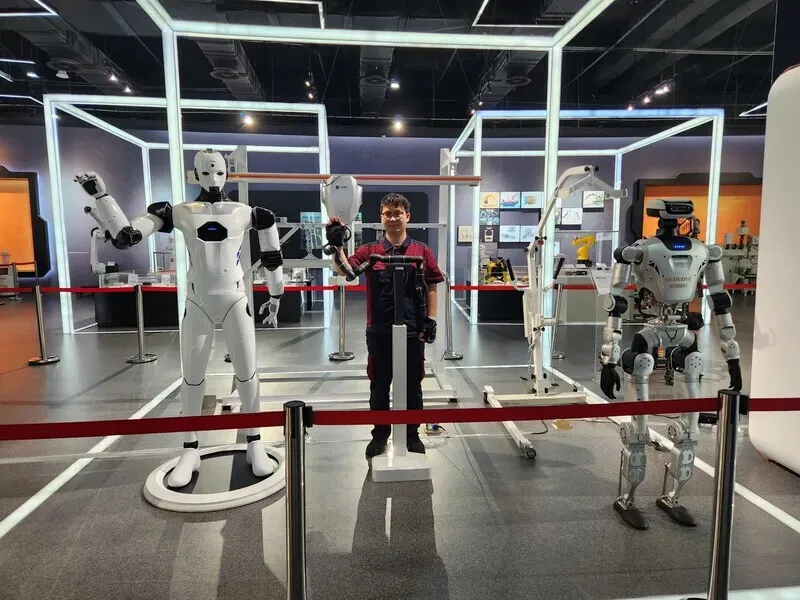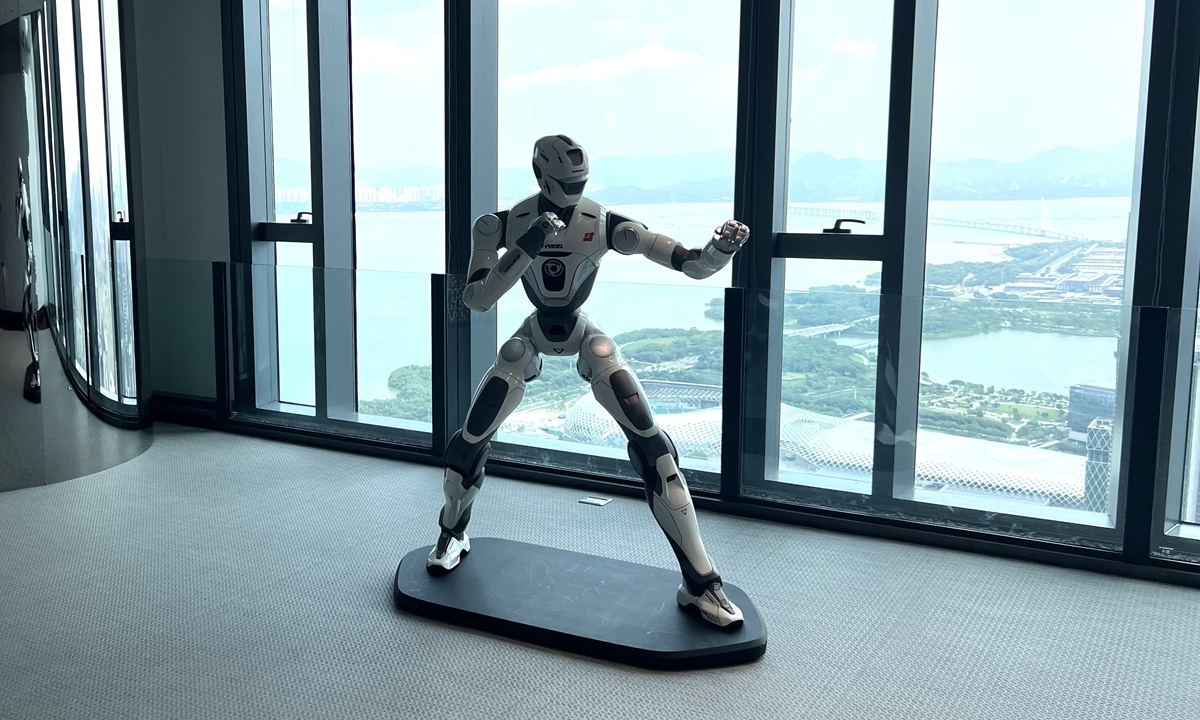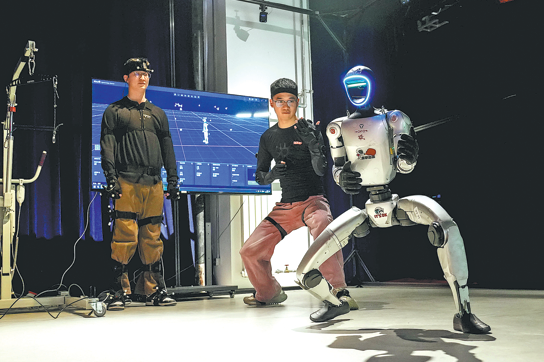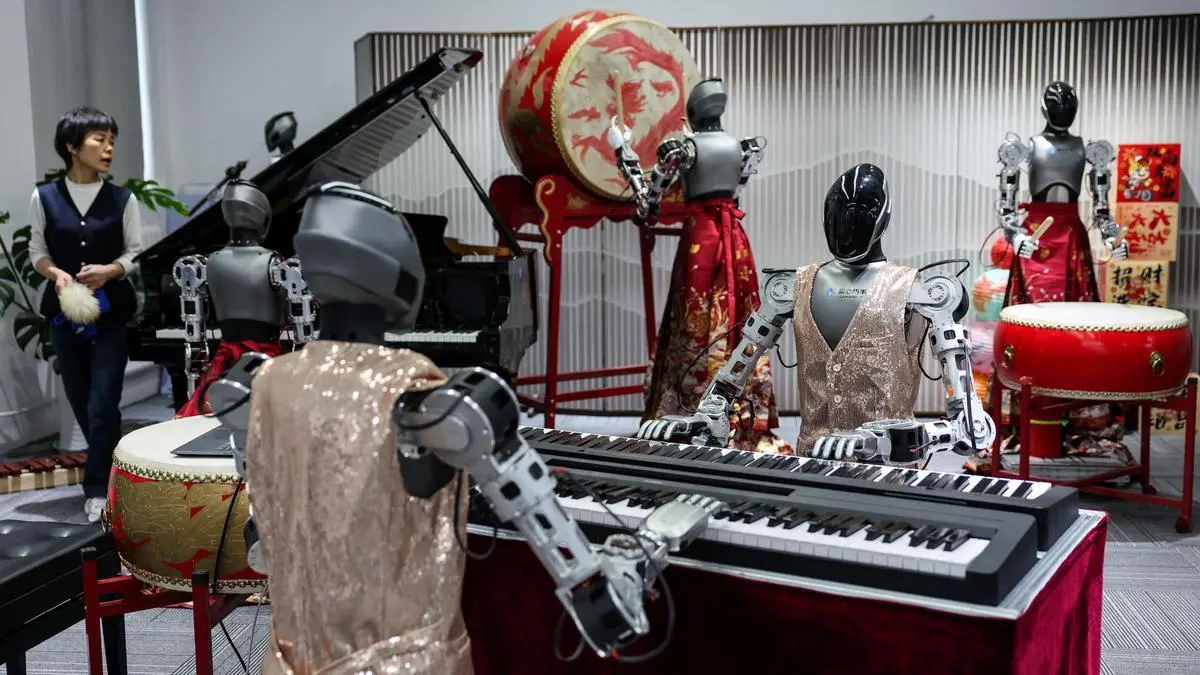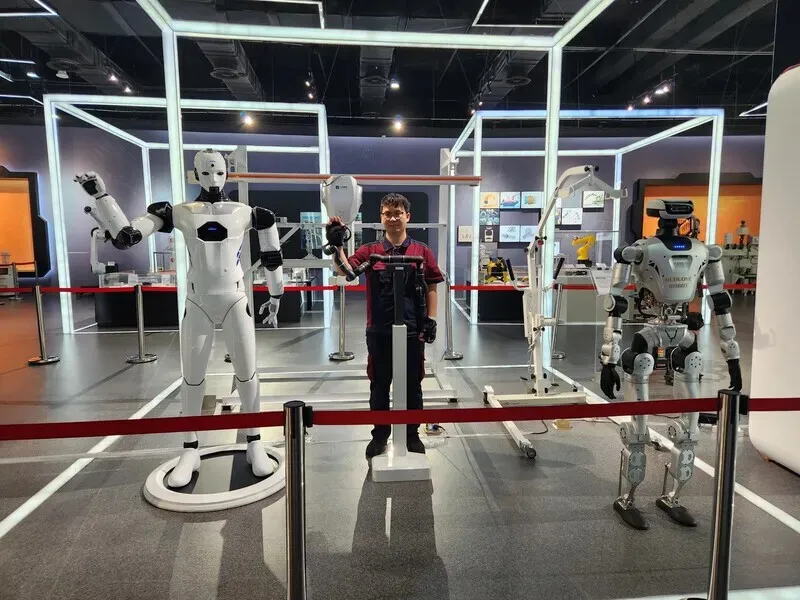
Humanoid robots mimic the gestures of a human at Anhui Innovation Pavilion in Hefei, in China’s Anhui Province, on June 13, 2026. (Park Min-hee/Hankyoreh)
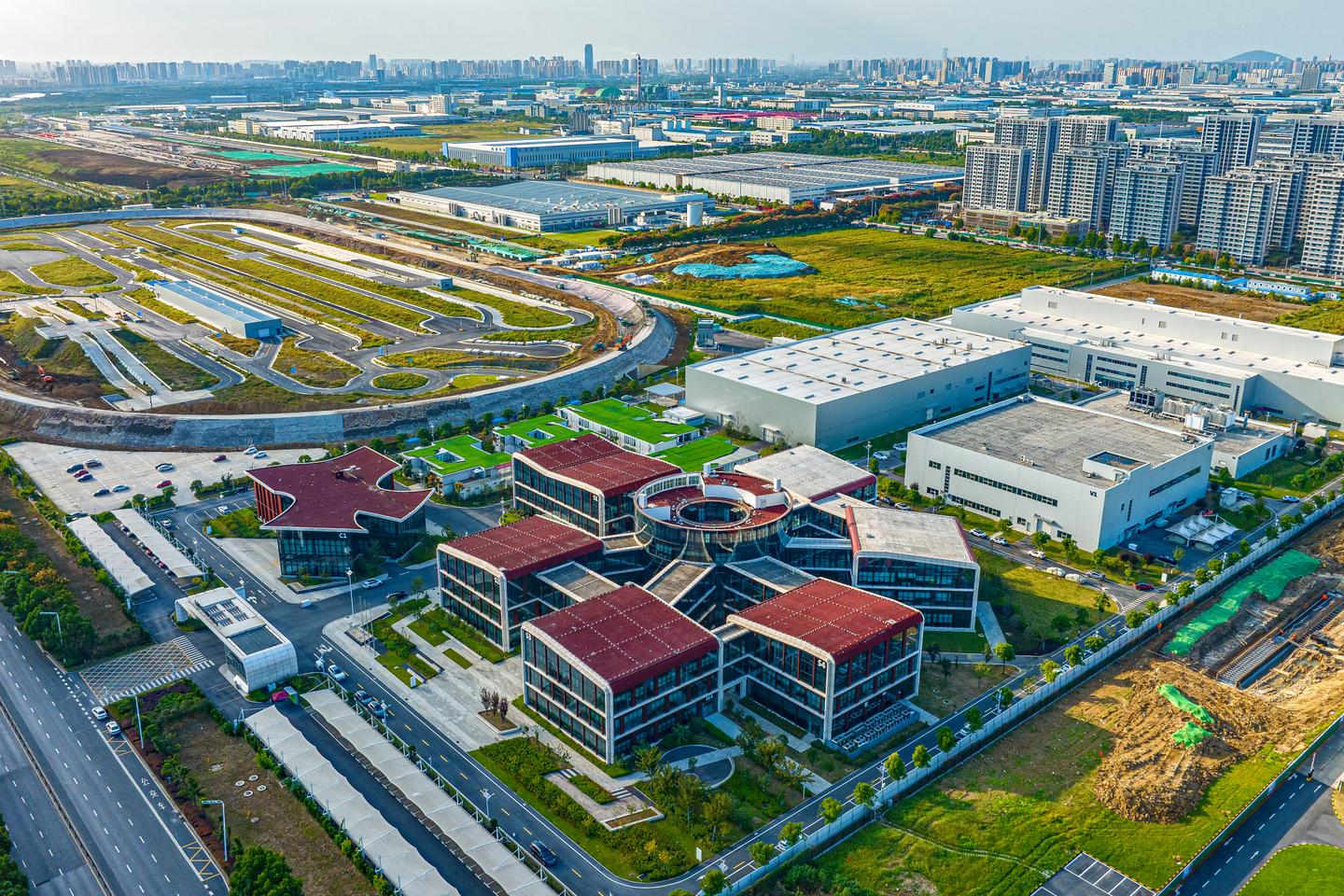
The orange-colored robots are in constant motion, handily raising the vehicle chassis and welding it in a ceaseless shower of sparks. On the floor, white-colored automated carts are constantly shuttling vehicle parts back and forth. Human workers are seldom seen.The F2 factory operated by China’s top-end electric vehicle brand NIO (Chinese name: Weilai) at Xinqiao NeoPark in Hefei, a city in China’s Anhui Province, leverages robotics and artificial intelligence to produce one electric vehicle a minute. Once the parts are assembled, the vehicle drives itself to a test area where it checks over a thousand functions on its internal systems.Around 1,300 production robots and 500 automated cars are “working” at the factory.“We have an internet network installed in the factory basement that collects around 1.5 terabytes of process data every day. Our goal is to automate the decision-making process at some point down the road,” a company employee said.This state-of-the-art factory, which is expanding with the goal of becoming the world’s biggest EV manufacturing hub, demonstrates how Hefei, an inland city in China, is becoming a city of cutting-edge technology. Ten years ago, Hefei was a backwater often referred to as a “huge farming village,” but now it has experienced explosive growth from the confluence of strategic investments led by the Hefei municipal government and the central government’s strategy for the integrated development of the Yangtze River Delta — a strategy for the integrated development of Shanghai, Anhui, Jiangsu and Zhejiang.