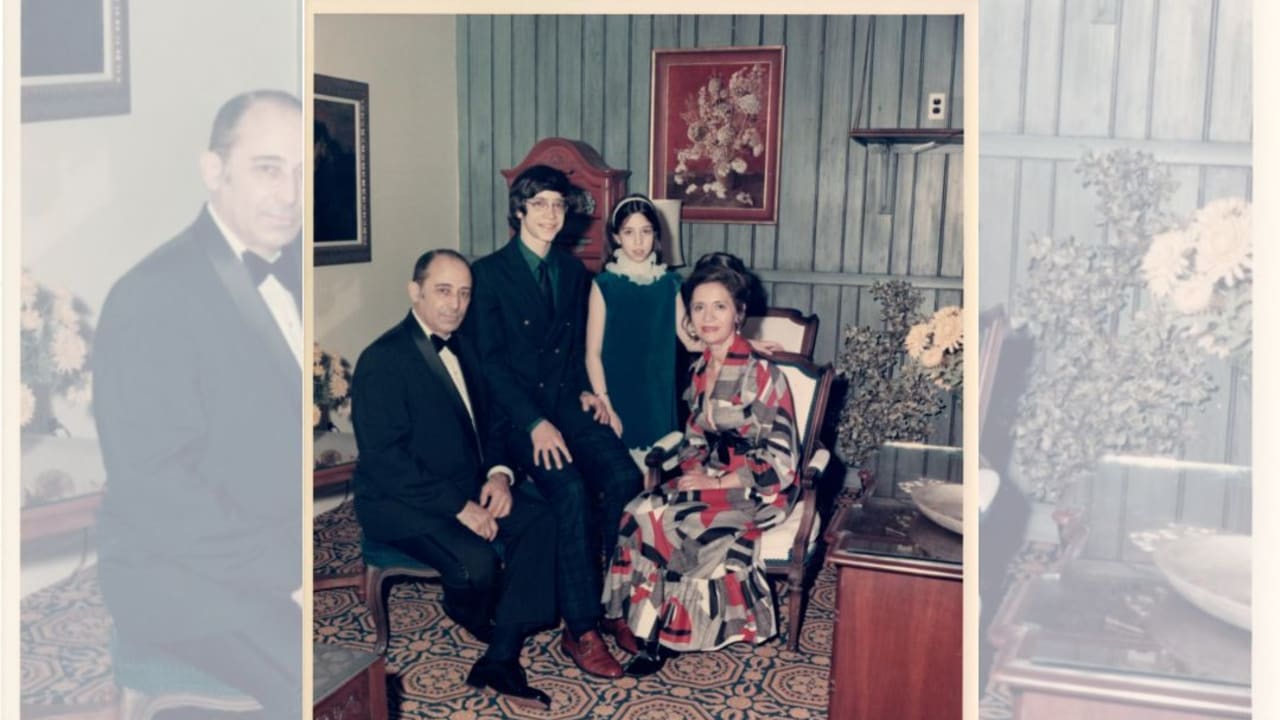
ByDAVID GEFFENJUNE 28, 2026 00:49Hard for me to believe that 50 years have passed since I, my wife Rita of blessed memory, and my children celebrated the US Bicentennial.First, we felt the joy at Rodney Square in Wilmington, Delaware, named for Caesar Rodney, who rode to Philadelphia to bring the news that Delaware was the first of the 13 states to accept the US Constitution.Then, in Philadelphia, we were standing at the Liberty Bell and waving our red, white, and blue flags as the wonderful parade moved by us. There we cheered, along with an enormous crowd, as the colorful Bicentennial parade with floats for the 13 original states captured our imagination with their ingenuity.For the five of us, that July 4 night was punctuated by bursting, bright fireworks, which we watched each new round of visual beauty as we lay in a field in Delaware. Finally, around midnight, we returned to our home in Wilmington, where we had lived before making aliyah.Being alive to celebrate this 250th American birthday, I remember and value those American Jews, especially one in Oklahoma, an Israeli whose wife was a Native American of the Apache tribe. On this July 4, it’s most important to recall individuals whom we met personally and who shared their lives with us.COLONIAL SILVERSMITH Myer Myers: Ingenious promotion. (credit: COURTESY DAVID GEFFEN)George and Halina Wind Preston of Delaware, USAWhen we lived in Delaware before making aliyah, we had the pleasure of visiting Winterthur on many occasions. This 250-room home, owned by a wealthy du Pont, had original American Colonial furniture and other objects of that period. There is a small painting of Dr. John de Sequeyra, who was an 18th-century Italian-born Jewish physician who practiced in and around Williamsburg, Virginia. He was noted for bringing the tomato to the US, forbidden until the 19th century.Only as a teenager did I learn about the 6 million Jews being murdered by the Nazis. As late as my thirties, my ignorance of the Holocaust was unusual for someone my age. In Wilmington, I met two individuals, Holocaust survivors, whose words touched me, and they have never been forgotten.One, Halina Wind Preston, was the daughter of a pious watchmaker from the Carpathian Mountains of pre-war Poland. To survive, Halina hid for 14 months in 1943-1944 with nine other Jews in the sewers of what is now Lviv, Ukraine. An Oscar-nominated film by Agnieszka Holland, In Darkness, movingly describes that ordeal.When Halina came to the US from a DP camp after the war, she enrolled at the Teachers Institute of the Jewish Theological Seminary of America. She traveled throughout the US, visiting 30 cities to tell her personal story. At one stop in December 1949, she met her husband, George, a survivor of Auschwitz-Birkenau. They married in 1951 and moved to Wilmington, Delaware.When our family moved to Delaware in 1970, Halina was a beloved educator and the eloquent spokeswoman for the victims and survivors of the Holocaust. In 1977, she traveled to Jerusalem to present testimony about those who aided their group to survive. Leopold Socha, Stefan Wroblewski, and their wives were then designated by Yad Vashem as Righteous Among the Nations. Before her death, Halina established the “Garden of the Righteous” at the Jewish Community Center in Wilmington.Her husband, George Preston of Rivne, Ukraine, was a French-educated engineer. He survived Auschwitz-Birkenau as a slave laborer for the Siemens company. He testified at the Auschwitz trials in Frankfurt in March 1965, and his testimony helped to convict a kapo, Emil Bednarek, of murder. George was among the first Jews hired as an engineer by the DuPont company. His vast knowledge helped the company save over $22 million during the half-century he was employed there. Following his retirement, he volunteered to speak about the Holocaust in many communities in the northeastern United States.The American Heritage HaggadahFrom the 20th century, I return to an illustration of a Seder in New York in 1889 in the American Hebrew weekly. There is the image of the entire Seder table with all those participating, rich Jews in their finery. Then a surprise occurs. As one of the servants stands, having opened the door for Elijah, the picture of George Washington can be seen hanging on the wall.Ambassador Stuart Eizenstat, in his introduction to my American Heritage Haggadah, where that illustration first appeared anew, wrote. “In 1889, on the centennial of George Washington’s inauguration as America’s first president, the George Washington Seder was held. During that Centennial year, free pictures of Washington were given for purchase of ten pounds of matzah.” As seen in the illustration in the American Heritage Haggadah, “our first president is shown near the door awaiting Elijah’s arrival.” Eizenstat concludes, “What a wonderful integration of Americana with Judaica!”In 1991 and 1992, as I did the research for my American Heritage Haggadah, I found a very important drawing of a Seder scene showing how Jews celebrated Passover before the Civil War.In the picture in the living room, we see adults and a youngster in a high chair celebrating the Seder. This Passover scene is part of a larger drawing titled The Rites and Worships of the Israelites, executed in 1859 in New York.At this pre-Civil War Seder, the father wears his high hat reminiscent of the Orthodox German Jews who had migrated to America. The child sits in a high chair, prevalent in the US at that period. The father is explaining the Exodus from Egypt as the Torah commands us to do.The father looks like Abraham Lincoln, as do all the men. It appears that was the dress code for that period. The Hebrew is written by hand, amateurish, but can be read.Turning to early 20th-century American Jews, I found a drawing of Passover Eve on the East Side in The New York Times. It is filled with merchants, men, women, and children, all their faces recognizable.In the 1880s, the Jewish community in Wilmington, Delaware, consisted of 25 families. On the main thoroughfare of Market Street, a large number of the existing stores were owned by Jews. One of the leading merchants was Myer Meyers, who used ingenuity to promote his products in a city of 10,000 people.Once, he was about to release a Montgolfière balloon to climb aloft. He announced in the Every Evening newspaper that on Wednesday of that week, a balloon would lift off with a gift certificate awarding a suit for men and a dress for women. The balloon rose – many of the citizens of the city trailed it until the balloon landed. One person was the victor, bringing the certificate to Meyers’s store to receive the award. About a hundred people, the local newspaper noted, came that day to make purchases at the store.Meyers is well known to me; I possess an original trading card with his picture. A number of his cards are known, even one Meyers printed offering a ball and bat for every purchase.In over a week from now, it will be July 4, 2026: The 250th birthday of the US is about to arrive. I recall the faces of American Jews from a number of states. And each time I think of them, it is a real treat.Congratulations, USA. ■In honor of the marriage of Odelly, daughter of Dr. Francoise and Dr. Elisha Ouzan, and Eylon, son of Azriel and Rina Outmi Damari.Follow us on Google
As USA celebrates its 250th, we recall the faces of notable American Jews | The Jerusalem Post
On this July 4, it’s most important to recall individuals whom we met personally and who shared their lives with us.
1,230 words~6 min read