No nation in history has enjoyed the longevity, prosperity, and freedom that the United States has achieved over the past two and a half centuries. From our founding to the present day, generations of the public have worked to preserve a remarkable experiment in self-government built on liberty, opportunity, and the belief that all people are created equal. This is certainly something to celebrate.But milestone anniversaries invite reflection, and the fact is, we’re failing to teach our children about their American heritage. You cannot love what you do not know. As we celebrate America’s semiquincentennial, we have an opportunity — and a responsibility — to renew our commitment to civic education and to teach the next generation what it means to be an American.
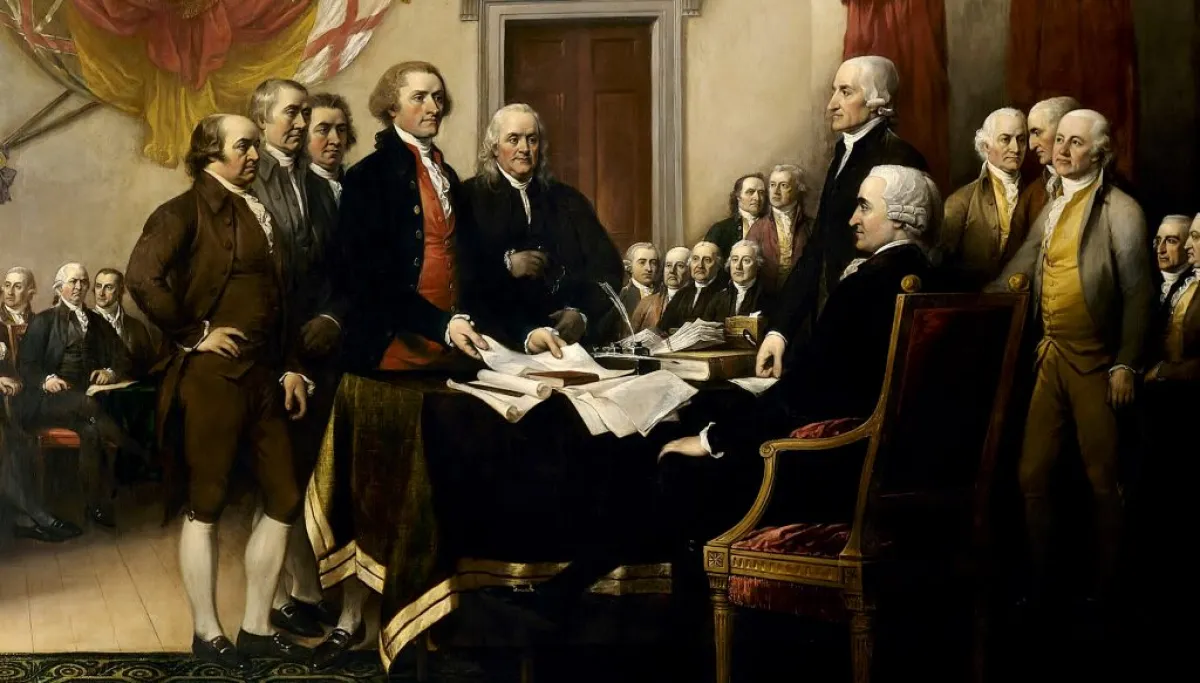
TRUMP MUST MANDATE HIGH SCHOOL ECONOMICS TO STOP SOCIALISMToday, many young people are graduating without a basic understanding of those foundations. Recent surveys show that civic knowledge is alarmingly low, while pride in being American has steadily declined, particularly among younger generations. Civics was once a staple of U.S. schooling. As it has disappeared from classrooms, so has civic pride. According to a recent Gallup poll, just 58% of Americans say they’re proud to be American, down from 87% in 2001, and just 41% among Gen Z.Ignorance also threatens our rights and the very fabric of our country. A republic can’t survive if its citizens don’t understand it. That’s the situation we are facing today. Fewer than 1 in 10 Americans can name all five First Amendment freedoms, and nearly a third can’t name the three branches of government. Even more alarming, almost 4 in 10 college students now say physical violence can be justified to shut down speech they don’t like. You cannot defend rights you don’t even know you have.For much of our nation’s history, civics education helped students understand not only how our government functions, but why our constitutional system has endured. Students learned about the Declaration of Independence, the Constitution, the Bill of Rights, and the individuals whose courage and sacrifice helped secure our freedoms.The decline in civic knowledge should concern all of us. A healthy republic depends on citizens who know their rights, understand their responsibilities, and appreciate the principles that have made the U.S. a beacon of freedom for people around the world.The good news is that this challenge is entirely within our power to address. America’s 250th birthday provides the perfect opportunity for families, educators, community leaders, and policymakers to recommit themselves to teaching our history, our founding principles, and the responsibilities of citizenship.Like faith, civics begins in the home. It is passed from one generation to the next through conversation, example, and shared experiences. Parents can use this anniversary year to tell their family’s American story, read the Declaration of Independence together, visit historic sites, attend community events, or discuss the freedoms that the public often takes for granted. That’s exactly what we do in our home.My husband and I teach our sons love of country by attending events honoring veterans and celebrating the U.S.’s founding and independence. We ensure that their schools are teaching a complete history of our country, and the history of the world that makes clear that America is the greatest country man has ever known. As a family, we visit historical sites, share stories of our ancestors, and discuss the philosophies that underpin Western civilization.Schools have an equally important role to play. Civic education should once again be treated as an essential component of a well-rounded education. Students should graduate with a strong understanding of our nation’s history, governing institutions, and constitutional freedoms — not merely because these subjects appear on a test, but because informed citizenship is indispensable to preserving our republic.In Florida, under Gov. Ron DeSantis’s (R-FL) leadership, we put civics back at the center of K-12 education, with standards and benchmarks for every grade, required courses, an exam worth 30% of the grade, and a Civic Literacy Exam in high school and college. We support our teachers through the Civics Seal of Excellence Endorsement, a 55-hour course rooted in American history and the founding principles — every available seat was filled in under a minute this January, with thousands more waiting to enroll!Civics and debate participation have jumped from fewer than 60 teams to over 350 statewide. Florida proved civic pride can be reenergized. There is no reason other states can’t do the same.America’s founders entrusted each generation with the responsibility of preserving the blessings of liberty. That responsibility now belongs to us.As we celebrate 250 years of American independence, let us seize this moment not merely to look back with gratitude, but to look forward with purpose. By renewing our commitment to civic education, we can ensure that the next generation understands the principles that built this nation, cherishes the freedoms they have inherited, and remains prepared to preserve them for generations to come.TO FIGHT CIVIC IGNORANCE, DON’T JUST TEACH STUDENTS. TEST THEMThe best way to honor the country’s first 250 years is to prepare our children for the next 250.Know America. Love America. Pass it on.Erika Donalds is the founder of the Education Freedom Foundation.