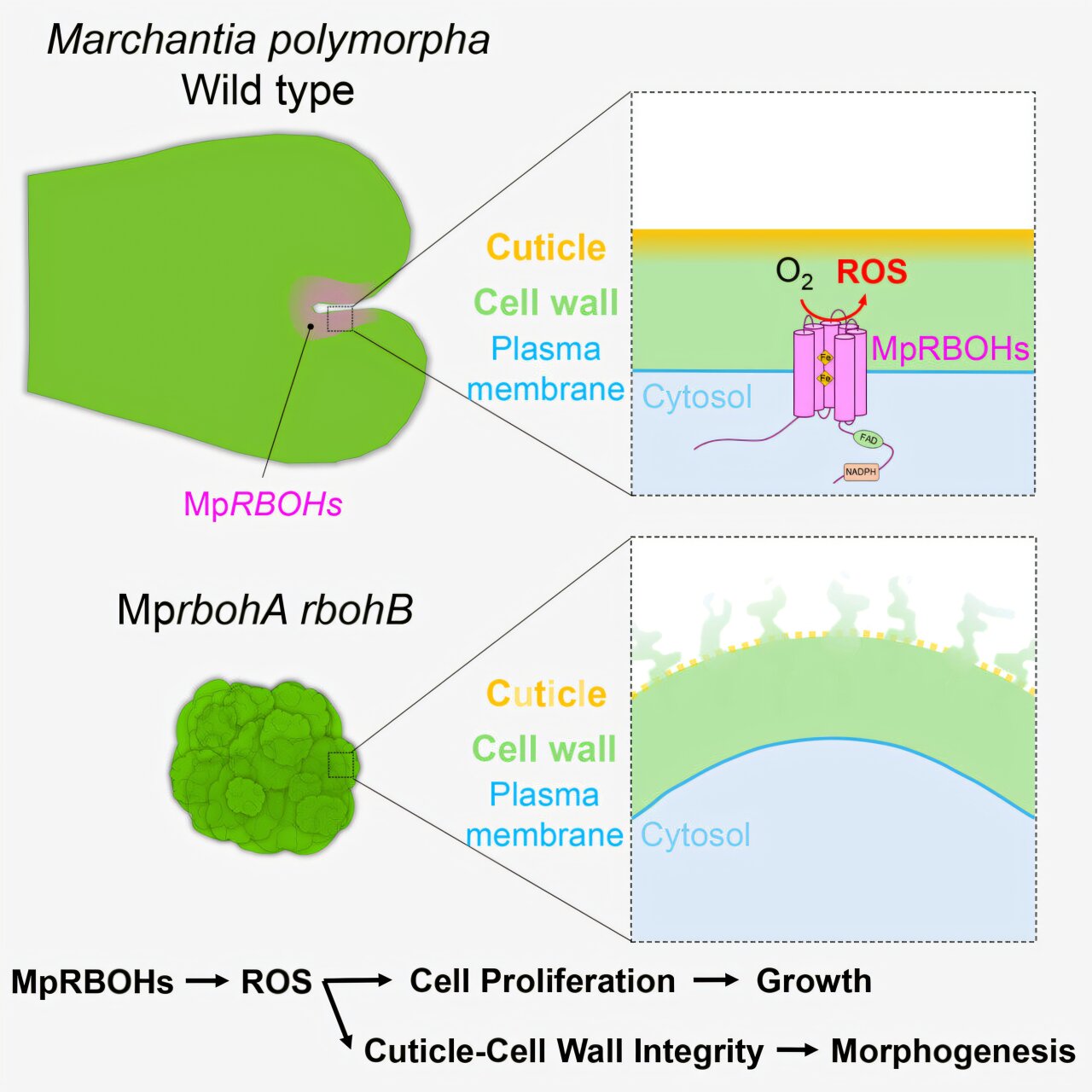
Graphical abstract. Credit: Current Biology (2026). DOI: 10.1016/j.cub.2026.04.016
Reactive oxygen species (ROS) produced naturally during cellular metabolism often cause oxidative damage to cells. However, these molecules also play an important role in normal cellular signaling. While ROS are established as essential signaling molecules in various organisms, their precise role in basic plant development and morphogenesis remains unclear.
A family of enzymes known as NADPH oxidases (NOXs) generates ROS that act as physiologically important signaling molecules. In plants, the NOX enzymes are known as respiratory burst oxidase homologs (RBOHs), which are implicated in diverse physiological processes. However, their contribution to plant development, including cell proliferation and ordered morphogenesis, has remained insufficiently understood.
To address this gap, a team of researchers led by Professor Kazuyuki Kuchitsu from the Department of Applied Biological Science at Tokyo University of Science (TUS) in Japan conducted a study.
The study, published in Current Biology, also highlighted the liverwort model, Marchantia polymorpha, to understand the role of RBOHs in plant development and morphogenesis.