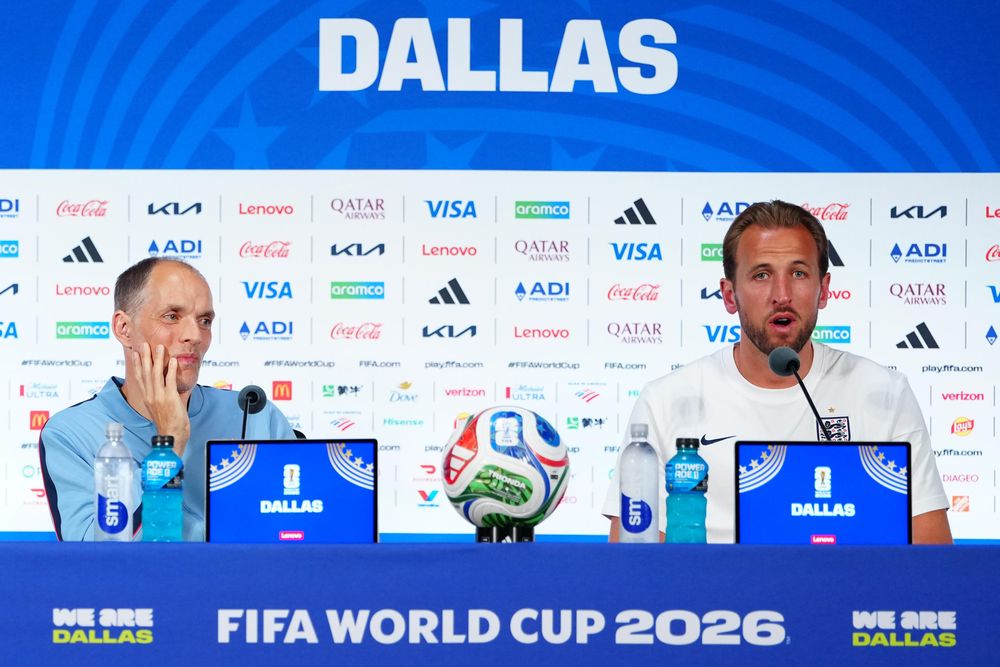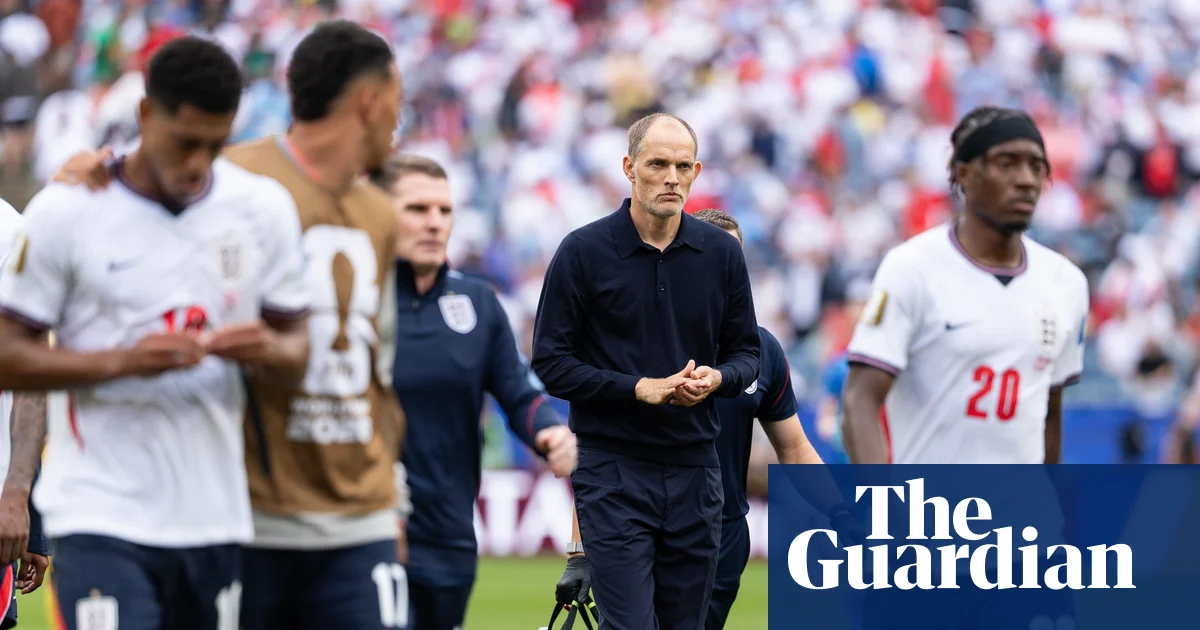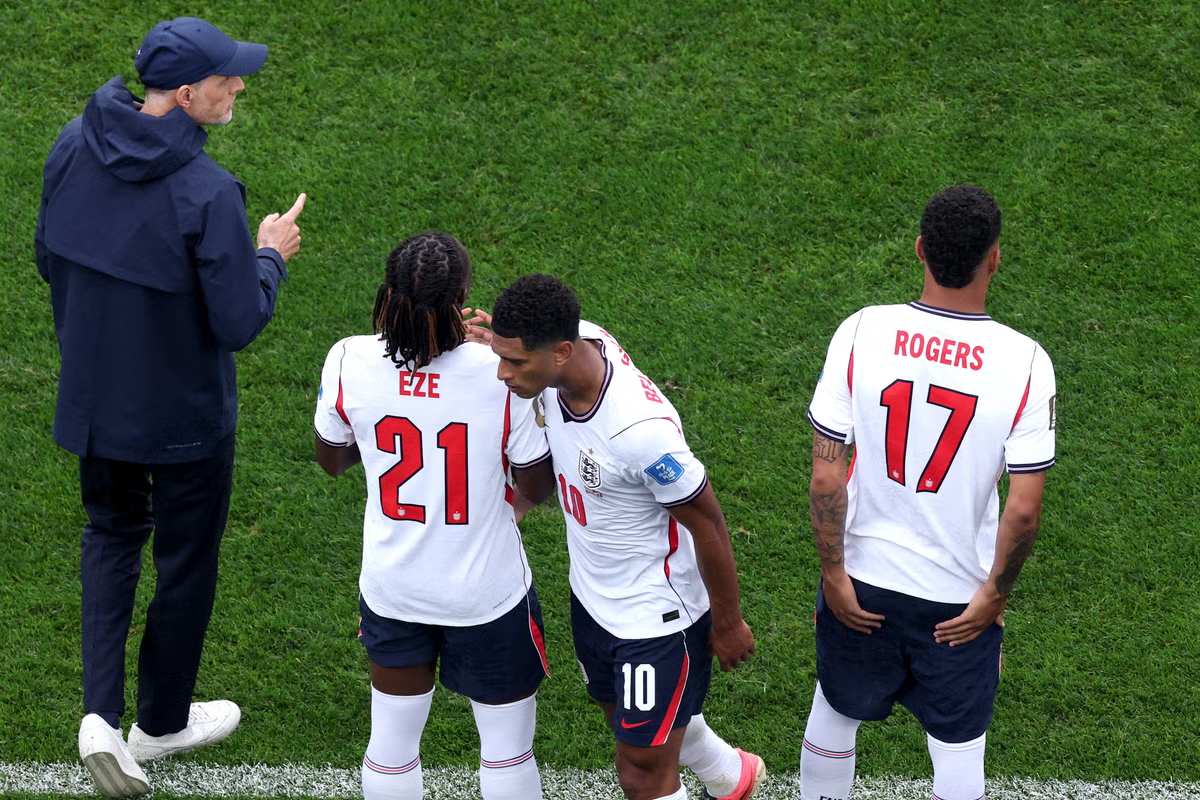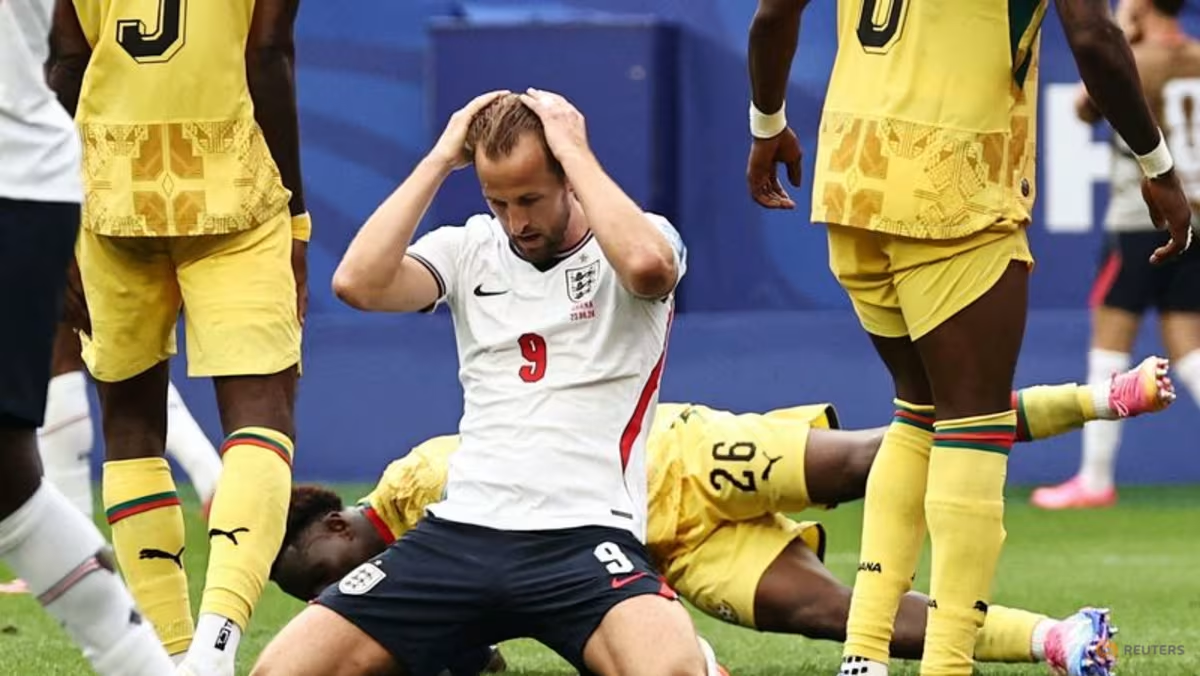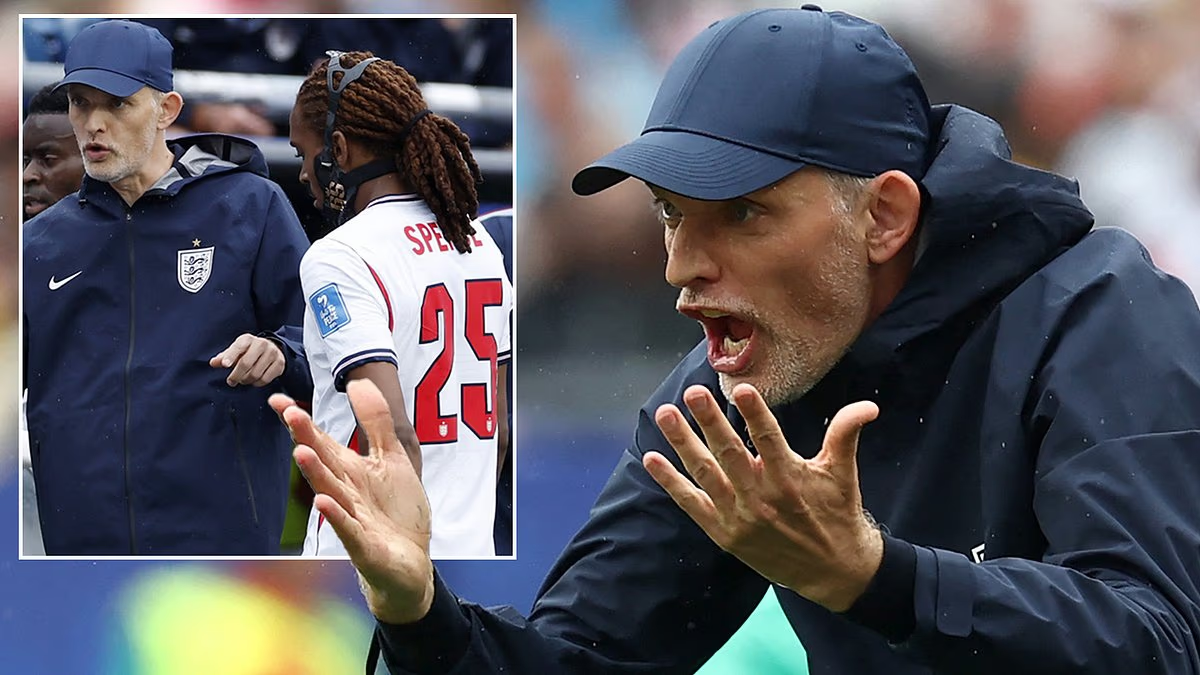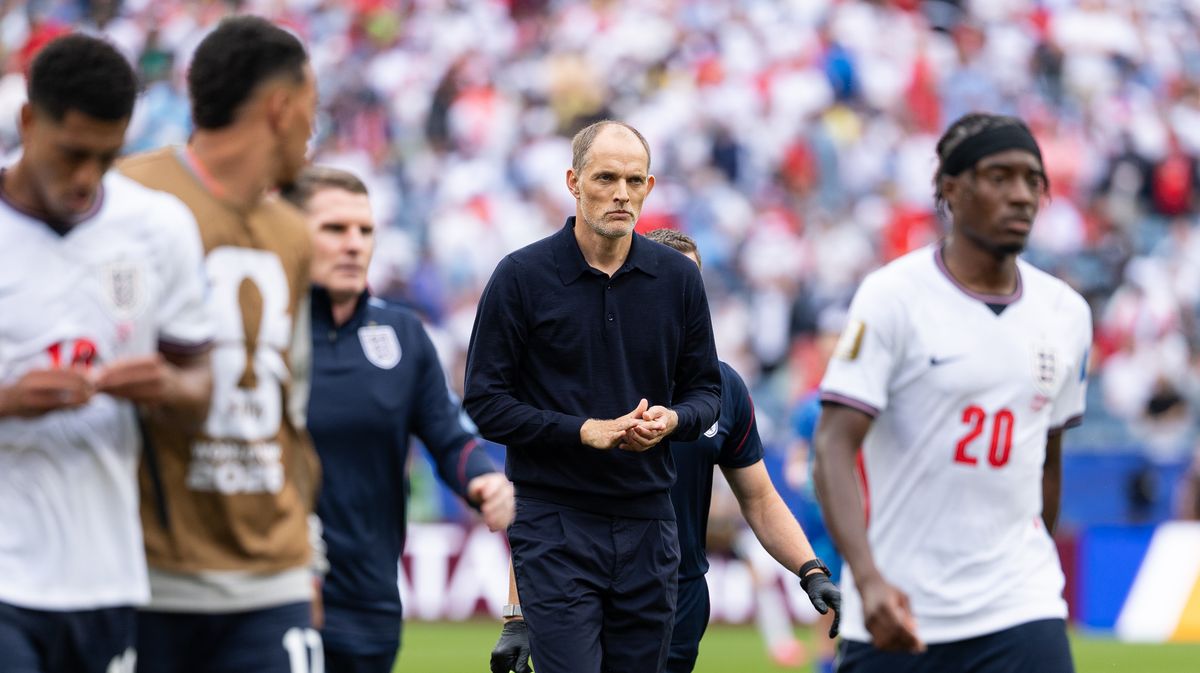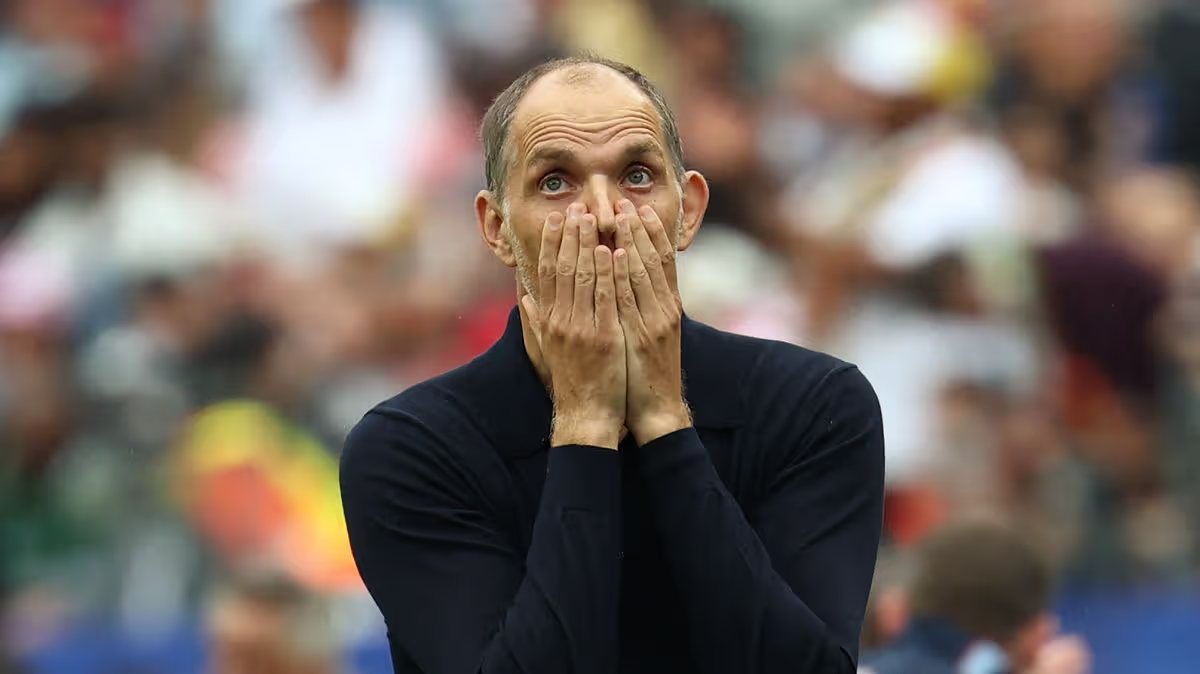
Thomas Tuchel's bold selection decisions have come under the microscope after England struggled to break a stubborn Ghana side down at the World Cup08:30, 27 Jun 2026There was a moment when it felt like the heavy, suffocating shackles of tournament football had finally been blasted off this England team. The 4-2 dismantling of Croatia wasn't simply a brilliant opening win but a rare, liberating glimpse of what happens when the Three Lions are finally cut loose at a World Cup.For once, they looked entirely free - unburdened by fear, passing with swagger, and expressing themselves under the American sun. The nation nodded in unison: "We're actually pretty good... we could actually do this."But against Ghana on Tuesday night, that intoxicating optimism was abruptly replaced by a gruelling, 90-minute toothache. The African side ground out a richly-deserved 0-0 draw by throwing 11 men behind the ball, clogging the centre of the pitch with a physical, hyper-compact low block, and daring Thomas Tuchel's side to do something about it.Deprived of the open green pastures they enjoyed against Croatia, England immediately reverted to the dreaded tactical horseshoe. Pass to the left, recycle it backward, pass to the right, and repeat - a sad, toothless U-shape around the penalty area that offered plenty of geometry but absolutely zero penetration.JOIN US ON FACEBOOK! Latest news, analysis and much more on Mirror Football's Facebook pageNoni Madueke and Anthony Gordon, tasked with providing the width, looked entirely lost. They're fine players, but they're not top bracket 1v1 wingers. When the room is stripped away, their tricks vanish.What England actually had, as they endlessly recirculated the ball around Ghana's defensive perimeter like a deeply depressed Roomba endlessly bumping against the skirting board, was an abundance of opportunities for half-space magic. Those teasing, intuitive moments of pure ingenuity that unlock tight spaces. The exact kind of unpredictability that makes Harry Kane and Jude Bellingham lick their lips.But the service never arrived. Instead, Kane and Bellingham spent the evening marooned on the last man, starving for a piece of ingenuity that was never going to come. And this is where Tuchel's pristine tactical blueprint begins to show its cracks.I respect Tuchel for his bravery. I respect a manager who has the stones to pick a squad based on a distinct identity - in his case, power, pace, and overwhelming athleticism. But the entire purpose of a 26-man squad is that it gives you a toolbox for every imaginable scenario. It is a safety valve for when things get gunged up in the middle, as they inevitably do against weaker opposition.Instead, Tuchel has built a glittering tactical prison populated entirely by athletic clones. When Jude Bellingham is having an off-day or finding himself suffocated by three holding midfielders, what is Tuchel's grand solution? He looks to the bench and swaps him for Morgan Rogers or Eberechi Eze.With all due respect, what on earth is the point of that? It's like swapping a Rolex for a slightly less expensive Rolex. Rogers and Eze are highly talented boys, but they share the exact same profile as Bellingham - just slightly less brilliant at execution. They want to power through challenges, use their physicality, and burst into space. But when there is no space to burst into, they're neutralised.England didn't need more muscle against Ghana. They needed a lock-picker. They needed a maverick. They needed Cole Palmer.Now, I know the counter-arguments. Palmer hasn't had a vintage season for Chelsea. He's been injured, inconsistent and on paper, he didn't strictly "deserve" a seat on the plane. But individual logic goes out the window at a World Cup.Even in a stop-start season, Palmer possesses something that cannot be taught: pizzazz. An unpredictable, ice-cold arrogance that makes opposing defenders sweat. He is the ultimate agent of chaos.The same argument can be made for Trent Alexander-Arnold. Yes, we all know why Tuchel - and Gareth Southgate before him - is terrified of him. The man defends like he's trying to remember if he left the oven on at home. In the knockout rounds of a World Cup, that defensive liability is a flashing red light.But Alexander-Arnold can bend a football around a corner from 40 yards out. He can deliver those half-space chips with microscopic precision. Leaving both him and Palmer at home feels less like pragmatism and more like dogmatic stubbornness.But leaving Palmer out, in particular, is a certified gaffe. Because while you can understand the caution behind omitting a defensive liability like Trent, there is absolutely no justification for the way Tuchel structured the rest of his squad.Right now, Dan Burn is sitting on the England bench in the stifling US heat, likely twiddling his very large thumbs. He is one of six (yes, six) out-and-out centre-backs in this squad, alongside Marc Guehi, Ezri Konsa, John Stones, Jarell Quansah and Trevoh Chalobah. And that's before you factor in Reece James and Declan Rice, both of whom could fill in there in a pinch.Burn has a 99 per cent chance of not kicking a ball in this tournament. He is a defensive security blanket for a house that already has triple-glazed windows and a state-of-the-art alarm system. Why waste a precious tournament spot on a redundant sixth-choice defender when a game-changer like Palmer could have been tucked safely onto the plane?In modern tournament football - and particularly in the punishing furnace of a North American summer - matches are no longer won by 11 men; they're decided by the 15 or 16 players who actually end up getting a run out over the course of 90 gruelling minutes. Attacking substitutions are mandatory, forward lines get refreshed constantly, and to be intentionally conservative with your offensive profiles in this climate is a form of managerial hubris.Had Palmer been sitting on that bench on Tuesday night, he would have been the automatic, glaring antidote to Ghana's steely bus-parking.He is a player who actively thrives in tight spaces. Where others see a terrifying thicket of opposing shins, Palmer hallucinates passing lanes that often don't exist on a whiteboard, fabricating a yard of space out of thin air with nothing more than a body feint and a look of supreme indifference. He would have occupied those half-spaces, dropped a shoulder, demanded the ball under pressure, and conjured the one-off bit of magic required to break the deadlock.But he wasn't there. Tuchel didn't just keep Palmer's rare brand of wizardry out of his starting line-up; he locked it out of the tournament entirely. When the German looked at his dugout for a spark, he didn't find a tactical alternative. He just saw a hall of athletic mirrors.Which leaves England marching into Saturday's clash with Panama carrying the exact same terrifying vulnerability: a complete bankruptcy of a Plan B.If you are a mid-tier international manager looking at England right now, the blueprint to stop them is laughably simple: drop deep, clog the middle, and watch them horseshoe themselves to death.Because let's be brutal: Marcus Rashford, Anthony Gordon and Noni Madueke are straight-line sprinters, not surgeons. They're transition monsters who need vast, open prairies to exploit. Force them into a phone booth, and their lack of elite, tight-space subtlety is instantly exposed. They simply aren't good enough to unlock a locked door.Bukayo Saka has the skill to do it, but not when he's nursing an Achilles injury. And while Harry Kane has beautifully evolved into a magnificent technical playmaker, he is a quarterback rather than a crowbar. He is a high-IQ architect who needs the ball at his feet to pull the strings, meaning he is completely unsuited to acting as a bullish, penalty-box battering ram when he's starved of service and swallowed up by a crowd.There is a distinct lack of guile in the squad, which could cost England dearly - and it isn't just a temporary group-stage hiccup.In this bloated, expanded 48-team World Cup, the route to the final has mutated into a long, ugly war of attrition. England are practically guaranteed to collide with the exact same brick wall in the Round of 32 and the Last 16, coming up against deeply stubborn, hyper-disciplined, unglamorous opposition who have absolutely zero interest in entertaining the masses.Those taxing knockout ties are rarely settled by structural discipline or tactical perfection. They are typically cracked open by moments of pure, unscripted individual genius.If this all feels horribly familiar, that's because we've seen this exact psychodrama play out before. Two summers ago in Germany, Gareth Southgate fell victim to the exact same naivety. He kept Cole Palmer firmly under lock and key for the vast majority of Euro 2024, watching his side turn in turgid, uninspired performances while the country's most natural game-changer sat on the bench.It was naive, it was frustrating, and it might have even cost England the trophy. But as stubborn as Southgate was, he at least had the common sense to put the fire extinguisher in the room. He had the option to break the glass when things got desperate.Tuchel, remarkably, has looked at Southgate's gravest mistake and decided to go one step further. He hasn't just left the fire extinguisher on the bench; he's left it sitting in west London.The ultimate irony, of course, is that Tuchel's rigidity won't be exposed when England finally meet a footballing heavyweight. The Frances, Argentinas and Brazils of this world will come out to play, leaving the exact kind of open space that Bellingham and his athletic supporting cast will ruthlessly exploit.Article continues belowBut international tournaments don't start at the semi-finals. You have to survive the trenches first. Southgate flew home from Berlin knowing he had brutally underused his greatest wild card. If Tuchel's muscle-bound machine gets choked out by a well-drilled low block in the coming weeks, the German won't even have a wild card to look back on. He'll just be left staring at a bench full of redundant centre-backs and straight-line sprinters.Tuchel has painted a magnificent, physically imposing masterpiece - but by leaving Cole Palmer at home, he forgot to bring the only brush capable of painting outside the lines.
Tuchel is repeating Southgate's fatal mistake – and this time there's no way out
Thomas Tuchel's bold selection decisions have come under the microscope after England struggled to break a stubborn Ghana side down at the World Cup
1,678 words~8 min read