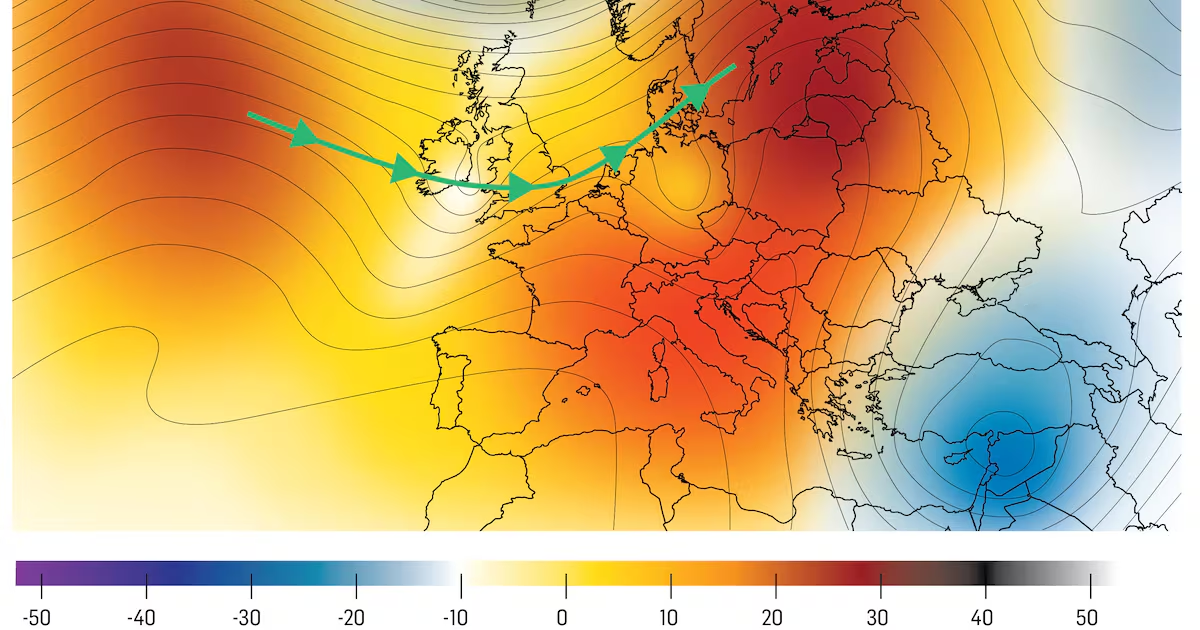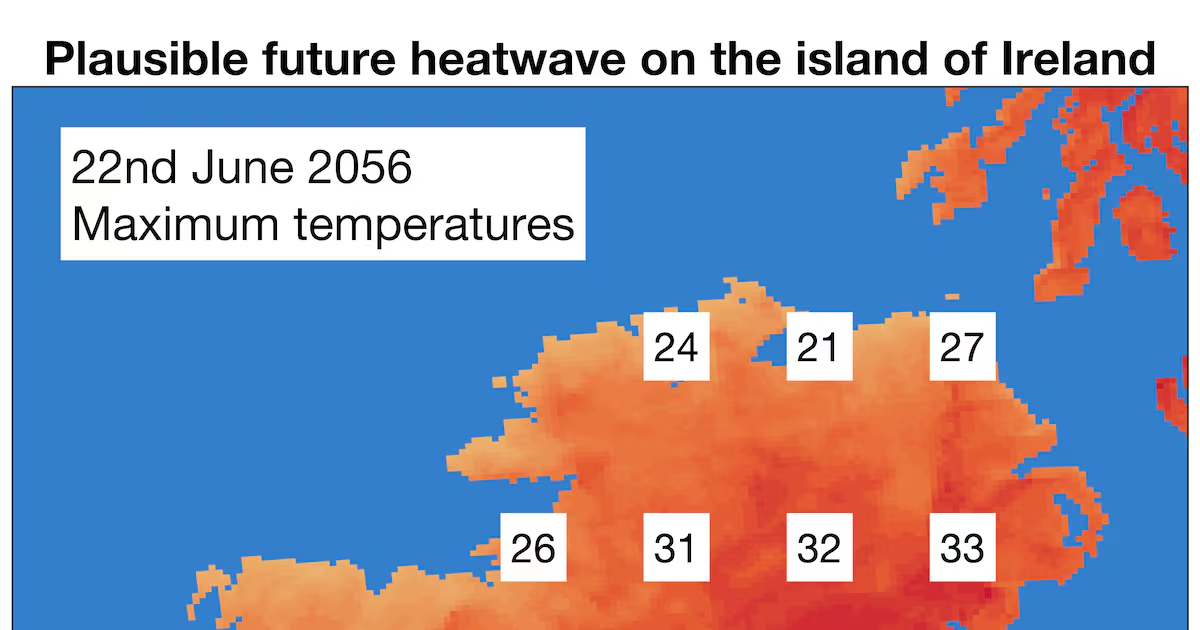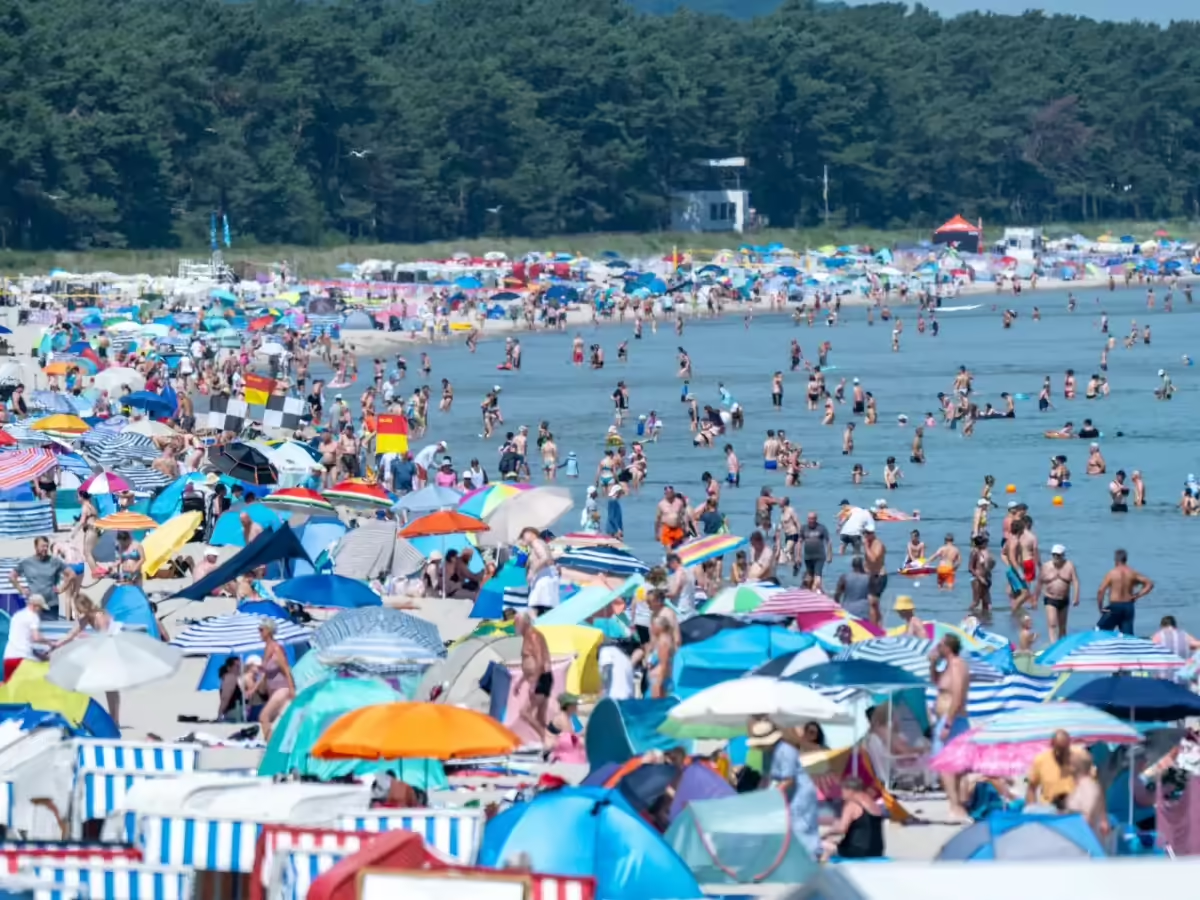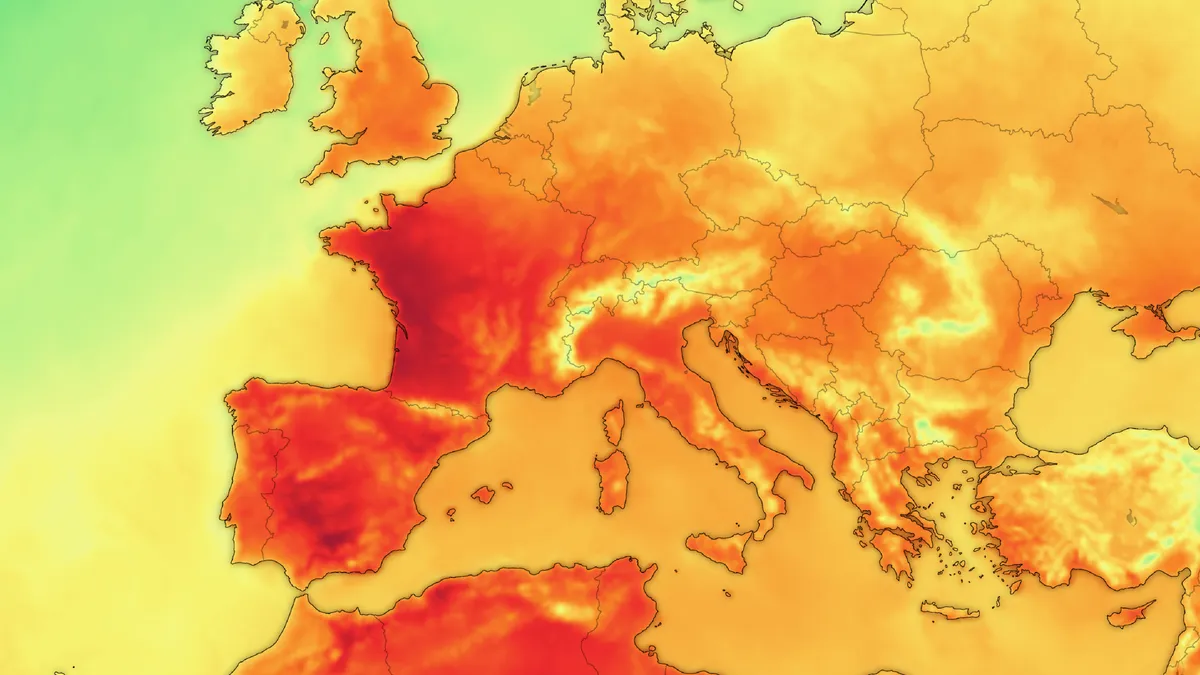
We know it is a hot summer in Ireland when the national airwaves start debating the merits and best places to buy a 99 ice cream. Whatever the origins of the name, the number 99 could equally refer to the temperature in Fahrenheit that much of Europe has been experiencing this week. 99 degrees Fahrenheit corresponds to just over 37 Celsius, a value almost reached in the UK, which broke its all-time record temperature for June which has stood for more than half a century. Similarly values of more than 44 degrees experienced in France produced its hottest day and hottest night since records began. Such long-term records are normally broken by a small fraction of a degree. The extensive shattering of them is indicative of a climate supercharged by human interference with the atmosphere. The latest studies indicate that we are now experiencing a “topping up” on heatwave temperatures of between two and four degrees. In Ireland we have now experienced two hot spells with temperatures of about 30 degrees during the last four weeks. On Thursday, the temperature in Athenry, Co Galway reached 32.1 degrees, nudging ever closer to the national record of 33.3 degrees, which has stood since 1887. As land and ocean warm in the world’s fastest-warming continent, the era of summers frequently in excess of 30 degrees must be accepted as imminent – and plans to adapt to this must be considered urgent.What is causing this week’s intense heat over Europe?The huge anticyclone parked over Europe this week has sent air from high up in the atmosphere spiralling down to the surface, where it is compressed and heated, rather like the warm air coming out of a bicycle pump. This spreads out and forms a lid on escaping air all around. This is the so-called heat dome, which grows larger day by day until it is swept away by a more powerful contender from the Atlantic. As the ground dries out beneath it, the lack of moisture adds to the warming effect and city climates further enhance the temperatures. The thundery downpours some places experienced on Friday are another manifestation of a warmer world that we will have to cope with – more intense summer short-term rainfall hazards.Heat-related deaths are now the main cause of climate-extreme-related deaths in EuropeNot all heat domes are identical, and this week’s event was different from previous hot spells in one important way. Analysis of the trajectories of the air entering the dome showed a significant component coming from the Atlantic, then getting mixed up with the air originating in North Africa. This oceanic component meant the hot spell was very humid and this probably will cause the death toll to be elevated significantly. High humidity during the short solstice nights made for very uncomfortable sleeping for many people. This is when the body recovers from the exertions of the previous day and if it can’t fully recover, is under stress from the next morning. Excessive heat can overwhelm the natural cooling systems of our bodies. By prioritising heat loss through sweating, additional stress is placed on the heart and kidneys to carry out their other functions. As such, populations compromised by weaker-than-normal physiology in these areas, such as the very young and elderly, become more vulnerable to serious harm. Heat-related deaths are now the main cause of climate-extreme-related deaths in Europe. The French health minister, Stéphanie Rist, said this week that the Paris ambulance service reported four times more cardiac arrests than normal over a 24-hour period. Young people were also suffering cardiac arrests.Of 24,400 heat-related deaths in European cities last year, climate change was estimated to be responsible for 16,500, or 68 per cent. Based on previous work on Irish heatwaves in which I had some involvement, I would expect more than 100 Irish people to have died prematurely this week from climate change-related heat impacts. When 15,000 people died in Paris during a heatwave in 2003 the French government put in place a detailed programme to protect its citizens. In addition to co-ordinating warning systems across several government departments, actions to provide cool refuges in places such as museums and churches were planned and put into practice and drinking alcohol in public places was temporarily banned to avoid overwhelming hospitals this week. Policies of restoring fountains, planting trees and generally greening city centres have also been part of the adaptation process from which Irish local authorities can learn. The country’s four climate action regional offices are ready to assist with this, but require greater commitment from Government to fulfil their mandate.In fact, the commitment of Government to tackle climate change has faltered. Ireland’s imminent leadership role in climate diplomacy, which starts with the European Union council presidency next week, is not something to be anticipated with much confidence based on our long-term performance. While our EU partners have achieved average emission reductions of 40 per cent since 1990, we have managed a measly 5 per cent. Three Bills are to be rushed through the Oireachtas in the next couple of weeks before the summer recess: removing the Dublin Airport cap; facilitating a gas terminal in Kerry; and fast-tracking certain infrastructure projects. All will increase greenhouse gas emissions yet are being specifically exempted from compliance with our Climate Act. This heat dome was expected to fizzle out going into the weekend, as the anticyclone moved east and the jet stream resumed a more direct southerly trajectory across Ireland. But it is the jet stream that holds the key to whether such extreme heat spells will become more frequent and increasingly severe in the years ahead. As the Arctic warms four times more quickly than the planet as a whole, the temperature gradient with the equator that drives the jet stream weakens. Some research has linked this to increased heat dome formation. A worrying signal of this potential linkage is the decline in the Arctic summer sea ice which this week hit the lowest level for this time of year for 45 years. On average, Arctic sea ice is now declining by an area equivalent to a country the size of Austria each year. Returning to the ice creams, “When it melts, it’s ruined” was a famous ice cream company’s slogan used to refer both to their fragile ice cream structure and as a rallying cry for climate justice. We would do well to remember this slogan and act on this week’s wake-up call.
John Sweeney: Climate records are normally broken slowly. Now extremes are being topped up by 4 degrees
Jet stream holds key to whether extreme heat will become more frequent and severe
1,075 words~5 min read