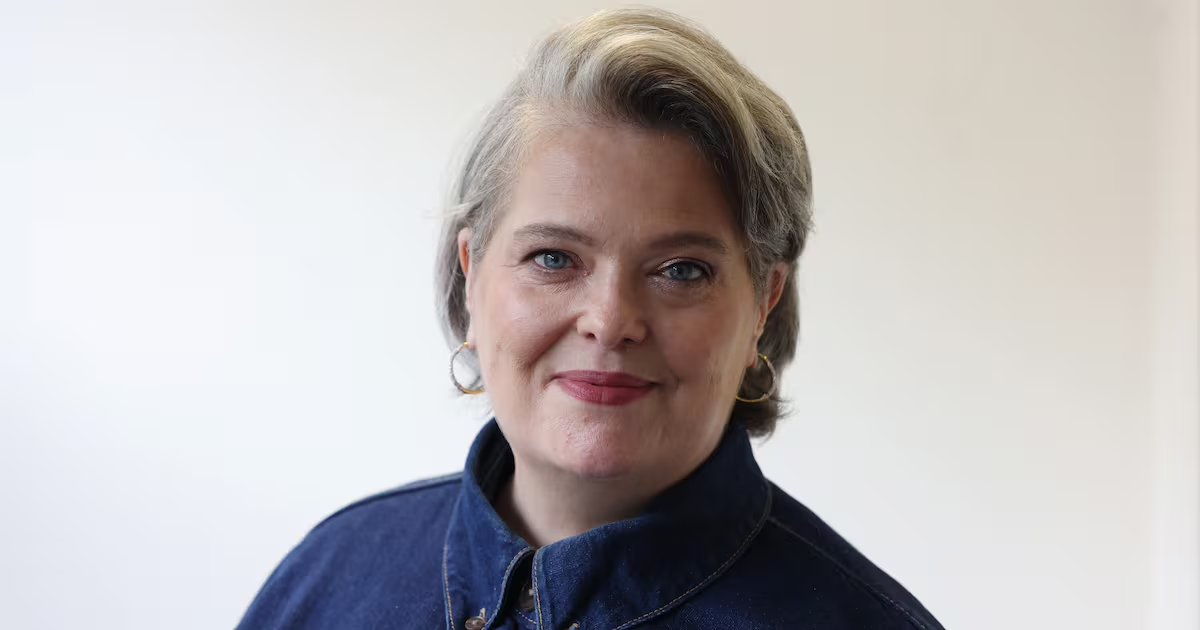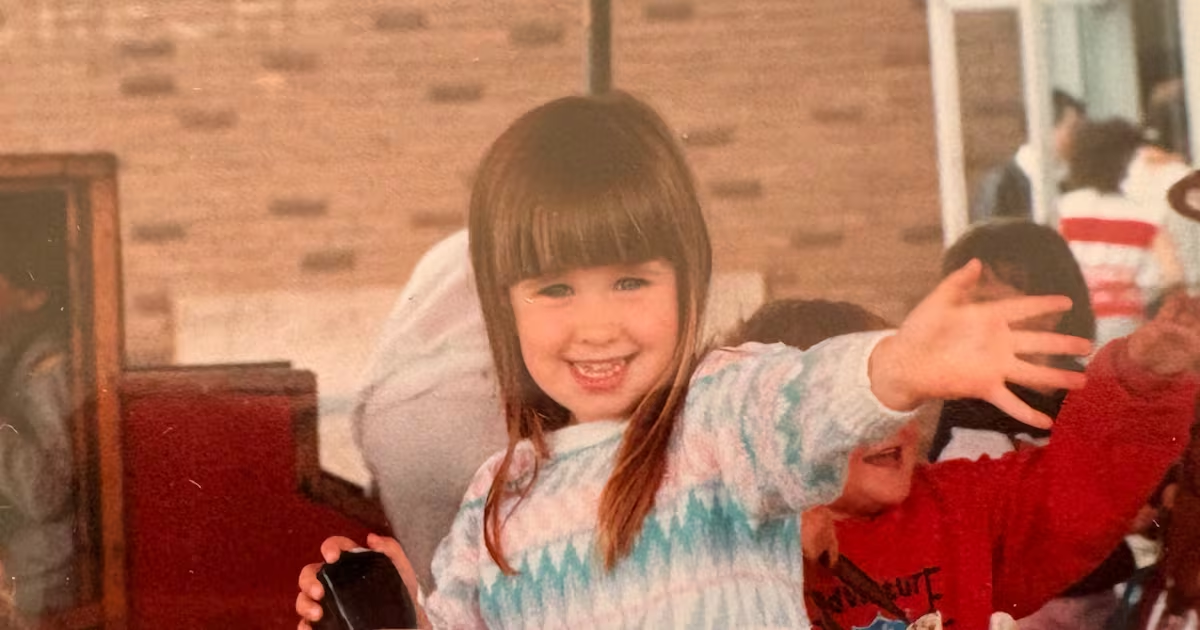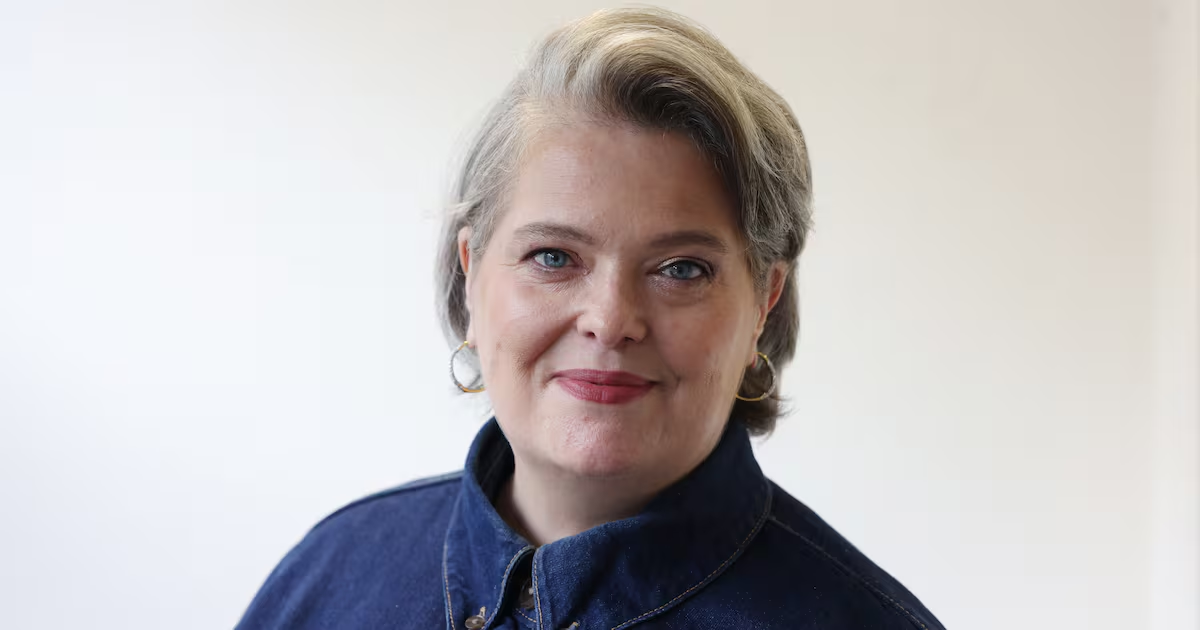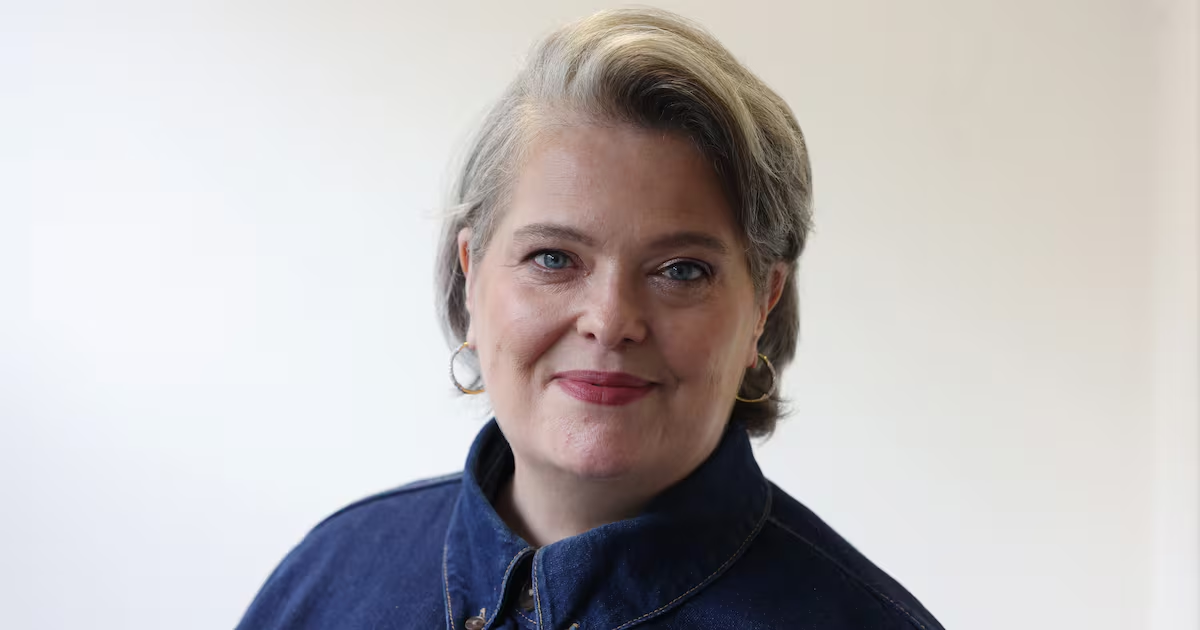
I have a terrible memory for the specific details of childhood. I mostly remember feelings and smells and vibes. Deep fried fragrances wafting from Borza’s chipper in Sandymount, the shock of nettle stings on the back of my legs, the chalky taste of a green fizzle stick. And vivid, as though it were yesterday, the warmth of snuggling up with my mother watching Barry Manilow concerts on television, having her all to myself in these moments because nobody else in the family could stand Barry Manilow. Barry is still going strong at 83. An often unfairly mocked pop talent. I watched a recent concert of his in London, where he moved me to tears with a tune about his grandpa. I’d also recommend checking him out on a YouTube video from 1975, wearing a fetching pink spandex number, talking about how he wrote Could It Be Magic in collaboration with his friend, a man named Frederic Chopin. The song was inspired by Chopin’s prelude in C Minor, which the singer plays beautifully before singing: “Spirit move me, every time I’m near you, whirling like a cyclone in my mind.” To this day I won’t have a bad word said against Barry. Childhood memories whirl like a cyclone in my mind. I find it hard to pin them down. I had this faraway memory of a picture that was printed in a newspaper of my mother. She was walking down the street, a grocery bag in each hand. I wondered had I made the image up, the way memory plays tricks, but then I went searching for it in a newspaper archive. I found the picture illustrating an article on the cost of living in Ireland in the summer of 1981. I showed it to my mother on holiday in Lahinch, where it rained all day, but we didn’t mind. We walked by the sea in our rain macs and played competitive games of cards and ate outrageously delicious scones in the sublime comfort of Gregans Castle Hotel, deep in the Burren. Finding that newspaper article entertained us for a whole afternoon while the waves crashed on to the promenade. There she was in black and white in the late lamented Irish Press, looking harried but capable in her shift dress and trusty Scholl sandals, bags of groceries in either hand. There she was, a woman in her early 40s, walking from H Williams supermarket towards our house in Sandymount Green. The article quoted people in Ringsend who were feeling “beggared” by price increases and creeping poverty. My mother was described as an “energetic” mother managing on a widow’s pension and children’s allowance with eight children ranging in ages from 18 to 2. Her husband, my father, had died the year before. “All my children’s allowance goes on the ESB bill, and now they’re putting it up so much I’ll have to find money to add to it,” she told the journalist, Rose Doyle. My mother said she didn’t know what to do about rising food prices. “I know what it is to live on the money I get at the moment, it’s just a bare living. There’s no way I’ll be able to save money for it all.” So many things are better for people in this country since 1981, when women were still being incarcerated in Magdalene laundries, being gay was a crime, you couldn’t get a divorce or an abortion, and the Troubles were raging in the North. But reading that article, it struck me that aspects of those dark days of the 1980s are still very much with us. Recent Eurostat figures show that Ireland is one of the most expensive countries in the EU when it comes to housing, health, alcohol and electricity. In Dublin, we pay more for electricity than people in all the other EU capitals.In this newspaper in recent weeks, Kitty Holland wrote an article almost identical in tone and theme to the one written by Rose Doyle in 1981. She quoted a man called Michael Conway, who lives alone on disability benefits and who is struggling with electricity bill arrears since last November. He feels, he told Kitty, like he is “under water and can’t breathe”. He has stopped paying other bills in order to clear his electricity debts. More than 300,000 homes in this country were behind with their electricity bills at the end of March. “I feel completely alone, with no help. And I am terrified about the winter coming,” Conway said. The Irish Press, August 3rd, 1981. 'I had this faraway memory of a picture that was printed in a newspaper of my mother. She was walking down the street, a grocery bag in each hand.' Back in 1981, Rose Doyle praised my mother, saying that in the face of great adversity she displayed great good humour. “I’ll have to write to my mother in England and ask her what she did in the war. I’ll have to invent ways, I suppose,” my mother reasoned.I was proud of my mother, reading the article. In awe of her refusal to be defeated by circumstances that would have overwhelmed many people. And sad because so many families and individuals are still struggling now all over this country. The anxiety in my mother’s voice is painfully familiar. “It gives me the shivers to think what may happen if I can’t manage,” she said back then. The fact that energy prices are due to increase again from July 1st should give us all the shivers.
Róisín Ingle: Childhood memories swirl like a cyclone in my mind - I find it hard to pin them down
I recall a picture in a newspaper of my mother years ago, only to unearth it and find the story behind it as real today as it was back in 1981
922 words~4 min read