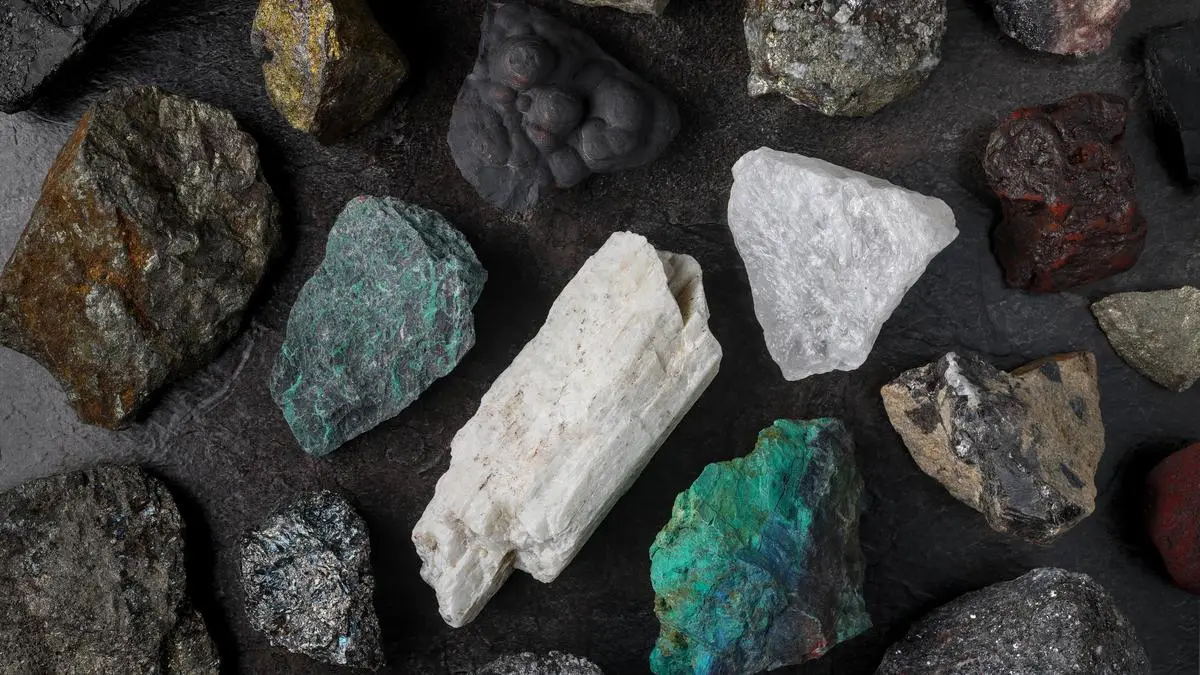
Inside a sterile fabrication plant coming up in Dholera, robots will soon move silicon wafers with nanometre precision. But before that first chip is etched, tons of gallium, germanium and rare earths must arrive from one country: China.India’s multi-billion-dollar fabrication plants (fabs), alongside the Production-Linked and Design-Linked Incentive schemes under the India Semiconductor Mission (ISM), represent the nerve centre of future technologies. This will be powering everything from digital infrastructure to advanced manufacturing. Although it upholds policy foresightedness of India’s ‘Tech-Sovereignty’, a quiet but consequential paradox may unfold in the upstream supply of critical minerals.While much of the public conversation focuses on the race to construct fabrication plants, the sourcing of these essential inputs is just as vital to the mission’s success. India’s demand for these minerals will grow alongside its expanding economy, pulling in larger volumes from global markets to feed high-tech sectors. This expansion may create a complex puzzle where the country seeks to balance rapid growth with a resilient supply of raw materials.Paradox of ChoiceRecent empirical exploration into the trade patterns of critical minerals required for India’s Semiconductor manufacturing using standard gravity framework has offered revealing perspectives on these sourcing dynamics. Our analysis suggests that critical mineral supply chains are not shaped by strategic intent alone; rather driven by economic factors, such as market size, geographical proximity, cost competitiveness, exchange rate dynamics and supply stability. However, the choice of supplier is not a tap that can be easily turned by policy signals but shaped by the cold logic of scale, efficiency, and reliability.This is where the ‘friend-shoring’ narrative hits a wall. The policy assumption is that we can reorient supply chains toward politically aligned partners. In practice, the evidence suggests otherwise. Despite the absence of a comprehensive bilateral trade agreement, India’s sourcing remains heavily concentrated, with a substantial and persistent dependence on China for several critical mineral inputs.Even more striking is the finding that India’s existing Free Trade Agreements (FTAs) have not translated into higher imports from partner countries in this sector. In fact, the data reveal an unexpected result: these agreements are often associated with lower import dependence on partner countries. While policy aims for diversification, trade continues to gravitate toward the most competitive and reliable sources, irrespective of formal institutional ties. In essence, trade policy is being outpaced by market realities.Global struggle with ‘gravity’India is not alone in this learning curve. Similar to the findings that FTAs do not automatically shift trade, the US experience through its Inflation Reduction Act (IRA) 2022 and US CHIPS Act 2022 has been that despite massive subsidies to ‘friend-shore’ battery and semiconductor supply chains, manufacturers still remained tethered to Chinese processed minerals.Much like India’s ISM, the EU has set ambitious targets under Critical Raw Materials Act 2024 (e.g., 10 per cent domestic extraction). However, European industry experts often cite the same ‘structural economic factors’, specifically the ‘cost competitiveness’: the primary barrier to entry for domestic capacities is being the ‘economic gravity’ of established, low-cost hubs.Japan’s decade-long pivot after the 2010 Senkaku Islands dispute also underscores this reality. It took over a decade of massive state-backed investment in Australian mines to successfully diversify away from Chinese rare earths. This experience reinforces the point that true resilience requires enabling competitive alternatives through industrial scale and processing capabilities rather than just strategic agreements.India’s recent entry into the US-led Minerals Security Partnership (MSP) and the Ministry of Mines’ auctions of domestic lithium blocks are steps in the right direction. However, as the recent empirical outcomes arrived, it shows that institutional ties are insufficient if they do not address the underlying cost and capability gaps.Gravity of the situationIndia seeks to understand how mineral bottlenecks might transmit through the production system to impact GDP and external dependence. Because trade flows have the tendency to concentrate where mass, proximity and efficiency align, policy cannot treat these forces as infinitely malleable.So, what would a realist pivot look like for India?First, realising that more FTAs will not help if they do not address the actual cost of processing. Stringent regulatory constraints in the US have often reduced the competitiveness of its domestic mineral refining relative to Chinese capacities, which China has capitalised on. In contrast, India does not have comparable regulatory constraints, rendering our adaptation more cost-effective and enhancing our potential for growth. India needs massive, long-term investment in domestic mineral processing capabilities, the unglamorous work of turning ore into industrial-grade inputs in the refineries.Second, embracing the calibrated bilateralism. India’s trade partners, excluding China, are relatively insignificant in this sector, which indicates that we should not pursue the unrealistic goal of completely eliminating China from our supply chain. Resilience often involves managing dependence rather than striving for the impossible objective of eliminating it in the short term. If China continues to be the most competitive supplier for certain minerals, India should focus on building strategic reserves and establishing long-term contracts instead of pursuing a zero-dependence approach at all costs.Third, writing 10-year cheques rather than 10-page MoUs. Securing supply chains requires securing the economics for miners and refiners. This can take the forms of long-term offtake agreements, patient capital and deepening of our participation in specific value-chain segments where India can build genuine scale.Fourth, integrate minerals into the India Semiconductor Mission itself. Today, the ISM looks at fabs, packaging and design. It must also look at anodes, cathodes, sputtering targets and refined metals. A dedicated minerals directorate inside the mission is no longer optional.The August 2023 Chinese export controls on gallium and germanium were a warning shot. Prices spiked within weeks. A bottleneck in these minerals cannot just remain like an issue for a particular fab. The criticality could amplify as a potential constraint on every downstream industry that uses semiconductors and further act as a drag on India’s GDP growth.India’s semiconductor mission will succeed not merely by building fabs, but by securing the invisible foundations of long-term supply relationships. In the end, strategic ambition must work with economic gravity, not against it.Banerjee is a Fellow; Mondal is a Research Analyst; Pohit is a Professor at the National Council of Applied Economic Research (NCAER), New Delhi. Views expressed are personalPublished on June 27, 2026
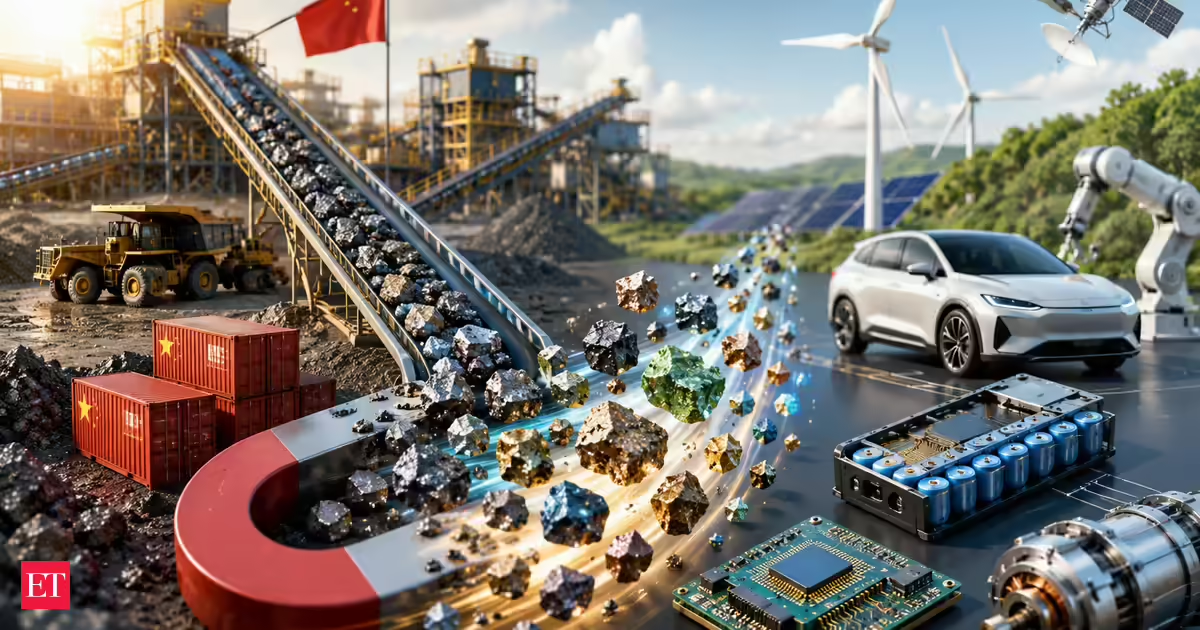
Critical minerals and dependence on China
Reducing dependence on China through ‘friend shoring’ easier said than done. Sheer economics dictates otherwise
1,025 words~5 min read