This audio is auto-generated. Please let us know if you have feedback.
With the U.S. facing an electricity affordability crisis and demand rising quickly for the first time in decades, experts say the Federal Energy Regulatory Commission’s June 18 order to system operators to provide transmission for flexible large loads underscores the urgent need to implement data center load flexibility.
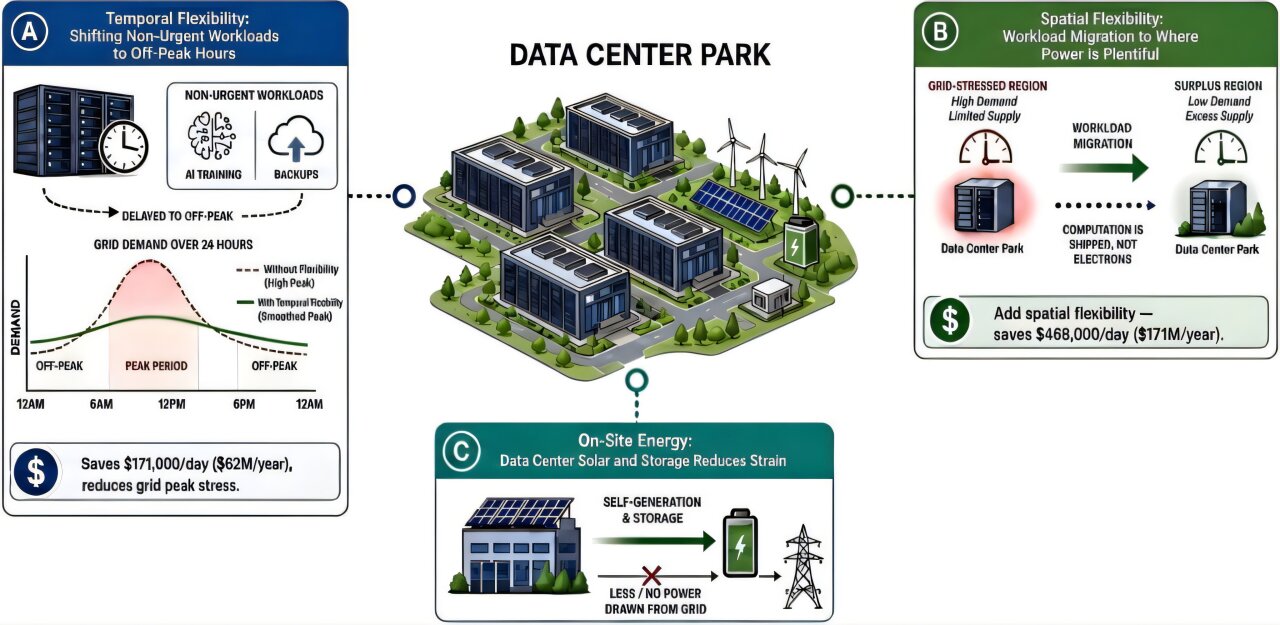
Just a 1% to 2% reduction in data center peak demand can reduce electricity rates 0.5% to 2.8% and protect reliability, according to a 2026 Duke University Nicholas Institute study. And pilots and analysis led by the Electric Power Research Institute, or EPRI, show how flexibility is within reach that can also get data centers interconnected faster.
Electricity demand by artificial intelligence, or AI, data centers is driving a global urgency, Nat Bullard, chief strategy officer of research group Halcyon, reported in May. From Q1 2025 to Q1 2026, Amazon Web Services’ cloud business grew 28%, Microsoft Azure grew 40% and Google Cloud revenues increased 63%, he reported.
“Growth rates this high in already-mature businesses mean total revenue doubles in two years (or less),” Bullard wrote. “That revenue can only be serviced with compute, and that compute can only serve when energized.”