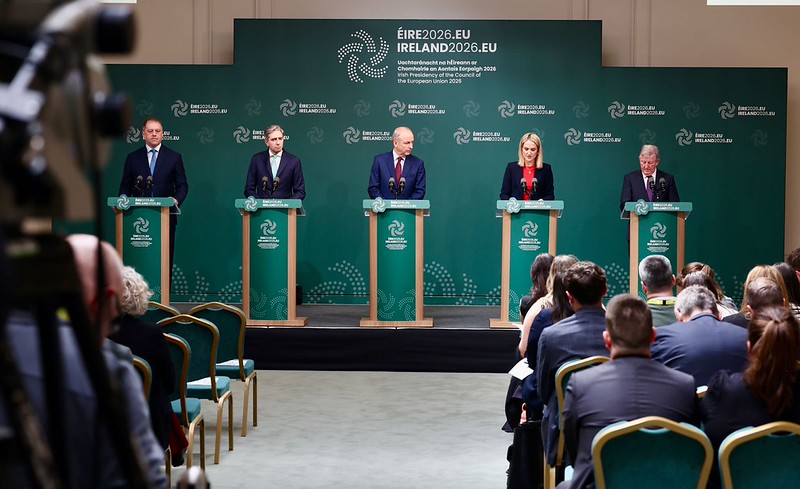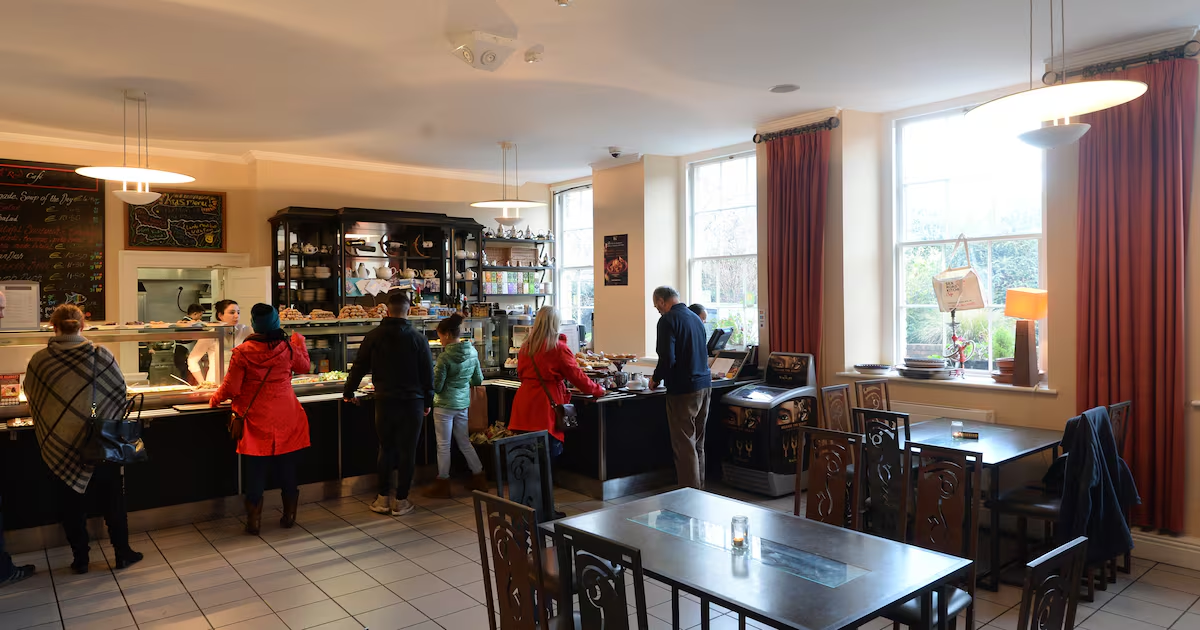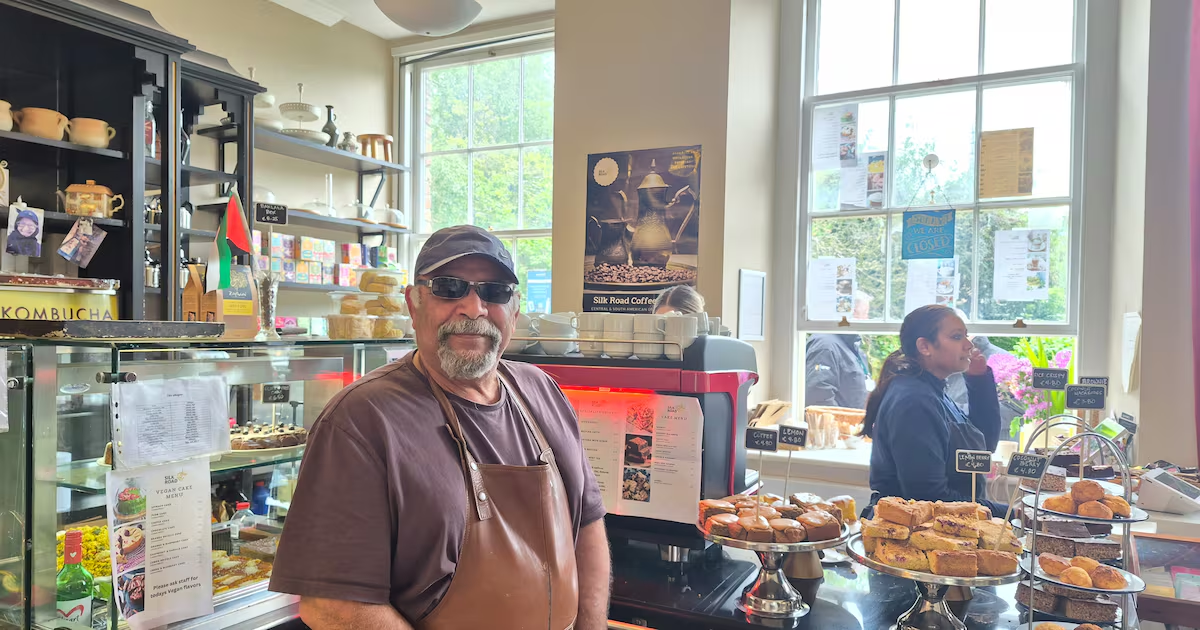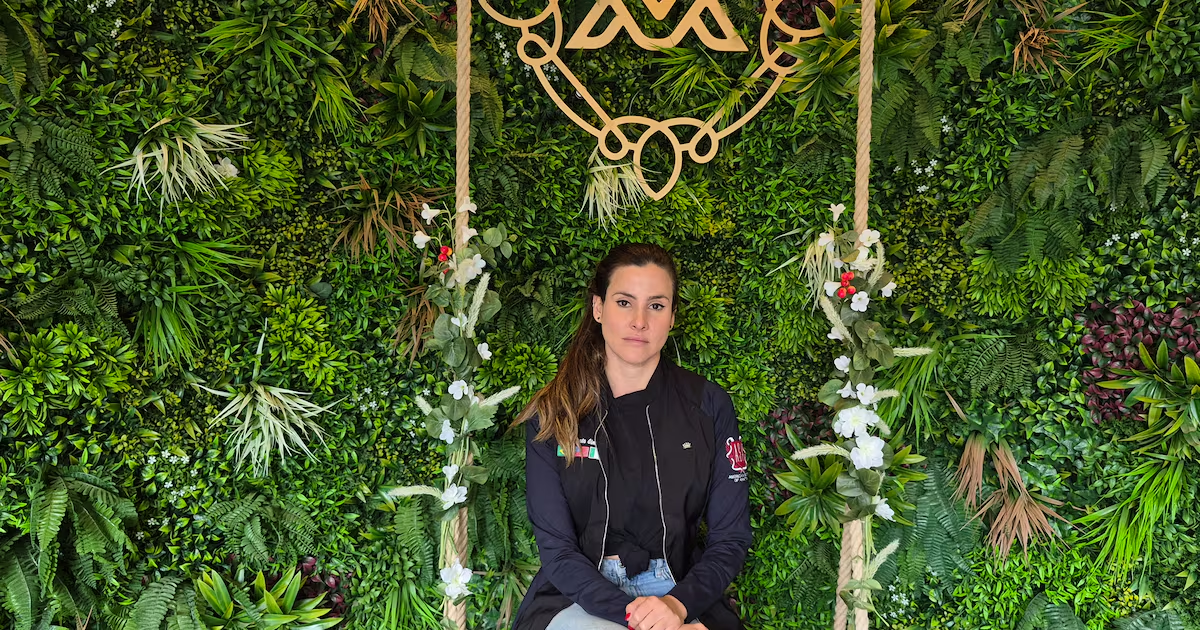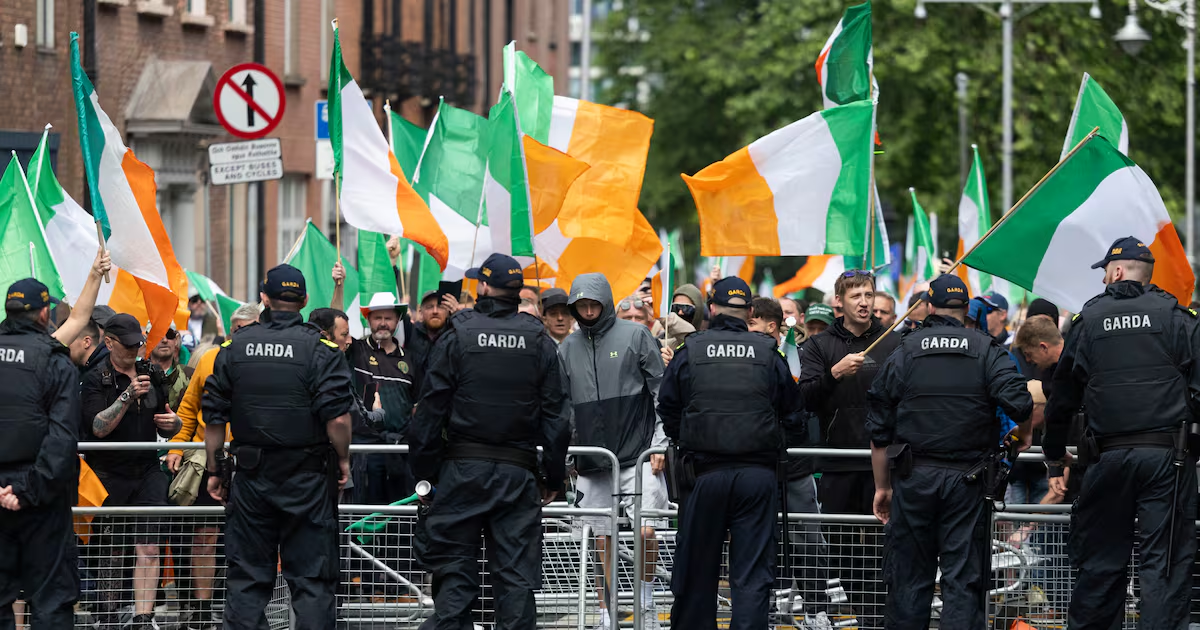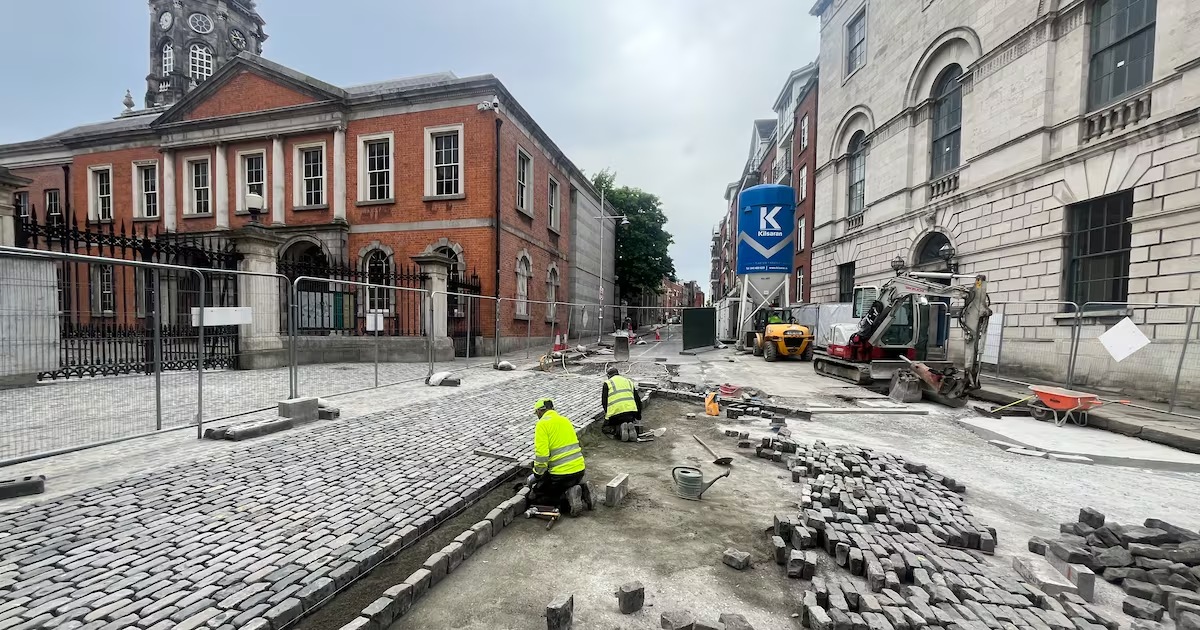
I was glad to see the Silk Road Cafe fight a successful rearguard action against its threatened closure as part of the lockdown of Dublin Castle for Ireland’s imminent European Union presidency.Now, however, I fear for another of my favourite restaurants, the tiny Bottega Toffoli on nearby Castle Street. That’s still open, for now. But the street became part of a cordon sanitaire this week when barriers descended at either end. Residents, who had been given no advance notice, found themselves being asked to produce proof of address and IDRegulars of the charming restaurant run by Carlo Toffoli and his wife Elaine would usually be reticent about broadcasting such facts as having Dublin’s best pizza, because it takes barely a dozen customers to fill the place.It suited some of us to preserve it as one of the city’s better-kept secrets, which it has been for more than 20 years. But the EU lockdown must be an existential threat to such a business, so now perhaps they need the publicity.I wouldn’t mind but, unlike the Silk Road, which is part of the Chester Beatty Library, Bottega Toffoli is not actually in Dublin Castle, which is separated from Castle Street by, among other things, a 30ft wall.The patrons of the pizza restaurant are no more a threat to castle security than those of Burdock’s chip shop located just around the corner on Werburgh Street but outside the sanitary cordon.Oh well, I gather the restaurant will battle on and trust that customers with reservations can get through the Garda barricades. I just hope that when the Eurocrats depart in December, Bottega Toffoli will still be with us.Lockdowns of Dublin Castle come and go, but sometimes they leave permanent scars on the local landscape. Consider, for example, St Werburgh’s Church, just across the street from Burdock’s, which was decapitated during a previous security panic, two centuries ago, and remains spireless today.Rebuilt in 1719 on the site of the 12th-century Norman original, it once boasted many parishioners in the castle, including the Lord Lieutenant of Ireland. And with such regal connections, the church soon acquired a suitably lofty tower and spire, soaring 160ft towards the heavens.Alas for St Werburgh’s, it was the view downwards – into the castle yard – that became a problem. For by 1798, parishioners also included Lord Edward Fitzgerald and Napper Tandy. Then there was the threat posed by that well-known overseas terrorist, Napoleon. In the early 1800s, authorities affected to be worried about the dangerous condition of the church’s upper extremities. Indeed, after the events of 1798 and 1803 it was the dangerous condition of the parishioners and church officials that was a bigger concern.By then, the remains of Lord Edward lay interred in St Werburgh’s crypt. He had plenty of local sympathisers, however, and the castle authorities were not inclined to allow them a prime sniping position in the event of renewed hostilities.An offer from the architect Francis Johnston to fix the supposed structural problems was ignored. The spire came off in 1810, the tower some years later, and St Werburgh’s has never regained its former grandeur.Security concerns at the castle have also on occasion been the excuse for additions to, rather than subtractions from, the surrounding streetscape. Hence, during the last Irish EU presidency in 2013, the great concrete carbuncle that appeared at the main entrance to the castle on Cork Hill.It doubled as a plinth for flagpoles and, according to Dublin City Council, a “traffic calming” measure. But what it didn’t calm were members of An Taisce and other conservationists, outraged at its ugliness and the fact it was erected without planning permission.The slab’s offences included ruining one of the classic views of Dublin, as immortalised in an 18th century print by James Malton, featuring the old Royal Exchange, now City Hall. The council always insisted it was temporary, but there was a suspicion that, having cost €15,000 to build, it might have become permanent had it not been so unpopular. In the end, at the cost of another €4,000, it went the way of the Tomb of the Unknown Gurrier and other crimes against taste.Happily, the barriers aside, there have been no additions this time, although last year, perhaps with the presidency in mind, the council laid new cobbles (or strictly speaking setts) on Cork Hill. Their visual charm aside, the appeal of cobblestones includes the pleasant syncopation they produce under the tyres of cars. This is somewhat less pleasant, though, when felt through the saddle of a Dublin Bike. But as experienced from the back seat of a chauffeured limousine in coming months, it may provide a gentle drumroll for EU leaders entering the historic precincts of the upper castle yard.
Castle martyrs – Frank McNally on unwelcome side effects of Ireland’s EU presidency
Security concerns at Dublin Castle are leading to drastic measures, but not for the first time
786 words~4 min read