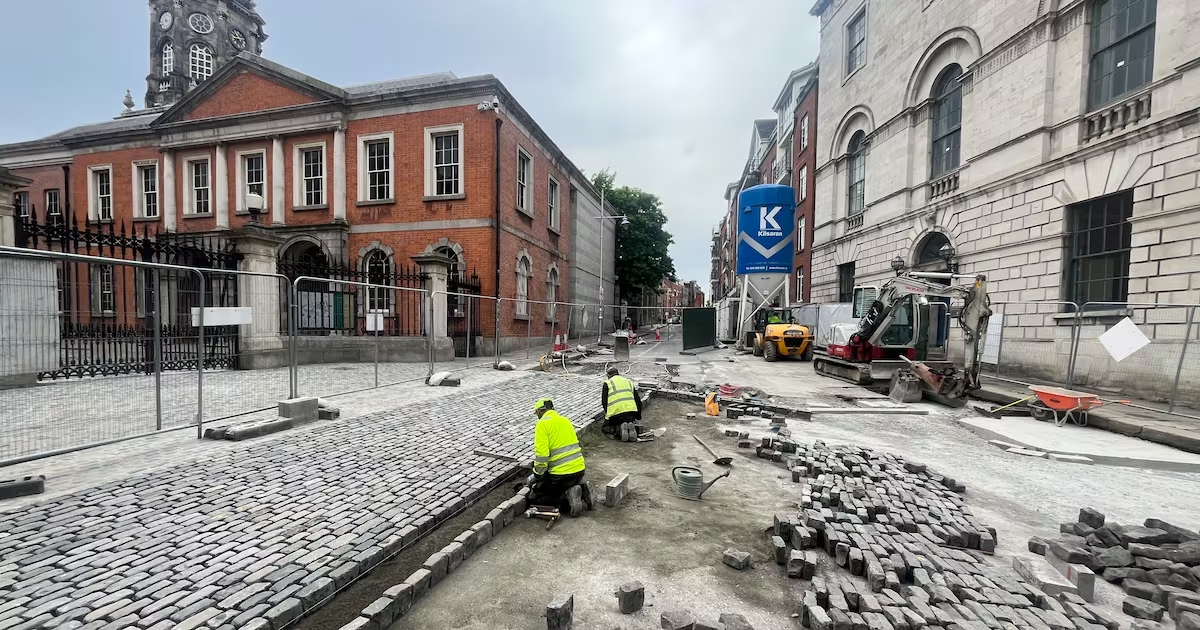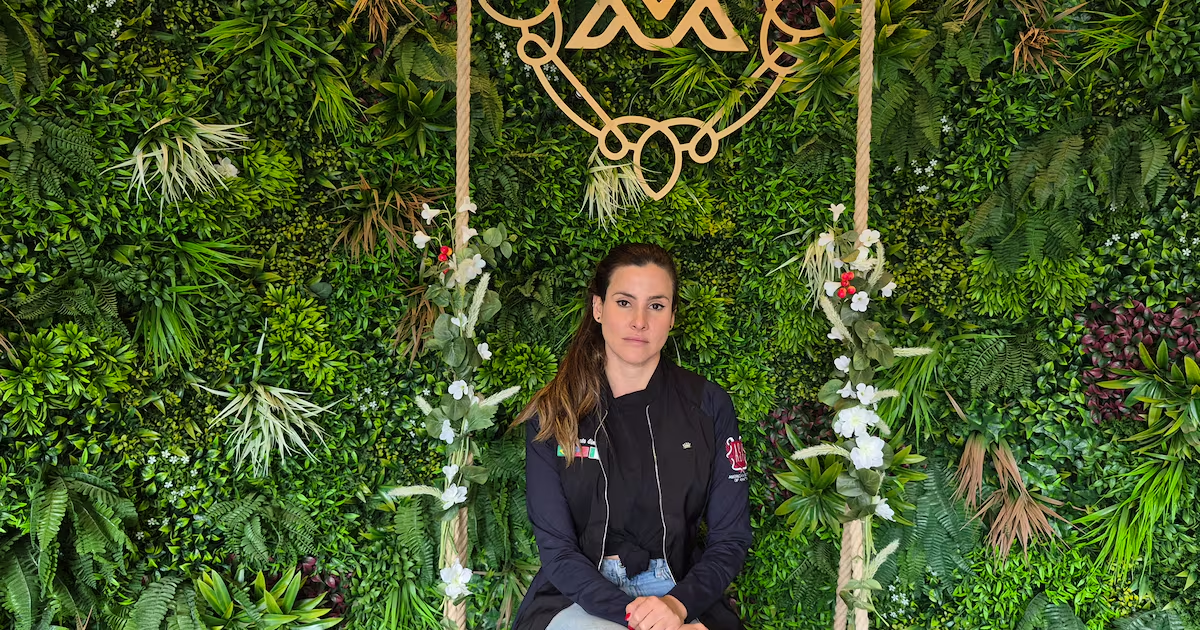
Renata Gimenez, owner of MB Glow Spa and Aesthetic Clinic on Castle Street in Dublin city, says she has already lost about a quarter of her clients since the street closed without formal notification on June 23rd. This, she says, amounts to a loss of up to €4,000 a week.The closure of the street is part of a policing and security operation by An Garda Síochána for Ireland’s EU presidency. The security operation began at Dublin Castle on June 15th.Gimenez says she has lost “at minimum 10” clients. She adds that one of her tenants, who agreed to rent one of the six rooms for their own appointments, handed back the keys after setting up two days prior. They did this because the street closure had made it too difficult to do business.The other four tenants operating their own businesses under MB Glow have also informed Gimenez they are considering looking for new places to do business with easier access for clients. That has resulted in Gimenez having to swallow a loss of €750 – the monthly rate she charged the exiting tenant for the business space. It has added to her own financial worries as she tries to pay her rent to the landlord of the building.She also says her average client can spend anywhere between €200 and €1,000, but most pay about €400.Gimenez says it is going to be “very hard” to rent the room during the EU presidency because nobody wants to go into business “in this situation”.Gimenez has contacted a solicitor to see if she can legally pursue Dublin City Council (DCC) for compensation on the grounds she has paid the council’s property-based charges on commercial and industrial properties.Tony Collier, Gimenez’s solicitor, says: “Consideration is now being given to appropriate legal action.”Gimenez says she has been asked for identification “every single day” since the barricades were erected.She sent an email to DCC on June 23rd enquiring about the possibility of temporary commercial rates relief, financial assistance or access to a compensation scheme. She also asked about the possibility of additional signage or measures to improve public awareness of businesses so they remain accessible. However, she has yet to receive a response.DCC has been contacted by The Irish Times for comment.The barricades remained in place this week but foot traffic was allowed to pass without the need for identification. Gimenez says this was the first time the road had partially opened for any period of time since the beginning of the closure. She remains unsure how long the measures will last.Barriers set up on Castle Street, Dublin for the start of Ireland's EU presidency A spokeswoman for the Garda says Castle Street, Ship Street Little and Ship Street Great are currently closed to both traffic and pedestrians. The spokeswoman added that the closures will remain in place until the end of the EU presidency on December 31st. Local access will be facilitated during that time.Gardaí are stationed at either end of Castle Street.Gimenez says if the situation continues, she will have to relocate to Cork, to use space available in her friend’s hair salon. “It’s been hard already,” she says. “I’m thinking for the next six months, ‘how will we be?’.”The Garda spokeswoman says the force has been “liaising with businesses and local residents in the key locations and will continue to communicate directly with them during the EU presidency, where required”.“We are working to ensure that the nature and scale of our policing and security operation continue to be proportionate to the need to protect everyone’s safety during the EU presidency,” she adds.When Elaine McArdle, owner of Bottega Toffoli restaurant on Castle Street, was informed the street would be closed off by barricade and that gardaí required her identification, it was “a bit of a shocker”.McArdle says she discovered the road was closed when she attempted to drive down to Toffoli last Wednesday only to find barricades blocking the Castle Street entrance.The fallout from the road closure brings back unpleasant memories for McArdle. “It feels like Covid all over again,” she says, adding there is “no energy” on a street that is lacking its usual “buzz”.That walk-in trade is “gone for now” – significant for a restaurant that does a lot of business from passing trade. Her customer base is mainly passing trade from tourists, as well as concert-goers en route to Vicar Street.McArdle says the road closure is “definitely going to effect the books at the end of the day”, adding her trade could be down as much as 40 per cent.She opened the business with her husband Carlo Eremita in 2004, a year in which Ireland also hosted the EU presidency. However, she says the security plan has been significantly ramped up this time around.Co-owner Carlo Eremita outside Bottega Toffoli on Castle Street, Dublin, in 2013. Photograph: Elaine McArdle “It just didn’t seem to be as big of a deal back then,” she says. Despite suffering a loss of trade, McArdle says she will not be taking any legal action – something she says would be a “headache” – unless the restaurant is in danger of closing permanently.McArdle says gardaí have been “very accommodating”. However, the requirement to produce identification or proof of a Toffoli booking upon entering Castle Street over the past week has posed an extra challenge to her business.She says some of her regular customers are in their 70s, are not tech-savvy and prefer to book a table over the phone.Both McArdle and Gimenez say informal contact was received from the Garda but that they had been expecting a formal letter regarding the street closure.Clark Brydon, a Castle Street resident, says the closure is a “double-edged sword” as locals feel safer but the security in place is “limiting” and “scary” to a certain extent.Brydon says he woke up on the morning of June 23rd to the increased security without any notification of the street closure. He says he would have liked to receive a letter explaining the security measures as well as details about who to contact for further information.For everyday practicalities, Brydon says showing identification to a garda every time he wishes to return to his house has become an “annoyance”. He says the barriers can also “defeat the purpose of having something delivered to your house”.Ireland’s EU presidency started on Wednesday. More than 270 events will take place across the country throughout the six-month period. The Garda spokeswoman says the force will implement traffic-management plans to facilitate events at Dublin Castle throughout the EU presidency.
‘Like Covid all over again’: EU presidency leaves Castle Street firms fearing financial ruin
One company owner is exploring legal action against Dublin City Council amid fears she will lose €4,000 a week
1,086 words~5 min read