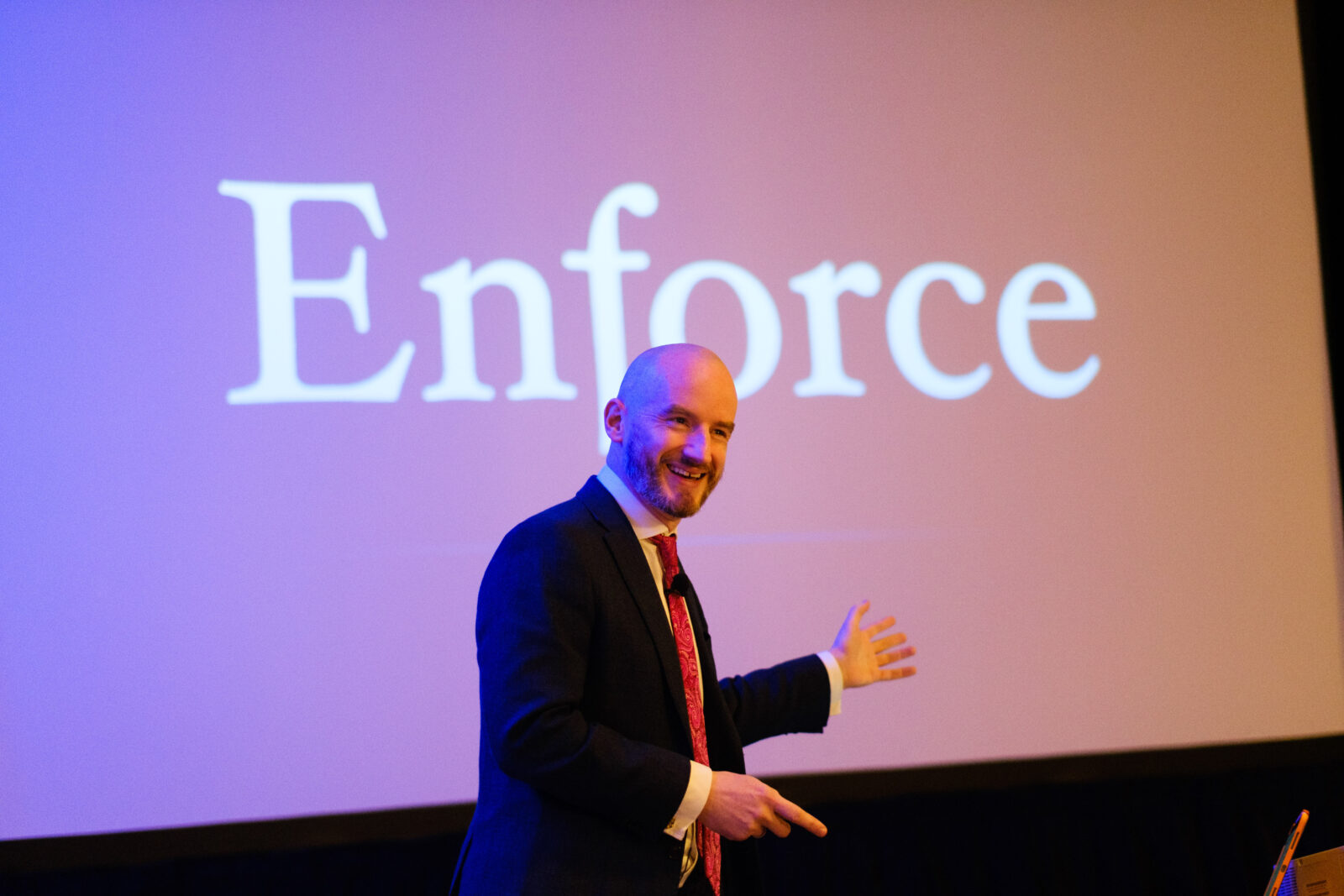
There is a type of room, Irish activist Johnny Ryan tells an audience the day before we speak, which exists in the small Irish houses his country built in a wave of construction in the 1960s: the biggest room at the front, usually unused, dust on the silver, fine linens. It is only opened when the priest comes for tea.
“Ireland’s presidency is like us getting the special room ready,” he says on stage at the Re:Publica conference in Berlin earlier this month adding: “This is the moment when Ireland is most interested in looking like something that, in this domain, it is not – a good European.”
Ryan runs Enforce, a litigation and investigation unit set up within the Irish Council of Civil Liberties (ICCL) to drag tech platforms through the regulatory system they are supposed to comply with.
He is unusually succinct for a critic of Big Tech – his crusade pretty much fits on a postcard: Europe’s digital enforcement crisis is, in essence, an Irish enforcement crisis.
The country that hosts almost every American tech firm’s European headquarters is also the country that has decided not to police them. And on 1 July this year, that country takes the rotating EU Council presidency and inherits the agenda-setting powers on the EU crown jewels of tech-laws: Digital Omnibus, the AI Omnibus, the implementing acts of the AI Act, the Cloud and AI Development Act, the Digital Networks Act, and the GDPR. All in one six-month run.