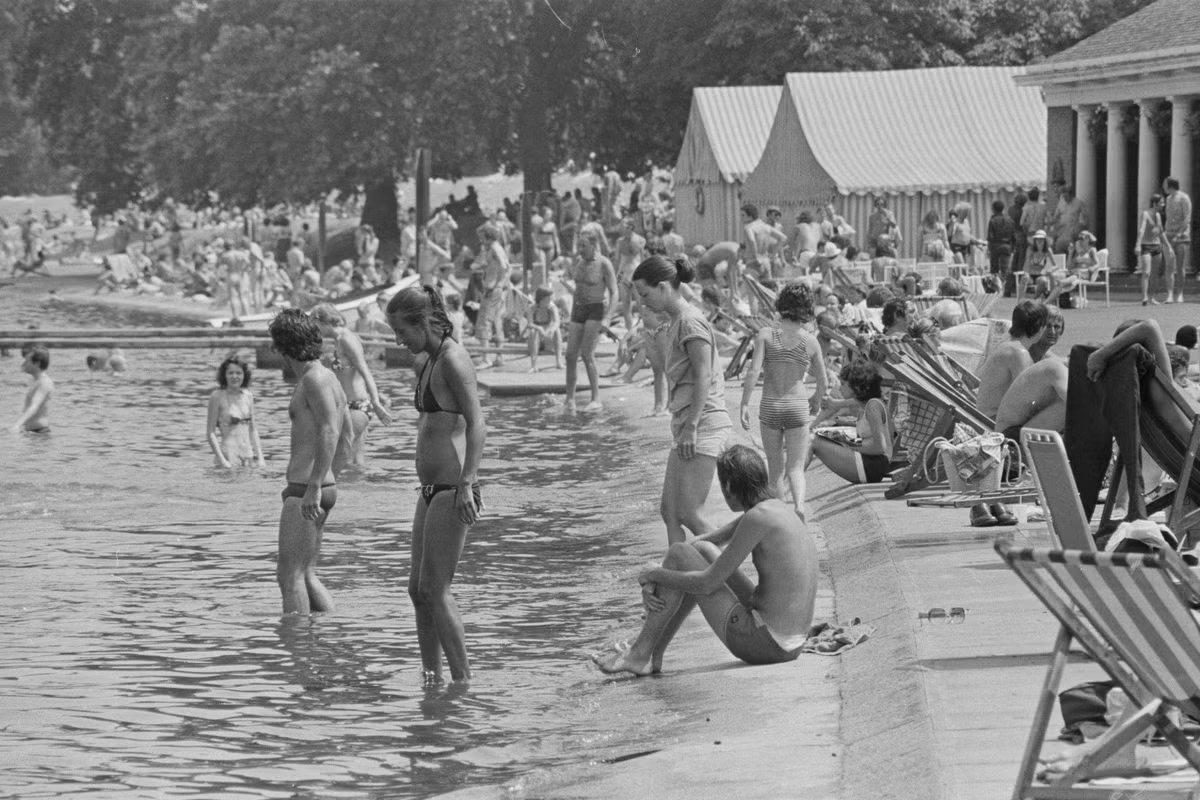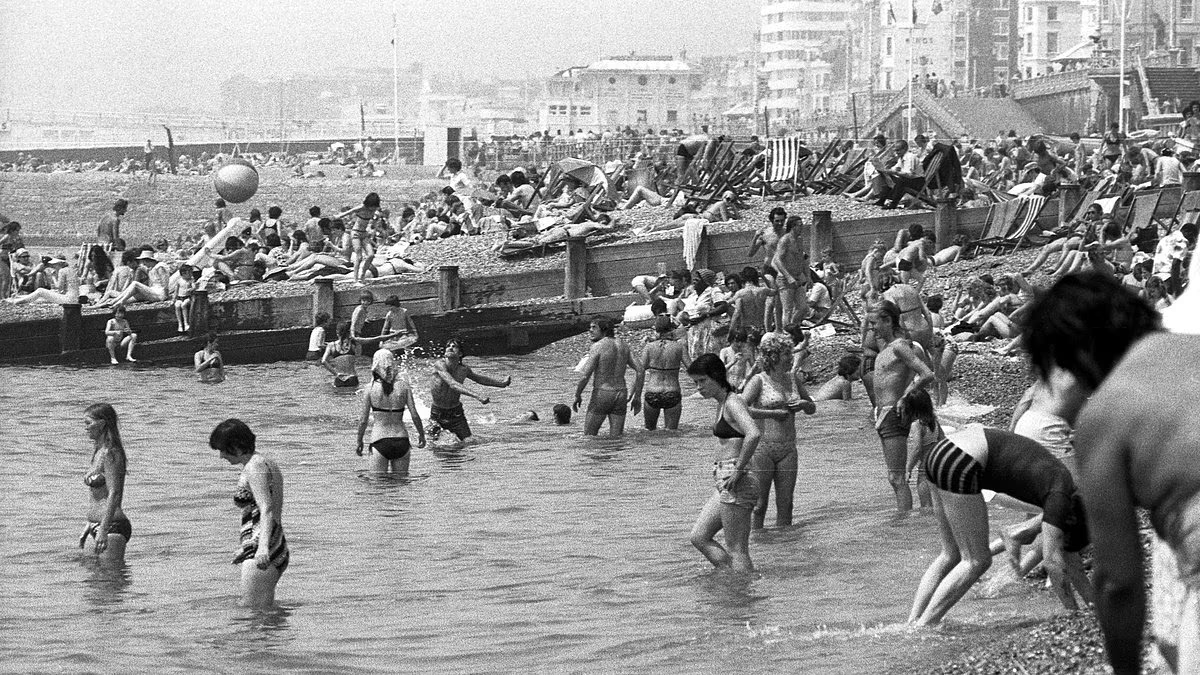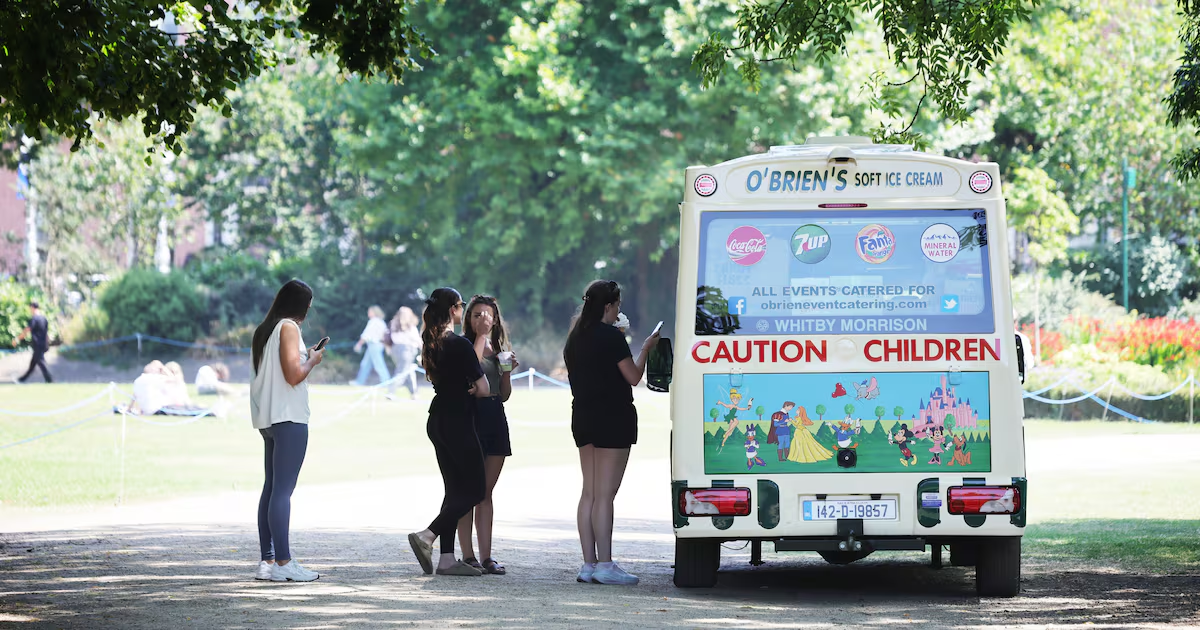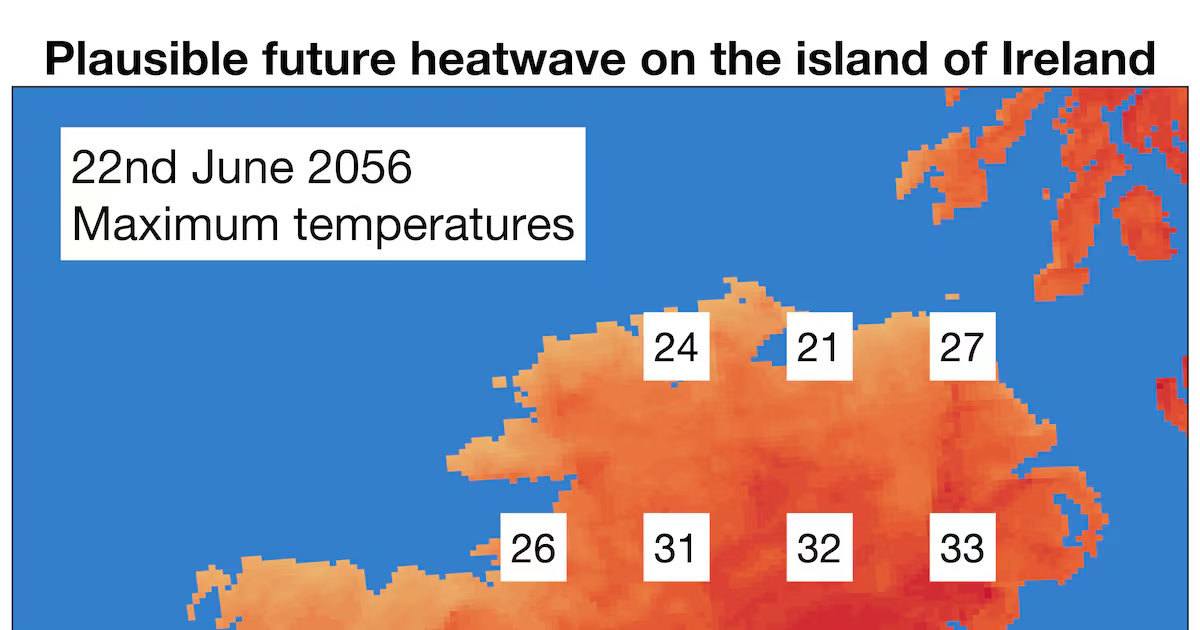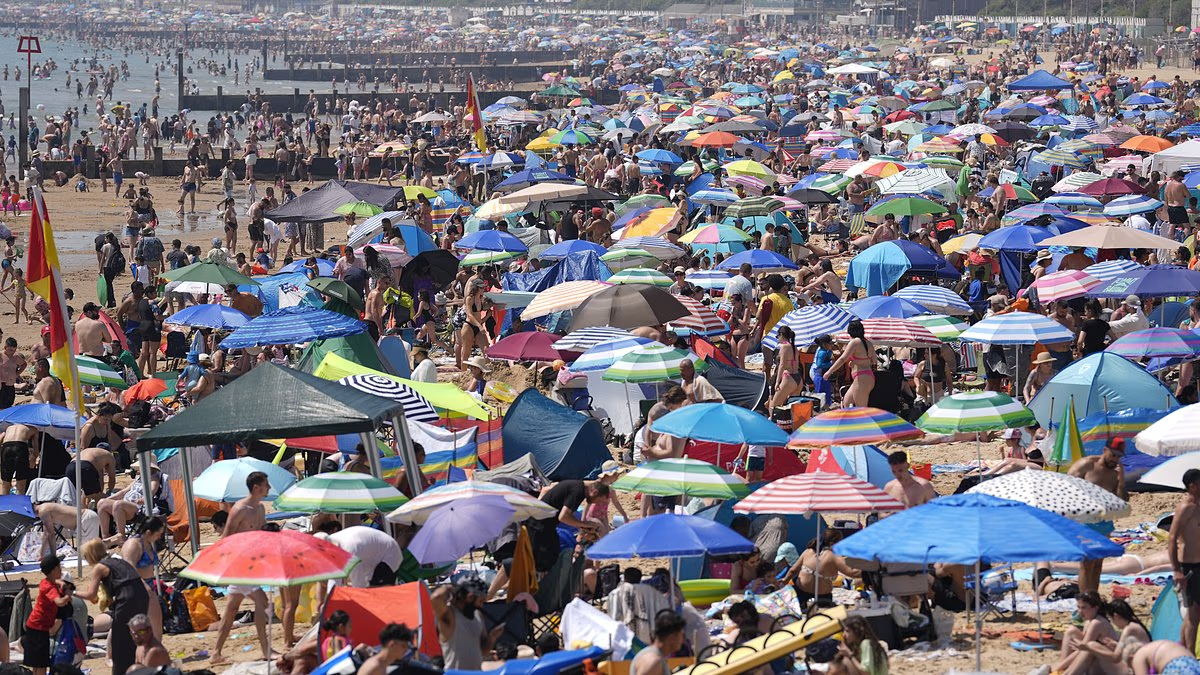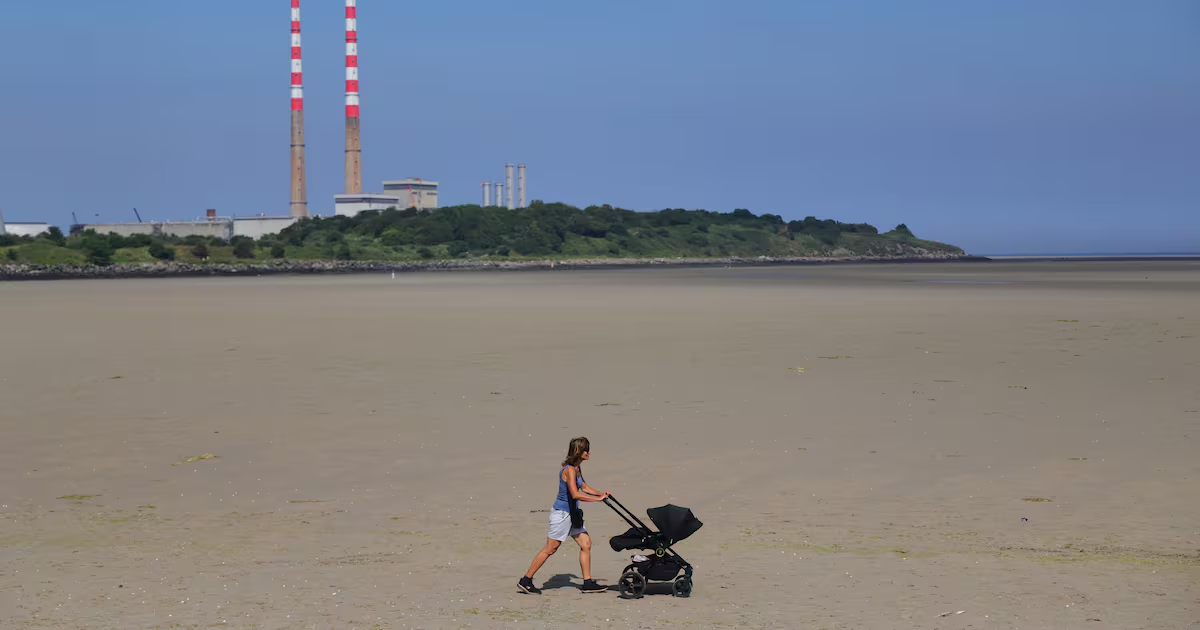
The summer of 2026 is already shaping up to be one of the warmest on record and we are not even in July yet. The heatwave that has enveloped Ireland in recent days peaked with a value of 32.1 degrees at Athenry, Co Galway, on Thursday. But it is not the highest ever June temperature. That happened 50 years ago on June 30th, 1976 when a value of 32.5 degrees was recorded at Boora, Co Offaly, during one of two heatwaves that year. It was the highest temperature recorded in Ireland in the 20th century. An exceptionally hot and dry summer, there were two heatwaves defined by five consecutive days when the temperature was above 25 degrees. The heatwaves lasted for nine days from June 27th to July 4th in most parts of the country and another lasting 14 days from August 14th to 27th. In between, the weather was warm and dry for the most part, conditions brought about by high pressure which remained anchored over western Europe for most of the summer. It was the driest summer for 85 years.From the middle of July to the end of August that year, there was an absolute drought in most parts of Ireland. While the public were asked to conserve water, there was none of the rationing that occurred in the UK. The other exceptional summer of recent decades came in 1995 which was even warmer than 1976. Mean temperatures were 2 degrees above normal almost everywhere. The highest temperature that summer was 31.5 degrees at Oak Park in Carlow on August 2nd. [ How does a heatwave affect the body?Opens in new window ]On the same day, 30.8 degrees was recorded in Kilkenny There were 27 consecutive days of a heatwave with temperatures over 25 degrees. It was the driest summer on record at Malin Head, Casement Aerodrome and Cork Airport weather recording stations, while in the Phoenix Park the summer total of 65.1mm of rainfall, most of which came as downpours in July, was the lowest since records began there in 1887. Fortunately, a very wet winter of 1994/1995 and a wet spring in 1995 meant reservoirs were full and there were no water shortages. Agriculture suffered, however, with reduced crop yields affecting rural economies. In urban areas shops sold out of fans. The heatwave prompted discussions on improving water management and heat preparedness.In August 1995, The Irish Times reported a deluge of angry wasps in the west of Ireland and a proliferation of dangerous jellyfish on the east coast. At that time there was little talk of climate change. The biggest environmental threat was the hole in the ozone layer which had been discovered in the late 1980s and spread over the Antarctic area. This largely forgotten crisis was resolved with the banning of chlorofluorocarbons (CFCs) then present in aerosols and cooling devices. The Montreal protocol was universally signed by every country and by 2009 all CFCs were banned. Climate change is proving to be a much more difficult problem to solve with no consensus on how to do it. Yet neither 1976 nor 1995 were the warmest summers on record in Ireland. That record belongs to last summer which has a lot to do with climate change. Unlike 1976 and 1995, which saw long extended periods of hot and sunny weather, the summer of 2025 was relatively mediocre. Heatwaves were relatively short-lived, but the record was broken because of other factors.Dry soils from the warmest spring on record allowed heat to linger for longer. A marine heatwave pushed warm air up more consistently over Ireland and heat domes to the south of Europe occasionally extended as far as Ireland.Another critical factor was warmer nights, with several long-standing stations having their highest number of warm nights on record.This was a result of sea surface temperatures (SST) that were elevated around the coasts of Ireland and maintaining a blanket of warm air at night.
How the current heatwave compares to the scorching summers of 1976 and 1995
August 1995 brought a deluge of angry wasps to the west of Ireland and dangerous jellyfish to the east coast
656 words~3 min read