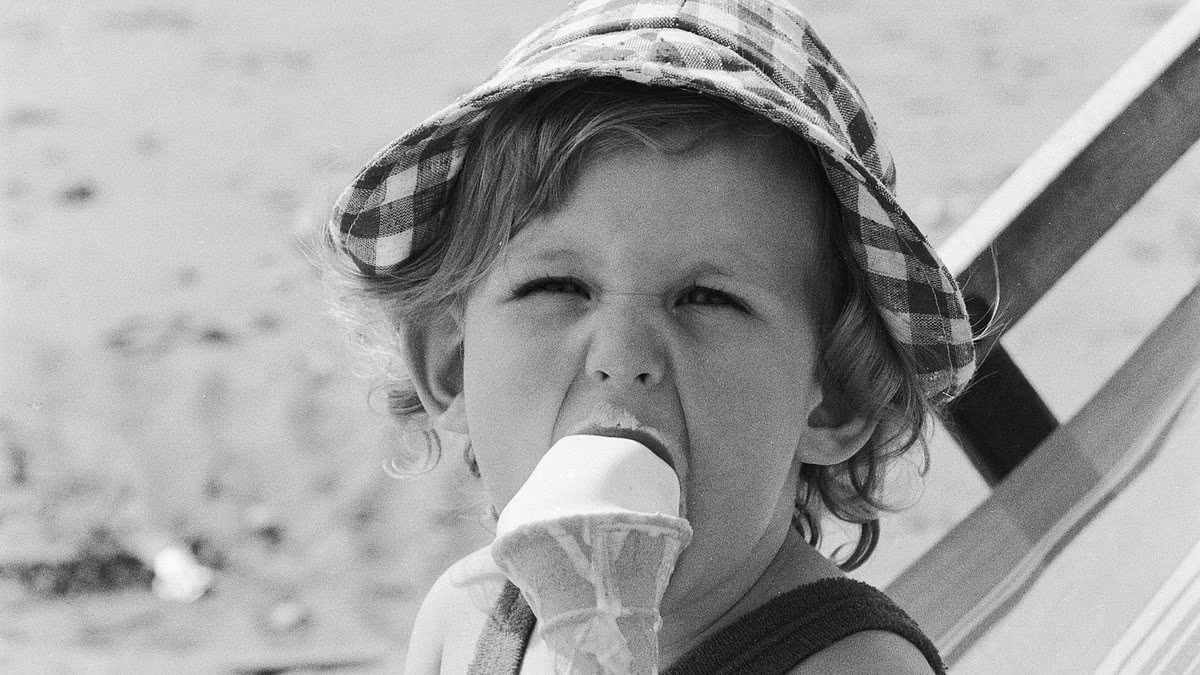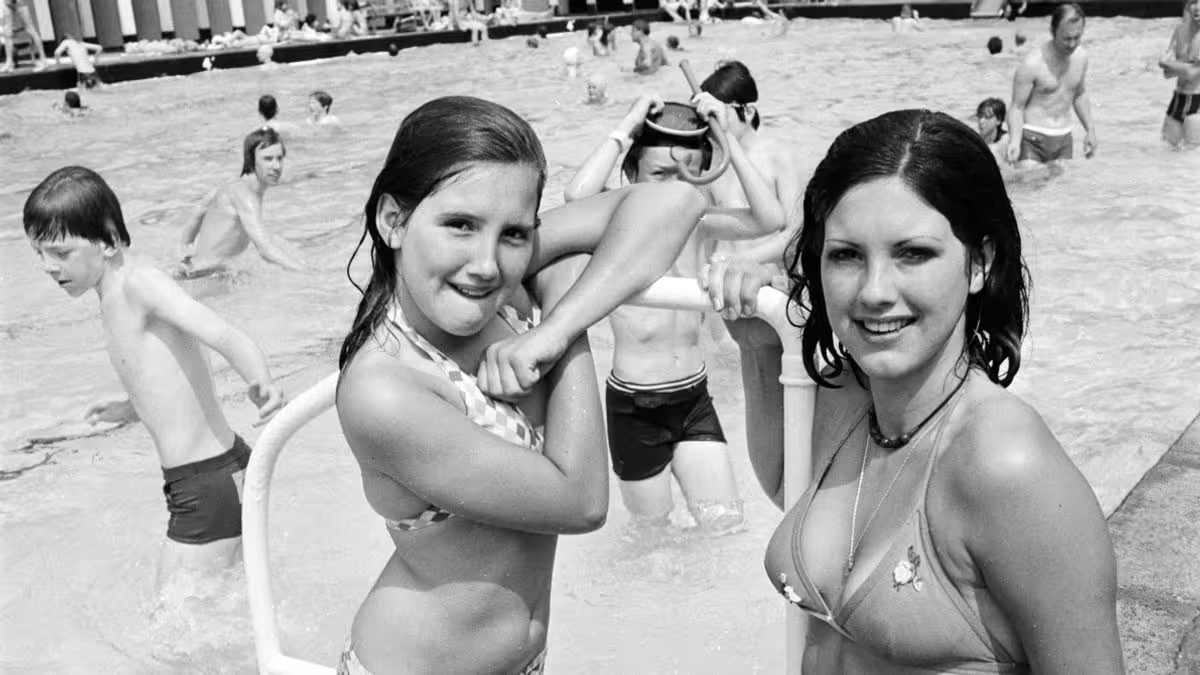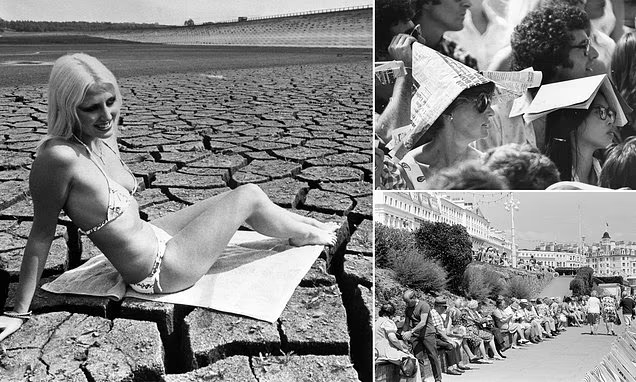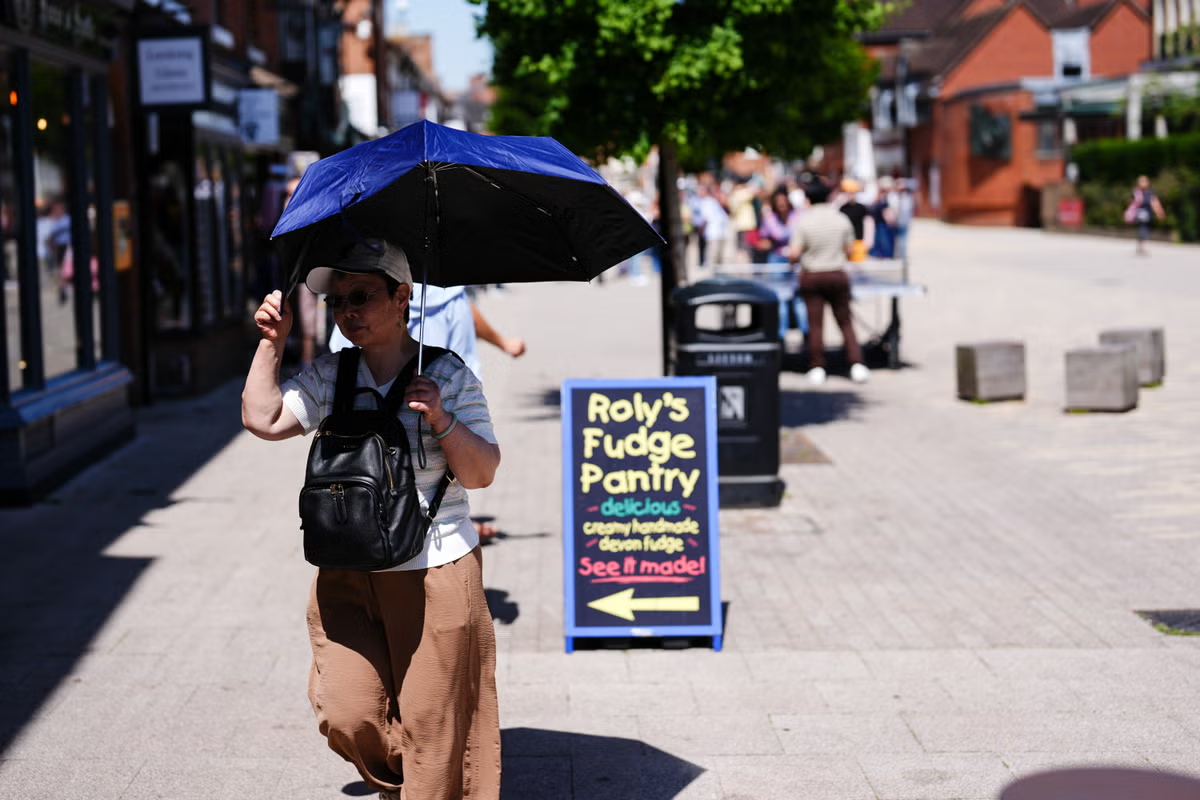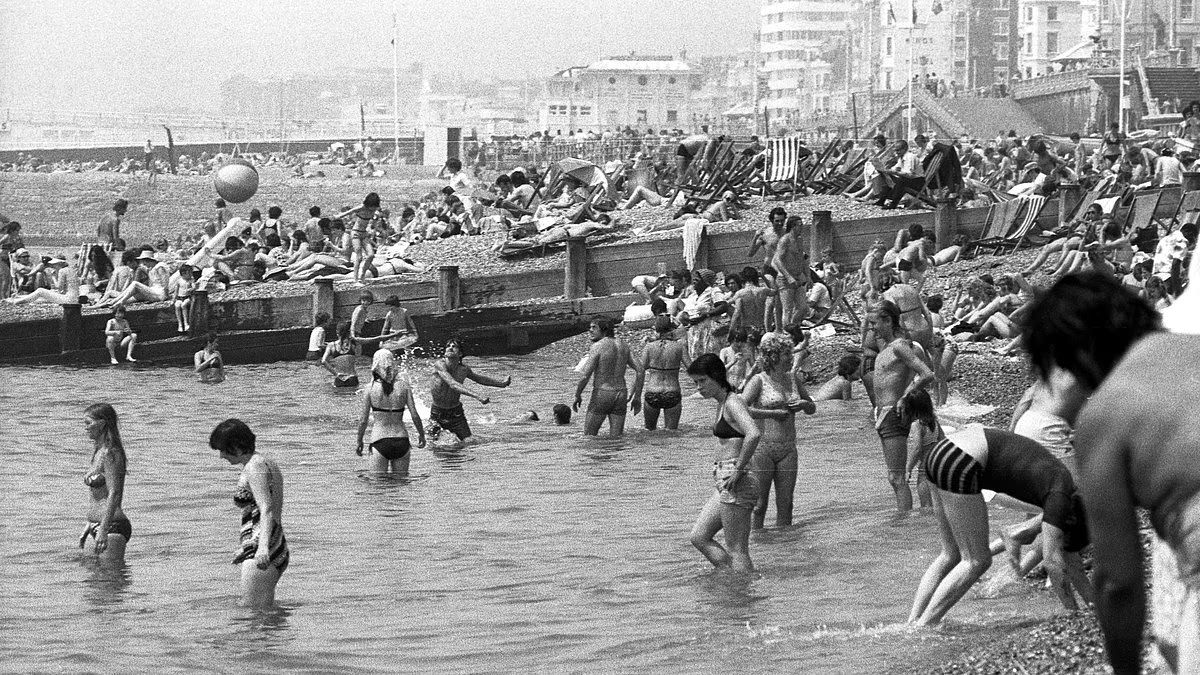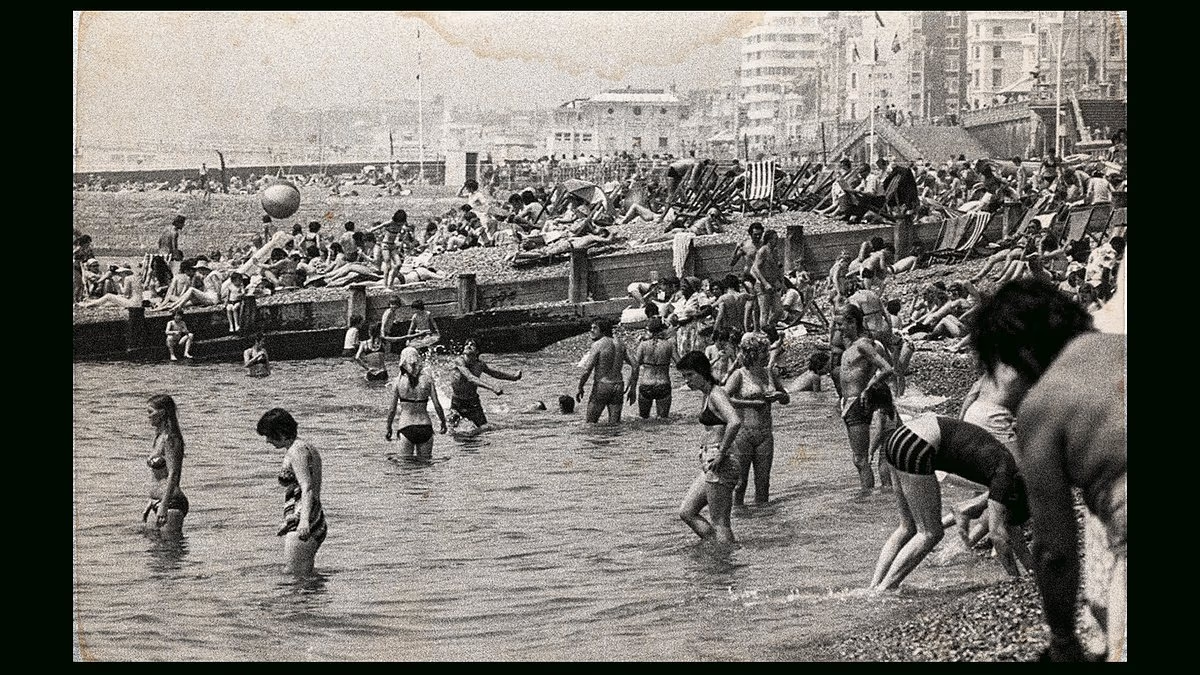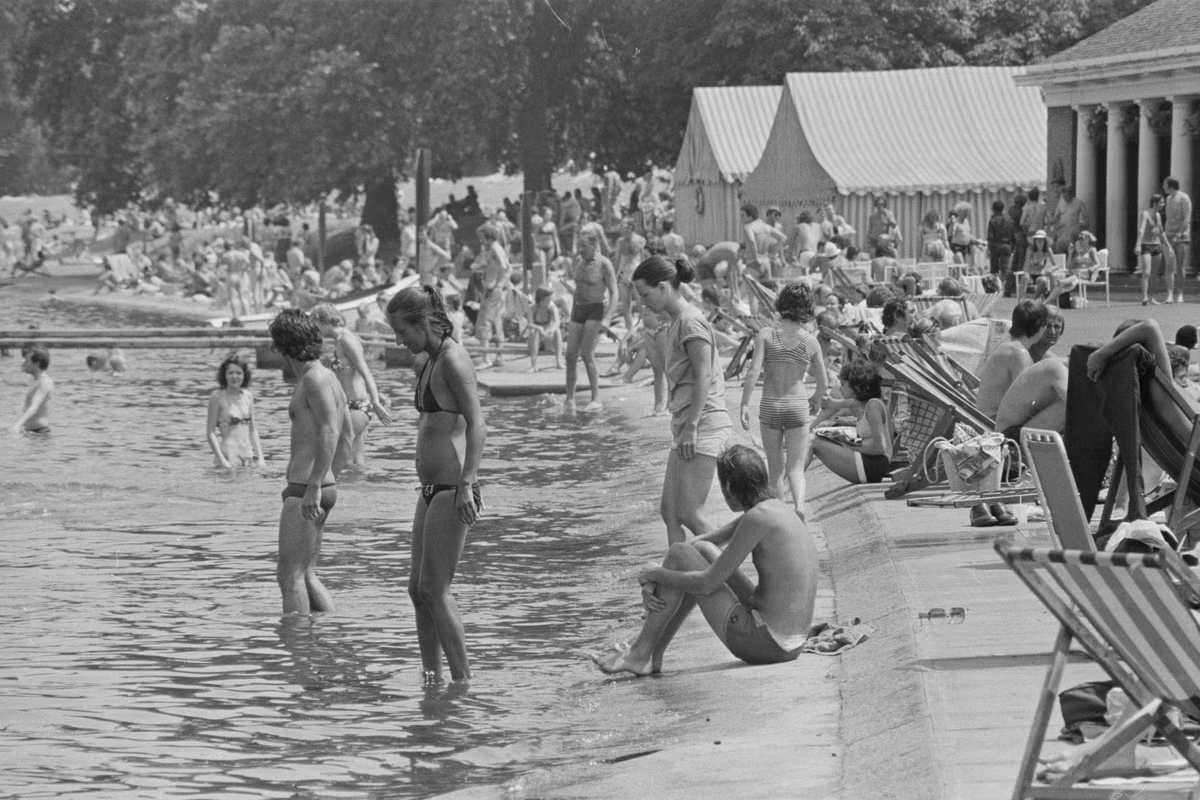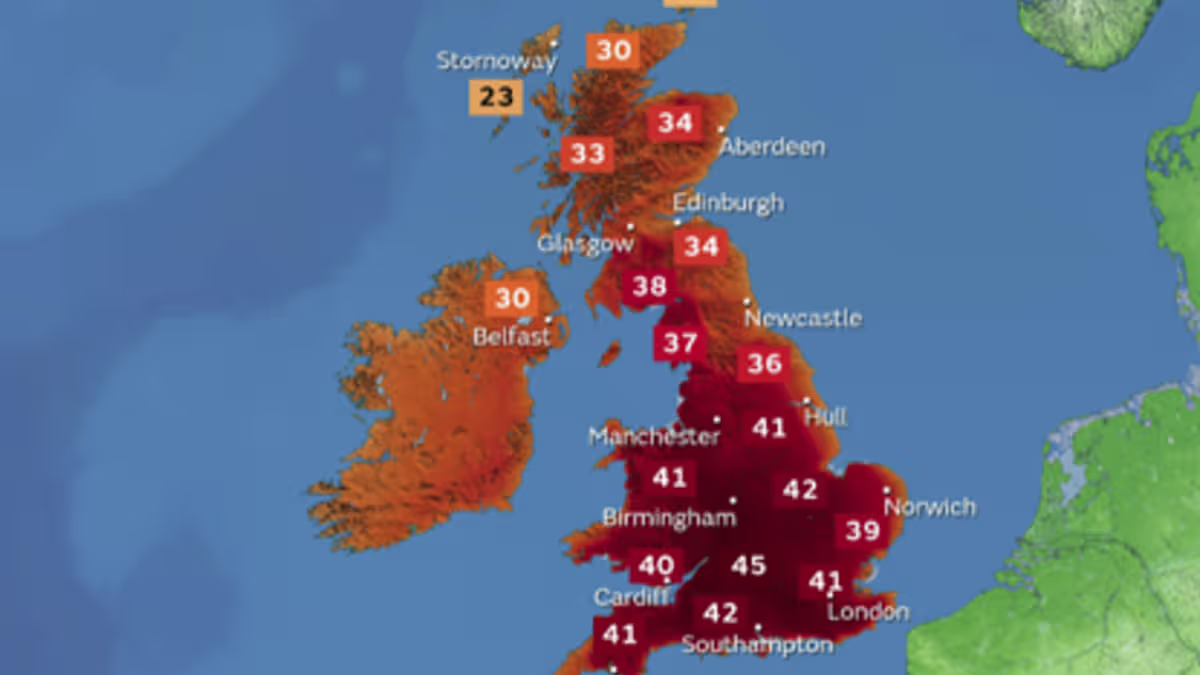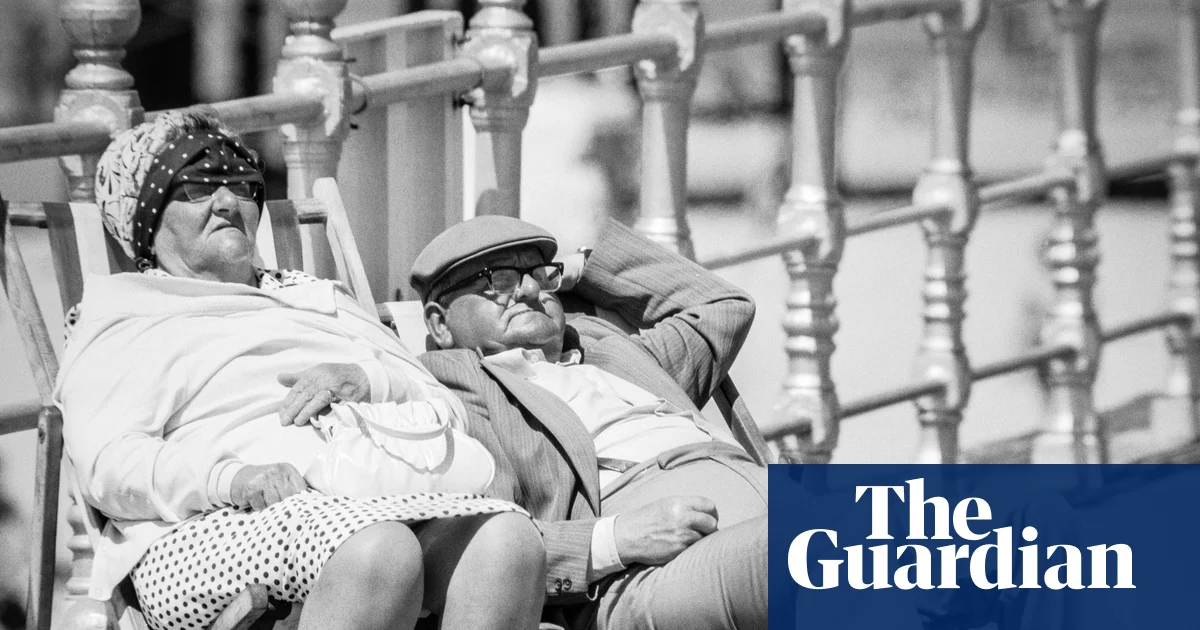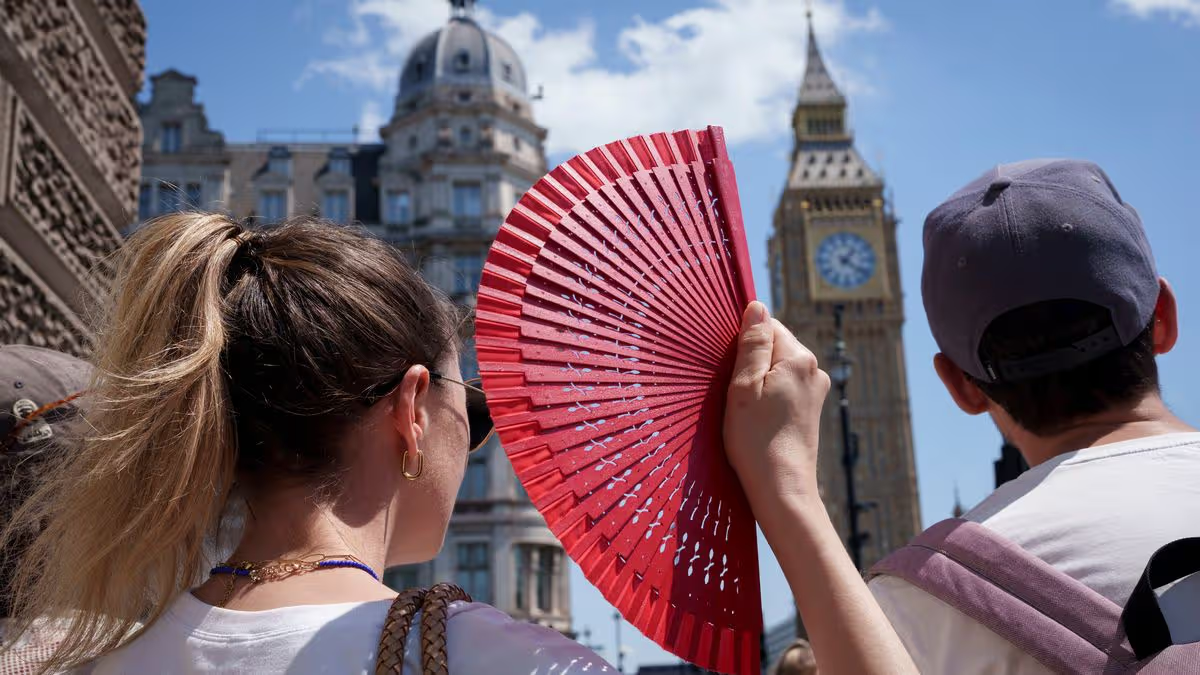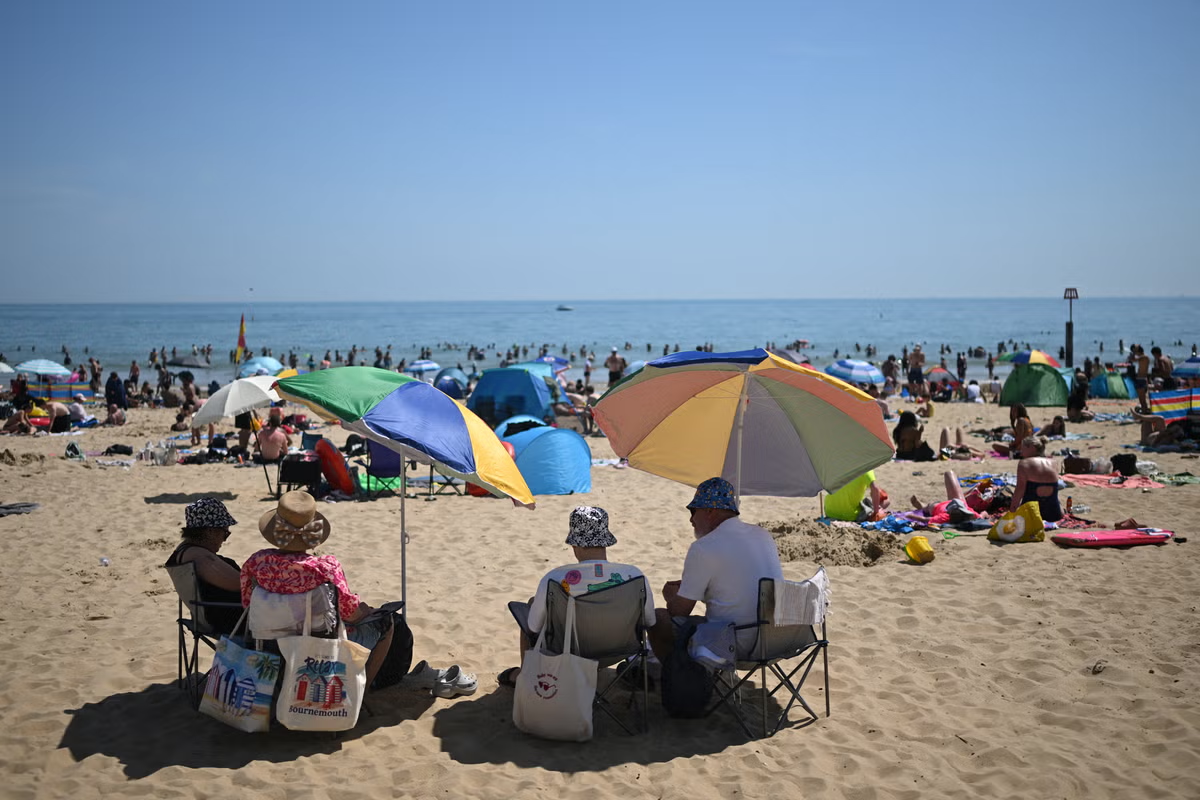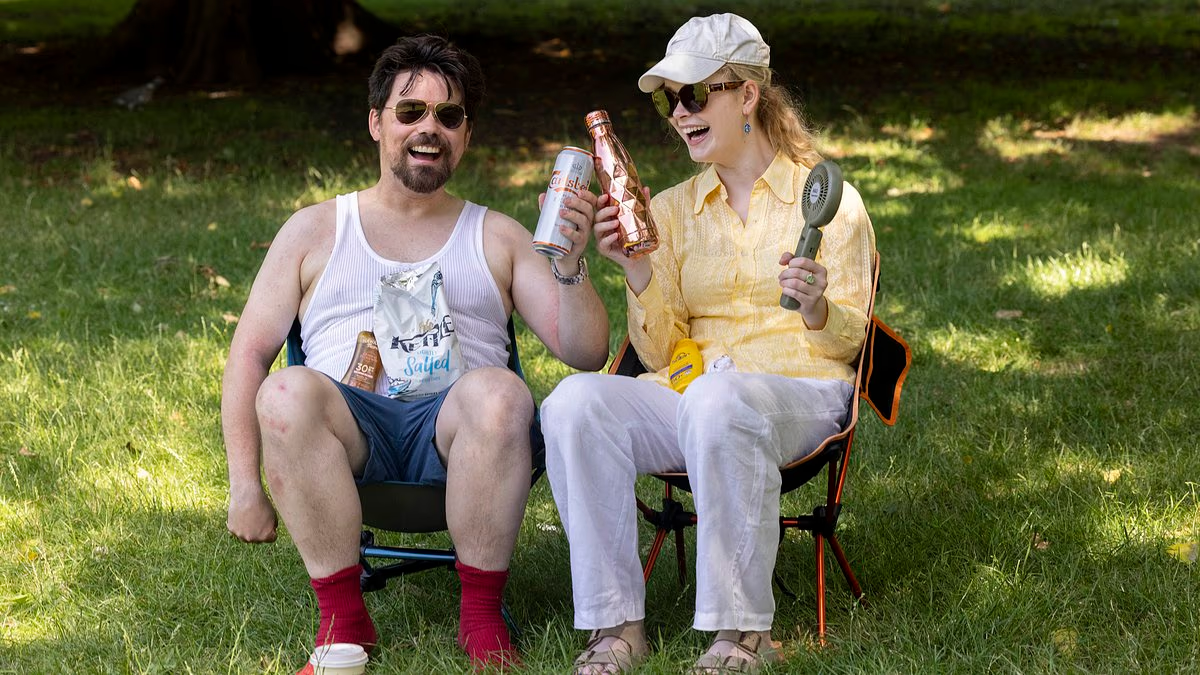
The 1976 heatwave might have been surpassed several times over but its ability to capture the public's imagination is legendary. 'Thirsty, burning Britons carry on regardless,' thundered the Daily Mail on June 29 1976 as the temperature hit 96 in old money (35.5C today).It saw temperatures above 32C for 16 consecutive days - the hottest day being on July 3, where there was a peak of 35.9C in Cheltenham - and it came amidst the most severe drought in British history. Those records have, of course, long been smashed: 1976 is now only the sixth-warmest summer on record, and temperature records for the hottest day in June were smashed three times on Wednesday, peaking at 36.1C in Hampshire. But some are convinced of a generational divide: that by closing schools and water parks - and even cancelling a conference on extreme heat - modern-day Britain is overreacting to a bit of sun.Fifty years ago, Brits are said to have endured the Great Heatwave (almost) without breaking a sweat, armed with the stiff-upper-lip gusto that defines the nation.People queued at standpipes in the street to get water to wash - never mind to fill up a reusable bottle. Many were inclined to sink a pint or two instead, prompting widespread beer shortages.Battery-powered fans were a rare novelty, never mind the elaborate portable mist-spraying devices carried by many a train passenger today.And as for suncream? Forget it: tanning oil - or a mix of coconut oil and iodine for those saving the pennies - was the order of the day to achieve a perfect bronze, long before sun protection and skin cancer awareness entered the public consciousness.Billboard advertisements of Bergasol tanning oil abounded. It would be another decade until the Government's terrifying 'Are you dying to get a suntan?' poster scared us all into covering up.Without any official government advice to turn to, people depended on professionals in the press for advice on how to beat the heat - with some truly 70s-style results.Are we overreacting to a touch of sun? Or, as experts say extreme heat events like this are becoming the norm, is it time for us to start taking them more seriously? Daily Mail reporters Jon Brady and Eleanor Mann try out advice for keeping cool, 1976 and 2026 style One of the defining images of the 1976 heatwave: Brits take to the sea in their droves at Brighton Beach The Mail's heatwave advice 50 years ago included 'making love' and 'the old British panacea of a cup of tea' How were Brits told to look after themselves in 1976?Several newspapers quoted advice from a doctor at Charing Cross Hospital unlikely to be given by the NHS now. 'A pint of beer and a packet of crisps will replace the liquid and salt lost through perspiration,' the medic said, hopefully not having taken his own advice while on call.Other newspapers suggested 'loose-fitting' clothes such as string vests, donning woolen underwear and wearing wet socks to bed, while one Sunday publication advocated for putting the kettle on: 'You can't beat a cup of tea. It's far more cooling in warm weather because it opens up the pores.Some advocated for donning woolen underwear and damp socks in bed in order to keep the subtropical nights at bay.The Daily Mail, meanwhile, opted to give what might now be considered sensible advice, including limiting alcohol intake and eating salad and fruit rather than 'starches' - what we call carbohydrates today. It also leant on fashion legend Mary Quant for advice on dressing for the sun. The miniskirt pioneer took the unusual step of telling British women to cover their legs.'When it's as hot as this it might sound like a good idea to take your clothes off - but don't,' she quipped. The Daily Mail asked on July 7, 1976 if Britain could learn to live with a super heatwave - a question now at the fore of many people's minds as temperatures rise year on yearThe Mail also suggested that Brits 'be merry by making love, which will burn up energy and make you sweat, which keeps you cool'. There is a generational divide: a YouGov poll released on Wednesday revealed that around 35 per cent of 18-24 year olds say they aren't coping well with the weather, compared with just 22 per cent of battle-hardened over-65s.Those who have seen off heatwaves of old are convinced that grit, and a pint, are all you need to survive the Met Office's 'extreme heat' red alert this week. But are they right? We've tested some of the classic advice Brits were given in the 70s against modern day tips, and asked the experts to bust some heatwave myths.JON BRADY takes a trip to 1976...With some 1970s advice fresh in my head, I plonk myself in a picnic chair in Hyde Park at the peak of the hottest day of the year (35C, 'feels like' 36) armed with everything a man of the era could need to ward off the sun.My inventory: a large bag of ready salted crisps, a literal pint-sized can of beer, a cup of tea and a bottle of Hawaiian Tropic. No 1970s tanning oil for me, though: modern day oils come with SPF protection built in - even Bergasol.'My mum uses that,' says the photographer, tellingly, as he nods at the bottle. Replete with a string vest (or rather, a ventilated number from M&S as the next best thing), I feel like a man out of time.I slap the oil on my weedy arms in the hope of giving some colour to my pasty Scottish skin. Crisps open, beer cracked, I prepare to catch a few rays.My younger colleague laughs as she shields herself with every modern-day accoutrement under the sun and hides beneath a tree (more on her in a bit). Mail reporter Jon Brady tries the old fashioned ways of managing the heat: a bag of crisps, a pint of beer, and some tanning oil Bottoms up! But are crisps really the best way of topping up the salt you lose to sweat, as was claimed 50 years ago?It isn't long until the humidity begins to creep up on me. It is hot. Really hot. My back is an ocean. My arms cook. The beer, quaffable as it is, is doing nothing for my thirst. Nor does the cup of tea cool me down - if anything, it makes me hotter. An ice cream purchased for the photographs is half-melted by the time I pose up.I worry about the ventilated vest giving me tan lines that resemble a cheese grater. The crisps are delicious, but the grease clings to my fingers in the hot sun.After just a short time, the heat is oppressive. I can only glare enviously at my colleague's vacuum-sealed water bottle and her handheld fan as I beat a retreat to the shade. I suspect I wouldn't have done well in 1976.Or would I? It's easy to dismiss the concerns around today's heatwave as yet another harbinger of Britain going soft, a sign that we're simply not as hardy as we used to be under the ever-watchful eye of the nanny state.But that would insult the 700 people whose deaths were linked to the 1976 heatwave and the thousands of heat-related deaths in heatwaves since. Not everyone was able to take it on the chin then. Some won't now.And while temperatures might be the same as 50 years ago, it likely feels hotter now too because of excess humidity: 75 per cent saturated with water, according to the thermometer we take to the park, which is enough to foster the growth of mould.The air of the 1976 heatwave was arid and dry, while the 'heat dome' hovering over Britain today contains moist air blown in from over the Atlantic. In humid conditions sweat struggles to evaporate into air already thick with moisture, which makes the body heat up and sweat more, creating a cycle of uncomfortable, clammy doom. A scene straight from 1976: can a string vest and a rapidly melting ice-cream really help you keep cool? Our man on the ground tries to cool off with a cup of tea - but it turns out not to helpScientists say things will only get hotter, too. The Met Office issued a speculative forecast for 2056 this week, presented by one of its usual beaming meteorologists who cheerfully told us England is likely to regularly hit 45C in three decades' time.So was the advice wide of the mark? I can't say I'd recommend plonking yourself in a clearing in the middle of Hyde Park and slapping on the tanning oil with prejudice. Nor are crisps exactly nutritionally complete - and the salty crisps only made me thirstier. I knocked back a full two litres of water on my return to the Mail's heavenly air-conditioned office.Even if you eschew the beer in favour of water, and cover yourself from head to toe in clothing and SPF50, it's almost impossible to completely avoid a heat that's only going to get hotter in summers to come, if experts are to be believed.These days, farmers are banned from transporting livestock in temperatures exceeding 30C and must keep them cool.Given the choice between that and a pint and some crisps in the park, I'd rather be a cow.Gen Z reporter ELEANOR MANN tries the modern way...As a self-confessed Gen Z snowflake with a ginger father, I was particularly nervous about this heatwave.Born in 2002, I was never able to brave the summer of 1976.Today, the advice for staying safe in the sun seems quite simple: stay in the shade, keep hydrated, and apply sun protection.Dr Agostinho Sousa, of the UK Health Security Agency, said this week that 'simple actions like staying hydrated, avoiding the sun during the hottest part of the day, and keeping your home cool can make a big difference'.Age UK suggests shopping early or late in the day to avoid peak temperatures, keeping in the shade and closing windows and curtains during the day, only opening them at night to let cooler air in.Having put some of these to the test, I can confirm that after an hour in the sun I felt markedly better off than my 1976 counterpart. Mail reporter Eleanor Mann stands ready to face the heat with a combination of sensible clothing and modern day inventions Forget tanning oil: for our Gen Z correspondent, it's all about the SPF50 - and lots of itThe electric handheld fan provided a lovely breeze and my environmentally-friendly refillable and insulated water bottle kept me cool and hydrated.My colleague's warm beer can looked comparatively unappealing. I felt quite smug as I reclined in the shade of the trees, adhering to the expert dermatologist advice, knowing I would have skin like Joan Collins when I was 80.While admittedly less sexy than a tan, the SPF50 sun cream did also protect my skin, as someone fair-skinned and freckly who grew up in an age when the dangers of sunburn were drilled into you.I remember only too well holidays on the beach in the 2010s when my mother smeared me and my sisters in greasy P20 sun cream, which stained your clothes and stung your eyes. These days, the fancier lightweight creams offered in tiny bottles for £25 seem invisible.One piece of modern advice I was less convinced by was the long clothing. Yes, it saved on suncream space, but I felt a little claustrophobic even in my loose, breathable clothing.I would have felt more at home in some denim shorts and a t-shirt, but instead gave off a slightly American summer-camp mom look.The sunhat kept me shaded and protected from melasma spots, as did the sunnies, and staying in the tree shade where it was cooler made the biggest difference.Enjoying the heat without the faint headache-y feeling that one gets after a couple of ciders in the sun was also a pleasant change - though low or zero alcohol alternatives can offer the tasty quench without the hangover too.These scientists are clearly onto something. I wonder how the advice will change 50 years from now? It's always nice to meet a fan: Mail reporter Eleanor Mann feels the breeze with her modern-day personal coolant Eleanor keeps cool with some fresh water from her vacuum-sealed water bottle - a better choice, she says, than a tepid can of beerWhat do the experts say? We asked two medical experts if there was any science behind the kinds of advice people were being given at the peak of the 1976 heatwave.In unsurprising news, neither were impressed by the notion of drinking beer - or even tea or coffee which, in humid conditions, can actually heat you up.Dr Dean Eggitt, a consultant primary care physician in Doncaster, said: 'I can see where some of the advice comes from - the concept of drinking beer back in the day, in theory it has vitamins in there so it seems good. 'But we've learnt over the years that alcohol is quite dehydrating. 'So people should stay away from it and from hot drinks like tea and coffee too, as they're terribly dehydrating and can worsen medical conditions during the heatwave.' Dr Eggitt added: 'If you're dehydrated, you have to drink water that has rehydrating salts in it too. In the global South, many people die from heat exhaustion simply because they aren't aware that salt replenishment is a must, as well as water.'You can make your own version at home by mixing a little salt and water, but you can also get rehydration sachets from the shop.'The attitude towards tanning has changed: having bronzed skin, aided by whatever oil you could get your hands on, is no longer the symbol of vitality it once was.
How the heatwave advice of 1976 compares to today
Those who have seen off heatwaves of old are convinced that grit, and a pint, are all you need to survive the Met Office's 'extreme heat' red alert this week.
2,772 words~13 min read