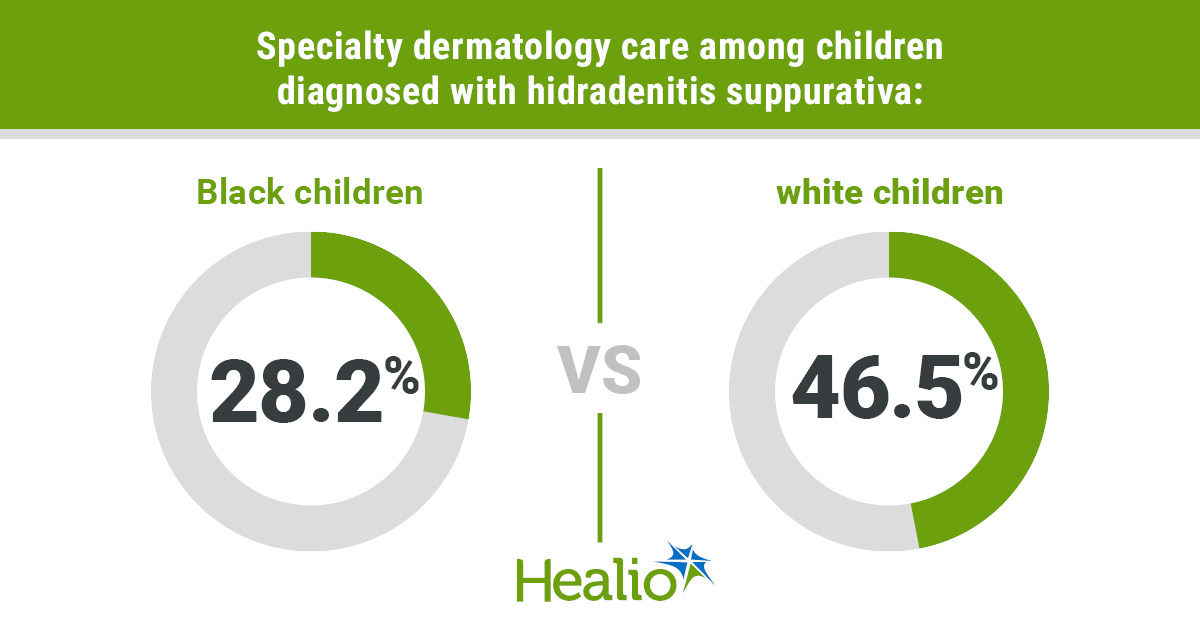
A study in JAMA Dermatology explores dermatology use at eight U.S. children's hospitals to determine practice variations based on race and ethnicity.
The cross-sectional study included electronic health records for 536,776 children with one or more dermatology clinic visits or two or more non-dermatology clinic visits coded for atopic dermatitis (AD), acne, infantile hemangioma, psoriasis, or hidradenitis suppurativa (HS).
Co-author Lucinda Kohn, MD, MHS, is a pediatric dermatologist with MarinHealth in California. Kohn's exchange with the Reading Room has been edited for length and clarity.
What motivated this investigation?
Kohn: When I worked at the University of Colorado, I often cared for American Indian patients from rural communities who drove up to 8 hours to see a pediatric dermatologist, as well as immigrant and refugee families who did not speak English. Those experiences made me wonder whether children from marginalized racial and ethnic communities face greater barriers to accessing specialty dermatology care. Access to specialty care has a major impact on health outcomes, so identifying where disparities exist is an important first step toward addressing them.