The Fertiliser Ministry on Friday said that the interest shown by prospective players in green urea indicates that its domestic production will be a reality in the near future.Currently, the Indian Council of Agricultural Research (ICAR) has been conducting trials at its different locations since last Rabi season on the effectiveness of green ammonia on some select crops like paddy, oilseeds and sugarcane.Under a pilot project, a 150 TPD Green Urea plant at Pudimadaka, Andhra Pr,adesh will be developed by NETRA, the R&D arm of NTPC, as a technical reference point. The facility integrates Carbon Capture and Utilisation (CCUS) systems with water electrolysis, it said.The Department of Fertilizers (DoF) held a high-level pre-Expression of Interest (EOI) meeting for the establishment of Green Urea Plants in India, which was chaired by K K Pathak, a joint secretary in the department and also holding charge of Chairman and Managing Director of public sector PDIL.Indicator of intentThe EoI was floated by PDIL earlier to gauge market interest and technical readiness across the value chain. The participants in the meeting included NTPC, Solar Energy Corporation of India (SECI), Technology Suppliers of Ammonia-Urea, major fertilizer companies and manufacturers of Electrolyzers, Green Hydrogen and Green Ammonia.“The massive turnout — online and offline — from prospective players across the entire value chain is a clear indicator of the keen intent to bring this initiative to reality in the near future,” the ministry said.The discussions highlighted the financial allocations from multiple ministries to make green urea production economically viable. Ministry of New & Renewable Energy (MNRE) has been tasked to allocate ₹19,744 crore to accelerate critical green energy infrastructure and strengthen India’s clean energy ecosystem.Proposed arrangementDepartment of Fertilizers (DoF) has been tasked with creating the institutional and market-parity framework to seamlessly integrate Green Ammonia into the national fertilizer manufacturing chain.The financial contours of DoF’s role is yet to be worked out. Green ammonia currently costs more to produce than conventional grey ammonia, making Green Urea uncompetitive without subsidy.Under the proposed arrangement, the SECI will act as an intermediary -- procuring green ammonia from producers and supplying it to domestic fertiliser companies at grey ammonia-equivalent prices.It was also agreed that the prices of green ammonia will be benchmarked to a two-week average of Platts and Argus indices, adjusted for customs duties and local logistics costs. The DoF would cover the residual price difference.On the supply side, financial incentives under the National Green Hydrogen Mission (NGHM) -- Green Ammonia Mode 2A -- have been proposed. Besides, a procurement target of 7.24 lakh tonnes (lt) of green ammonia per year is envisaged, and those will be allocated via competitive e-reverse auction to be managed by SECI.Captired Co2 essential input“If approved, support would be available across development and operational stages, secured for 10 years through a binding definitive agreement,” the ministry said.India imported 100 lt of urea in 2025-26 and has been continuing its overseas purchase to meet domestic demand even as the government has been making simultaneous efforts to reduce import dependence on chemical fertilisers.Green urea production requires carbon dioxide as a synthesis feedstock, making captured CO₂ from thermal power, cement, and steel plants an essential input. A world-scale urea plant of 12.7 lt annual capacity would require nearly 10 lt of CO₂ per year.The ministry noted that integrated projects — combining renewable energy, green hydrogen, carbon capture, and ammonia synthesis — could position the fertiliser sector as one of India’s largest consumers of captured industrial carbon, supporting the country’s net-zero goal for 2070.Published on June 26, 2026
Fertiliser Ministry prepares green urea roadmap, plans a pilot plant in Andhra Pradesh
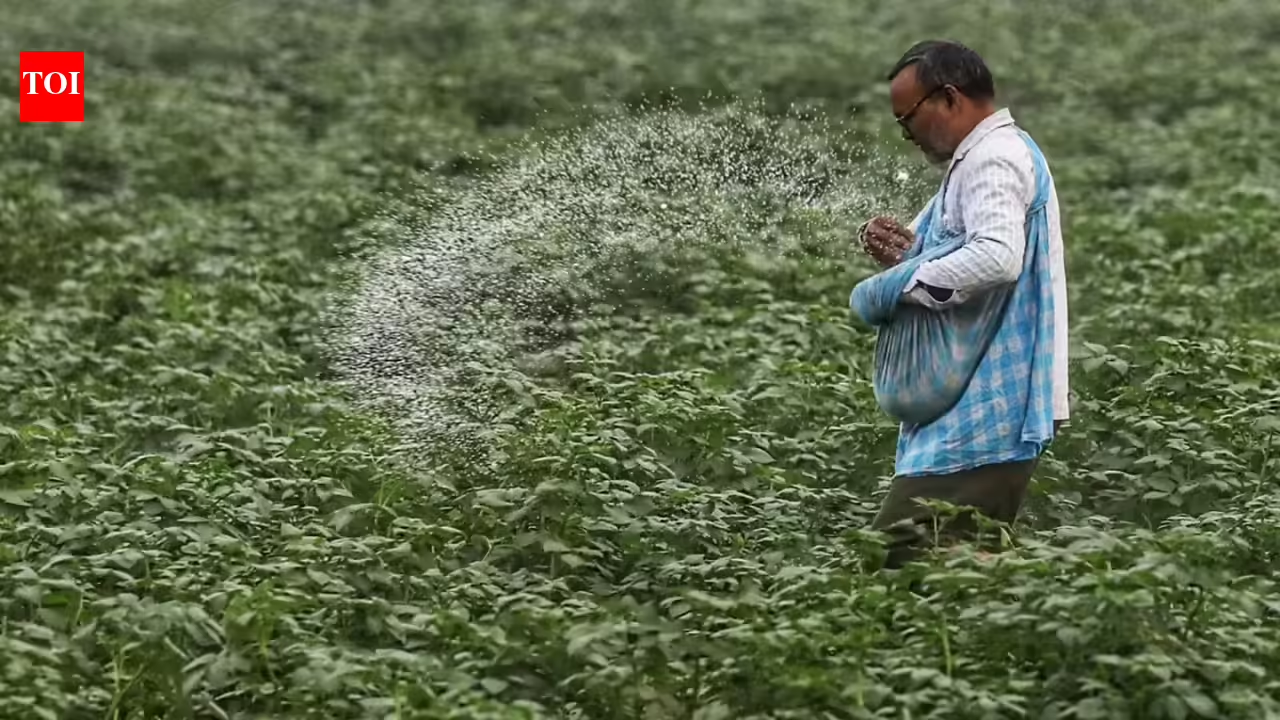
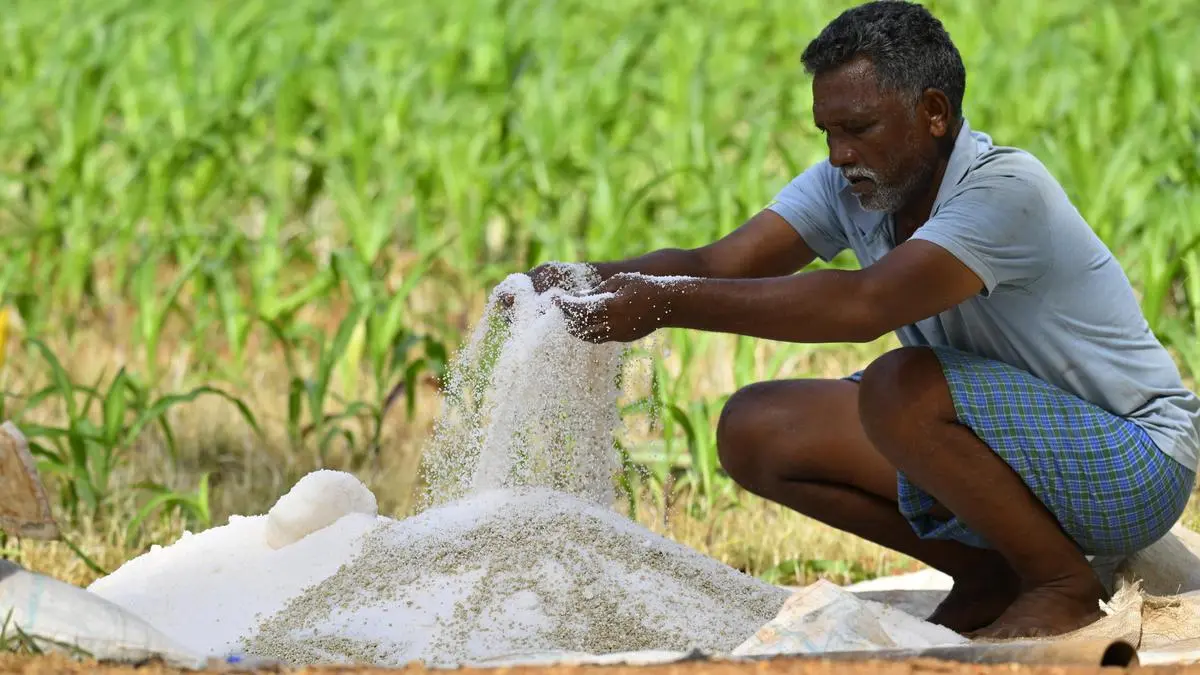
ICAR has been conducting trials at its different locations since the last Rabi season on the effectiveness of green ammonia on some select crops like paddy, oilseeds and sugarcane
587 words~3 min read