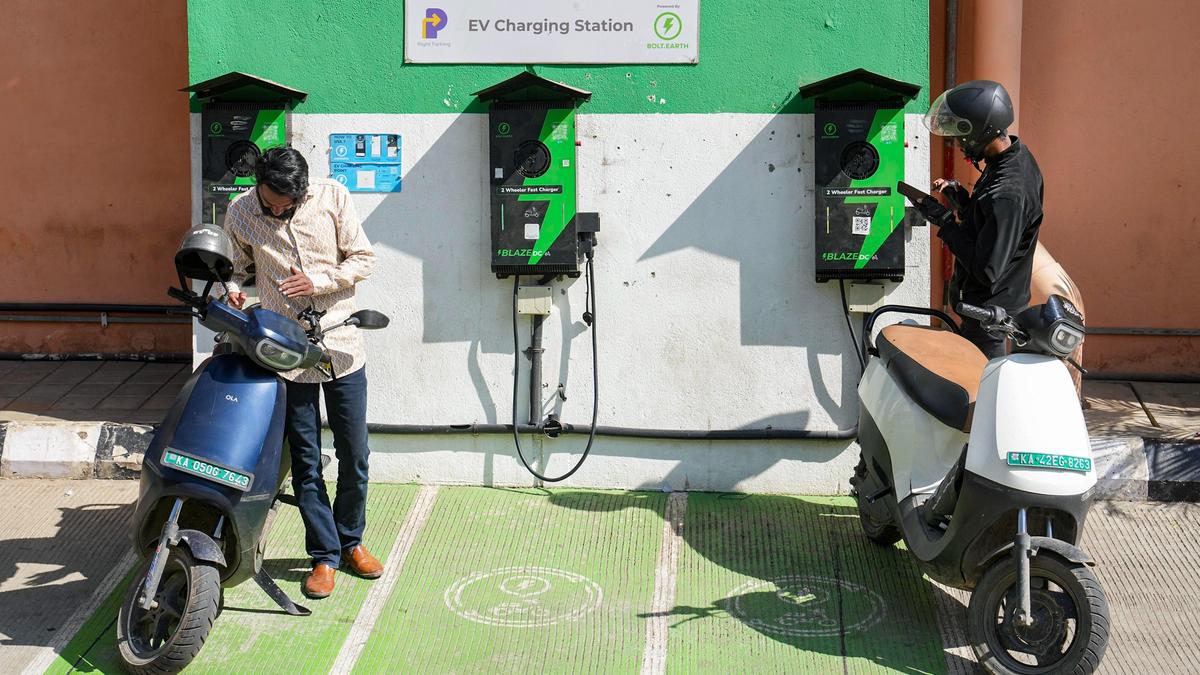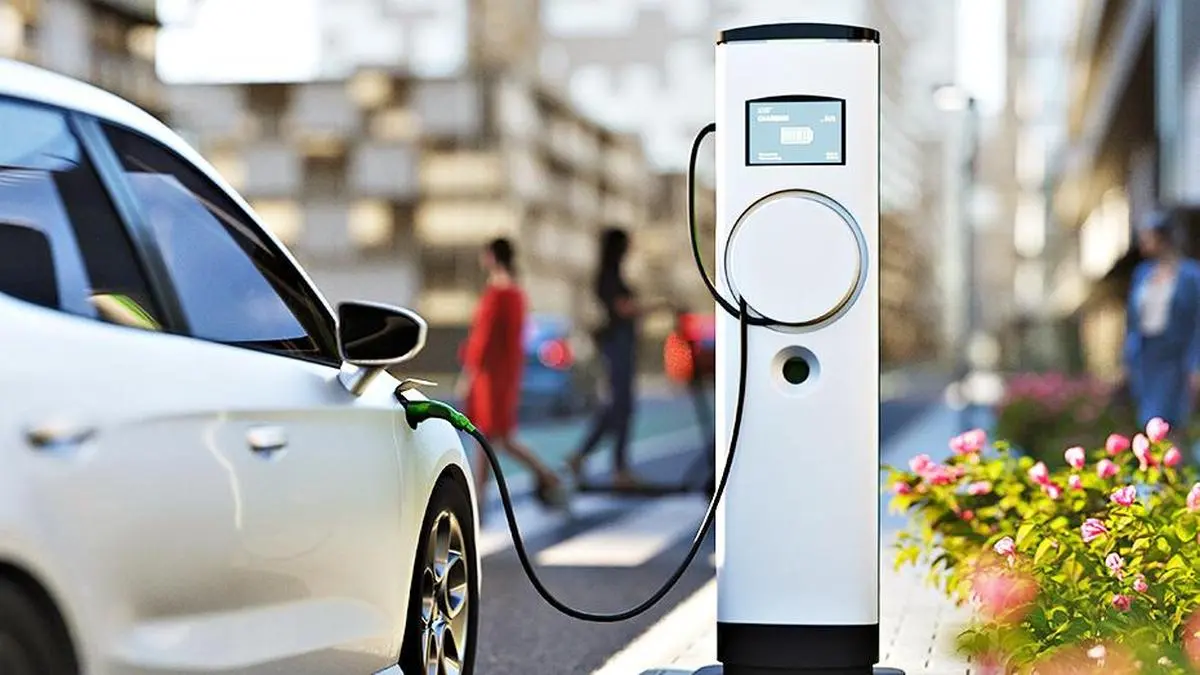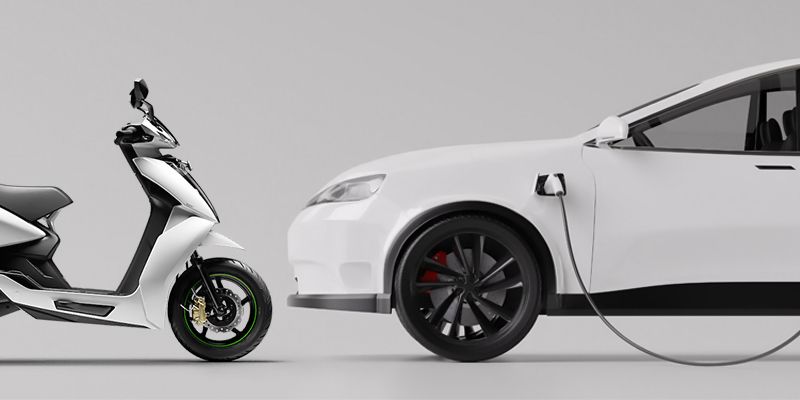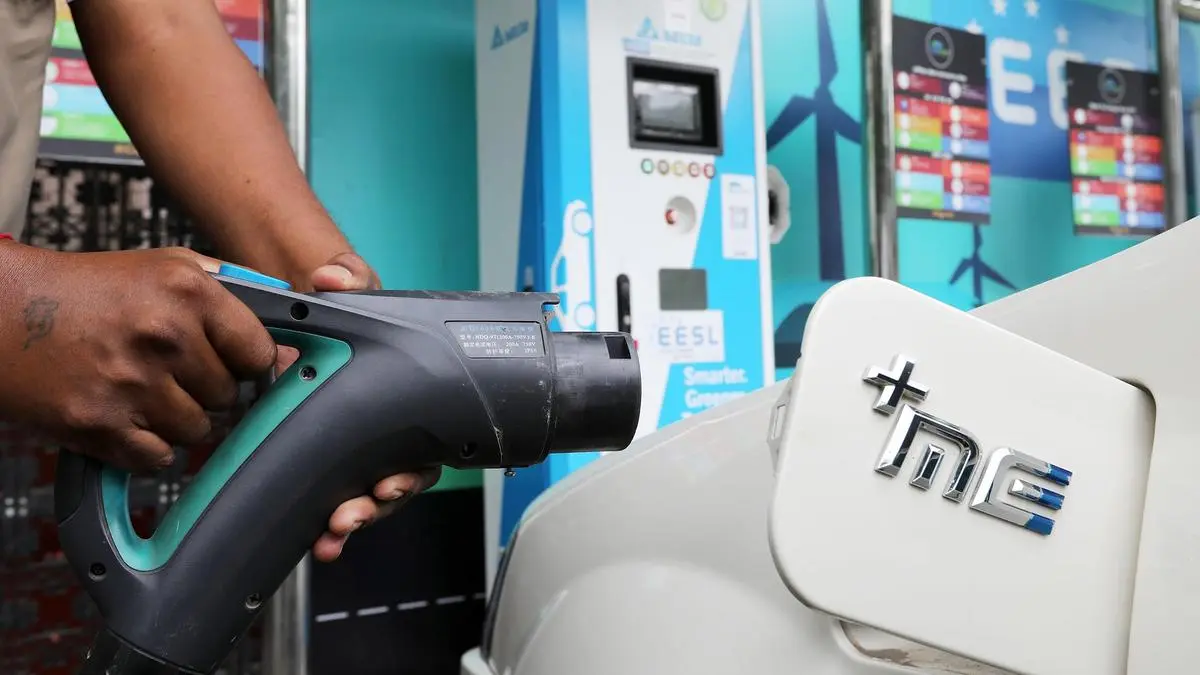
India’s EV market is characterised by a wide variety of OEM-specific designs. This lack of standardisation makes it difficult to use common parts across different brands
| Photo Credit:
T. NARAYAN
Despite higher policy support and growth in manufacturing investment plans, complete localisation in the electric vehicle (EV) segment faces several hurdles, such as fragmented platforms and a lack of component standardisation, making it hard to achieve economies of scale.A joint report by the Institute for Energy Economics and Financial Analysis (IEEFA) and JMK Research & Analytics points out that India’s EV market is characterised by a wide variety of OEM-specific designs, particularly in the two and three-wheeler segments. This lack of standardisation makes it difficult to use common parts across different brands.“Furthermore, India’s production volumes are nearly 85 per cent lower than China’s, and the domestic supplier base is still developing. These factors together make it hard for manufacturers to achieve the economies of scale needed to lower the costs of high-technology components like controllers, chargers, and electronic modules,” it added.The report highlighted that rapid growth in the domestic EV market is transforming the value chain in India’s automotive sector, with value shifting from traditional metal-based components to sophisticated electronic systems and advanced assemblies.While this presents substantial opportunities for the sector, the report emphasised that it also introduces significant challenges that require strategic adaptation.LocalisationThe report noted that localisation levels have improved across EV segments, with many original equipment manufacturers (OEMs) now undertaking domestic assembly and local sourcing for structural and mechanical components.“However, a deeper assessment of the supply chain reveals that localisation remains uneven at the component level, particularly for systems unique to EVs such as motors, battery packs, power electronics, and charging systems,” it added.Prabhakar Sharma, Senior Consultant at JMK Research & Analytics, said that accelerating development of semiconductor and rare-earth magnet supply chains, expanding participation of EV startups in localisation programmes, promoting greater component standardisation, and increasing investment in indigenous research and development all have a role to play.Future localisation progress will also depend on whether local suppliers can become more cost-competitive relative to imports from established manufacturing ecosystems such as China.At present, many Indian suppliers continue to face a 20–30 per cent cost disadvantage due to lower production volumes, fragmented demand across OEMs, and limited vertical integration, the report pointed out.It suggested that greater component standardisation across OEM platforms could help aggregate demand and improve economies of scale for domestic suppliers.Recent initiatives such as the Light Electric-Vehicle Acceleration Forum (LEAF) indicate growing industry recognition of the need for standardisation, especially in charging ecosystems for light EVs.“However, these efforts have not yet evolved into a broader policy framework covering other components. Faster progress in standardisation and manufacturing integration is likely to play an important role in reducing costs and improving supplier competitiveness over the long term,” it added.Published on June 26, 2026