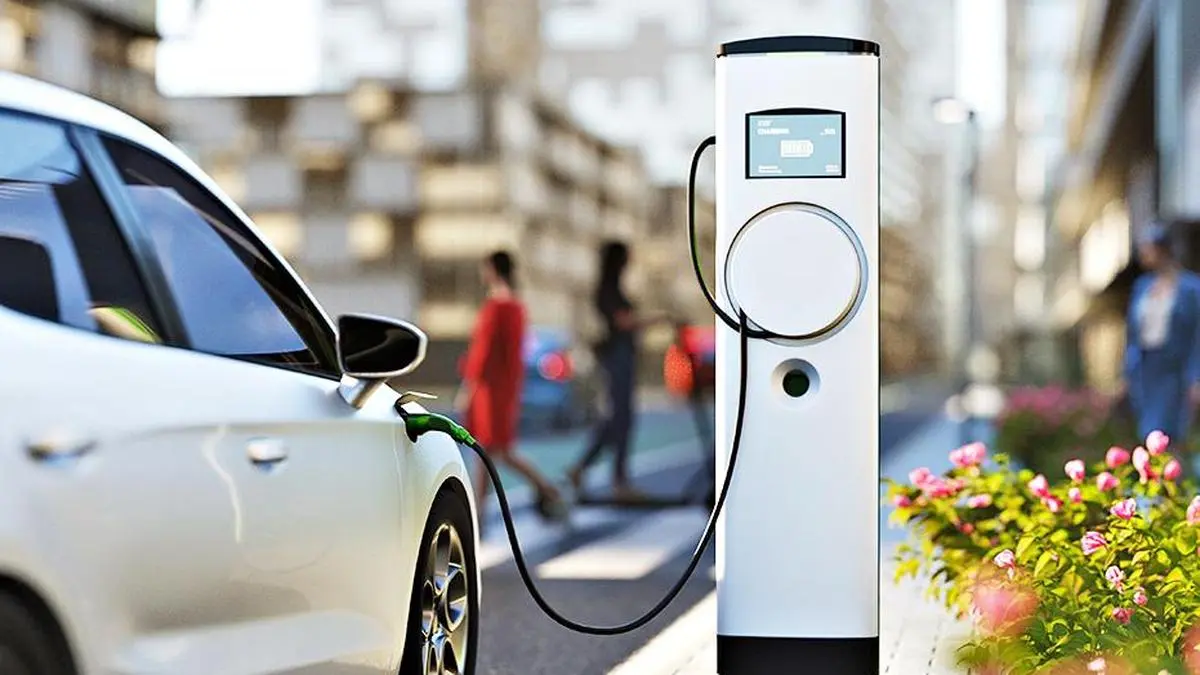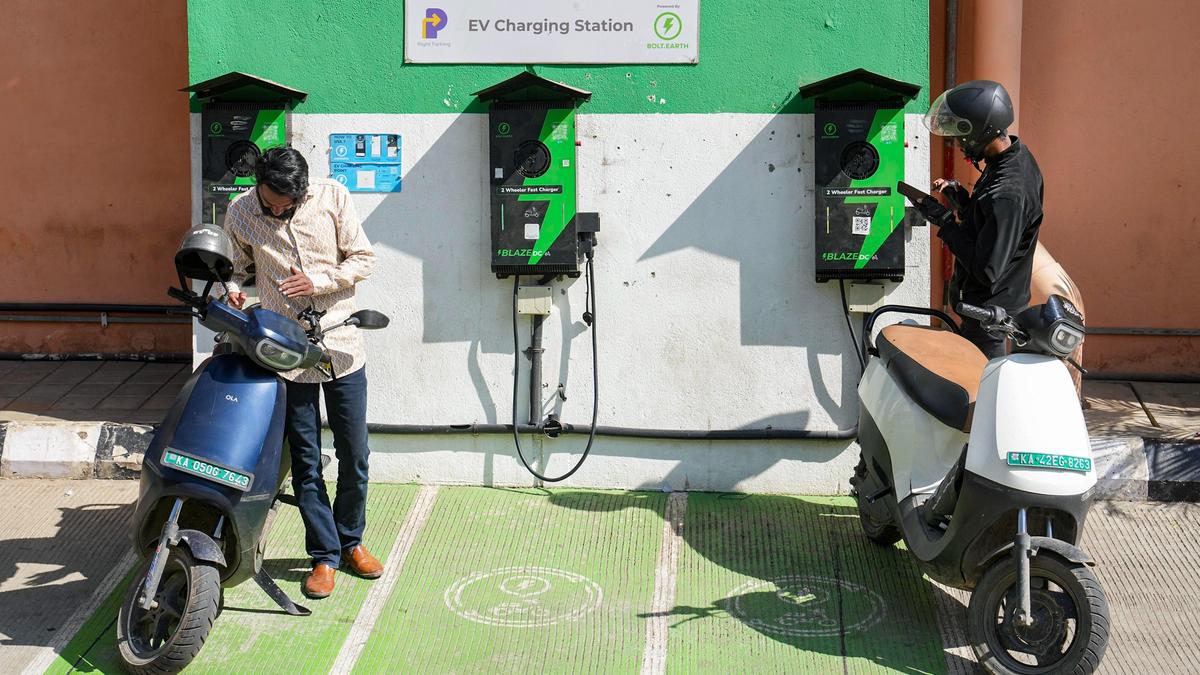
Representational image
| Photo Credit: PTI
India’s electrification of road transport has entered a decisive growth phase. Around 2.5 million vehicles were sold in FY26, a significant increase from FY25. This momentum reflects the effectiveness of policy support from both the Centre and the States, including upfront purchase incentives, road tax exemptions, registration charge waivers, and other demand-side interventions. These measures helped create the initial market, reduce consumer hesitation, and establish electric vehicles (EVs) as a credible and tested technology.Import dependenceThe next phase of EV adoption demands a different policy and industrial logic. As the sector scales, India is moving away from imported fossil fuels, only to find itself becoming increasingly dependent on imported lithium-ion batteries. That shift changes the core question. The challenge is no longer how quickly India can electrify transport, but how it can do so without creating a new strategic vulnerability. EV growth must now be judged by three additional metrics: supply chain resilience, strategic autonomy, and long-term sustainability.India’s domestic cell manufacturing is still far below the scale needed to alter import dependence meaningfully. Under the ACC Battery Production Linked Incentive scheme, 40 GWh of capacity has been awarded, but only about 1 GWh has been installed so far. Meanwhile, passenger EVs sold in India are sourcing batteries from 14 global manufacturers, with 7,987 MWh imported in 2025. Of this, a significant share came from Chinese manufacturers, highlighting that increasing EV sales are tightly correlated with increasing imports from China.This concentration creates a structural risk for Indian EV OEMs (original equipment manufacturers). Battery supply is increasingly exposed to a single-country ecosystem that is shaped by policy, geopolitics, and industrial strategy outside India’s control. Several developments in China are influencing pricing and availability, like tighter technology restrictions, prioritisation of domestic demand, withdrawal of VAT exemptions on battery exports, and more. Additionally, the West Asia conflict has compounded the pressure through higher raw material costs, elevated manufacturing expenses in China, and rising transport and risk premiums.The consequences extend beyond OEM balance sheets. Battery inflation delays price parity with internal combustion engine (ICE) vehicles and slows the shift from early adopters to mass-market buyers. In a market as price-sensitive as India’s, rising cell costs can do more than compress margins; they can confine EVs to premium segments and place national adoption targets at risk if the situation persists and OEMs are forced to pass on higher costs to consumers.This requires a holistic situational assessment and identifying key interventions in the short to medium term. The near-term response must be pragmatic. Many OEMs already talk of a “China + 1” sourcing strategy, but actual supplier diversity varies widely by segment. Higher-end EVs are increasingly paired with non-Chinese NMC batteries, while cost-sensitive mass-market models continue to rely on cheaper Chinese LFP cells. True diversification, across suppliers, chemistries, and geographies, may raise costs initially; but it significantly lowers the risk of strategic disruption over time.Product modificationsThe cost shock should also drive product-level discipline. OEMs need to design EVs around efficiency, lighter architectures, more effective drivetrains, smarter software calibration, and battery right-sizing aligned with actual usage rather than aspirational range. India’s market may ultimately reward lean, purpose-built electrification over oversized vehicles designed around imported battery economics. Software-defined battery platforms that support multiple chemistries without hardware redesign would further improve flexibility as the cell market evolves. Moreover, Indian manufacturers should begin type-testing vehicles across emerging chemistries, including sodium-ion batteries. Sodium-ion is not yet a full substitute for lithium-ion across all use cases, but it could serve as a meaningful hedge as production scales domestically, broadening the technology base and reducing dependence on any single chemistry or supplier.Further, India’s path forward lies in building a structured ‘EV supply chain alliance’ with trusted partners, one that spans minerals, manufacturing, technology, and standards. Such an alliance would distribute risk across geographies, deepen domestic capability over time, and ensure that no single external disruption can stall India’s electrification agenda.The EV transition is no longer straightforward and the recent disruptions underscore the need for a more resilient approach. India has already demonstrated that it can create demand for clean mobility. The next test is whether it can build the industrial depth to sustain that demand without becoming dependent on a single external bottleneck. The goal should not be merely to electrify faster, but to electrify intelligently, securely, and on terms that strengthen India’s long-term strategic and economic autonomy.(Jaideep Saraswat is the Associate Director of the Clean Power, Electric Mobility & Emerging Technologies vertical at Vasudha Foundation. Akanksha Golchha is Senior Associate (non-resident) with the Chair on India & Emerging Asia Economics at Center for Strategic and International Studies.) Published - June 03, 2026 08:00 am IST