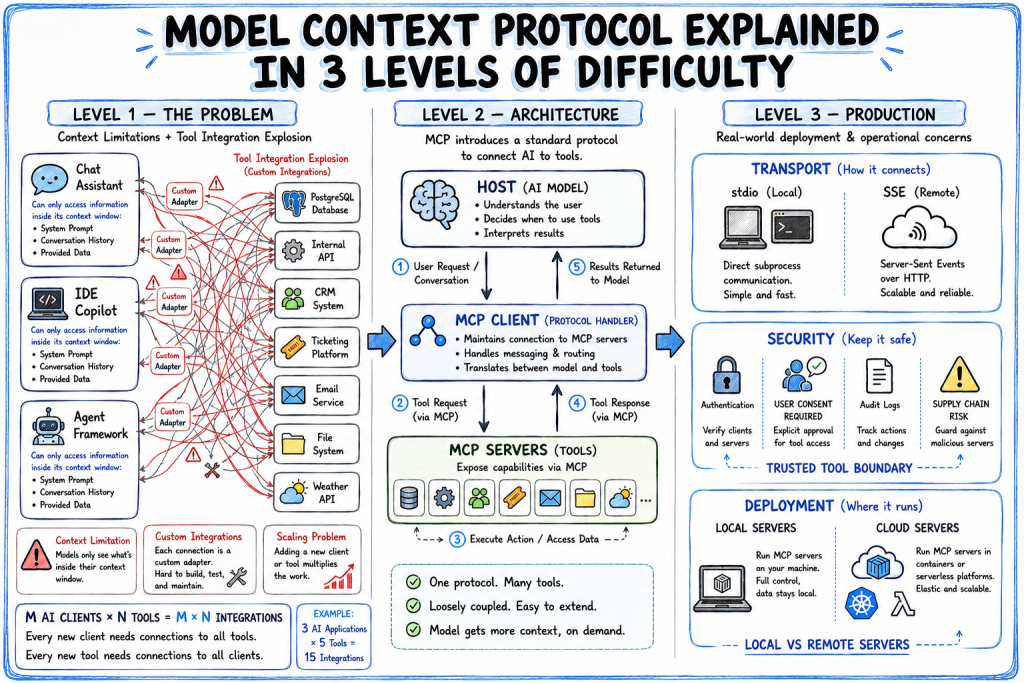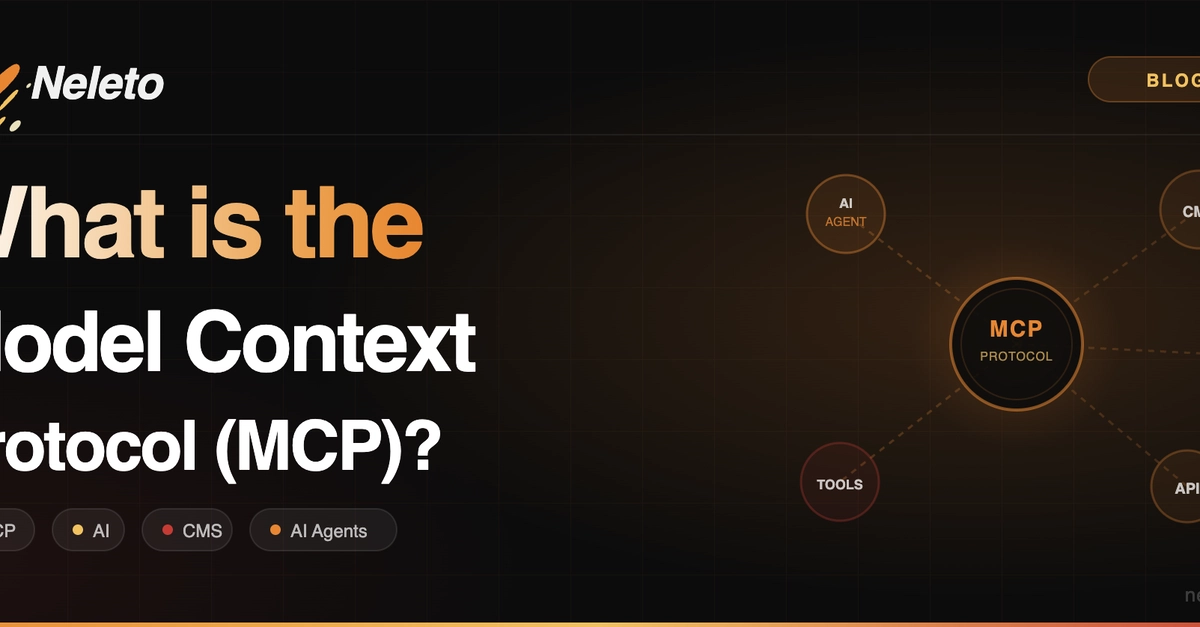
Don Murray is Cofounder & CEO of Safe Software and has spent his career helping organizations bring life to data to make better decisions.gettyI have spent 32 years building data integration tools. When a new standard arrives, I ask one question before anything else: Does it make the connection easier, or does it just relocate the complexity? Most standards do the latter. The Model Context Protocol does something I have not seen in three decades of watching this space. It eliminates the complexity.And here is what most AI conversations are missing: MCP has nothing to do with AI. Anthropic invented something that the AI space needed, but in the process created something even bigger. MCP is an integration protocol for data and tools, an open standard that defines how any MCP client (not just AI) discovers tools, and then calls on any other client it wants to use. All this without custom code, without a proprietary connector, without having to rebuild from scratch when either side changes.The reason it is discussed almost exclusively in AI contexts is that it was created to make it easy for AI to get access to any data or tools. Its value, however, is not AI-specific, as any system that speaks MCP can connect to any other that does. That is a much larger idea than most technology leaders have had time to absorb.The Problem Was Never The ModelMany organizations that have struggled to move AI from pilot to production share the same root cause. The models are capable. The integration was the challenge.AI needs context to be useful—live, trusted, with specific data delivered to the model at the moment it matters. Until now, building that context layer meant custom work for every connection. Every new data source, every new AI system, every change on either side meant work.The Walled Garden Problem Is Getting WorseThe integration burden is only part of the challenge. The deeper problem is structural. AI vendors want to own the model layer. Data platforms want to own the data layer.Every integration built within a single vendor's ecosystem is not just a technology decision; it is a bet that this vendor will remain the best option at a rational price indefinitely. Locking into one vendor is a bet that is more often wrong than right. Disconnected data is a strategic risk, but so is data connected through a single vendor's door. The organizations that recognize this are designing for portability now, before the switching costs become prohibitive.Why This Standard Will HoldI have watched integration standards fail. They fail for predictable reasons: too complex to adopt, too narrow to matter, or controlled by a single vendor whose incentives eventually diverge from the community. MCP avoids all three.It is architecturally simple. Two operations: Ask a server what tools it has and what they can do, then call the desired tool. That simplicity is intentional. It was built by pragmatic practitioners who needed something that worked immediately across hundreds of different tools.When Anthropic handed MCP to the Linux Foundation as an open standard, that was a signal worth taking seriously. Infrastructure that belongs to no one serves everyone. The industry read that signal correctly. Every major AI platform supports MCP not because they were required to, but because the value is there.For integration vendors, this changes the economics of connection in both directions. Reaching any system that exposes an MCP endpoint no longer requires building a custom connector. Connecting to any AI is now a matter of creating MCP server tools that any model can discover and call. The protocol works both ways. Our reach as an industry just got significantly larger, and the cost of expanding it dropped considerably.The Agentic Economy Requires This FoundationThe most consequential AI applications of the next several years will not be conversational. They will be agentic. Systems that plan across goals, execute across tools and act across organizational systems with minimal human intervention. These agents need a standardized way to discover capabilities and call them dynamically. MCP delivers.What the Organizations Getting This Right Are Already DoingThey are designing for choice, not convenience, agility over allegiance. The winning architecture is not built on today's strongest model. It is built to swap models without rebuilding anything. Lock-in is a decision. So is refusing it. MCP makes the refusal practical for the first time.Leaders should be asking themselves if their organization is positioned to benefit from it or is still paying the cost of every custom integration that came before it. No data. No AI.Forbes Technology Council is an invitation-only community for world-class CIOs, CTOs and technology executives. Do I qualify?
MCP: The Protocol Reshaping Enterprise AI Is Not Just For AI
The Model Context Protocol does something I have not seen in three decades of watching this space. It eliminates the complexity.
769 words~3 min read