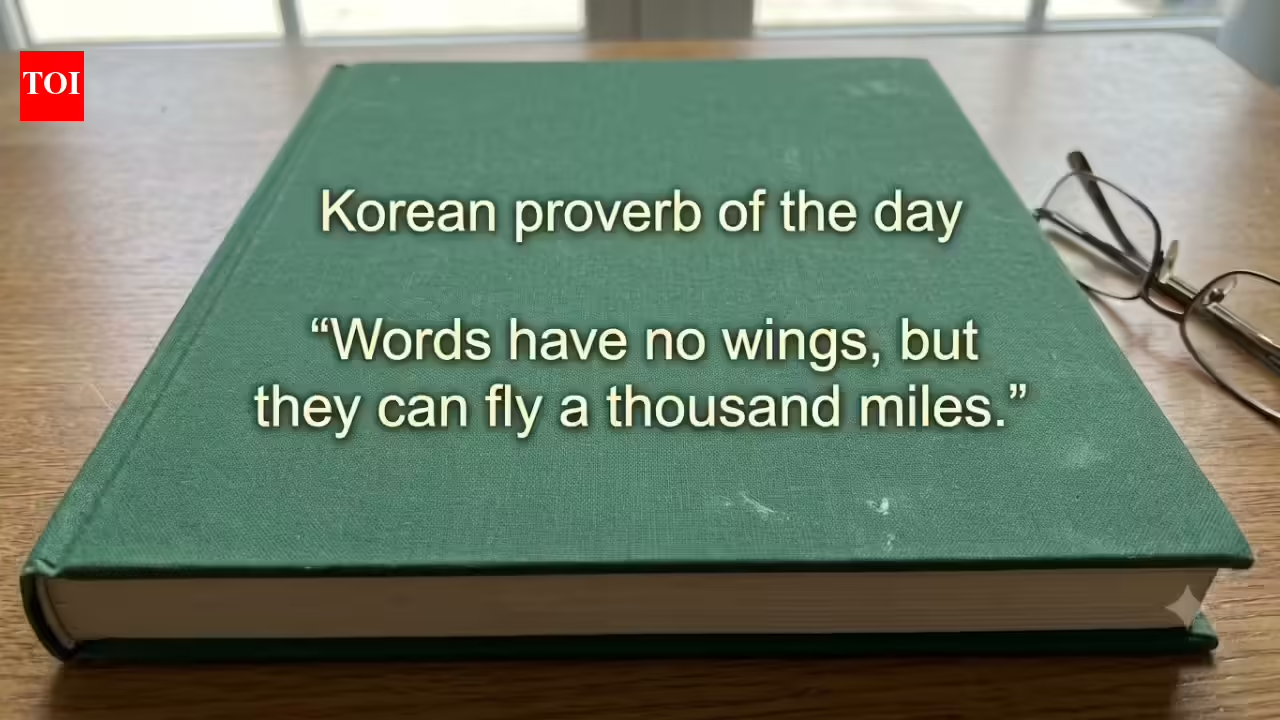
The image behind this saying is striking in its contradiction: words are weightless, formless things. They have no body, no legs, no physical presence and yet they can travel farther and faster than the truth they distort. A rumour needs no vehicle. A whisper, once released, moves on its own. The proverb comes from the Korean oral tradition, where sayings about speech and its consequences have long formed a central thread of moral instruction.A universal warningIts wisdom is not unique to one culture: the Roman philosopher Virgil wrote of rumour as a swift, many-tongued creature that grows stronger with every telling, while a popular saying holds that a lie can travel halfway around the world before truth has laced up its shoes. Across traditions, the warning is the same: falsehood does not wait.What the proverb really meansThe meaning goes beyond the mechanics of gossip. Consider what each element represents:Words stand for everything spoken carelessly. Half-truths, assumptions, unverified claims and deliberate distortionsTruth is slow because it requires evidence, patience and the willingness to correctThe race between the two is unequal from the start. Truth must be established, a rumour only needs to be repeatedThe proverb does not promise that truth will eventually win. It is a caution about what happens in the meantime.The philosophy of speechThe philosophy behind the saying is rooted in the responsibility that comes with speech. In many East Asian moral traditions, words are not treated as neutral instruments. What is said, and how it travels, carries consequence for the speaker, the subject and the community that receives it. A careless word does not stay where it is spoken. It moves, changes shape in each retelling and by the time it reaches its farthest point, it may bear little resemblance to what was first said.The proverb in today’s worldIn today’s world, the saying carries an urgency its original authors could not have anticipated:Misinformation now travels at the speed of a share or a repost, reaching thousands before a correction can reach dozensA false claim about a person, an institution or an event can circle the world in hoursThe correction, when it comes, rarely travels as far or as fastThe proverb's ancient observation has become a measurable feature of modern information systems.Why falsehood travels fasterThe saying also reflects something honest about human behaviour. People are more likely to pass on what is surprising, alarming or scandalous than what is ordinary or verified. Truth, being complex and often undramatic, does not always travel well. Rumour, being simple and emotionally charged, does. The proverb does not blame the listener alone, it places responsibility equally on the speaker, the one who first sets words in motion without weighing where they might land.The lesson: care, not silenceYet the proverb is not an argument for silence. Speech is how communities share knowledge, hold power accountable and preserve memory. Its lesson is about care:The pause before speakingThe question of whether something is known or merely heardThe recognition that once words leave the mouth, they belong to everyone who receives themIn ancient courts and modern timelines alike, the distance between what was said and what was true has always mattered. The proverb simply reminds us that this distance can grow very quickly, and very quietly, without a single foot touching the ground.
Korean proverb of the day: 'Words have no feet, but they can outrun truth' – timeless warning about rumours and reckless speech
The image behind this saying is striking in its contradiction: words are weightless, formless things. They have no body, no legs, no physical presence and yet they can travel farther and faster than the truth they distort.
546 words~2 min read