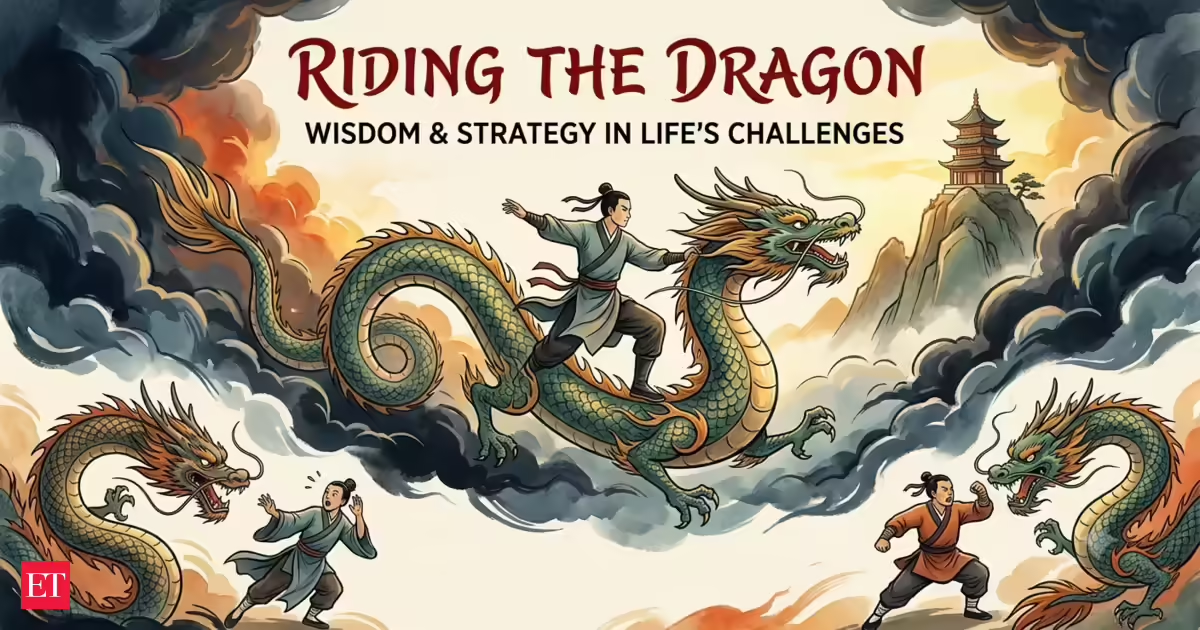
Best proverb of the day comes from an old Chinese saying that has remained meaningful for generations. The proverb says, "A dragon will be teased by a shrimp in a shoal water; a tiger will be bullied by a dog on a treeless plain." It reminds people that power does not exist on its own. It often depends on surroundings, support and circumstances. Even the strongest person can struggle after losing influence or moving into an unfamiliar place. The proverb encourages people to remain humble, understand changing situations, respect others and adapt wisely instead of depending only on status, strength or past success.The Chinese proverb says, "A dragon will be teased by a shrimp in a shoal water; a tiger will be bullied by a dog on a treeless plain." Its pinyin pronunciation is Lóng yóu qiǎnshuǐ zāo xiā xì, hǔ luò píngyáng bèi quǎn qī.Ancient Chinese proverb meaning The proverb explains that even the strongest individuals lose their advantage when they leave their natural environment. A dragon is powerful in deep waters and the skies. A tiger dominates forests and mountains. However, both become vulnerable when they are forced into places where their strengths no longer help them.You Might Also Like:As a result, creatures that are usually much weaker, such as shrimps or dogs, gain the confidence to challenge them. The proverb shows that strength is closely connected to circumstances.Best proverb of the day and why context matters in lifeThe biggest lesson from this proverb is that context is everything. People often believe that power, wealth or authority will always protect them. However, this saying reminds us that success depends not only on personal ability but also on the environment.A business leader may perform well in one company but struggle in another. An athlete may dominate one competition but fail under different conditions. A student who excels in one school may face challenges after changing institutions. The proverb teaches that surroundings influence performance. The right environment allows skills to grow. The wrong environment may reduce even the greatest strengths.You Might Also Like:The historical roots of the Chinese sayingThe proverb has deep roots in Chinese culture and literature. It is commonly associated with the famous Ming Dynasty novel Journey to the West. Over time, it became one of the best-known Chinese sayings because it explains human behaviour through simple but powerful images.Dragons have long represented authority, wisdom and power in Chinese culture. Tigers symbolize courage, leadership and dominance. Shrimps and dogs represent creatures with far less strength. By placing these symbols in unfamiliar settings, the proverb explains how quickly power can disappear when circumstances change.Life lessons about vulnerability and changing circumstancesThe proverb reminds people that nobody remains powerful forever. Many successful individuals depend on their network, workplace, family support or social position. If these supports disappear, life may become difficult. History has shown many examples where rulers, leaders or wealthy people lost influence after losing public support or political power. The proverb encourages people to prepare for changing situations rather than believing success will last forever without effort.Humility is one of the biggest messagesAnother lesson is the importance of humility. When people experience success, they sometimes become overconfident. They may believe nobody can challenge them. The proverb warns against this thinking. Today's winner may face tomorrow's challenges. Someone who seems less powerful today may gain strength under different circumstances. Remaining humble helps people build stronger relationships and avoid unnecessary conflicts. Humility also encourages continuous learning instead of assuming that existing knowledge is enough.You Might Also Like:Adaptability becomes the key to survivalOne of the strongest teachings in this proverb is adaptability. Life constantly changes. Careers change. Technology changes. Relationships change. Markets change. People who recognise these changes early often succeed because they adjust their strategies instead of resisting reality. The proverb advises people not to rely only on old achievements. Instead, they should understand new environments, develop new skills and remain flexible. Adaptability often becomes more valuable than raw strength.Never underestimate the underdogThe proverb also reminds people not to underestimate others. Someone who appears weak today may become powerful tomorrow if circumstances change. Many successful businesses began as small companies. Many leaders started without influence. Likewise, ignoring competitors or looking down on others can create unexpected problems later. Respecting everyone creates better decisions and reduces unnecessary risks.True strength depends on timing and circumstancesPower is rarely permanent. A person's influence often depends on timing, opportunity and support systems. Someone who performs well in one situation may struggle elsewhere. The proverb explains that true wisdom lies in understanding where your strengths work best. Instead of forcing every situation, people should identify environments where they can perform effectively.Knowing when to wait instead of fightingAnother important lesson is patience. When people find themselves in difficult circumstances, reacting emotionally may worsen the situation. Sometimes waiting, learning and rebuilding strength produces better results than immediate confrontation. The proverb teaches that retreat is not always defeat. Preparing quietly before making the next move often leads to better outcomes.Why this proverb remains relevant today?Although the proverb is centuries old, its lessons continue to apply today.Employees changing jobs often experience new challenges.Business owners entering unfamiliar markets may struggle despite previous success.Students moving abroad must adjust to different education systems.Athletes joining new teams need time to adapt.Even social media creators may lose popularity after changing platforms.Every example shows that success depends on both personal ability and environment.The proverb reminds people to respect changing circumstances instead of assuming previous success guarantees future results.English equivalents and related expressionsSeveral English sayings carry similar meanings."A fish out of water.""Every dog has its day.""Pride comes before a fall.""Don't judge a fish by its ability to climb a tree.""Right person, wrong place."Although the wording differs, each expression highlights the importance of environment, humility and understanding situations before acting.The lasting message of the proverbThe proverb continues to inspire people because it reflects everyday life.It teaches that power should never create arrogance.It reminds people to remain humble during success.It encourages adaptability during difficult times.It asks people not to underestimate anyone.Most importantly, it explains that true strength is not simply about ability. It is about knowing when, where and how to use that ability.That timeless lesson makes this Chinese proverb relevant across generations and cultures.
Best proverb of the day: 'A dragon will be teased by a shrimp...' Life lessons from Chinese proverb on situation, vulnerability, humility, adaptability, true strength, caution, authority, and why one should never underestimate the underdog or weak
Best proverb of the day highlights an ancient Chinese saying that explains how power depends on the right environment. The proverb shows that even strong people can become vulnerable when they lose their position or familiar surroundings. It teaches lessons about humility, adaptability, caution, authority, true strength and respecting every situation. Its message continues to guide people in personal life, work, leadership and relationships.
1,035 words~5 min read