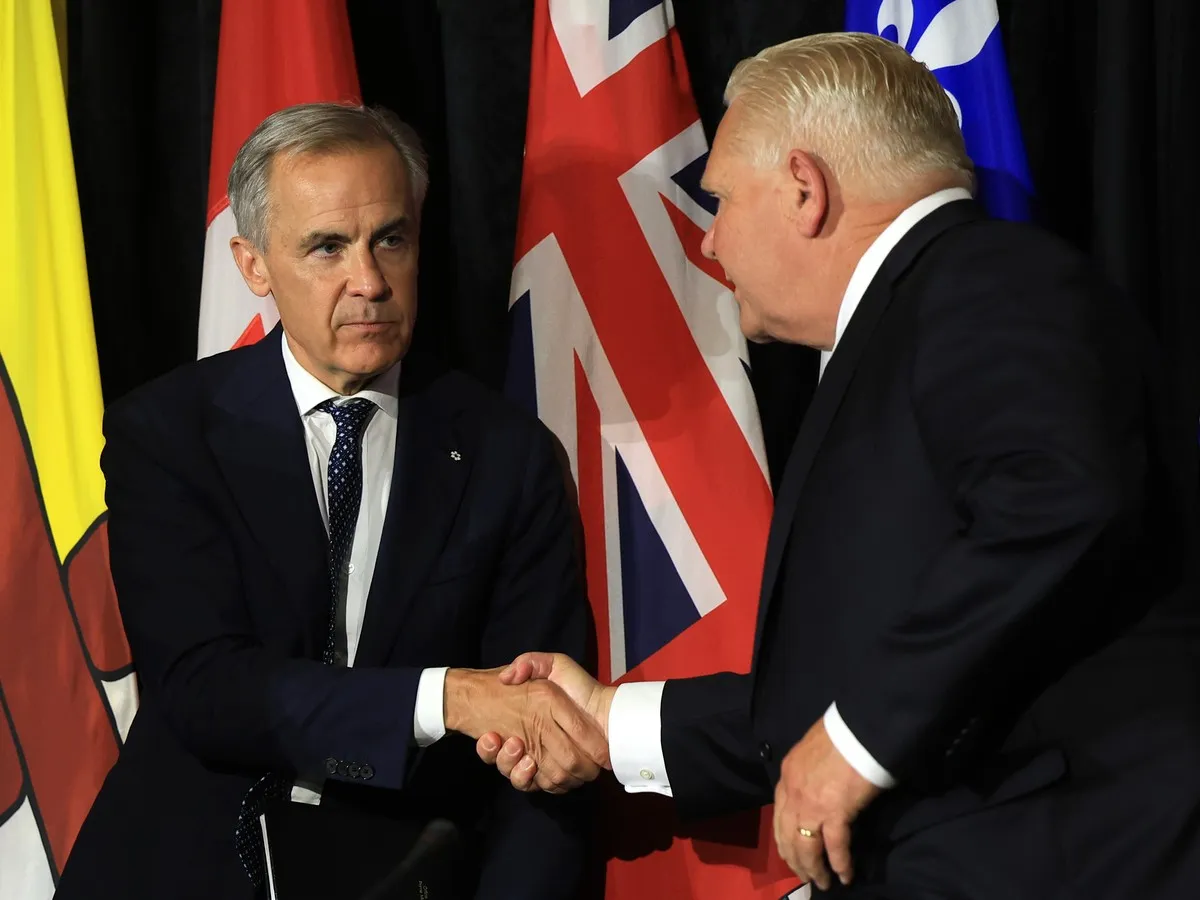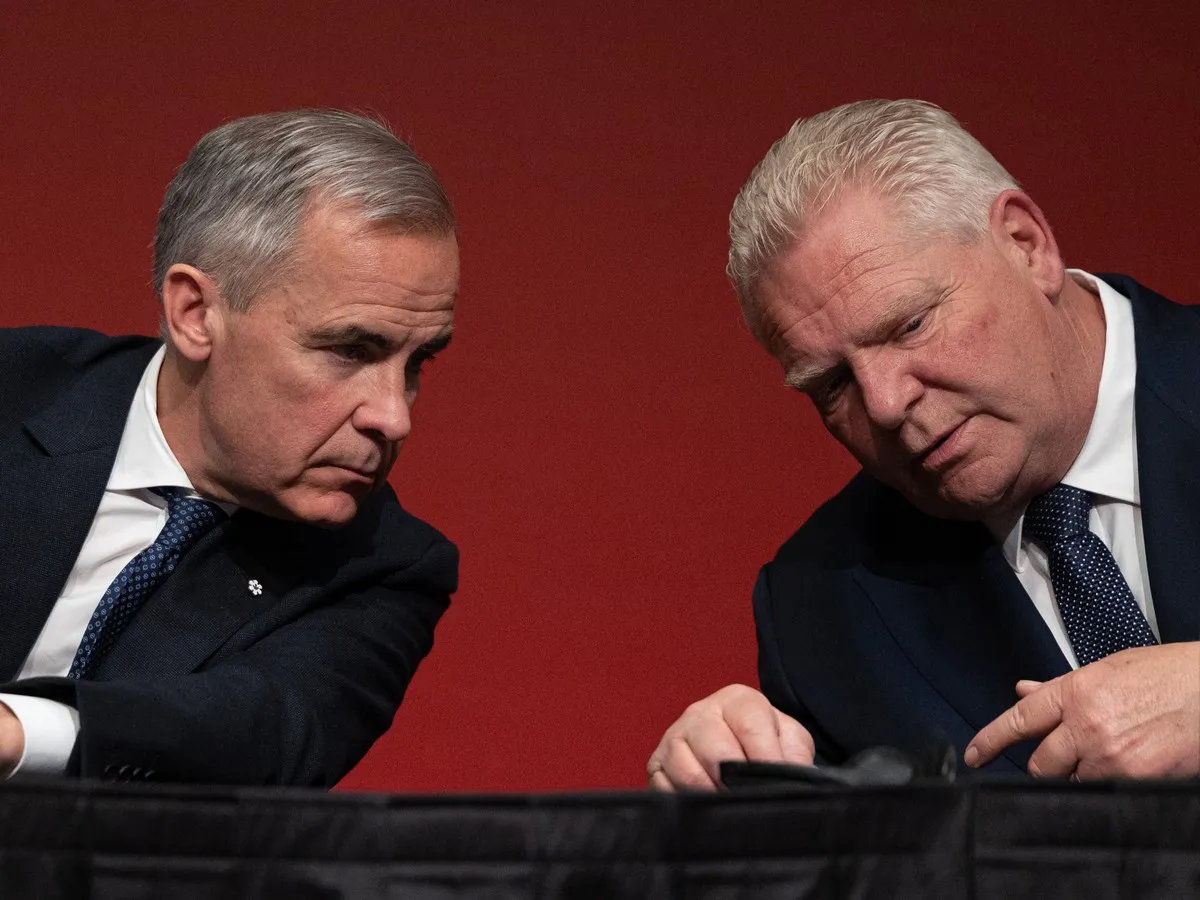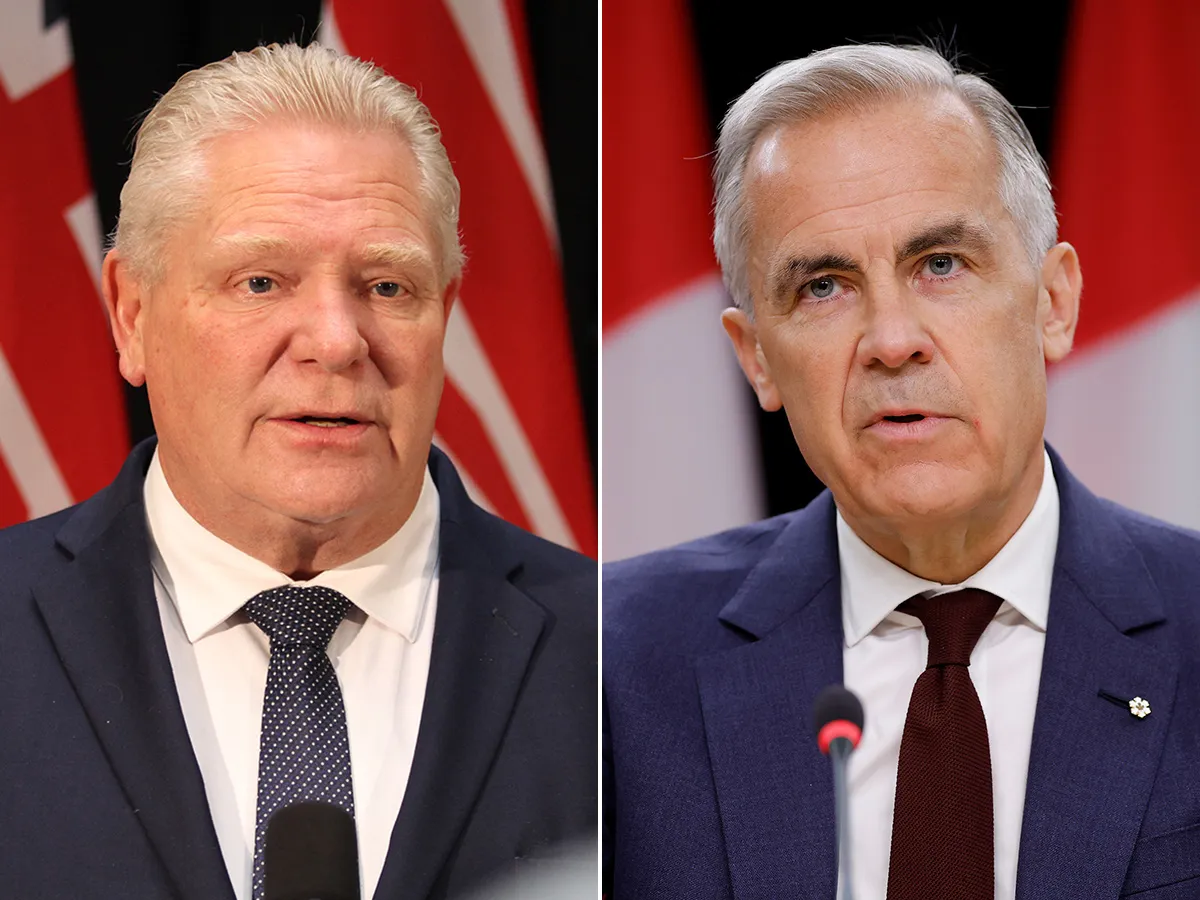
Skip to Content Subscribe Our Offers My Account Manage My Subscriptions FAQ Newsletters Canada Canadian True Crime Canadian Politics Health World Israel & Middle East Financial Post NP Comment Longreads Puzzmo Diversions Comics NP News Quiz New York Times Crossword Horoscopes Life Eating & Drinking Style Sponsored Play for Ontario Travel Travel Canada Travel USA Travel International Cruises Travel Essentials Culture Books Celebrity Movies Music Theatre Television Business Essentials Advice Lives Told Tails Told Shopping Buy Canadian Home Living Outdoor Living Kitchen & Dining Tech Style & Beauty Personal Care Entertainment & Hobbies Gift Guide Travel Guide Amazon Prime Day Deals Savings National Post Store More Sports Hockey Baseball Basketball Football Soccer Golf Tennis Driving Vehicle Research Reviews News Gear Guide Obituaries Place an Obituary Place an In Memoriam Classifieds Place an Ad Celebrations Working Business Ads Archives Healthing Epaper Manage Print Subscription Profile Settings My Subscriptions Saved Articles My Offers Newsletters Customer Service FAQ Newsletters Canada World Financial Post NP Comment Longreads Puzzmo Diversions Life Shopping Epaper Manage Print Subscription HomeNP CommentRandall Denley: Carney's genius is taking credit for projects already underwayThe Liberals' supposedly new nuclear strategy is remarkably similar to the plan Ontario Premier Doug Ford's government released last yearLast updated 45 minutes ago You can save this article by registering for free here. Or sign-in if you have an account.Ontario Premier Doug Ford and Prime Minister Mark Carney. The Ford government's 2025 nuclear power strategy has become, more or less, the Carney government's 2026 nuclear power strategy. Photo by Adam Huras/Brunswick News/Postmedia; Blair Gable/PostmediaSome of the federal Liberal government’s future economic plans are a bit fanciful, but at last they have found one that will produce the predicted result.Enjoy the latest local, national and international news.Exclusive articles by Conrad Black, Barbara Kay and others. Plus, special edition NP Platformed and First Reading newsletters and virtual events.Unlimited online access to National Post.National Post ePaper, an electronic replica of the print edition to view on any device, share and comment on.Daily puzzles including the New York Times Crossword.Support local journalism.Enjoy the latest local, national and international news.Exclusive articles by Conrad Black, Barbara Kay and others. Plus, special edition NP Platformed and First Reading newsletters and virtual events.Unlimited online access to National Post.National Post ePaper, an electronic replica of the print edition to view on any device, share and comment on.Daily puzzles including the New York Times Crossword.Support local journalism.Create an account or sign in to continue with your reading experience.Access articles from across Canada with one account.Share your thoughts and join the conversation in the comments.Enjoy additional articles per month.Get email updates from your favourite authors.Create an account or sign in to continue with your reading experience.Access articles from across Canada with one accountShare your thoughts and join the conversation in the commentsEnjoy additional articles per monthGet email updates from your favourite authorsSign In or Create an AccountorThe new thinking is pure genius. Instead of imagining an unprecedented outburst of housing construction or a rapidly expanding Canadian defence industry, why not take credit for something that’s already happening?Prime Minister Mark Carney’s government has just released a new national nuclear power strategy. What luck! The “new” strategy is remarkably similar to the plan Ontario Premier Doug Ford’s government released last year. The main difference is that the federal strategy is a high-level document light on facts and figures, while Ontario’s is an action plan that’s already being implemented.This newsletter from NP Comment tackles the topics you care about. (Subscriber-exclusive edition on Fridays)By signing up you consent to receive the above newsletter from Postmedia Network Inc.We encountered an issue signing you up. Please try againOntario is relying on nuclear to power its future. Construction on the first of four small modular nuclear reactors is already under way. The province is doing work on two new nuclear plants that could provide eight full-sized reactors.Ontario expects demand for electricity to grow by up to 90 per cent by 2050. Nuclear already provides about half of Ontario’s power with a generating capacity of about 12,000 megawatts. The Ontario plan anticipates adding up to 17,800 additional megawatts of nuclear power.Ontario’s plan is the result of years of detailed study about future power demand and the best way to meet it. By contrast, the federal plan looks like something created by AI. It even uses the same “energy superpower” catchphrase that Ontario employs.The Liberal government plan calls for up to 10 new reactors with seven “under development” by 2040. Given the vagueness of the term “under development,” that goal is a slam dunk since Ontario already has eight reactors in the preliminary development stages.While the new federal plan is cast as a national strategy it will include, at most, four provinces and rely almost entirely on Ontario. There is no consequential nuclear generation outside of Ontario. New Brunswick has the only other nuclear plant, at Point Lepreau.Alberta and Saskatchewan have talked about reactors, but the plans are in early stages. Don’t expect to see B.C. or Quebec in the nuclear camp any time soon. Nova Scotia has big plans for wind power.The federal government is touting the Candu reactor and hoping it will be chosen for new nuclear plants. This is where the federal and Ontario plans could diverge. The trouble with the venerable Candu is that there is currently no up-to-date full-sized version of the reactor ready for market.The federal government sold the reactor division of the Crown corporation Atomic Energy of Canada Ltd. in 2011, although the government still owns the Candu intellectual property.AtkinsRéalis Group Inc. owns the reactor division now and has been working for several years to develop a new full-sized reactor. The federal government says a new Candu will be available by 2030, but the decision for technology on Ontario’s new Bruce C nuclear plant is likely to take place in the next two years.The feds are also interested in exporting Candu reactors to other countries. It will be a tougher challenge if they can’t sell them to Ontario.It is good to see the Carney government wrap its head around the fact that nuclear power is the best, most dependable way to lower greenhouse gas emissions from electricity generation, something that eluded the last prime minister.It would be a mistake to credit Carney personally, however. Because of an ethics screen that prevents him from getting involved in files that could affect businesses where he has a personal interest, he was not involved in developing the strategy and did not see it before it was released.Despite the new enthusiasm for nuclear power, there is still troubling uncertainty about the cost of nuclear expansion. The federal government has suggested that the 10 large-scale reactors mentioned in its new strategy would cost $100 billion. That seems remarkably low given that Ontario expects to spend $20.9 billion to build four small reactors at Darlington.Ontario has not put a price tag on the two new nuclear plants and their eight reactors, but it has already committed $73 billion for the small reactors and refurbishment of existing reactors.The federal strategy announcement did not come with any promise of money for Ontario, but the feds have contributed just under $3 billion to Ontario’s small modular reactor project.The Ford government is on the right track with its nuclear plan and the federal government is correct to follow along. Just don’t forget that Carney and company are riding in the caboose, not driving the train.National Postrandalldenley1@gmail.com Join the Conversation This website uses cookies to personalize your content (including ads), and allows us to analyze our traffic. Read more about cookies here. By continuing to use our site, you agree to our Terms of Use and Privacy Policy.
Randall Denley: Carney's genius is taking credit for projects already underway
The Liberals' supposedly new nuclear strategy is remarkably similar to the plan Ontario Premier Doug Ford's government released last year.
1,277 words~6 min read