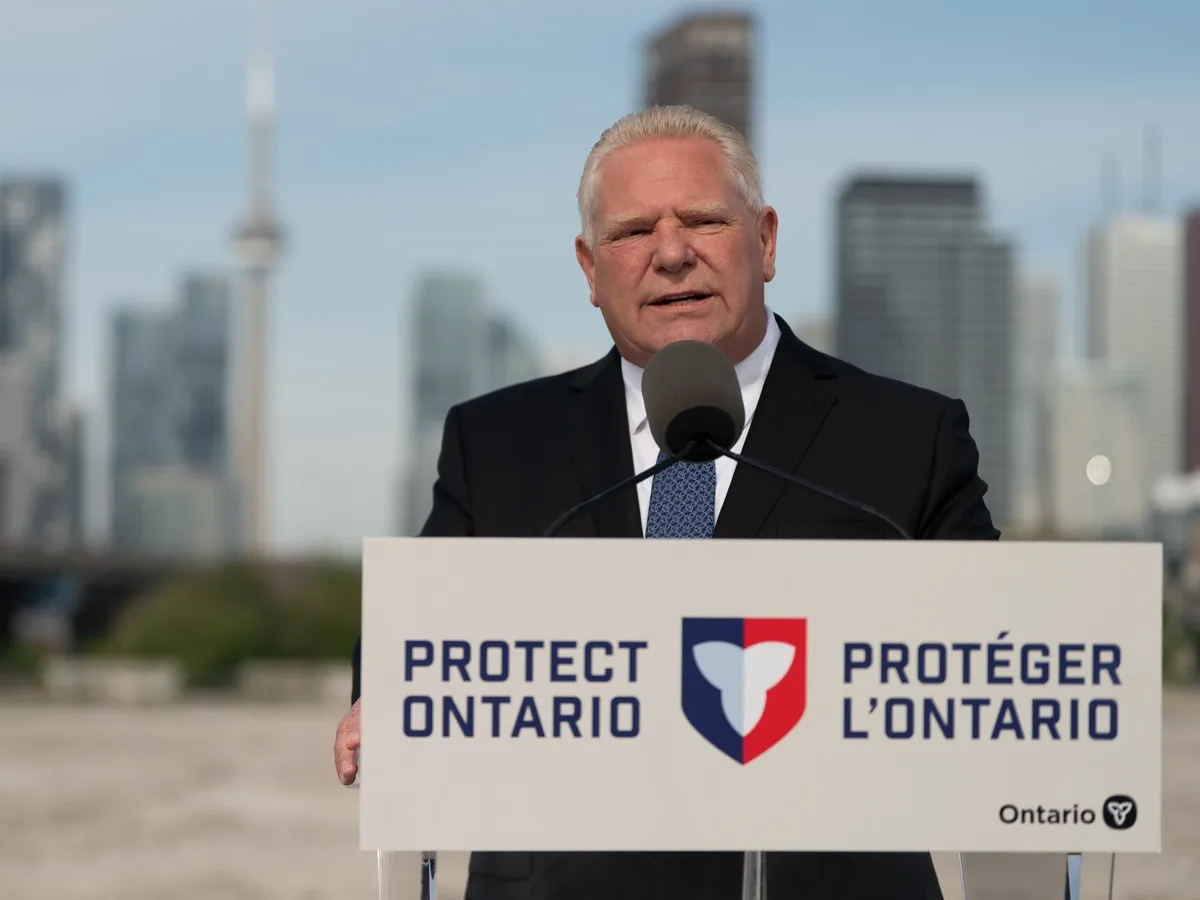
Skip to Content Subscribe Our Offers My Account Manage My Subscriptions FAQ Newsletters Canada Canadian True Crime Canadian Politics Health World Israel & Middle East Financial Post NP Comment Longreads Puzzmo Diversions Comics NP News Quiz New York Times Crossword Horoscopes Life Eating & Drinking Style Sponsored Play for Ontario Travel Travel Canada Travel USA Travel International Cruises Travel Essentials Culture Books Celebrity Movies Music Theatre Television Business Essentials Advice Lives Told Tails Told Shopping Buy Canadian Home Living Outdoor Living Tech Style & Beauty Kitchen & Dining Personal Care Entertainment & Hobbies Gift Guide Travel Guide Deals Savings National Post Store More Sports Hockey Baseball Basketball Football Soccer Golf Tennis Driving Vehicle Research Reviews News Gear Guide Obituaries Place an Obituary Place an In Memoriam Classifieds Place an Ad Celebrations Working Business Ads Archives Healthing Epaper Manage Print Subscription Profile Settings My Subscriptions Saved Articles My Offers Newsletters Customer Service FAQ Newsletters Canada World Financial Post NP Comment Longreads Puzzmo Diversions Life Shopping Epaper Manage Print Subscription HomeNP CommentRandall Denley: Ontario's weakening of local powers assumes the province always knows best. It doesn'tOntario is unique in Canada for having strong mayor powers, although many large American cities do You can save this article by registering for free here. Or sign-in if you have an account.Ontario has long operated on the principle that people would have a meaningful measure of control over what was happening in their own communities, but under Premier Doug Ford, writes NP columnist Randall Denley, local control has lessened and in some cases disappeared altogether. Photo is from announcement near intersection of the Don Valley Parkway and the Gardiner Expressway on Thursday June 4. Photo by Peter Power /Peter PowerOntario Premier Doug Ford has altered the scope and nature of local democracy in the province in what amounts to a major change in the traditional relationship between the provincial government and its cities and school boards.Enjoy the latest local, national and international news.Exclusive articles by Conrad Black, Barbara Kay and others. Plus, special edition NP Platformed and First Reading newsletters and virtual events.Unlimited online access to National Post.National Post ePaper, an electronic replica of the print edition to view on any device, share and comment on.Daily puzzles including the New York Times Crossword.Support local journalism.Enjoy the latest local, national and international news.Exclusive articles by Conrad Black, Barbara Kay and others. Plus, special edition NP Platformed and First Reading newsletters and virtual events.Unlimited online access to National Post.National Post ePaper, an electronic replica of the print edition to view on any device, share and comment on.Daily puzzles including the New York Times Crossword.Support local journalism.Create an account or sign in to continue with your reading experience.Access articles from across Canada with one account.Share your thoughts and join the conversation in the comments.Enjoy additional articles per month.Get email updates from your favourite authors.Create an account or sign in to continue with your reading experience.Access articles from across Canada with one accountShare your thoughts and join the conversation in the commentsEnjoy additional articles per monthGet email updates from your favourite authorsSign In or Create an AccountorWhile the provincial government has always been ultimately responsible for school boards and municipalities, Ontario has long operated on the principle that people would have a meaningful measure of control over what was happening in their own communities.Under Ford, that local control has lessened, and in some cases disappeared altogether. The changes have been incremental and spread over time, but the cumulative effect is notable.This newsletter from NP Comment tackles the topics you care about. (Subscriber-exclusive edition on Fridays)By signing up you consent to receive the above newsletter from Postmedia Network Inc.We encountered an issue signing you up. Please try againIn its latest move, the Ford government will appoint the chairs of eight regional municipalities in southern Ontario. These are positions that were formerly elected, although in three cases, people had been appointed to the jobs for the 2022–26 term only.These unelected regional chairs will have the same “strong mayor” powers that Ford gave elected mayors across the province a couple of years ago. This will give the new chairs significant authority over the elected people on regional councils.The appointed chairs will be able to propose budgets, veto changes that regional councillors want to make, appoint or fire many city officials, and veto council decisions if those decisions would slow down action on a provincial priority such as infrastructure or housing construction.Housing and Municipal Affairs Minister Rob Flack has said the move is necessary to have “effective government” and it would be “getting politicians out of the way.”Lindsay Jones, executive director of the Association of Municipalities of Ontario, has called the strong chair powers “fundamentally undemocratic” because they allow unelected people to overrule elected councillors.The strong mayor system is a concentration of power in one person. Ontario is unique in Canada for having them, although many large American cities do.Ford has certainly gone all in on the concept. He began by giving strong mayor powers to Toronto and Ottawa with the goal of speeding up housing approvals. Then he expanded that control to largish cities and ultimately to every municipality in the province, even tiny townships.The enhanced powers for mayors changed the traditional balance on councils, where mayors had to build consensus to win a majority vote. Councillors have not lost all control. Mayoral vetoes can still be overturned by a two-thirds majority council vote.When it comes to housing, the strong mayor system isn’t producing much of a result. The Canada Mortgage and Housing Corp. predicts that housing starts in the province will decline in 2026 for the fifth year in a row. It’s interesting to note that the city of Ottawa had one of the strongest housing-start performances in the province last year, although Mayor Mark Sutcliffe does not use his strong mayor powers.The situation for school boards is similar, but starker. Citing poor financial management, the Ford government has taken total control over eight school boards, including those in Toronto, Peel, Ottawa, London and York.Those boards will function without trustees until some unspecified date in the future. Trustees in other public and Catholic boards will have their powers sharply reduced after this fall’s election.The trustee changes remove the last meaningful vestige of local control over education. The key blow came in 1997, when then premier Mike Harris took away school boards’ power to collect property tax. The provincial government gets those property tax dollars instead, about $5.9 billion a year.It’s easy to see why the provincial government prefers to deal with one person specifically empowered to advance the government’s agenda on education and other issues, but it’s a move that leaves ordinary councillors relatively less powerful and trustees almost useless.This does not constitute the death of democracy, but it puts new limits on the things that people can directly control through municipal trustee and council elections.If a community doesn’t like having no school trustees or having an unelected person in charge of their regional government, people there could vote against Ford’s party in the next election. It’s a limited lever, however. One community doesn’t have the power to change the provincial government.The new concentration of power rests on the dubious idea that decisions are best made by a single person determined to act as quickly as possible to serve a constituency of one — the premier. The Ford government charitably refers to this as “streamlining” or “cutting red tape.”Local government can certainly be slow and messy and get in the way of provincial plans. Process too often trumps results. It doesn’t necessarily follow that ordering everyone to march in the same direction is the best alternative.For that to be true, the provincial government of the day would require a monopoly on wisdom. It takes a substantial amount of hubris to imagine it does.National Postrandalldenley1@gmail.com Join the Conversation This website uses cookies to personalize your content (including ads), and allows us to analyze our traffic. Read more about cookies here. By continuing to use our site, you agree to our Terms of Use and Privacy Policy.
Randall Denley: Ontario's weakening of local powers assumes the province always knows best. It doesn't
Under Ford, local control has lessened. In his latest move, he will appoint powerful chairs of eight regional municipalities.
1,343 words~6 min read