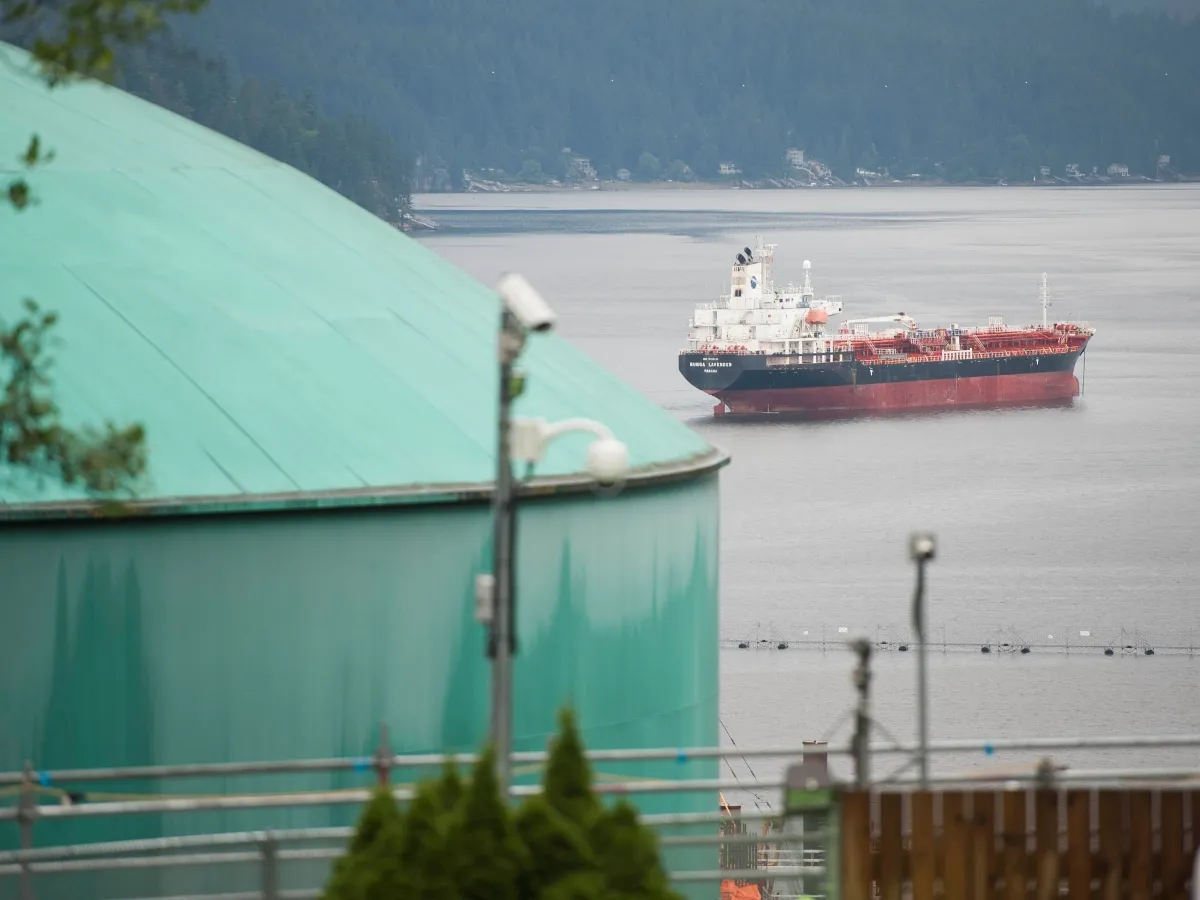
Skip to Content Subscribe Our Offers My Account Manage My Subscriptions FAQ Newsletters Canada Canadian True Crime Canadian Politics Health World Israel & Middle East Financial Post NP Comment Longreads Puzzmo Diversions Comics NP News Quiz New York Times Crossword Horoscopes Life Eating & Drinking Style Sponsored Play for Ontario Travel Travel Canada Travel USA Travel International Cruises Travel Essentials Culture Books Celebrity Movies Music Theatre Television Business Essentials Advice Lives Told Tails Told Shopping Buy Canadian Home Living Outdoor Living Kitchen & Dining Tech Style & Beauty Personal Care Entertainment & Hobbies Gift Guide Travel Guide Amazon Prime Day Deals Savings National Post Store More Sports Hockey Baseball Basketball Football Soccer Golf Tennis Driving Vehicle Research Reviews News Gear Guide Obituaries Place an Obituary Place an In Memoriam Classifieds Place an Ad Celebrations Working Business Ads Archives Healthing Epaper Manage Print Subscription Profile Settings My Subscriptions Saved Articles My Offers Newsletters Customer Service FAQ Newsletters Canada World Financial Post NP Comment Longreads Puzzmo Diversions Life Shopping Epaper Manage Print Subscription HomeNP CommentMargareta Dovgal: The cost of Carney's energy-sector sabotage is staggeringInstead of removing the barriers, he subsidizes themLast updated Jun 26, 2026 You can save this article by registering for free here. Or sign-in if you have an account.Construction continues on the Trans Mountain pipeline expansion at the Westridge Terminal in Burnaby, BC Thursday, July 2, 2020. Photo by Jason Payne/PNGEarlier this month, Cenovus Energy CEO Jon McKenzie sharply criticized the federal-Alberta agreement that links support for a West Coast oil sands pipeline to carbon capture and storage (CCS) and industrial carbon pricing.Enjoy the latest local, national and international news.Exclusive articles by Conrad Black, Barbara Kay and others. Plus, special edition NP Platformed and First Reading newsletters and virtual events.Unlimited online access to National Post.National Post ePaper, an electronic replica of the print edition to view on any device, share and comment on.Daily puzzles including the New York Times Crossword.Support local journalism.Enjoy the latest local, national and international news.Exclusive articles by Conrad Black, Barbara Kay and others. Plus, special edition NP Platformed and First Reading newsletters and virtual events.Unlimited online access to National Post.National Post ePaper, an electronic replica of the print edition to view on any device, share and comment on.Daily puzzles including the New York Times Crossword.Support local journalism.Create an account or sign in to continue with your reading experience.Access articles from across Canada with one account.Share your thoughts and join the conversation in the comments.Enjoy additional articles per month.Get email updates from your favourite authors.Create an account or sign in to continue with your reading experience.Access articles from across Canada with one accountShare your thoughts and join the conversation in the commentsEnjoy additional articles per monthGet email updates from your favourite authorsSign In or Create an AccountorHe described the industrial carbon tax as “insidious” and said industry has been clear that it should be revoked. He also noted that the Pathways Alliance CCS project itself carries an estimated cost as high as $30 billion.Without addressing core regulatory barriers and enabling real investment and production growth in Alberta’s oil sands, he warned, neither the pipeline nor the CCS project “really make any sense.”This newsletter from NP Comment tackles the topics you care about. (Subscriber-exclusive edition on Fridays)By signing up you consent to receive the above newsletter from Postmedia Network Inc.We encountered an issue signing you up. Please try againMcKenzie’s complaint is operational. I would offer a structural one: Ottawa intends to price carbon to discourage production, subsidize capture to permit production, fast-track a pipeline to move production, and suspend electricity rules to power it. The staggering cost of these contradictions is borne by Canadians.In 2022, former prime minister Justin Trudeau waved away the idea of Canadian LNG export to Europe by saying there was “no business case” to do so. Moreover, Ottawa had bet big on green hydrogen in Atlantic Canada, and there was no room left to back the resource the world actually wanted.Prime Minister Mark Carney is making the same errors on energy and climate policy. More than a year into his tenure, his signature innovation has been federal fast-tracking through the Major Projects Office. What began as a well-intentioned emergency measure carries a risk of becoming a permanent substitute for systemic reform, with a few favoured projects bypassing the mess and the rest left to rot.No one wants to be a bad team player, jeopardizing their own eligibility or that of sectoral allies, so it has also gotten the least critique from industry despite being a straightforward admission that the underlying process is irrevocably broken.When major projects stall or capital sits on the sidelines, the typical federal explanation is “market failure.”It has become Canada’s Bermuda Triangle. Instead of missing airplanes and sailboats, we contend with billions of dollars of foregone capital investment. Strange how the same global investors who can underwrite a copper mine in the Democratic Republic of Congo apparently lose the ability to read a spreadsheet the moment it crosses north of the 49th parallel.The Trans Mountain Expansion was our costliest lesson in recent history, and the most familiar. The same logic is playing out right now in the Pathways standoff and on British Columbia’s electricity grid.A private company, Kinder Morgan, was prepared to finance the project. Years of regulatory delays, court challenges and political opposition ultimately broke the business case. When the company walked, the federal government bought the pipeline system for $4.5 billion, and nationalized the expansion. Under government control, costs exploded from original estimates to more than $34 billion.In the same breath, the Liberals claimed transformative climate leadership — defined by making it as difficult and costly as possible to grow oil and gas — while professing such devotion to the sector that they invested massively to keep this one project afloat. Federal policy failures nearly tortured the Trans Mountain Expansion to death. In lieu of fixing the framework responsible, government assumed the cost of round-the-clock intensive care.The favoured remedy to that policy failure continues to be a combination of taxpayer-funded subsidies, sold as a national strategy, paired with relentless political interference in what should be statutory decision-making. Lobbyists who understand the necessary solutions — reform and regulatory efficiency — cynically grasp that asking for big cheques is easier than asking government to confront its policy incoherence head-on.A subsidy is justified, in economic terms, only when it corrects a genuine market failure. What gets dismissed as such in Canadian natural resources is more often a different kind of failure. Climate policies layer on cost and risk, deterring private capital from building large mines and energy facilities that government plaintively asserts it wants.Every dollar disbursed by the state to fix its own self-imposed problems must first be raised through taxation. That itself carries a deadweight cost. Bev Dahlby and Ergete Ferede’s work for the C.D. Howe Institute puts the marginal cost of the federal corporate income tax, which is the costliest major tax to levy, at close to two dollars for every dollar of revenue raised. A subsidy that offsets a self-imposed barrier costs a dollar, plus nearly another in damage done collecting it.Bill C-69, the Impact Assessment Act, is the Trudeau-era statute that reinforced the duplicative federal review and the discretionary cabinet veto that hangs over a project. In 2023, the Supreme Court found the regime largely unconstitutional for how it reached into provincial jurisdiction. It doled out a spanking to the feds for reaching too far on too little constraint.The answer was to broaden cabinet’s discretion. Carney gave it last June with Bill C-5, the legislation that created the Major Projects Office. It left the cost-and-delay machinery intact, while granting cabinet a new power to designate a project in the national interest and deem its approvals granted.A state that raises the cost and uncertainty of building, refuses to fix the issue and then offers selective regulatory shortcuts and subsidies to offset forced costs, is paying, with taxpayers’ money, to mitigate failures of its own making.Capital is mobile. Investors have abandoned hundreds of billions in Canadian resource projects over the past decade. The marginal dollar increasingly chooses Australia or Nevada over Canada, despite our abundant reserves of the world’s most valuable commodities.Mining and energy are two of the most reliably profitable industries on Earth. Our producers have the technical expertise and familiarity with our unique geology.Widespread market failure in Canadian energy and mining is as plausible as supernatural phenomena in the Bermuda Triangle. Ships and planes get lost in the Caribbean because of human error, bad weather and heavily trafficked sea lanes. Resource investment in Canada gets lost because our legislative and regulatory environment remains a fun-house mirror reflection of unresolved political conflicts.Carney’s government has an urgent imperative here: determine what form “climate leadership” can really take if we accept the reality of being a major resource producer that must compete for limited global capital.My own province offers a neat example of this tendency to inflict wounds on our most productive industries over outdated dreams of climate leadership. British Columbia’s electricity grid is strained. We have been a net importer of electricity for three straight years, much of it from the United States. As we grow production of liquefied natural gas, it makes no sense to force companies to draw electricity from a constrained grid to power production instead of using a fuel they already have on hand. It just makes it necessary to funnel public money towards expanding that grid, in this case, a northwest transmission line made necessary by this policy constraint.It would be comparable to the federal government declaring a National Bicycle Tire Slashing Strategy, then pairing it with a massive, ostensibly nation-building Bicycle Tire Repair Fund, with eligible recipients required to persuade a panel of non-cyclists that they are equipped for the Tour de France. Imagine the jobs that would be created, we would hear! Imagine how competitive Canada would become in bike tire repair. Imagine all the votes from the bike repair and bike slasher lobbies!There is, of course, a simpler path: save the taxpayer money and leave the bikes alone.Federal climate policies for our most productive industries in 2026 are, in effect, just as Kafkaesque.Proponents without a national-interest designation instead face a costly and lengthy federal assessment, a provincial assessment duplicating the first, and the risk of arbitrary rejection if the federal cabinet decides the project isn’t aligned with its opaque political goals.The agreement between the feds and Alberta that suspends the federal clean electricity regulations in that province is another stellar example of this unintelligibility, as is the move to fast-track major projects through the Major Projects Office.Political interference, embedded in our major projects process since the National Energy Board era, and now reinforced twice under two Liberal governments, is deeply inefficient. It is also antithetical to the principles of a competitive market economy from which Canada’s prosperity has always flowed. Results should come through a functioning, competitive regulatory system, not in spite of the mess we still have now.With it, affordability through energy policy, more than just in the price at the pump, is possible. High incomes and strong productivity make life affordable for Canadians. Cutting an unproductive cost lowers a price. More valuable is that it frees capital to do something useful: to build an energy sector that competes, attracts investment and puts Canadians to work.There are hundreds of billions in possible investment that fast-tracking won’t ever be able to touch. The price is workers never hired, and towns whose wages stall because projects got built elsewhere.Rather than subsidize around a self-inflicted barrier, remove the barrier. Where the system is driving towards contradictory goals, rebuild the full system.Canada has the means to become an energy superpower. That ambition demands a regulatory superhighway approach: make “one project, one review” a statutory default rather than a project-by-project decision, strip the cabinet veto C-69 preserved and the override power C-5 stacked on top of it, scrap the industrial carbon price and wind down the Major Projects Office on a fixed date once the baseline process is fast enough to make it pointless.We have good reason to be proud of our world-leading energy sector. Regrettably, the most decisive competitive advantage still belongs to those with the craftiest government relations strategies and the largest compliance departments.What an odd thing to optimize for. It’s almost as though the most valuable national product is handshakes and paperwork, not the raw materials the world actually needs.National PostMargareta Dovgal is Managing Director of Resource Works Society. Join the Conversation This website uses cookies to personalize your content (including ads), and allows us to analyze our traffic. Read more about cookies here. By continuing to use our site, you agree to our Terms of Use and Privacy Policy.
Margareta Dovgal: The cost of Carney's energy-sector sabotage is staggering
Instead of removing the barriers, he subsidizes them
2,118 words~10 min read