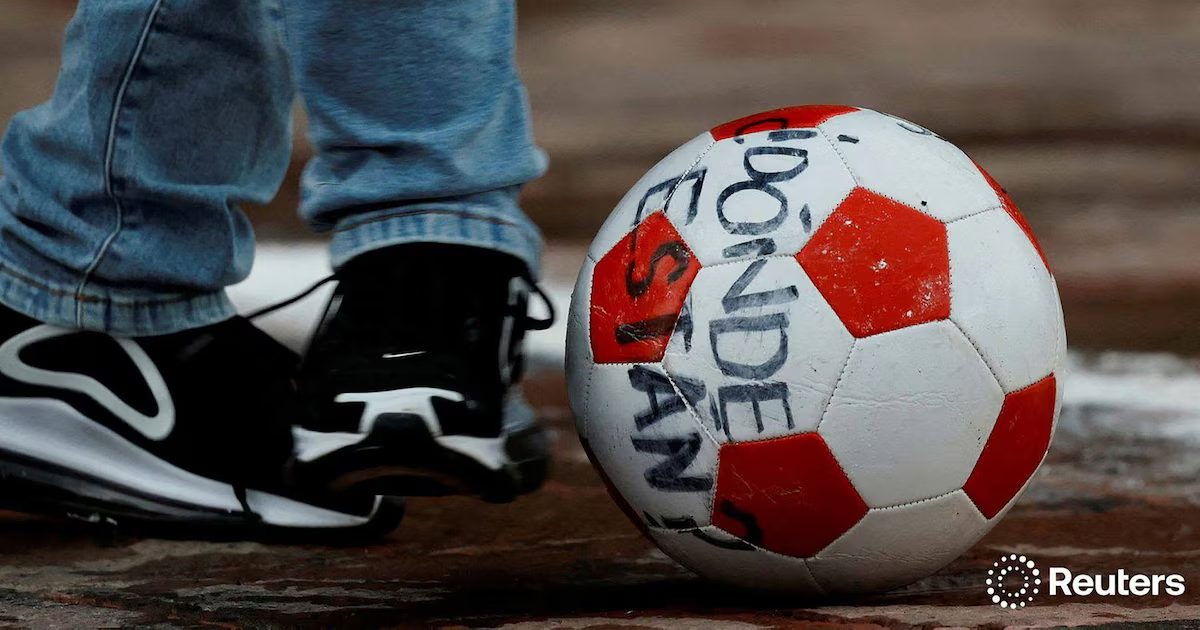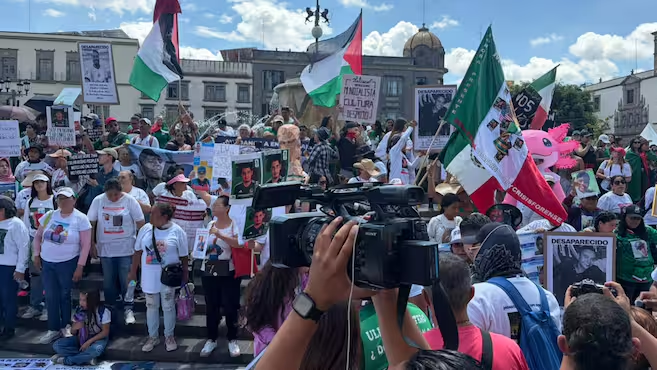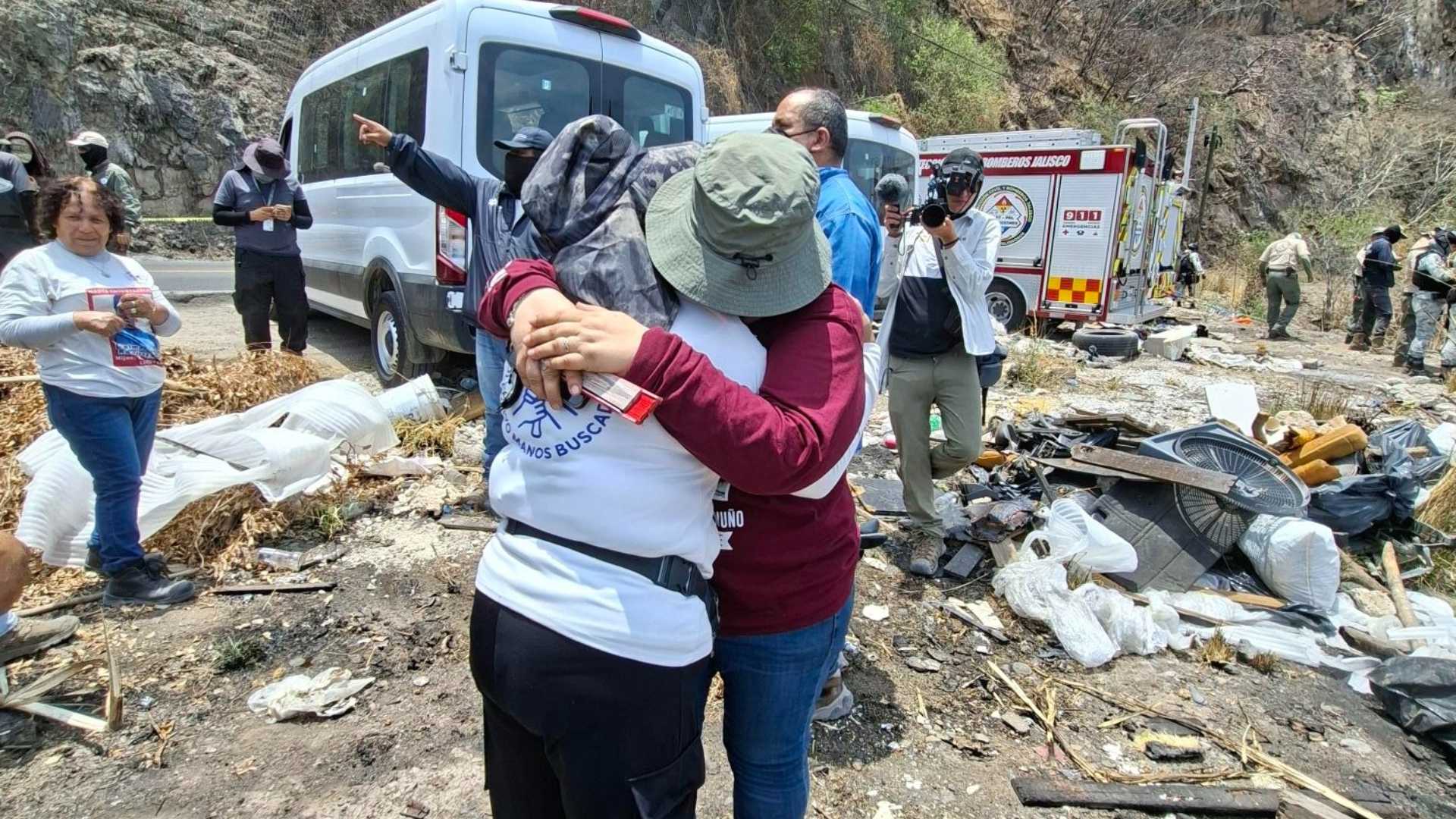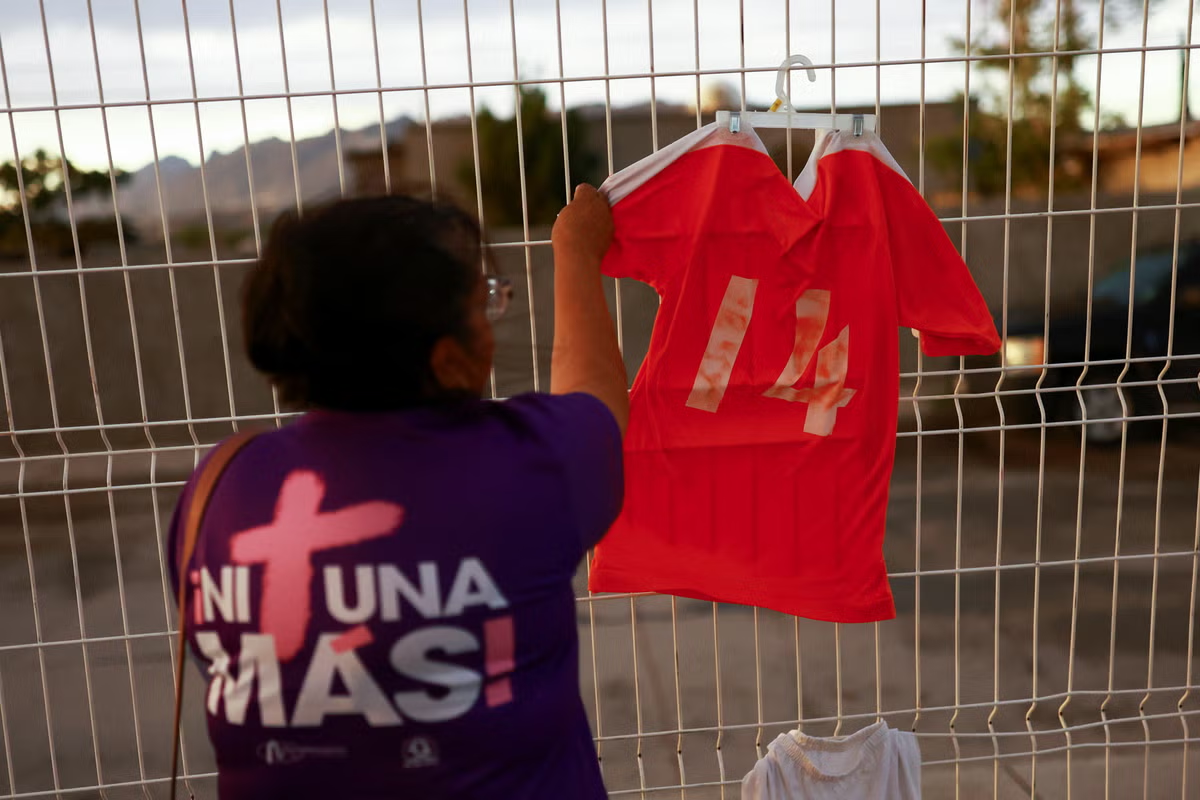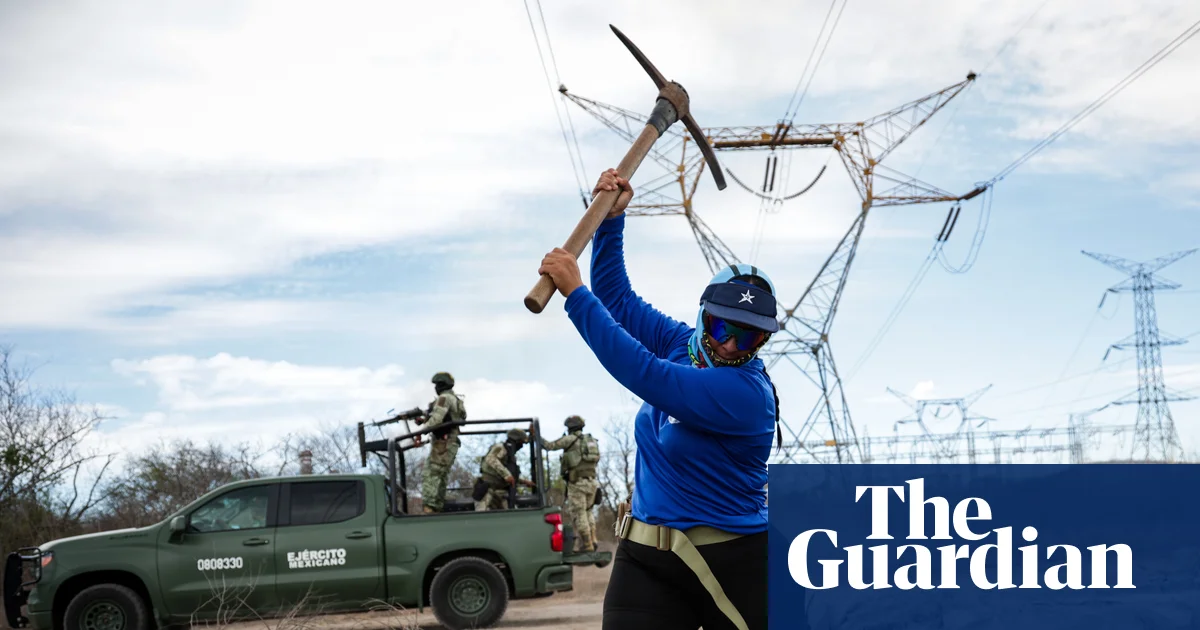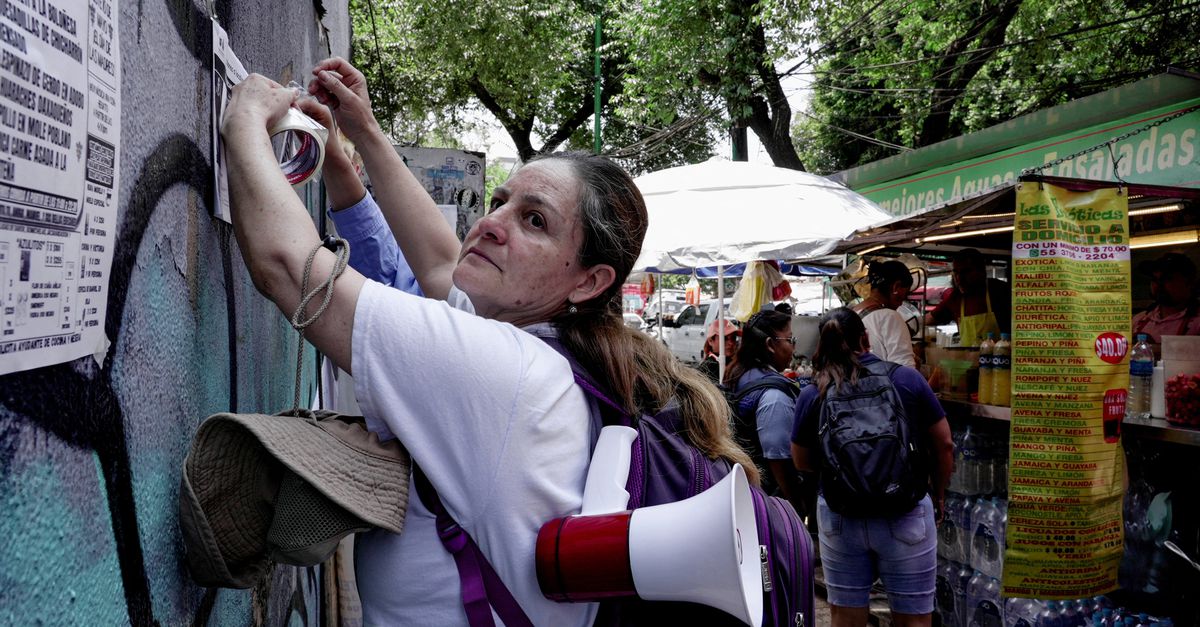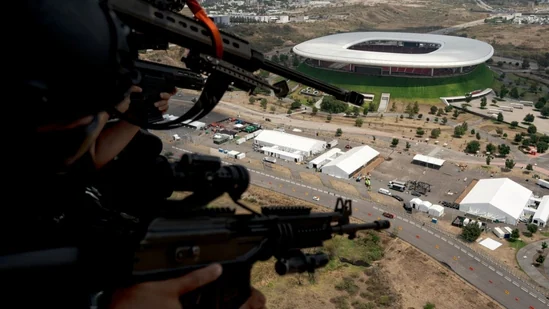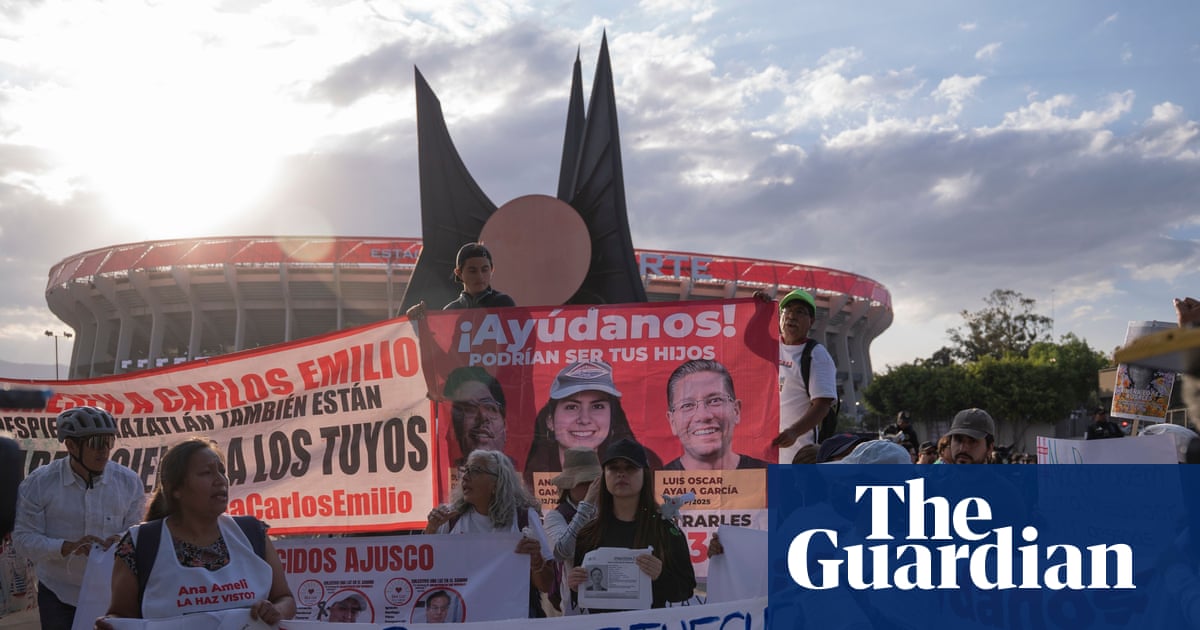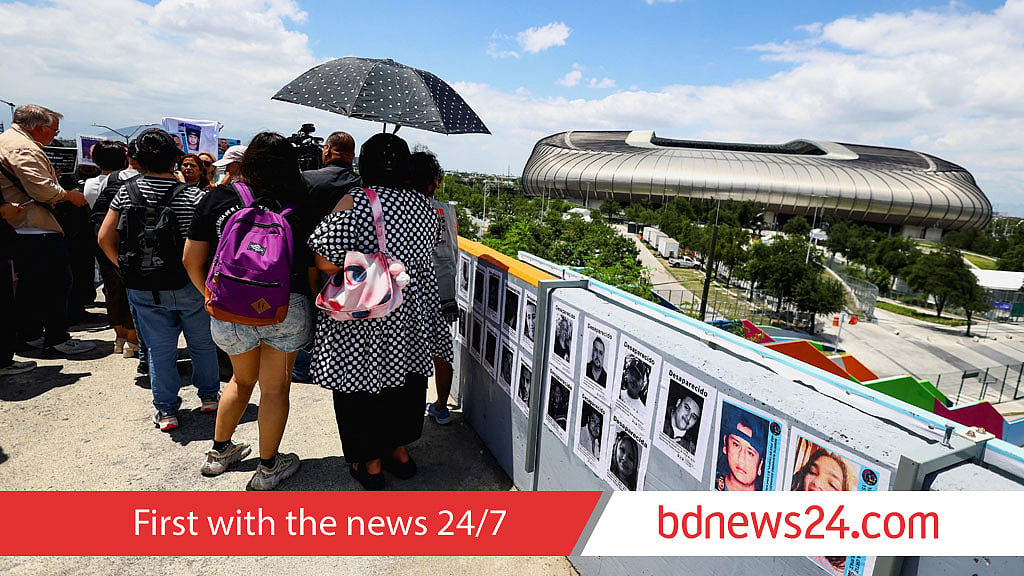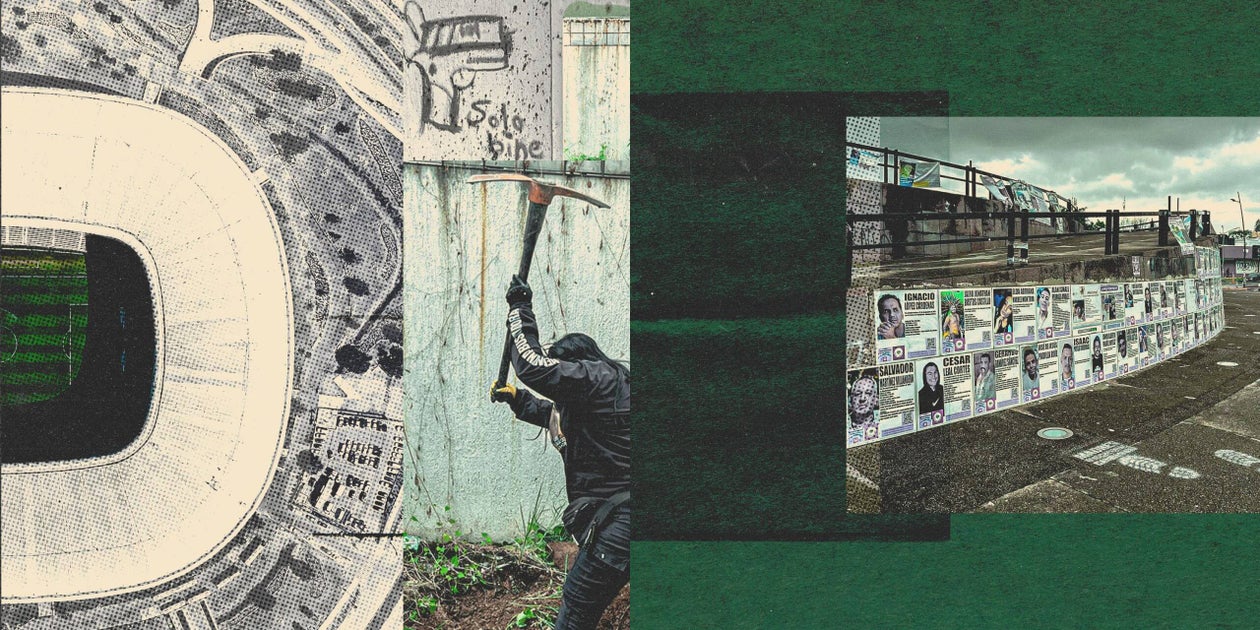
A small, yellow toy frog lies abandoned as the pole plunges into the ground.“This is how you search for bodies,” the mothers of the missing explain. “We search with our noses. Like wild dogs.”When the earth is soft, it means it has been dug recently. Sometimes, they find concrete underneath — a calling card of concealed cartel burials. It is usually only the work of a few intense minutes for the women to break through with pickaxes.Forcing their construction pole into the dirt, they draw it back out gently, and raise its tip to smell. They say they know the scent of flesh, the depth of the marker telling them how far to dig. Sometimes it is animal, more often it is human.“If we find a body, we say a small prayer,” they say. “It’s to tell them: ‘Here we are. We’ve found you.’”Gabriela using her probe to search for bodies in Villa Fontana, Jalisco (Credit: The Athletic)These are the Guerreros Buscadores de Jalisco (Jalisco Search Warriors), a collective of families whose loved ones number among the 130,000 disappeared recorded by Mexico’s government, though experts believe the real number to be far higher. The vast majority are victims of narcoviolence. Since the beginning of last year, this group alone says it has found at least 350 bags of remains in the wasteland, backyards, and construction sites of Guadalajara.According to them, at least 22 shallow graves have been unearthed in the immediate vicinity of the Estadio Akron, host of four World Cup games this summer, situated on open scrub to the city’s west. A further 270 bags were found in Las Agujas, just eight miles north.Many of the families of the disappeared say the presence of the World Cup is unwelcome while their sons and daughters remain unfound.‘Champion in Disappearances’ reads a ball at a protest in Guadalajara (Credit: The Athletic)“Everything we have was spent on renovations, to make this a beautiful city when it’s not this city to us,” says one member of the Buscadores, Victoria. She says that in two days, it will be the sixth anniversary of her son’s disappearance.“The World Cup victimises us more. The ball comes back, but when are our children going to return?”In Guadalajara, the Glorieta de los Niños Héroes (Roundabout of the Boy Heroes) symbolises the scale of Mexico’s disappeared.Flyers pile over the borders of their neighbours, a wave of absent faces staring back at drivers. They hang off lampposts too, yet never look frayed. There is always a new poster ready to be pasted. It is now nicknamed the Glorieta de las y los Desaparecidos — the Roundabout of the Disappeared. Drive west, and the junction for Estadio Akron is less than 30 minutes away.The Glorieta de los Niños Héroes in central Guadalajara (Credit: The Athletic)On the day of the World Cup’s opening game, the families of the disappeared stage coordinated marches across Mexico. Graciela holds out a necklace, decorated with the face of her daughter Jessica. A member of the Buscadores, Graciela has lost two children to the violence. She is speaking in Spanish like all those quoted in this article, with her words translated into English.“Jessica was 24 when she disappeared in 2019,” she says. “She was babysitting for two children, and that’s all we know. They took them all. Some months ago, I found out from a person that had been released from prison that she had already been killed, and buried in a house.”Graciela claims the government has not yet allowed her attempt to retrieve her daughter’s remains, which she says are situated on private property.“My son also disappeared in 2011,” she adds. “I found him, yes, I found him. But he was given to me in ashes. I don’t yet have a death certificate. They assure me that they are the remains of my son, but I am still fighting for him.”Graciela’s daughter, Jessica (Credit: The Athletic)The Buscadores meet at a petrol station on the city’s southern fringe. It is Father’s Day.For their own safety, the searchers have a non-negotiable rule — they arrive at the search site in convoy, they leave the search site in convoy. Unusually, they are not accompanied by a police escort, which makes the day’s search even riskier. In recent years, the group says eight of their members have disappeared or been killed. The Athletic has decided to use only the searchers’ first names to protect their identities and photographs they have consented to using.Susana is loading digging equipment into the flatbed of the group’s truck. Its number plates, along with every vehicle in the convoy, have been covered to make it more difficult for organised crime groups to track. Some members cover their faces to avoid being recognised.“Look, there is a lot of danger,” she says, matter-of-factly. Two years ago, her brother Erick went to work as a waiter at a party. He never returned. “At the beginning, when I started searching, I was very scared. I would put on a hat, sunglasses, and a buff. I didn’t know who might want to hurt me.“But over the years, I have lost my fear. You learn to live with it, you get used to it, don’t you? When I put on my boots, I feel like they give me superpowers. I can go into abandoned houses, I can find strange things. As a civilian, in my home, I would be scared. With my boots on, I can do anything.“And somebody has to do it. If the government doesn’t dare, if they are scared to go into these neighbourhoods on a search, it is down to us.” She wears a long-sleeve t-shirt bearing her brother’s face, his name, and the date of his disappearance.Susana says: “With my boots on, I can do anything” (Credit: The Athletic)The group operates through anonymous tips, which they say are delivered by locals to a central hotline. “Some people say organised crime tells us where to look,” says Ruth, another member of the group. “That’s a lie, it’s the people who tell us.”Today, they are bound for Villa Fontana in the suburb of Tlajomulco, a social housing project which lies 20 minutes south of Guadalajara in a low-income neighbourhood.“Tlajomulco is a pit,” says Susana. “That’s what we call it. An open grave.”Guadalajara is only Mexico’s third-largest city, yet possibly its most affected by narcoviolence. The city is a stronghold of the Jalisco New Generation Cartel (CJNG), which over the past decade, has established a reputation as the country’s most violent organised crime group.According to government figures, the CJNG has been responsible for over 75 per cent of cartel-related murders since 2017, almost doubling the national homicide rate in just four years. Those caught in the violence include not just those directly involved in the drug wars against both the government and rival groups, but also the victims of robberies, extortion, activists, and environmental defenders.
Special report: Searching for Mexico’s disappeared in the shadow of the World Cup
“If we find a body, we say a small prayer. It’s to tell them: ‘Here we are. We’ve found you.’” The heartbreaking stories of a World Cup city
3,242 words~15 min read