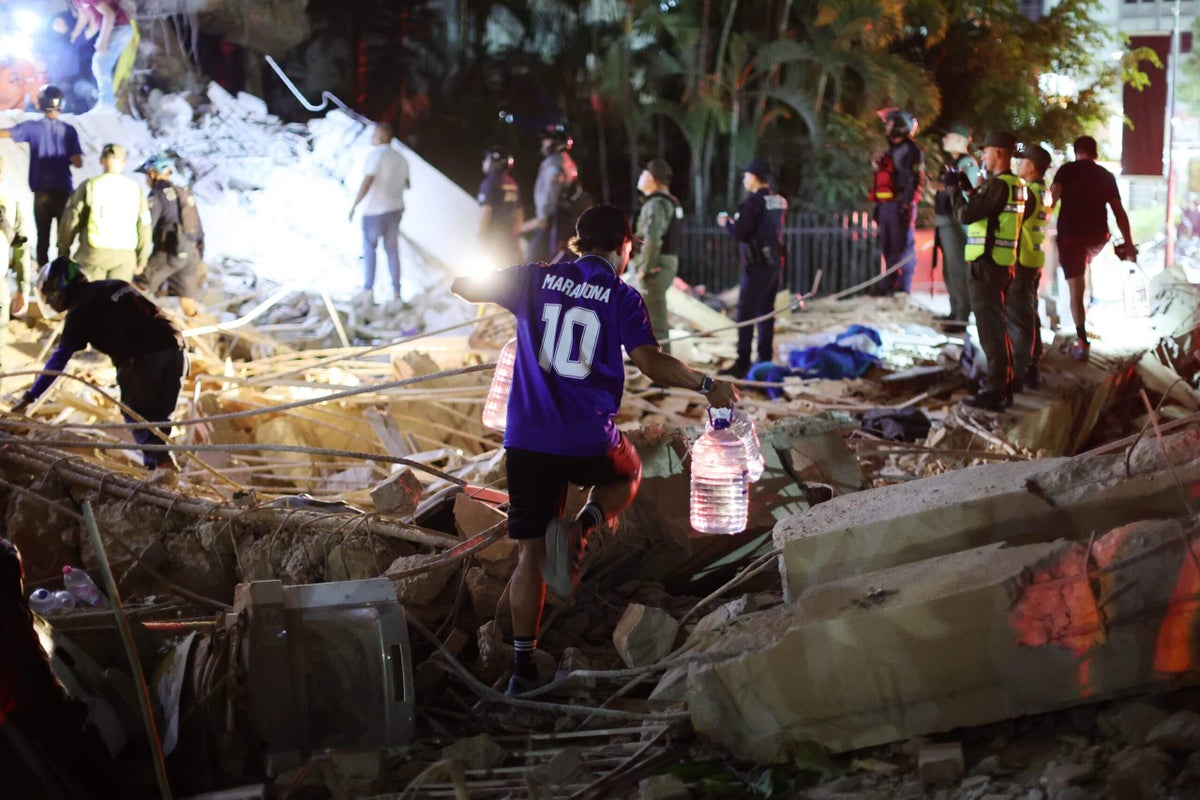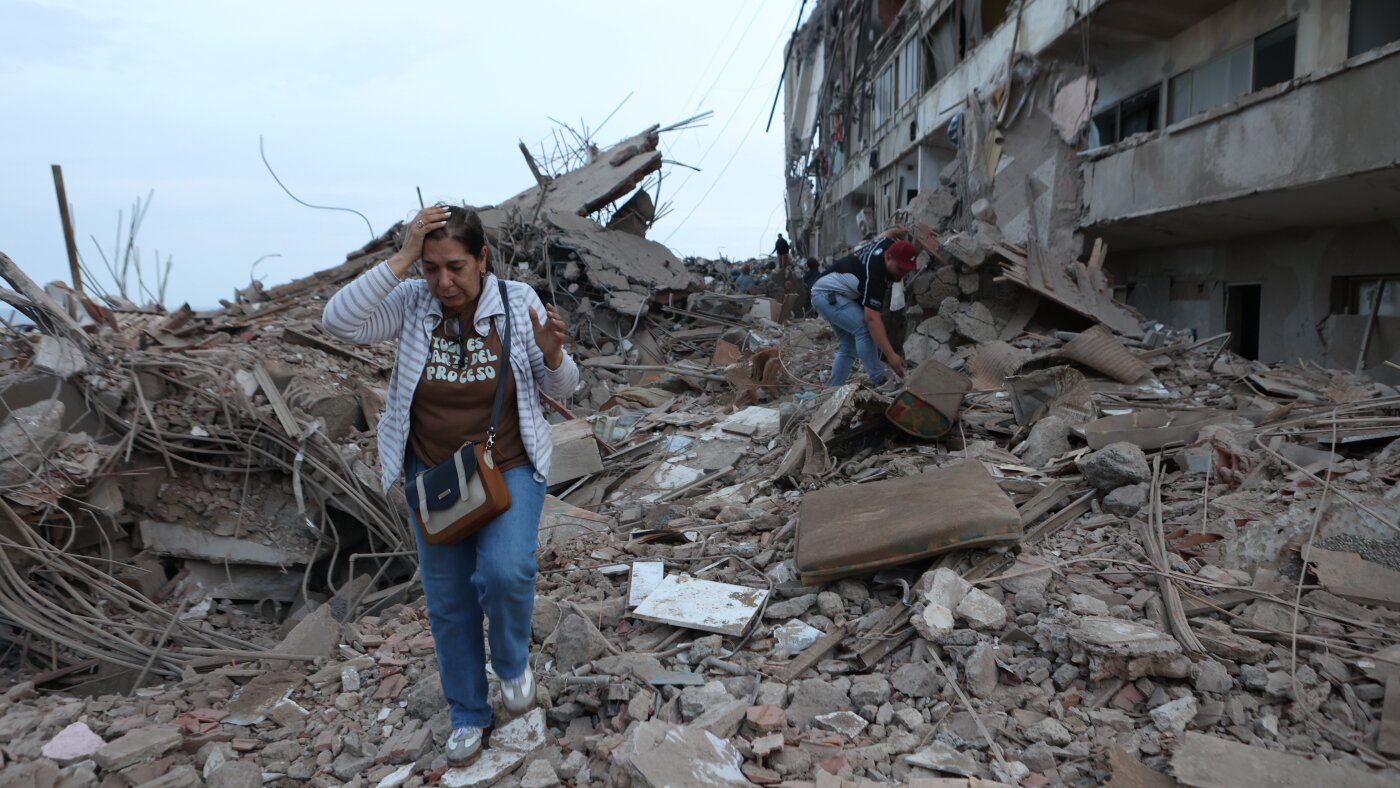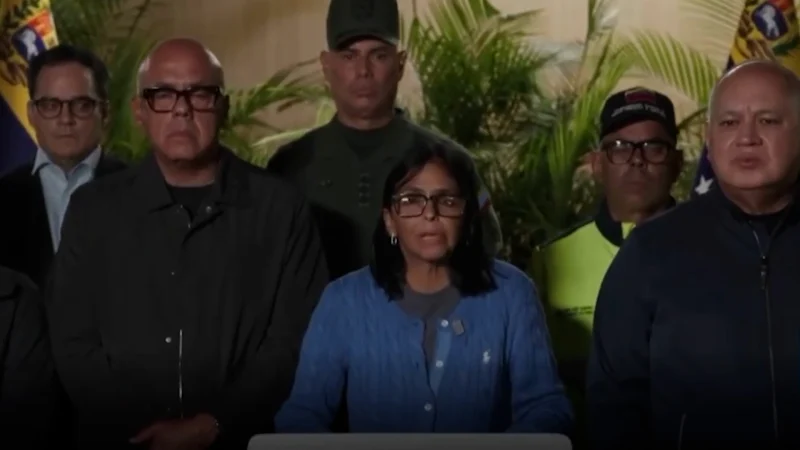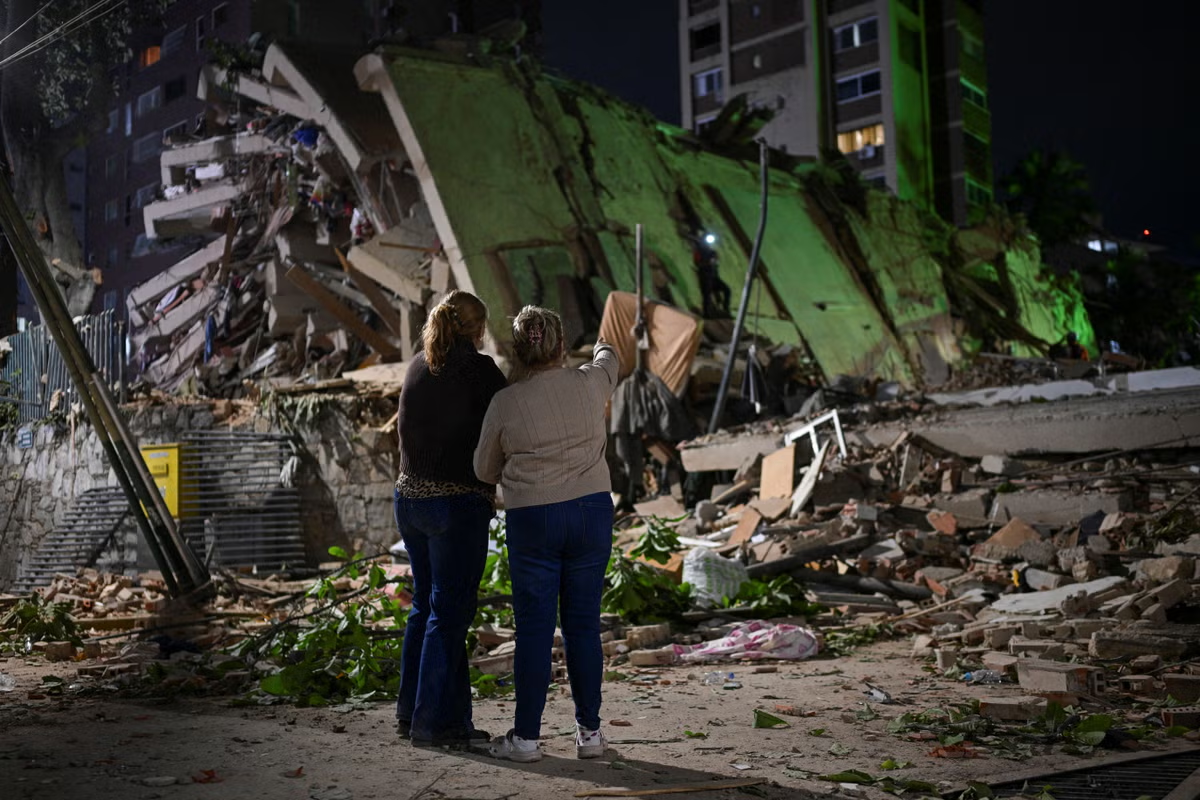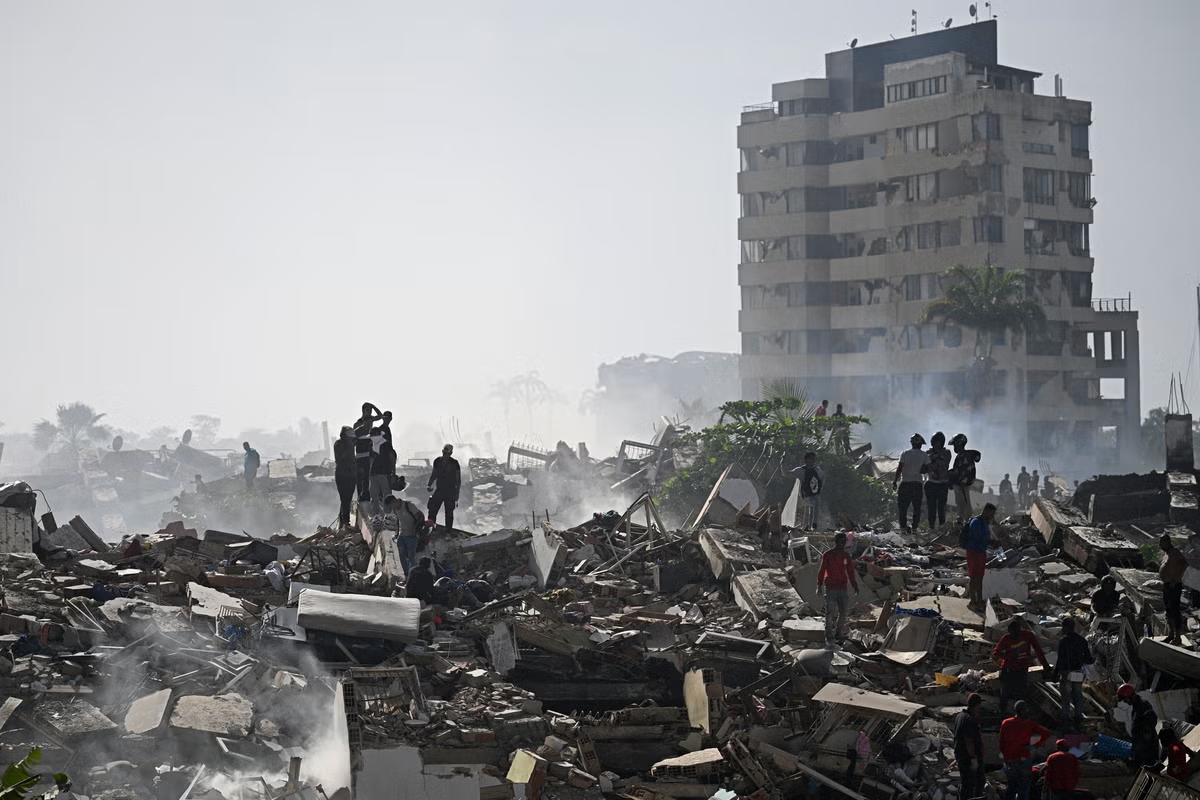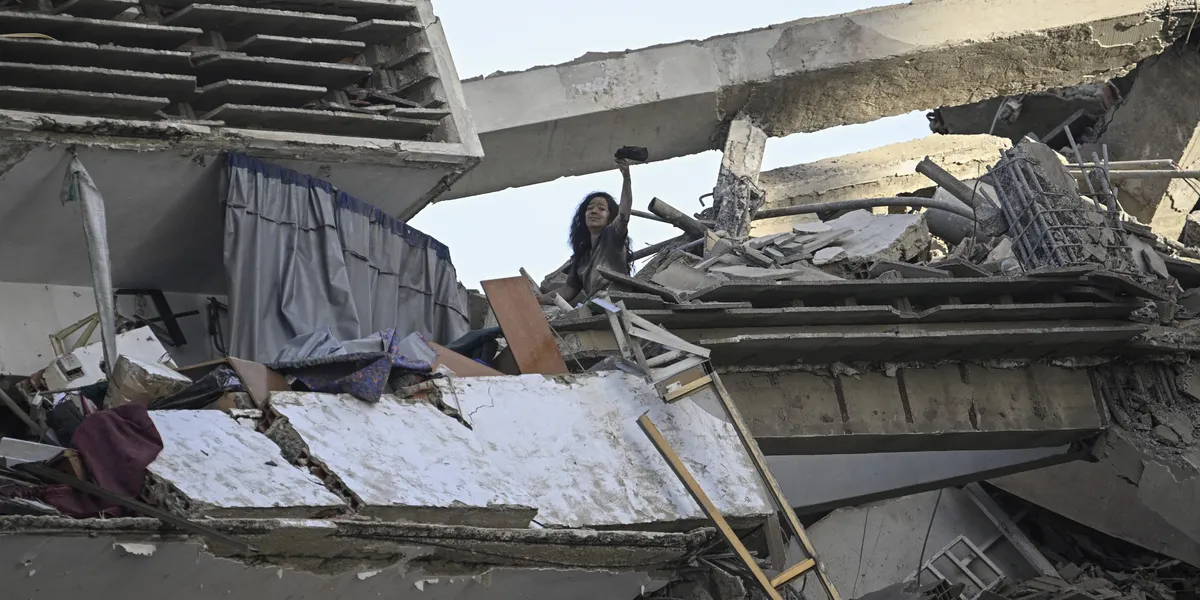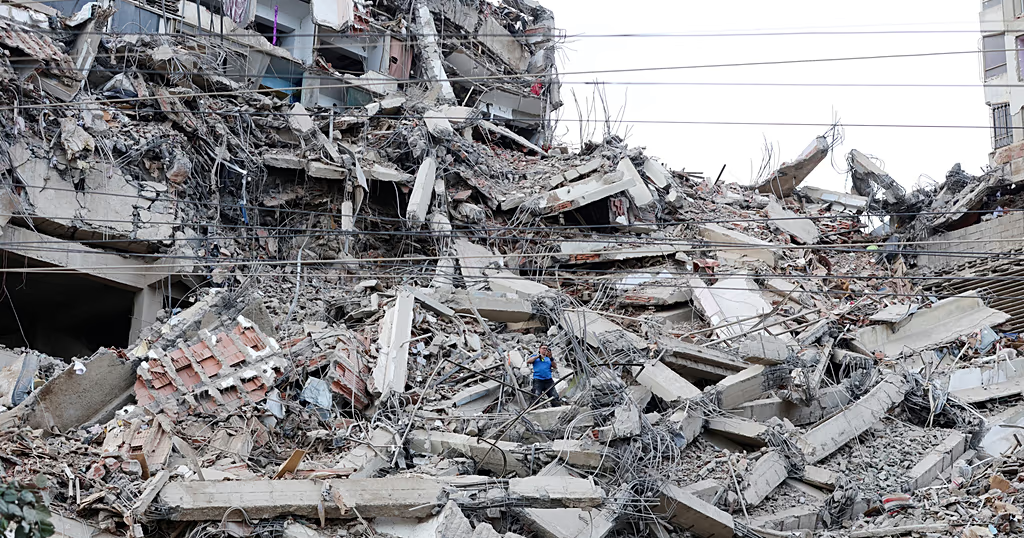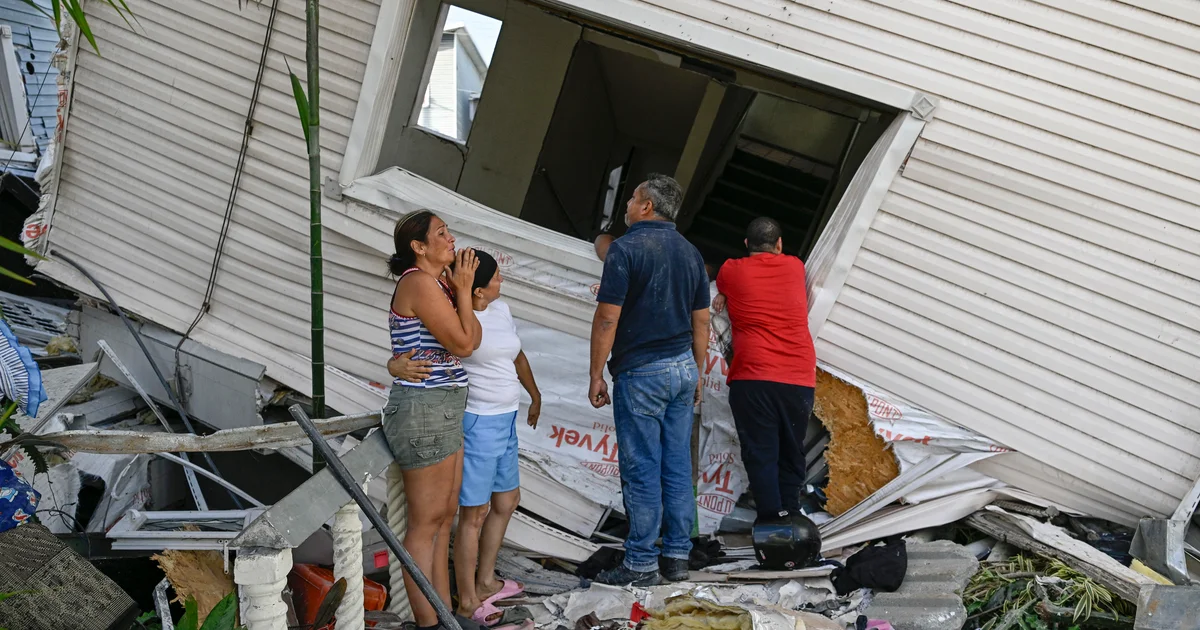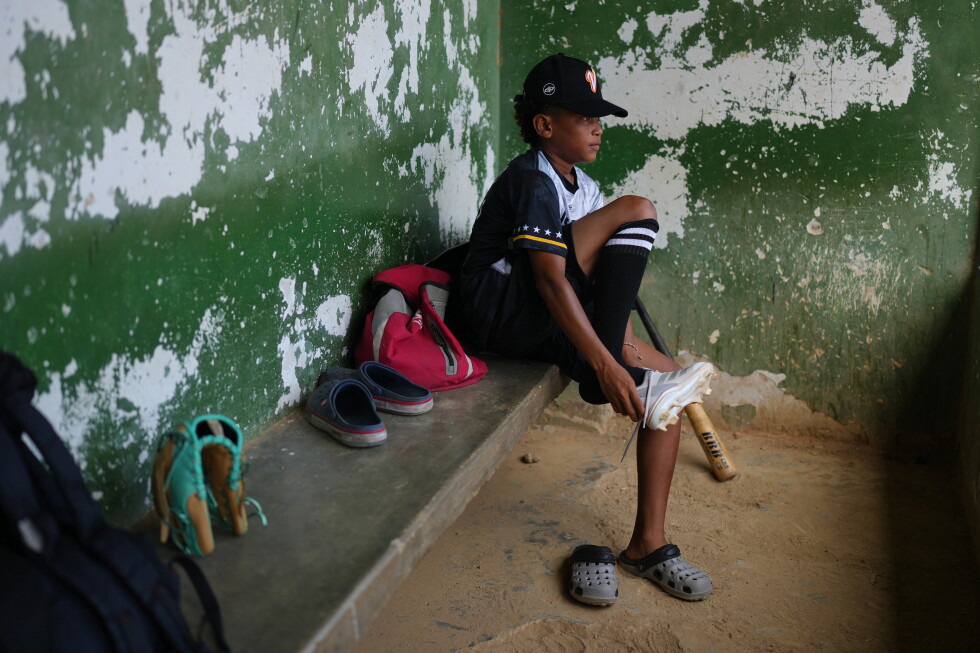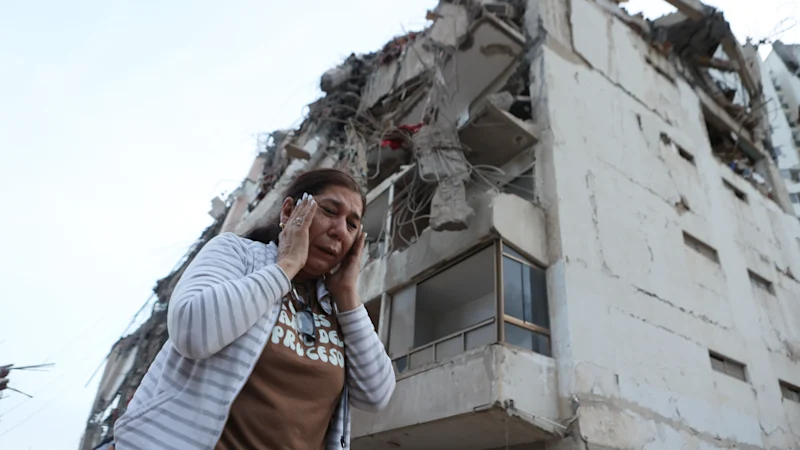
Memphis Barker, Lily Shanagher and Cody WeddleUpdated June 26, 2026 — 4:16pm,first published June 26, 2026 — 4:08amLondon: The Delfines (Dolphins) de la Guaira baseball players held their caps over their hearts as they stood for the national anthem. It was just after 6pm on Wednesday in Venezuela when they took to the field to face Samanes De Aragua, their rivals, at the Jorge Luis García Carneiro stadium, in the coastal city of Macuto.But the pitcher never threw the first ball. Moments after the end of Glory to the Brave People, the first of Venezuela’s devastating twin earthquakes struck the northern state of La Guaira.The camera filming the game began to shake as a 7.2-magnitude tremor hit first. Less than a minute later, an even larger jolt – of 7.5 magnitude – sent players and staff sprinting to safety in the middle of the diamond.“Mad devil!” one man shouted. “What was that?” On the horizon, a huge dust cloud erupted from Macuto.In the city, as across much of northern Venezuela, buildings were collapsing in their dozens. Some imploded instantly. Others slipped over, floor-by-floor, unable to withstand the cracks ripping through their foundations.Screams could be heard from residents trapped inside the rubble of the Oasis apartment building in Catia La Mar, a coastal city about 14 kilometres east of the baseball stadium, in an area that suffered some of the worst damage.The interior of a damaged building in San Bernardino lies exposed following the powerful quakes.Getty ImagesOn Thursday evening (Caracas time), the official death toll stood at 235 people, with at least 4300 people injured.But the “doublet” quake is feared to have killed thousands of people in a country that is already bludgeoned by decades of corruption, political upheaval and socialist repression.In January, American missiles struck Catia La Mar as special forces launched their daring raid to capture Nicolás Maduro, the country’s former president, who is accused of narco-terrorism.Until Wednesday afternoon, Venezuela appeared on a tentative upswing.A woman walks past a damaged building in La Guaira, Venezuela.AP Photo/Pedro MatteyCollapsed buildings in La Guaira on Thursday, the day after the earthquakes struck.AP Photo/Juan Pablo ArraezWorking with the United States, “puppet” president Delcy Rodriguez had endeavoured to kickstart the oil industry and freed some political prisoners. Foreign investment had been promised, and flights to the US restarted.But this morning, Catia La Mar looked as if it had endured decades of war. Tower blocks tilted at odd angles, with their windows blown out. Piles of glass, rubble and iron lay in the street.The coastal, largely working-class state of La Guaira appeared to have suffered the brunt of the quake, said José Rodríguez, the president of the national assembly.The United States Geological Survey (USGS) located the epicentre about 150km east of the Dolphins’ stadium, with tremors rippling, surging and tearing their way down the coast.Chaotic footage taken inside the Simón Bolívar international airport – the largest in the country – shows passengers suddenly flung to the floor. Clouds of dust blow through the terminal, while ceiling panels burst out of their fittings.Family members of the Dolphins baseball players were staying at Hotel Eduard’s, a luxury eight-storey building about a 10-minute walk from their home ground.By evening, the entire hotel had collapsed. On the street outside, team members, still dressed in their bright white uniforms, looked on in agony.Footage showing the moment the quakes struck during the Marineros vs Senadores game in Caracas (above).“The whole hotel fell apart,” says one unnamed man, who speaks in between sobs on a video shared on social media. “I had just left with my family to get ice cream over the road.” “We need people to help remove the debris of Hotel Eduard’s,” a journalist said in a video appeal on social media.“There are many relatives of the Dolphins under the rubble because of a lack of rescue personnel.”Baseball is Venezuela’s national sport. Now, even that source of joy has been marked by tragedy.Nobody could have prevented the build-up of friction between the Caribbean and South American tectonic plates, which have butted against one another for millions of years. The last cataclysm struck in 1900.But the country’s vast wealth from oil was not used to build homes or infrastructure capable of withstanding tremors of this size. “Non-ductile concrete buildings” proliferate, all of which lack the steel required to prevent concrete from exploding when it suffers a geological shake.“The structures were really not built in a way to withstand this intense of an earthquake, even though Venezuela is in a relatively active earthquake zone,” said Eloisa Ocando-Thomas, a researcher of Latin American history at the University of Warwick. “The situation in hospitals is very confusing, very overwhelming.”Roberto Marrero, an attorney and opposition politician, said: “The official numbers are moving slower than the tragedy.”Speaking to London’s Telegraph by phone from Caracas, Marrero added: “It was very intense. You feel dizzy for more than an hour after. It is an indescribable fear. And the worst thing is seeing all the buildings and the places you know just vanish.”Every doctor and nurse in the country has been ordered to go to work.Alejandro Narváez held on to his mother while she prayed on the floor of their apartment as the first quake struck.People and rescuers work on the debris from the Moises building in Caracas.Getty ImagesResidents and their belongings on a street in Caracas after twin earthquakes caused major destruction.Getty Images“My refrigerator ended up in the middle of the living room, that’s how strong it was,” said the 40-year-old.At the same time, Gerald Garcia was inside a shopping centre in Caracas.“The whole bottom floor started shaking,” he said. “It was maybe 30 or 40 seconds, but I felt like it was an eternity. Everybody started running, without paying, just panic, people running up the escalators.”In Caraballeda, a town in La Guaira, Orefrank Amaya was unable to return home because a bridge had collapsed.“I’m hearing children crying, people crying out in pain,” said Amaya from inside a police station, where he was helping move wounded people to an area where they could be treated.US President Donald Trump promised to rapidly send help to Venezuela, whose people he called “new and great friends”.The US said it was deploying two warships, transport planes and helicopters, and mobilising $US150 million ($220 million) in aid.A collapsed building in the Los Palos Grandes neighbourhood of Caracas.BloombergWashington has worked closely with Rodríguez, Maduro’s former vice-president, who now runs the country on an acting basis.She has assented to the US’s effective takeover of the Venezuelan oil industry, earning the removal of sanctions and the resumption of ties with the IMF and World Bank.But the socialist state has barely shifted, and poverty has wracked much of the nation long before the tremor struck.Under Maduro, millions of citizens fled. Those who remained watched the economy collapse, and any hope of change was extinguished by wholesale electoral rigging.The acting president faced a steep challenge in handling the painful, expensive process of recovery, analysts claimed.“Delcy Rodríguez was already an unpopular president, hoping that an economic recovery via oil and gas investment could boost her popularity and potential time in power,” said Dr Christopher Sabatini, the director of the Latin America Program at Chatham House.“That plan just became a lot more difficult and unlikely, as she sits atop a dysfunctional, fractious and corrupt government.”A vehicle is trapped in a fissure caused by an earthquake in La Guaira, Venezuela.AP Photo/Javier CamposA building damaged by the earthquakes on Avenida Los Proceres in Caracas.Getty ImagesHenry Shuldiner, a Venezuela expert at the Atlantic Council, said: “This earthquake is going to push that timeline back considerably. Any near-term planning around investment, reconstruction, or economic stabilisation now has to be reoriented around disaster response first.“The USGS has estimated economic losses in a likely range of $US10 billion to $US100 billion, with a small probability that losses exceed $US100 billion – potentially representing up to 20 per cent of Venezuela’s GDP.“For a country that was already financially crippled by years of hyperinflation and mismanagement, this is a devastating setback and tragedy even beyond the human loss, which is obviously the worst part.”The Telegraph, LondonGet a note directly from our foreign correspondents on what’s making headlines around the world. Sign up for our weekly What in the World newsletter.From our partners
Forty seconds of chaos that wrecked Venezuela’s comeback
Caracas faces a long and painful recovery after twin earthquakes devastated Venezuela’s northern regions, with thousands feared dead.
1,375 words~6 min read