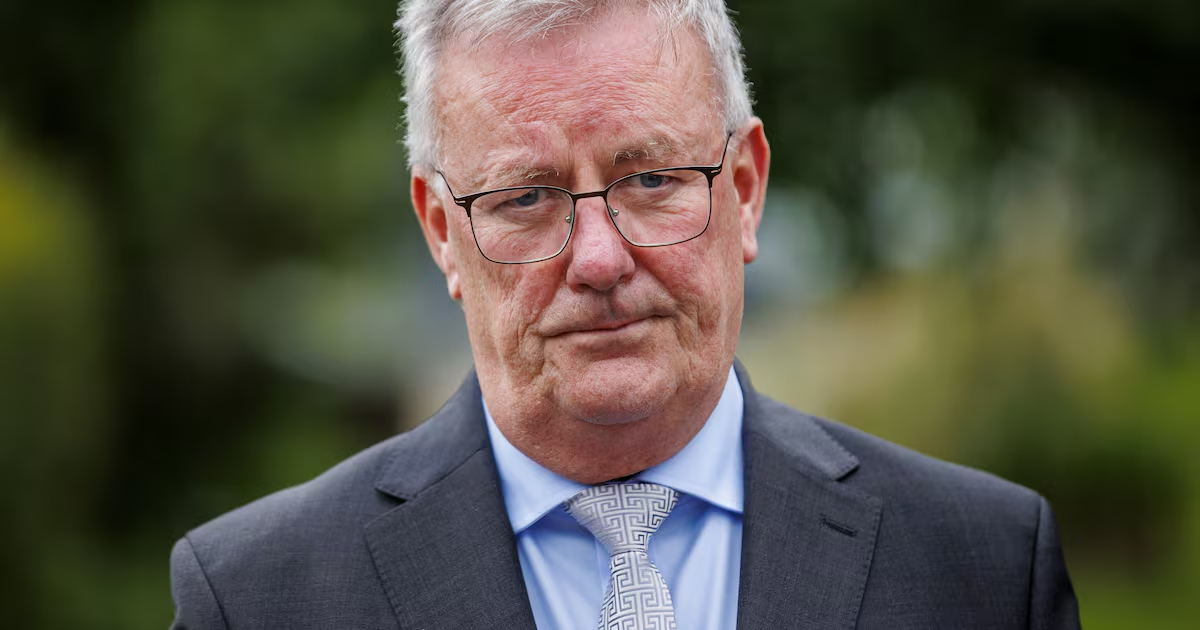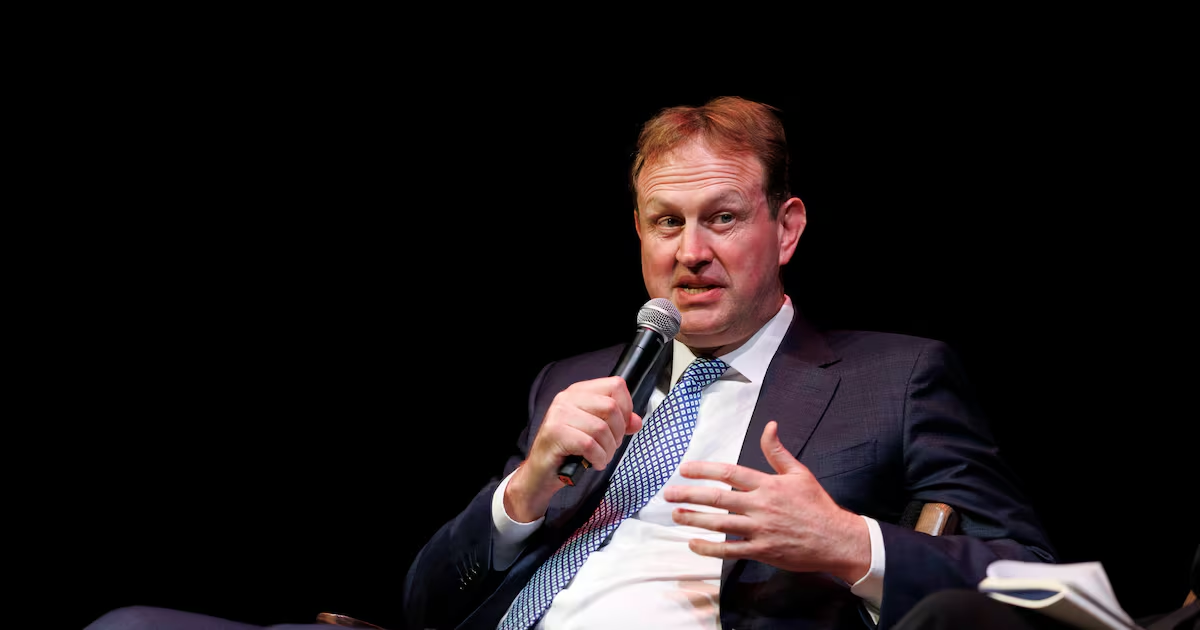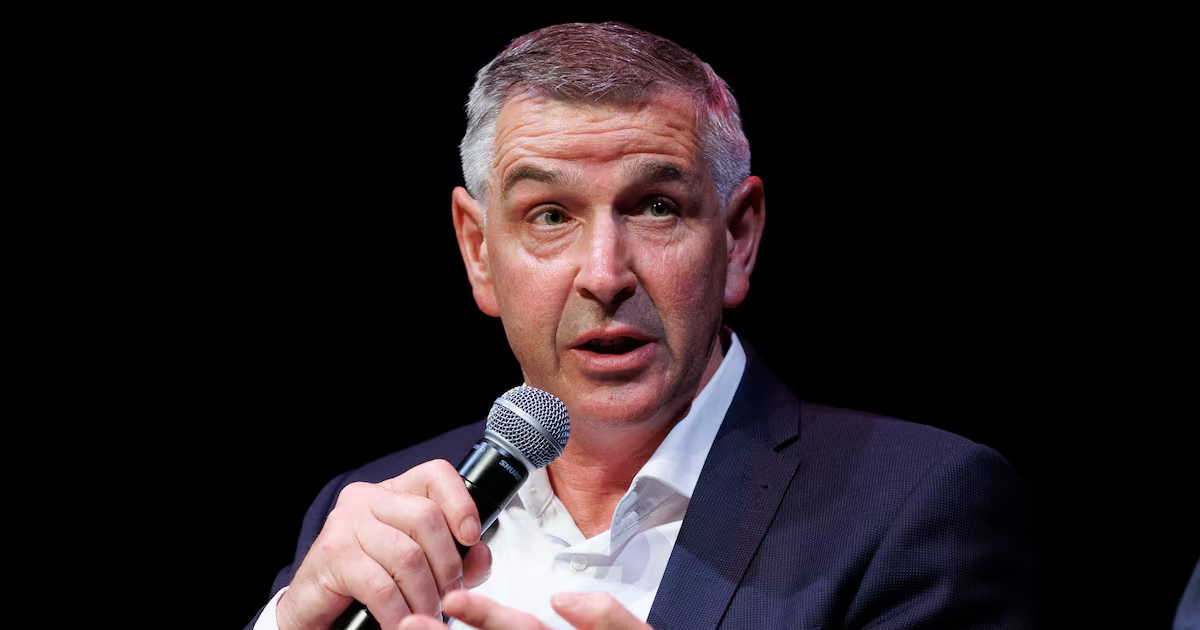
Pro-unity nationalists must engage in efforts to make Northern Ireland work, if they want Unionists to engage in conversations about Irish unity, a former Ulster Unionist Party member of the Seanad has said.“The UK union is not over. A Border poll is not imminent. Unity is not inevitable and we need to say so. But, equally so, neither is the future of the UK union cast iron,” said Ian Marshall.“A Border poll will come at some stage, but that’s not where we are now, and pretending otherwise serves no one well,” said Marshall, who previously led the Ulster Farmers’ Union.“The language and positioning currently adopted reinforces insecurity, instability, and entrenched positioning rather than building trust and inclusivity between Britain and Ireland,” he told an SDLP conference held in Belfast on Thursday.Questioning the language used towards unionists by unity supporters, Marshall said those who are most passionate on the subject have “often gone wrong with selling the proposition”.“If I go to a salesman on the Boucher Road today and I’m looking at a car. He’s trying to sell me a new car, he doesn’t tell me that the car I have is rubbish. He doesn’t tell me that the car I have is unfixable. He tells me that he’s going to sell me something better.“That’s what unionism needs to hear. Unionism needs to hear that there is a better option. And it’s not aspirational or based on ideology. It needs to be based on facts,” said Marshall.“It’s easier for political unionism to sell the status quo because it’s tangible and they know what they have. It’s very much harder for those supporters of Irish unity to sell that because it’s still aspirational,” he went on.The “biggest single challenge” facing both countries over the next decade is “the collapse of public trust” that has taken place in the body politic, which will affect any debate about unity takes place, Marshall said.“Politics is failing to meet the intergenerational challenges, yet Westminster, Stormont, and the Oireachtas operate on four- or five-year electoral cycles that reward short-term headline-grabbing and populism over long-term strategic delivery,” he said.Divisions worsened by Brexit and social media has “pushed people into silos”, he said: “You’re Leave or Remain. It’s London or Brussels. It’s union or unity. It’s east-west or north-south”.“What is needed is not just new politics, but a new political culture and a new language, one that values long-term thinking, cross-party collaboration, co-operation, respect, and courage to tell citizens the difficult truth.”Accepting Marshall’s arguments as “valid points”, former taoiseach and Fine Gael leader, Leo Varadkar said supporters of unification must able to show “why this is better and better for everyone”. “Maybe we don’t do enough of that, I think that’s a very valid point. If we ask people from a unionist Protestant or loyalist background to enter into debate, then we have to also be willing to open up the possibility that the union may be permanent,” he said.However, he warned that change could come far more quickly than anyone thinks , quoting the Vladimir Lenin line that “there are decades in which nothing happens and weeks in which decades happen”.German unification happened in 320 days after the fall of the Berlin Wall in 1989, even though people had not planned for it, or did not think it would ever happen before the wall fell.Indian independence happened within two years of the ending of second World War after Britain had “emerged victorious, its finest hour, but also broke and with its cities in ruins,” Varadkar said. Just five years passed between the Easter Rising and the creation of the Free State: “Just a few weeks before the Rising, most people just wanted Home Rule, and unionists didn’t want their own state. “They wanted Ireland to remain an integral part of the UK. So the lesson, I think, is that things can change very quickly in history, and it’s good to be prepared,” said Varadkar, who favours Dublin preparation for unity.
Unity supporters must be prepared to make Northern Ireland work, says leading unionist
‘A Border poll will come at some stage, but that’s not where we are now’, former UUP senator tells SDLP conference
662 words~3 min read