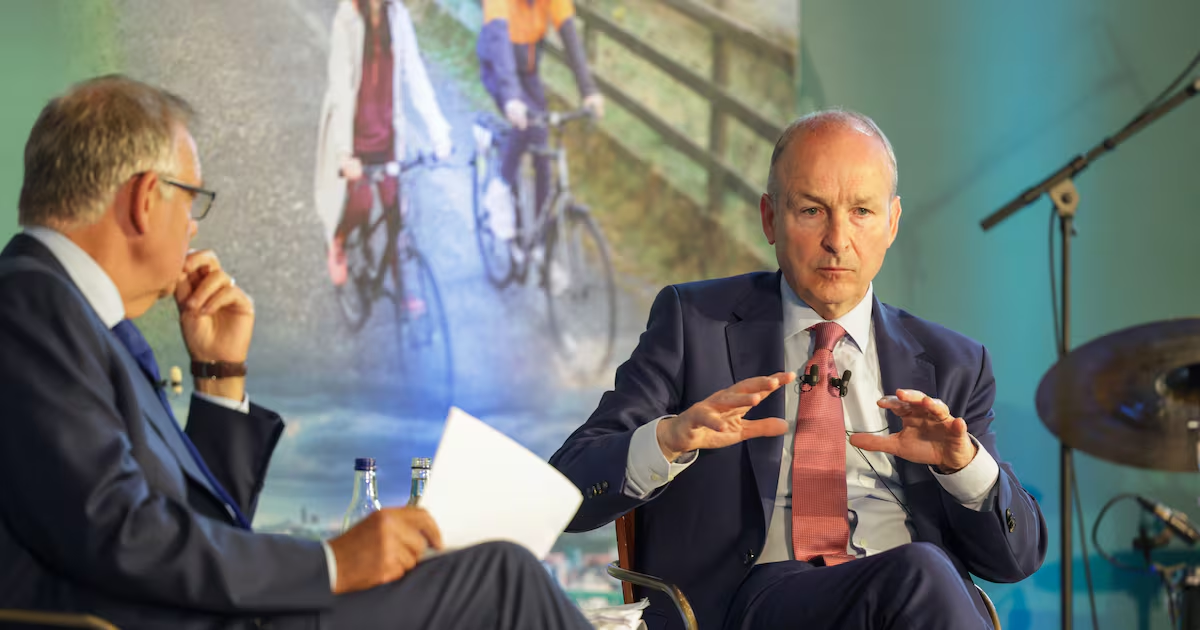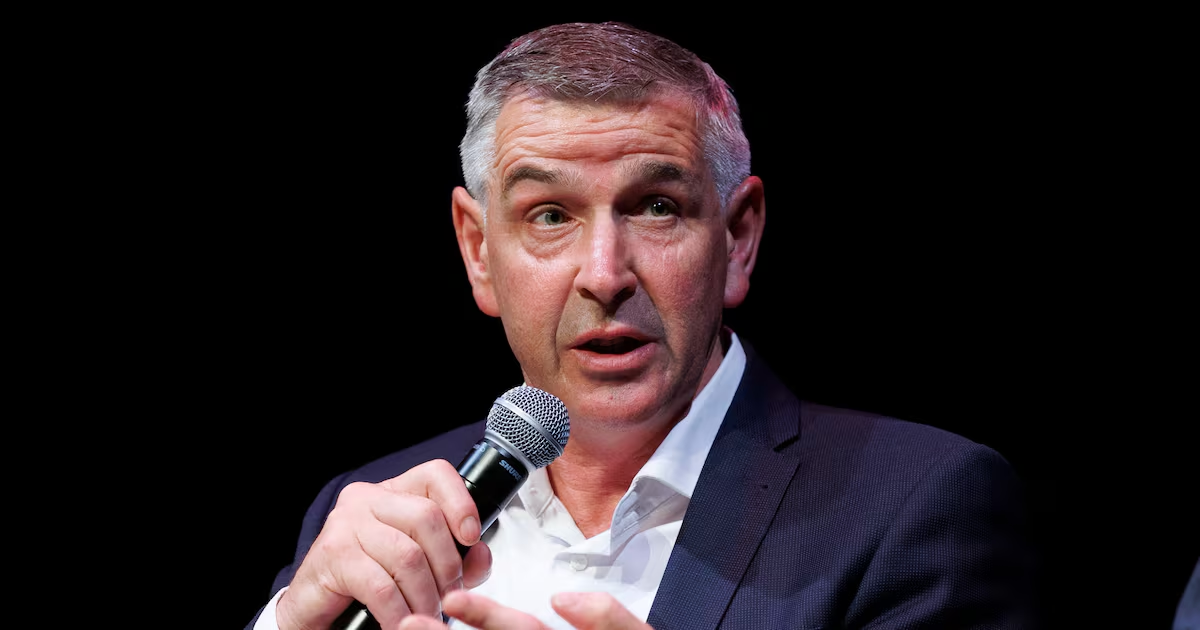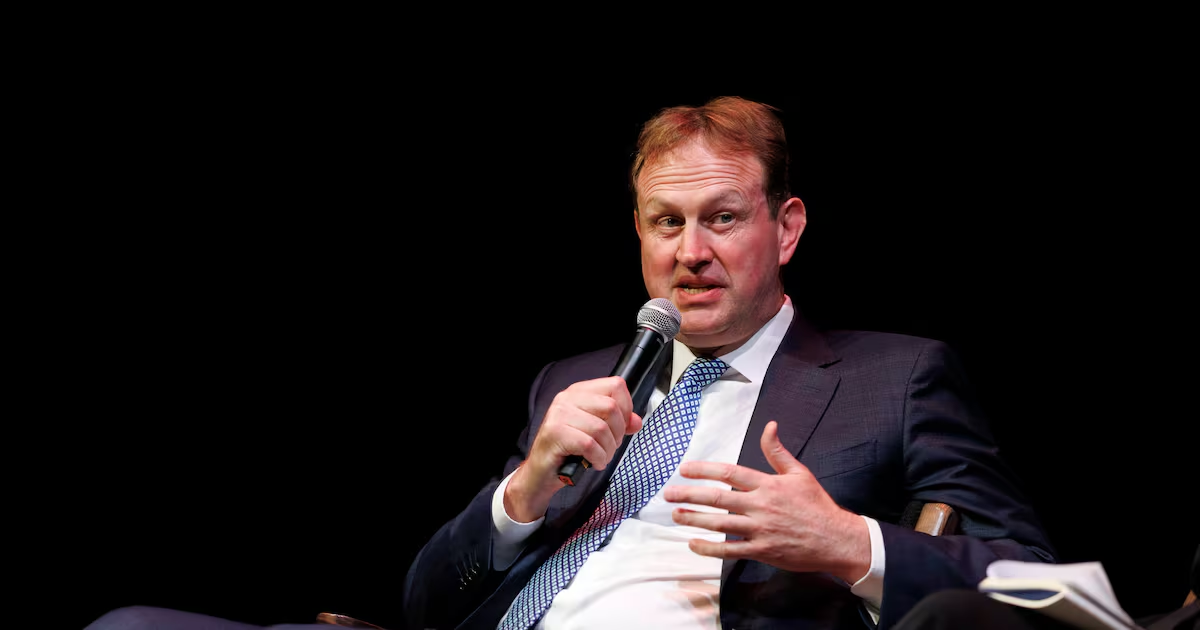
The next government must prepare for Irish unity and declare the compromises it is prepared to make, Minister for Justice Jim O’Callaghan has said.Though labelling it a job “for a future government”, O’Callaghan’s language in Belfast will be interpreted as putting distance on Taoiseach Micheál Martin’s more cautious approach on unity.His declaration comes days after Fine Gael leader Simon Harris announced the party would have “a blueprint for unity” by November, prompting criticism of Martin within Fianna Fáil. “It is responsible for an Irish government to set out what it is would happen, or what it is an Irish government would be prepared to recommend to its citizens if we were going to have a reunification referendum,” O’Callaghan said on Thursday. “That is an issue of legitimate concern.” He deliberately emphasised support for Martin’s favourite project, Shared Island, which is spending up to €2 billion on cross-Border co-operation.Minister for Justice Jim O'Callagan (left) at the SDLP's Preparing for Change conference in Belfast, alongside the SDLP leader Claire Hanna and the former Labour Welsh first minister, Mark Drakeford. “I know some people can be critical of it, but it is helping to build co-operation and engagement between people on both sides of the border,” he told an SDLP-organised conference, The Future of These Islands: Preparing for Change.Martin has long believed cross-Border reconciliation can best be driven by Shared Island projects focusing on improving co-operation, shorn of constitutional change ambitions.However, O’Callaghan said: “We cannot allow violence to dictate the future, or the threat of violence to dictate what democratically-elected politicians wish to see happen based on the wishes of their voters and constituents. “I hope we’ve moved beyond violence being a means of trying to achieve political change, I believe we have,” he said, noting the 1998 Belfast Agreement recognised that unification would happen if a majority voted for it.Insisting Fianna Fáil was “the Republican Party”, he said it was “born out of radical Protestants, predominantly based in Belfast, who founded the United Irishmen in 1791”.Under the Belfast Agreement, a unification referendum in Northern Ireland “shall be called” if the Northern Ireland secretary of state of the day judges that such a question, if put, would pass.“One of the extraordinary things about the Good Friday [Belfast] settlement is that we in the South have delegated to other people and another country responsibility for when to call a referendum in our own country,” O’Callaghan said. “It’s a matter for the secretary of state to determine whether, or not there should be a border poll. It’s all also then a matter for the people of Northern Ireland to vote. That’s going to trigger us having to make difficult decisions.” Saying he did not take issue with the agreement’s wording, O’Callaghan said the fact that the timing lies in the hands of others makes its more important “for a future Irish government to prepare”.People in Ireland have often thought they had freedom “to plan changes ourselves”, but so often “Ireland’s politics and Ireland’s history” has been dictated “by what happens on the neighbouring larger island”.Political instability and upheaval in London could do the same now, especially given the rise of the Reform UK party, he warned: “The future may not go down the predictable pathway of discussions and harmony,” he said.Unquestionably, there will be “some reluctance” among Southern voters about the costs of unity, but O’Callaghan believed it would grow the all-island economy “and it’ll be a huge advantage for Northern Ireland”.Urging people to put aside controversial subjects, such as flag and anthem, he said: “We don’t need to discuss them at present. We always start with the most difficult issues. Let’s just park them.”“I do believe a future Irish government just out of a sense of care and caution will need to put in place proposals as to what an Irish State would be prepared to give up in order to achieve unification.”
Next government must prepare for Irish unity, Jim O’Callaghan tells Belfast conference
Minister for Justice emphasises support for Taoiseach’s Shared Island project which will see €2bn spent on cross-Border co-operation
649 words~3 min read