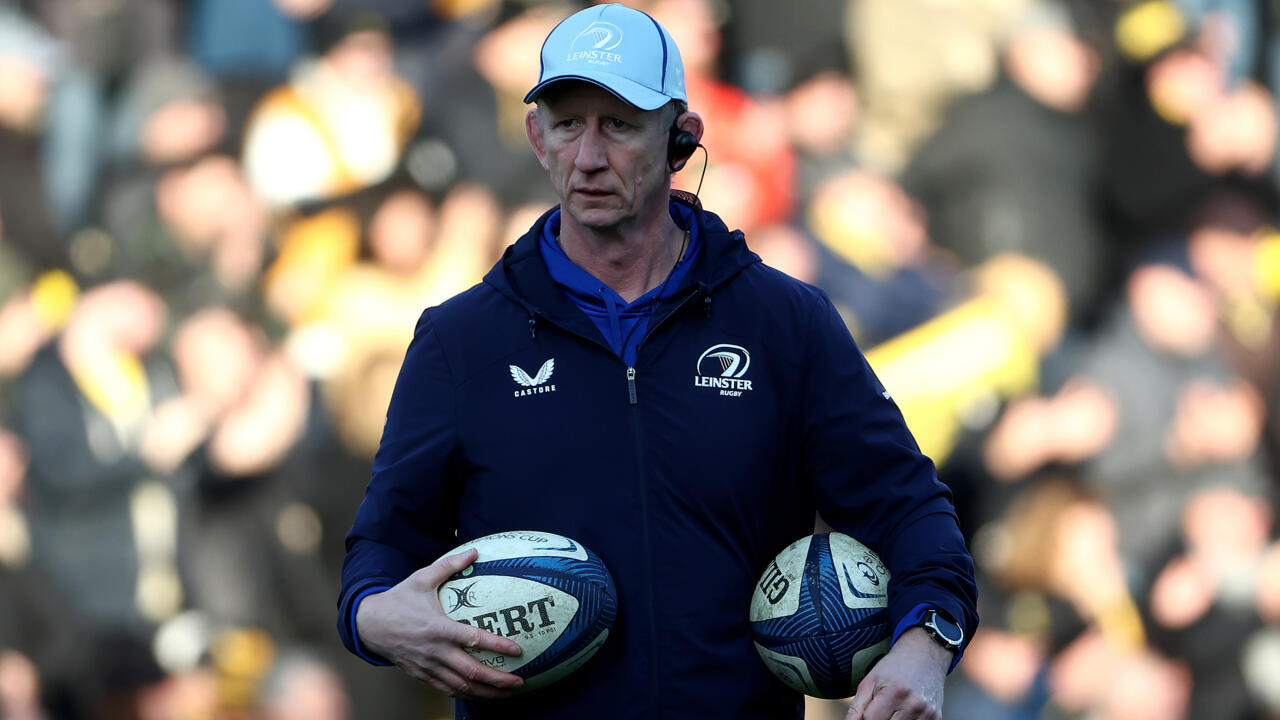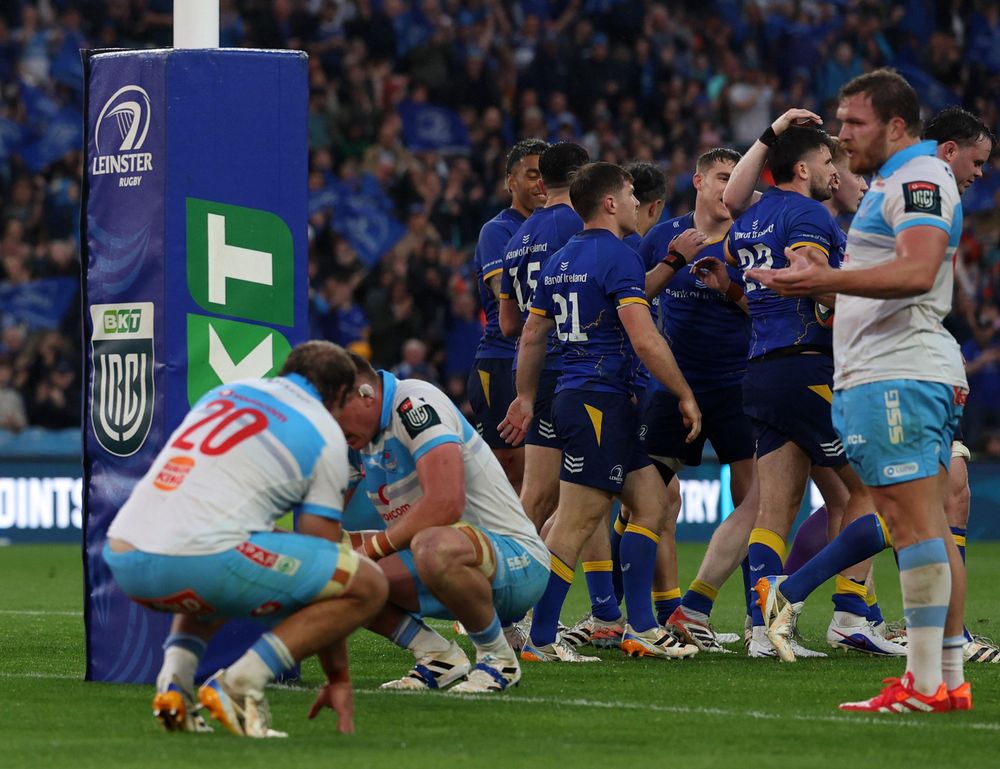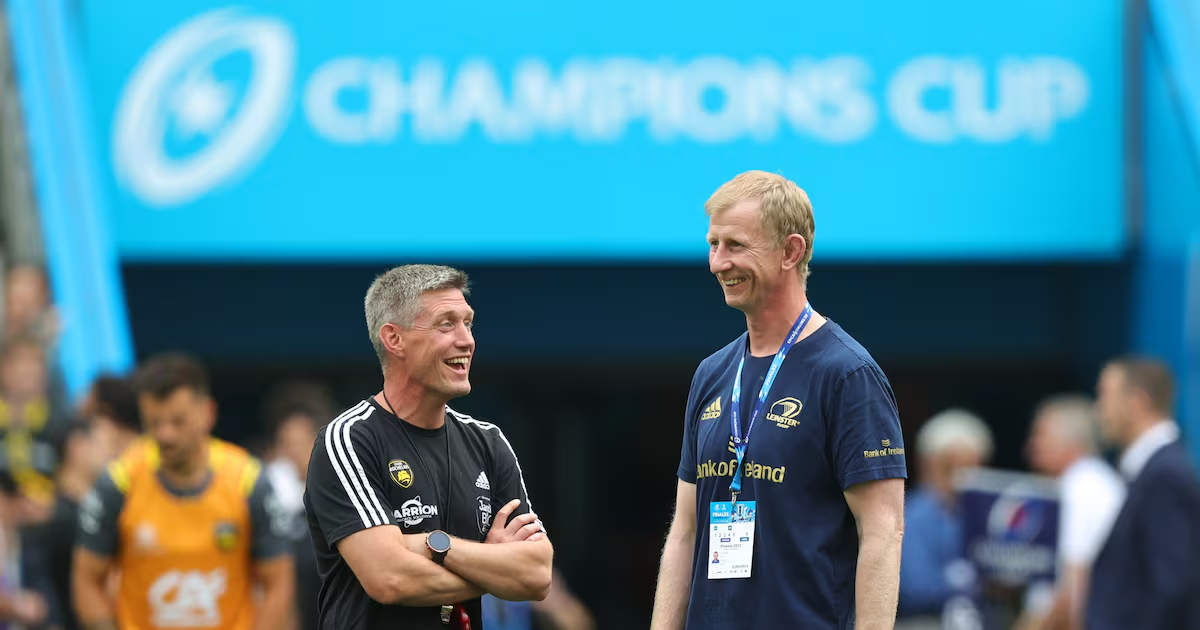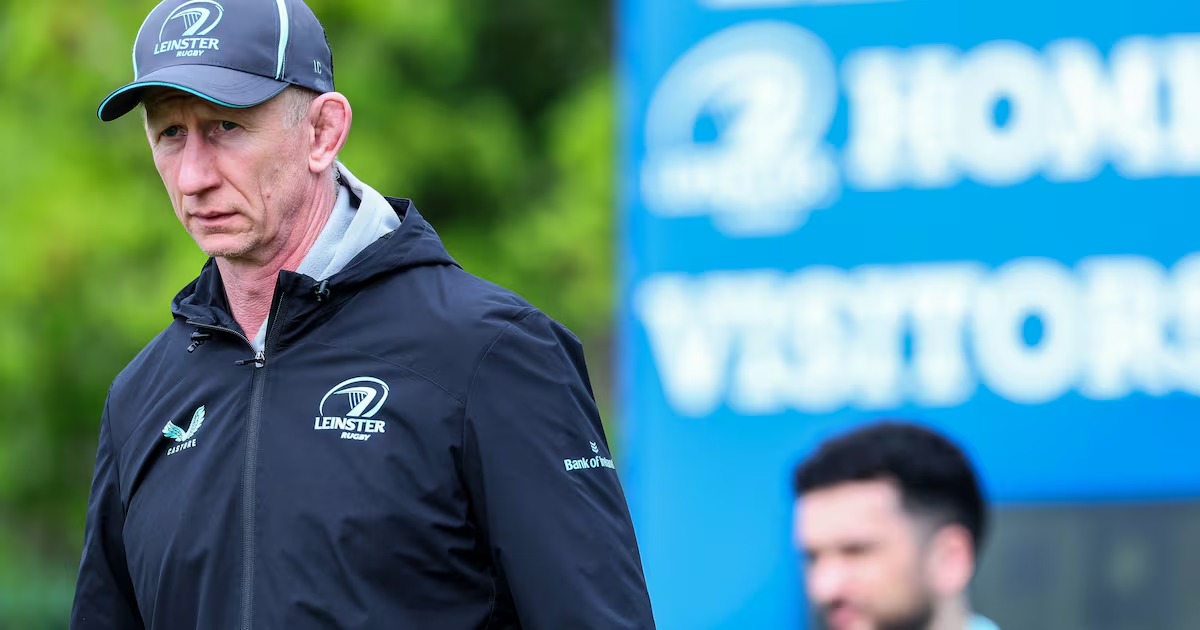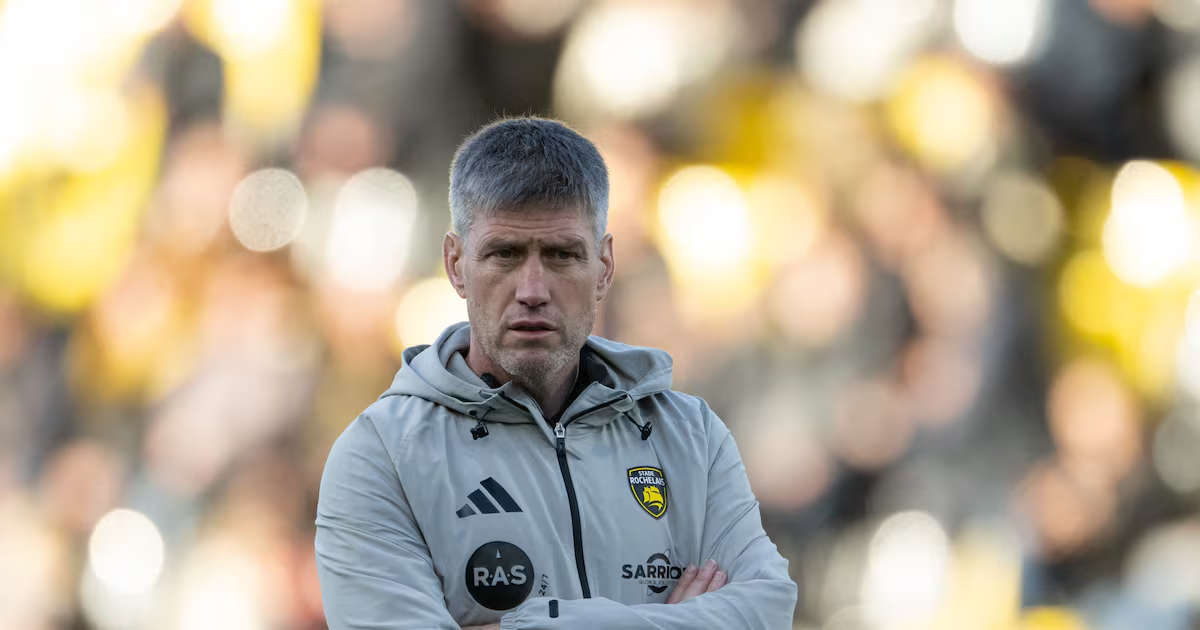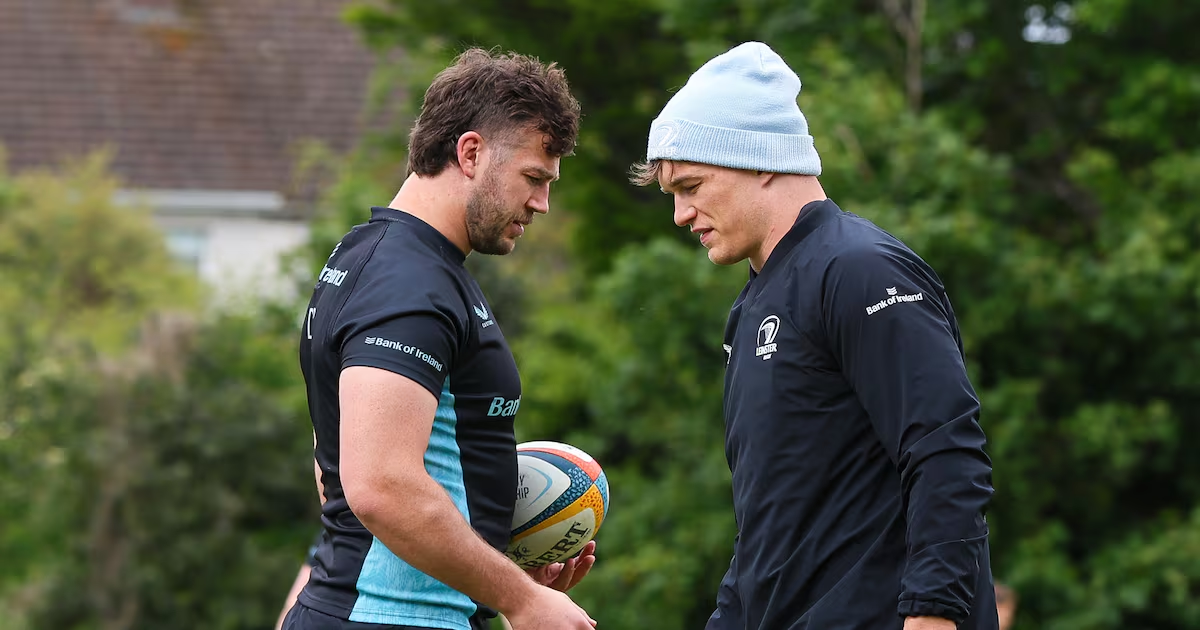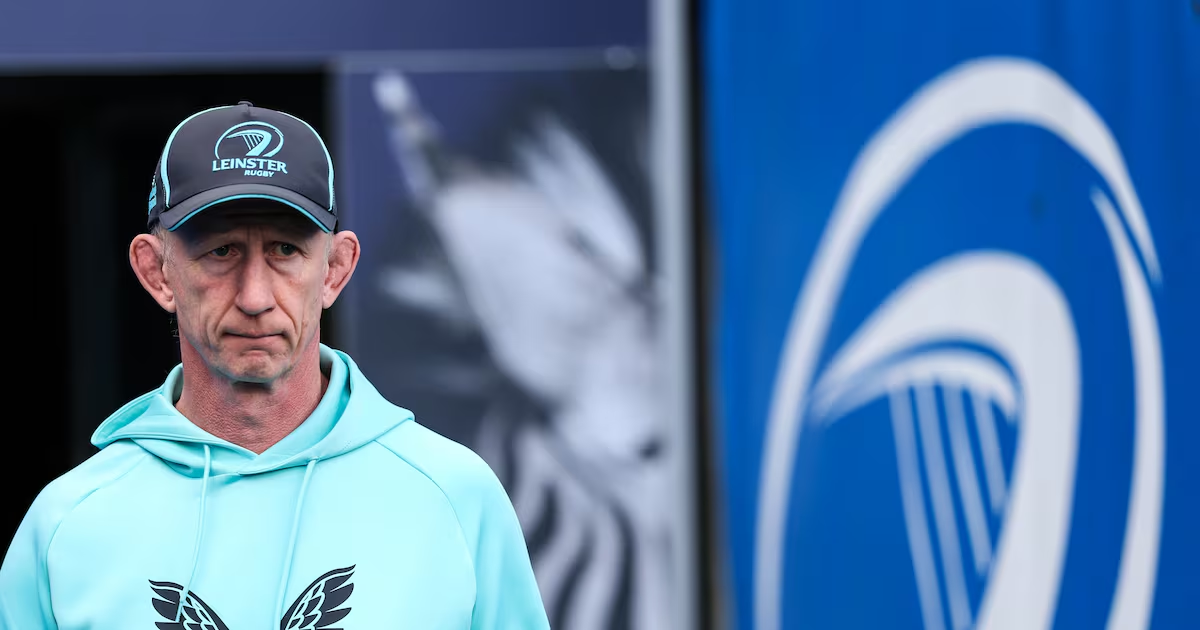
Quietly on Monday morning, in typical self-effacing fashion, Leo Cullen announced next season would be his last as head coach of Leinster. No fanfare. Just a few understated lines in a press release.That is Cullen’s style.So let me fill you in on what he was far too modest to say. Since he took over in August 2015, the club has reached seven United Rugby Championship (URC) finals and won six. They have also won the Champions Cup and reached five more deciders.Do the sums and Cullen has coached Leinster to an astonishing 13 finals. That statistic is unparalleled in professional rugby.In that same time frame, Munster, Ulster and Connacht have gone through a total of 15 head coaches, five from each province. None has reached a Champions Cup final. While Munster and Connacht have won a URC title in the same period, the contrasts between Cullen’s Leinster and the other provinces are stark.[ Who will succeed Leo Cullen at Leinster? Ronan O’Gara is among the intriguing possibilities ]As an organisation, Leinster are a reflection of their coach. The decision to announce his departure was not made in a haze of emotion. It had obviously been planned for a considerable period. The statement was strategically released on the first day of the off-season, presumably providing the club with a three-month window before the start of the new campaign to get their new coach under contract and avoid the wave of media speculation that can undermine a club.How to replace their great coach without triggering a decline in playing standards is one of the greatest challenges Leinster’s administrators have faced in the professional era.There are two paths Leinster could have chosen. The first is what we in Australia call the “DCM” method: Don’t Come Monday. Immediate dismissal. While the ignorant were calling for this approach after the defeat in Bilbao, common sense prevailed – and the coach who has guided the club to 13 finals, including back-to-back URC titles, remained.Leinster decided to take a second path, the long goodbye. That is when a coach is granted a final season before departing. Whoever takes over from Leo Cullen will face a much tougher environment. Leinster will also require rebuilding. Photograph: Ben Brady/INPHO Leinster have chosen to give the most influential individual in the club’s history a last shot at winning a Champions Cup and to oversee the transition of a new leader. While that is understandable, it is not without its pitfalls.The reason I do not like long goodbyes for coaches is because the speculation surrounding who will replace them is highly destabilising. Within minutes of Cullen’s announcement that next season would be his last, the media pounced on the list of possible candidates to follow him.Simon Easterby, Jacques Nienaber, Ronan O’Gara and Felipe Contepomi immediately became the centre of gossip and speculation. The role of Leinster coach is one of the most prestigious coaching positions in rugby. Virtually every coach would leap at the challenge to follow Cullen’s example and continue Leinster’s hegemony. It is exactly this intense speculation that destabilises clubs, distracts players’ focus and undermines their future. Like the stock market, sporting clubs detest uncertainty.However, I believe the Leinster administration are fully aware of the downside of the long goodbye and are well ahead of their public announcements. That is why they have strategically created a three-month window before the club’s next game to get their new coach under contract.While the Leinster players are away on international duty or on the beach, I understand that the club is a long way down the path to deciding who that individual will be. Their aim will be to not only announce Cullen’s successor before the start of the next season, but, if possible, also have them inside the club’s Dublin 4 building during Cullen’s last year.If Cullen’s successor is announced before the start of the URC in September, it will eliminate the instability and uncertainty a long goodbye brings. If the decision on Cullen’s replacement drags on into next season, the speculation will become so intense that the noise could seriously affect the team’s performance.Whoever is chosen to take over from Cullen will face a much tougher environment. Both Leinster and Ireland are rapidly ageing teams.The decision to allow James Lowe to leave was tough. While I have great respect for all Lowe has given Ireland and Leinster, the harsh reality is that his best playing days are behind him. Lowe’s is the first of what will be a series of other long goodbyes to a cohort of exceptional players such as Tadhg Furlong, Jamison Gibson-Park, Robbie Henshaw, Gary Ringrose, Jack Conan and several others who are not getting any younger. Father Time is a ruthless defender who eventually brings even the greatest to ground. The unavoidable ageing of so many great Leinster players means the period after the next Rugby World Cup, when the new coach takes over, will be a time of transition for the club. Leinster will require “rebuilding”, the dreaded word that sends shivers down every coach’s spine.Sporting dynasties do not last forever. They have a set beginning and a hard ending. As a coach, the trick is to be there at the beginning and the middle. The end is to be avoided at all costs. Cullen has achieved that.The task of Leinster’s next coach is best exemplified by the metaphor that the great Wallaby coach Dave Brockhoff used when describing what it takes to lead a winning dynasty. “It’s like painting the Sydney Harbour Bridge,” he would boom, “Once you think you have finished, you have to go back to the beginning and start all over again.”The process of renewal, regeneration and improvement inside every sporting club is a never-ending process. Leinster are not immune from this.Somewhere after Cullen’s long goodbye, there will have to be a new beginning.
Matt Williams: Leo Cullen deserves a final season, but Leinster must avoid the long goodbye
Speculation over a coach’s successor can destabilise the team unless the process is handled properly
972 words~4 min read