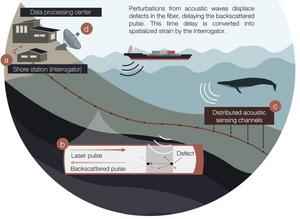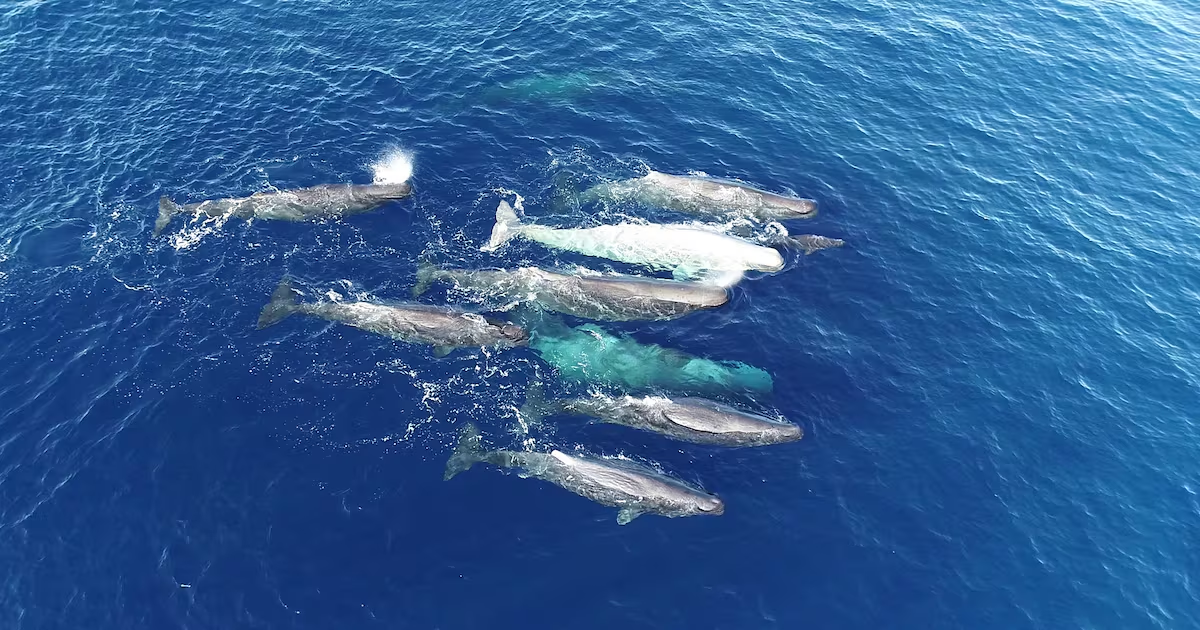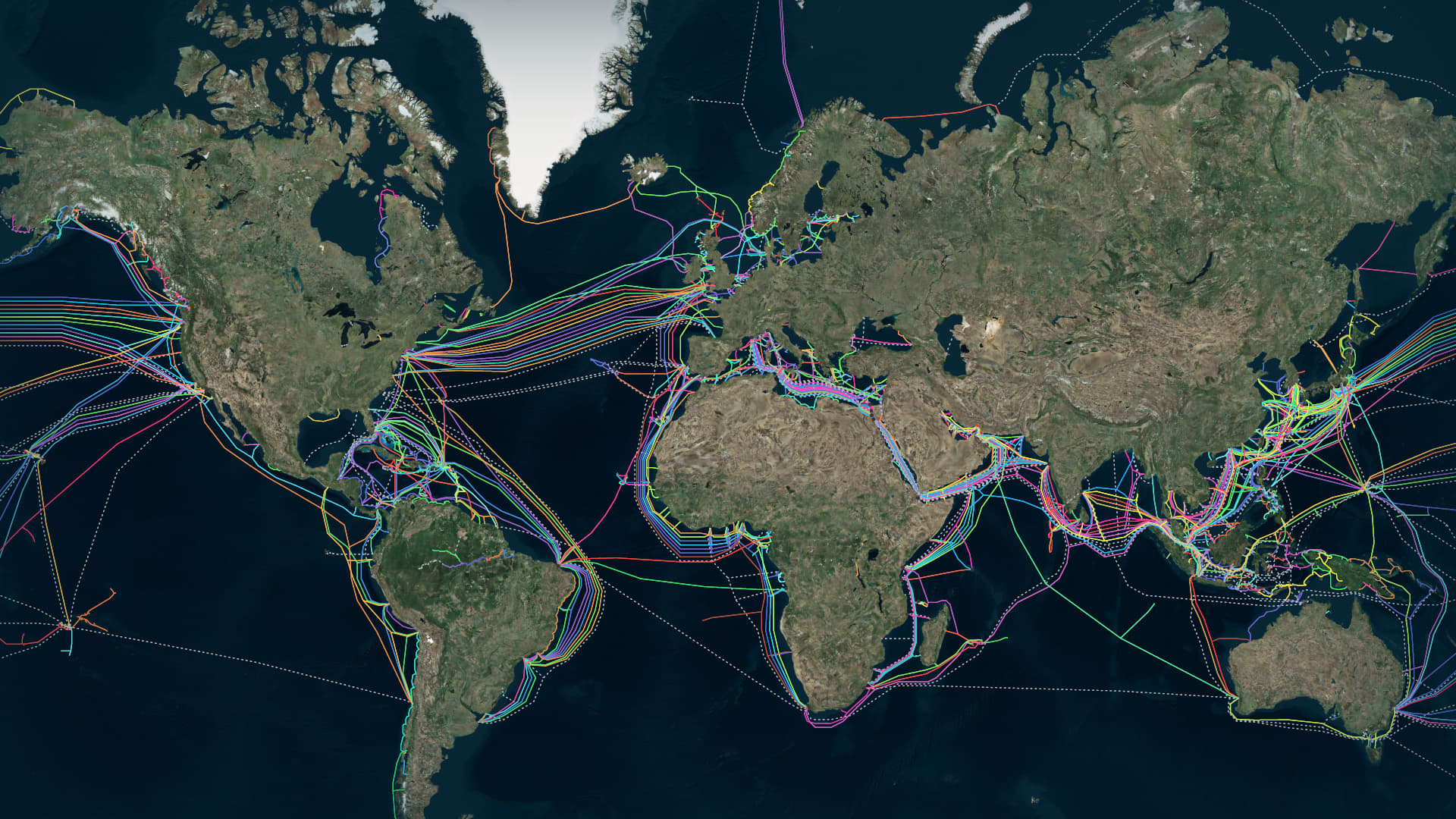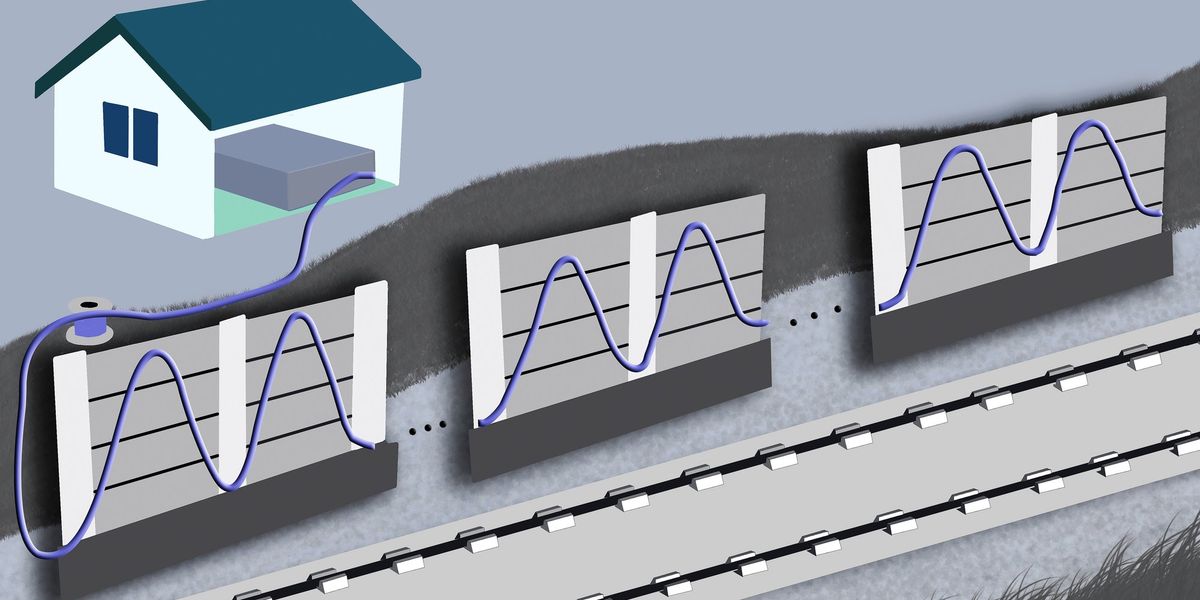
Tiny fiber-optic cables on seabed can do a lot more than you can imagine. A team of researchers has discovered that the same fibre-optic cables carrying internet and communication data beneath the oceans can also detect whales that are completely silent. Instead of relying only on whale calls, scientists found that the movement of a whale through water creates low-frequency pressure waves that these cables can sense. The discovery was made by researchers from the Norwegian University of Science and Technology (NTNU). The finding opens new opportunities for whale conservation, ocean monitoring, and scientific research using infrastructure that already exists across the world's oceans.Existing underwater cables reveal another purposeFor years, fibre-optic cables have connected countries by carrying internet traffic, telephone calls, financial transactions, and other digital communications across the ocean floor.In 2020, researchers at the Norwegian University of Science and Technology (NTNU) discovered another use for these underwater cables. They found that the cables could act as passive listening devices. Using this system, they detected the deep sounds made by whales in the waters near Svalbard.That success encouraged researchers to study whether these cables could provide even more information about whales. The latest research has now shown that whales can be detected even when they are completely silent.Tiny fiber-optic cables on seabed can do a lot more than you can imagine by detecting silent whalesResearchers found that whales create low-frequency pressure waves while swimming through the ocean. As the whale moves, its body pushes water ahead of it. This movement disturbs the surrounding water and nearby seabed sediments. The fibre-optic cables are sensitive enough to detect these changes.Martin Landrø, head of NTNU's Centre for Geophysical Forecasting and senior author of the study published in the Proceedings of the National Academy of Sciences (PNAS), explained that silent whales can still be detected because their movement creates measurable disturbances. According to the researchers, no previous studies had focused on these low-frequency pressure waves for whale detection.Detecting pressure waves is more difficultThe research team explained that low-frequency pressure waves weaken quickly as they move through water. Robin Andre Rørstadbotnen, the study's first author and a postdoctoral researcher at the Centre for Geophysical Forecasting, said large ships are much easier to detect because they displace much more water than whales.Since whales move less water, they need to dive into the water column before these pressure waves become detectable through the fibre-optic cables. Understanding this difference helped researchers improve their detection methods.Ships helped scientists understand whale movementThe waters around Svalbard receive many ships during the year, including cruise ships and research vessels. Ships are equipped with an Automatic Identification System (AIS). This system continuously reports the ship's identity, position, speed, and travel route. Researchers compared the AIS information with signals recorded by the fibre-optic cables.Earlier studies mainly focused on the sound generated by ships. During the latest research, scientists realized they could also measure the pressure waves created by ships moving through the water. Since ship positions and speeds were already known through AIS data, researchers could compare the recorded pressure waves with real ship movement. This helped them understand what similar pressure waves from whales might look like.Physics played a key role in the researchScientists also relied on a physics equation published in 1917 by Lord Rayleigh. The equation originally described how bubbles collapse in boiling water. Although boiling water and ocean movement appear unrelated, researchers said the same physical principles helped explain pressure waves produced by moving ships and whales.Using the ship data together with Rayleigh's equation allowed researchers to calibrate their observations. They were then able to interpret the low-frequency signals with greater confidence. This became one of the major findings of the study.A blue whale confirmed the discoveryThe research team received unexpected help from nature. A blue whale happened to swim close to the surface while making vocal sounds. The fibre-optic cables detected these vocalizations using methods already developed during earlier studies.The whale then stopped making sounds and dived deeper into the ocean. Instead of losing track of the animal, researchers examined the low-frequency pressure wave data. They successfully continued tracking the whale even after it became silent. This confirmed that the new detection method works. Researchers said the observation was possible because they already understood how pressure waves behaved after studying ships.Existing cable networks may support conservationScientists believe this discovery could become an important tool for protecting whales. Many whale populations declined because of commercial whaling over many decades. Although some populations have recovered, estimating whale numbers remains difficult because these marine mammals travel across large ocean areas.Traditional monitoring depends heavily on whale vocalizations. However, silent whales often remain undetected. The new technique could help scientists monitor whale populations more accurately without disturbing the animals. It also makes use of fibre-optic cables that already exist beneath oceans around the world.More possibilities beyond whale monitoringThe research team has previously suggested several additional uses for underwater fibre-optic cables. Scientists believe these cable networks could help detect earthquakes. They may also monitor undersea pipelines for possible damage or sabotage.Researchers have proposed connecting cable observations with satellite information to build an Earth-Ocean-Atmosphere-Space Observatory. Such a system could improve understanding of natural events happening across the planet. The ability to detect silent whales now adds another possible application to this growing list. Researchers believe that existing underwater communication infrastructure can support scientific research without installing entirely new monitoring systems.Why this discovery matters?This research shows that fibre-optic communication cables can perform many tasks beyond carrying internet traffic. By sensing pressure waves created by swimming whales, these cables offer scientists another method for observing marine life. The discovery combines communication technology, ocean science, ship tracking, and physics to improve whale monitoring.Researchers believe this method could strengthen conservation work by helping scientists estimate whale populations more accurately and study whale behaviour even when the animals remain silent beneath the ocean surface.FAQsQ1. How do fibre-optic cables detect silent whales?Fibre-optic cables detect low-frequency pressure waves created as whales move through water. Even without vocal sounds, these water disturbances travel to the cables, allowing researchers to monitor whale movement beneath the ocean.Q2. Why is this discovery important for whale conservation?The method helps scientists detect whales that remain silent underwater. Better monitoring can improve population estimates, study migration patterns, support conservation planning, and increase understanding of marine ecosystems using existing cable networks.
Tiny fiber-optic cables on seabed can do a lot more than you can imagine. Now, they can listen to silent whales. Here's how
Tiny fiber-optic cables on seabed can do a lot more than you can imagine as researchers have found that these underwater communication cables can detect silent whales by sensing low-frequency pressure waves created while they swim. The discovery could improve whale monitoring, conservation efforts, and ocean research. Scientists used existing fibre-optic cable networks, ship data, and physics to develop a new method for tracking whales even after they stop vocalizing.
1,050 words~5 min read