A country’s foreign policy is shaped by the national interest. This is the core principle that has also guided Greece in relation to the two major conflicts of our times. Sure, there are values, traditional ties and, in some cases, even the personal relationships between leaders, but at the end of the day, friendships don’t determine the decisions – interests do.
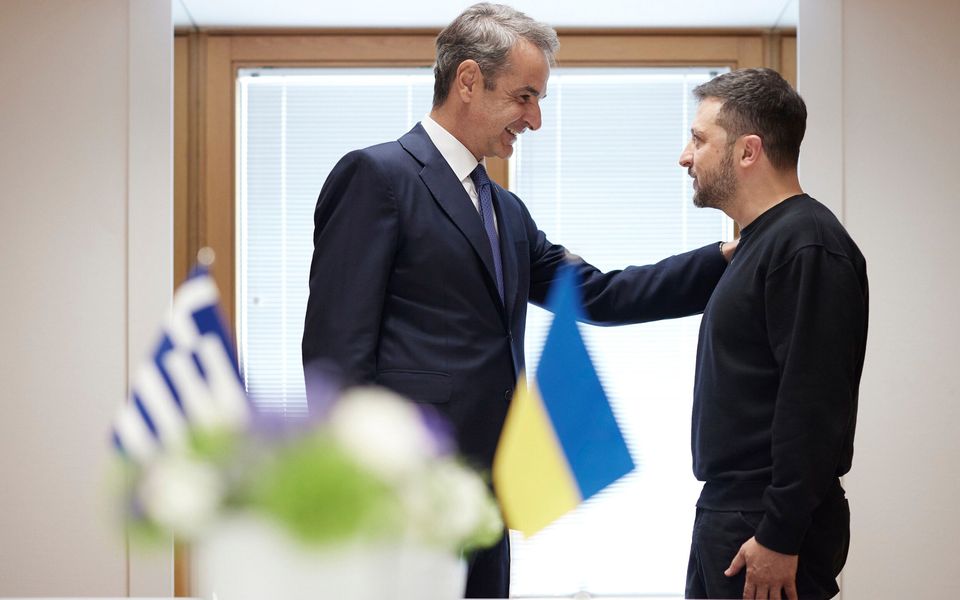
When Russia invaded Ukraine, Greece reacted strongly and gave active support to Kyiv. The reasons are obvious, and they have to do with the Turkish invasion of Cyprus in 1974 and the situation there – which has only gotten worse in these 52 years – as well as the sensitive situation in Thrace.
Critics should not judge complicated issues in an absolutist or one-dimensional approach,
Did we go too far? Especially with all kinds of accommodations and, mainly, by sending military equipment? That is a question that can be discussed dispassionately. However, it is clear that national priorities played a major role in shaping the Greek position – and that is something no one can dispute.
There is some merit to the criticism from the opposition that the government acted too fast and gave too much, but the Greek stance also needs to be assessed in the context of the prevailing mood in February 2022 and in the two and a half years that followed, during which both the Biden administration in the US and the European Union took a particularly hard line against Russia.