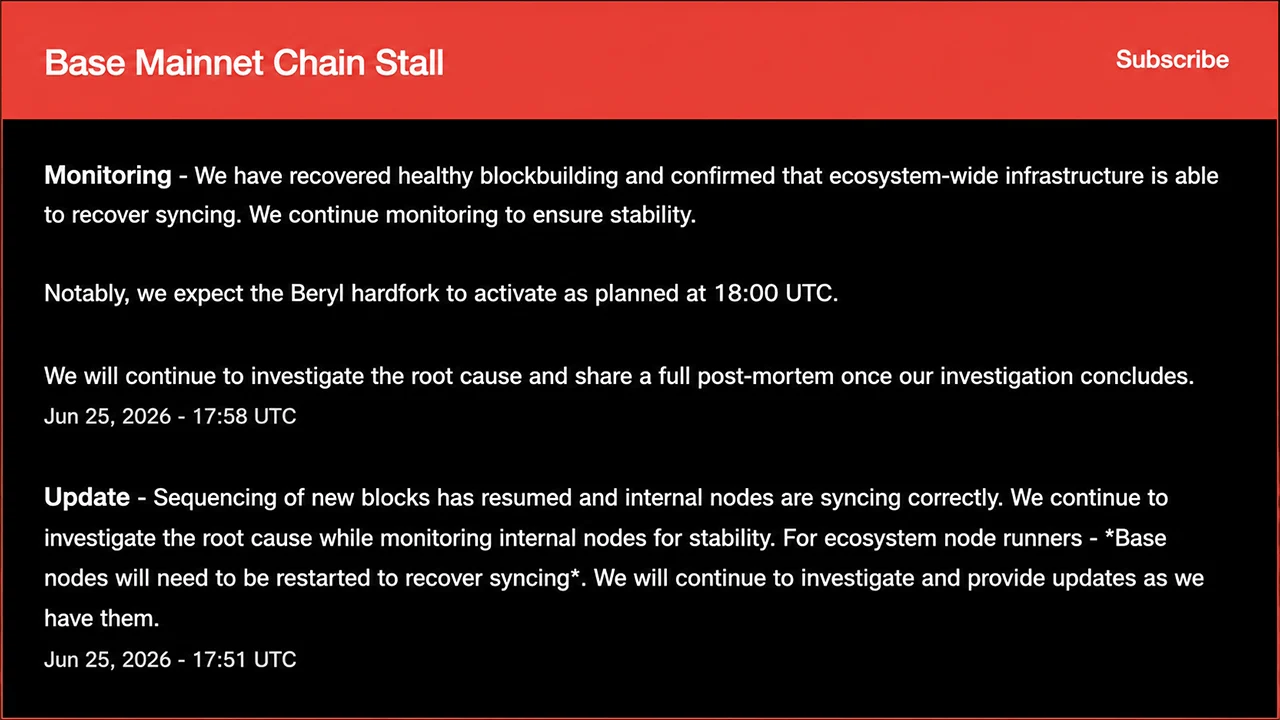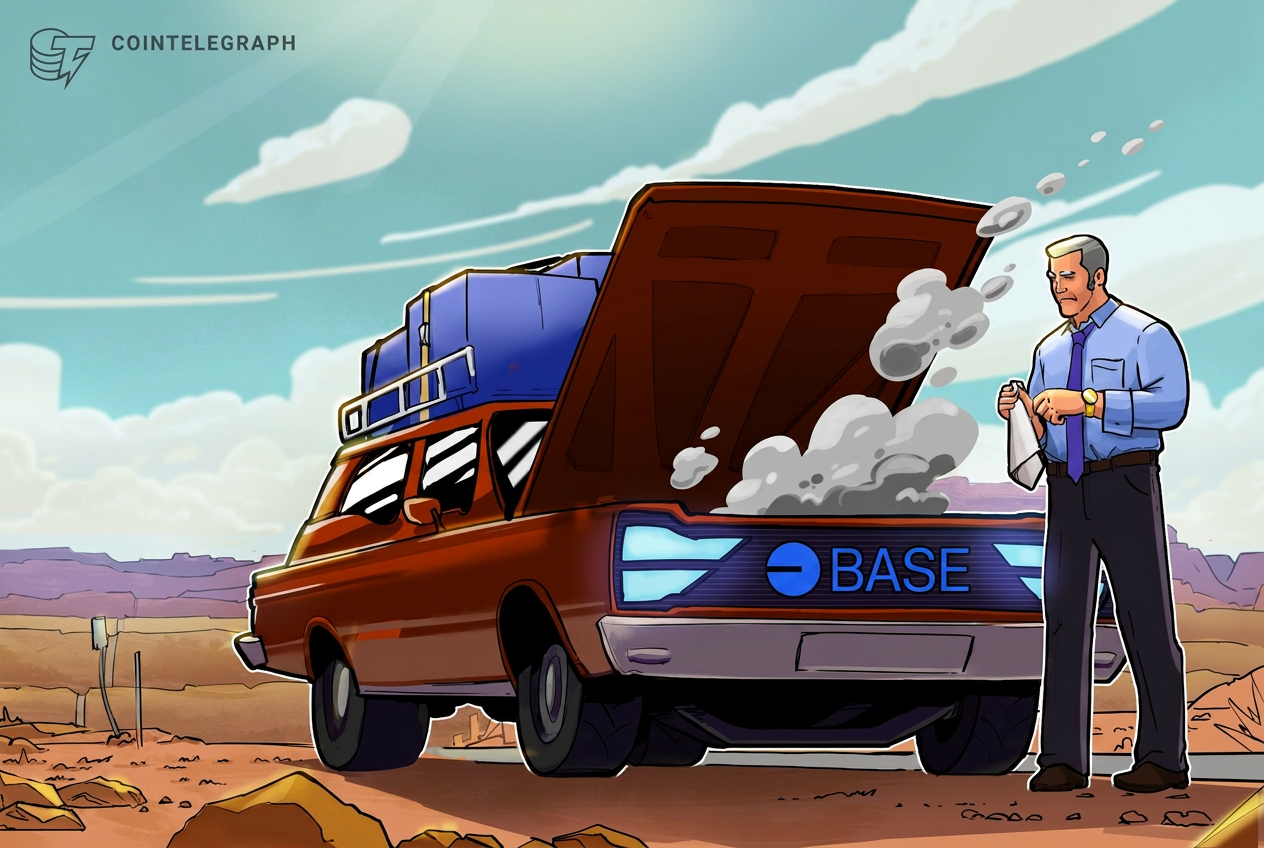
Base, the Ethereum Layer-2 network built by Coinbase, is facing renewed scrutiny over the stability of its sequencer, the single piece of infrastructure responsible for ordering transactions and producing blocks. Reports from users and developers point to ongoing instability that is limiting the network’s ability to scale under pressure.
Here’s the thing about sequencers: they’re the air traffic controllers of Layer-2 networks. Every transaction flows through them before getting bundled and posted to Ethereum. When the sequencer goes down, the entire network effectively freezes. And Base’s sequencer, which is operated solely by Coinbase, has been freezing at some inconvenient moments.
A pattern of outages that won’t quit
The instability isn’t exactly new. In February 2025, Base experienced a downtime incident tied directly to sequencer performance issues. A separate 33-minute outage occurred in 2025, caused by a failed sequencer handoff during a period of high onchain activity.
The root cause is structural. Base runs on a centralized sequencer, meaning one operator, Coinbase, handles all transaction ordering. If the single sequencer fails, there’s no failover mechanism that kicks in automatically to keep the network running. This architecture is common among OP Stack-based rollups, which Base is built on.