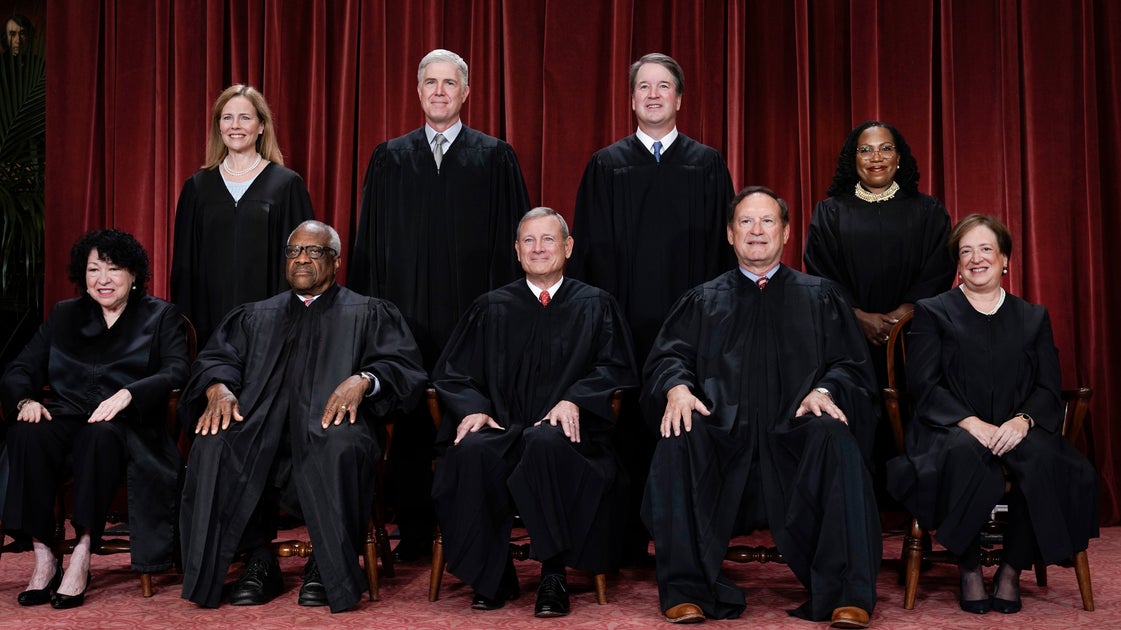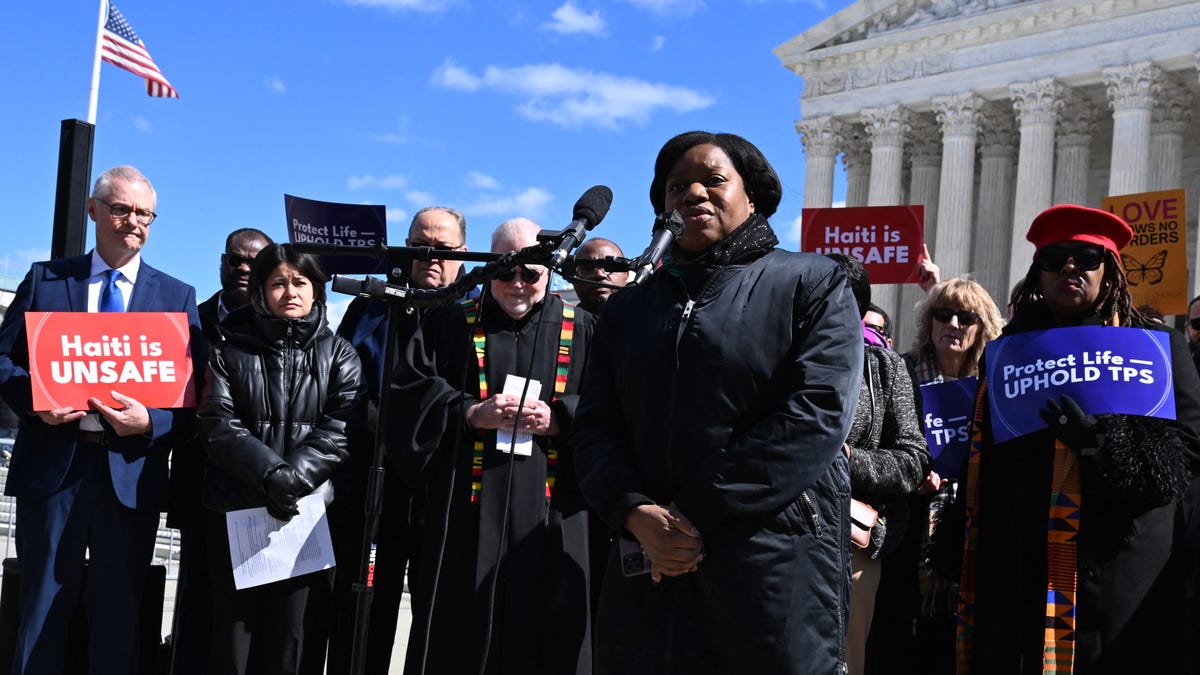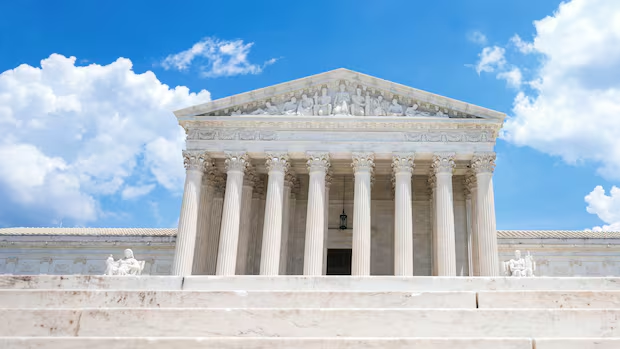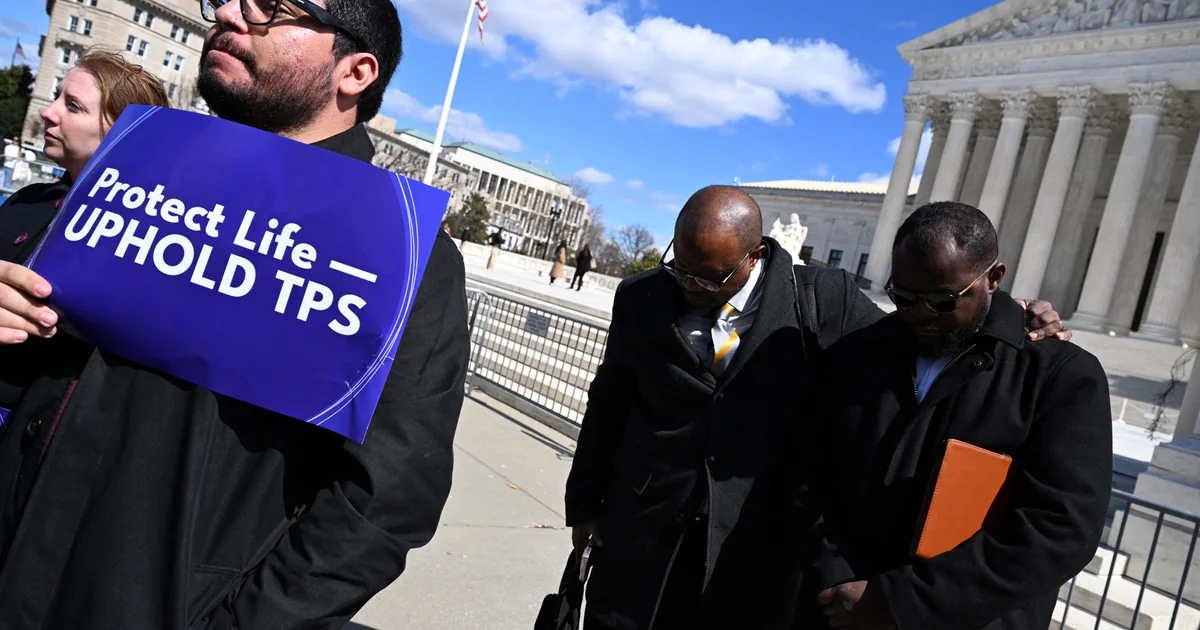
WorldThe U.S. Supreme Court heard arguments Wednesday over the legality of a move by Donald Trump's administration to revoke temporary legal protections for hundreds of thousands of U.S. residents from two countries, part of the Republican president's mass deportation agenda.Challengers claim administration didn't conduct a legitimate review of conditions in 2 unsafe countriesThomson Reuters · Posted: Apr 29, 2026 7:23 AM EDT | Last Updated: April 30Listen to this articleEstimated 5 minutesThe audio version of this article is generated by AI-based technology. Mispronunciations can occur. We are working with our partners to continually review and improve the results.How Trump turned ICE into a mass deportation machine February 21|Duration 9:33U.S. Immigration and Customs Enforcement (ICE) has become a central tool in U.S. President Donald Trump’s plan to deport millions of undocumented migrants, but as CBC’s Jonathan Montpetit explains, that’s not what the agency was originally designed to do. The U.S. Supreme Court heard arguments Wednesday over the legality of a move by Donald Trump's administration to revoke temporary legal protections for hundreds of thousands of U.S. residents from two countries, part of the Republican president's mass deportation agenda. The case at hand is occurring as a result of legal challenges filed on behalf of Haitian and Syrian migrants, but a ruling in favour of the Trump administration could have wide implications for 1.3 million immigrants from 17 designated countries who have received Temporary Protected Status (TPS). It could also affect migrant flows to Canada.U.S. Solicitor General D. John Sauer, arguing for the Trump administration, said the lawsuits challenging the TPS revocation are meritless and barred by federal law.The lawsuits before the court "challenge the very kind of foreign policy-laden judgments that are traditionally entrusted to the political branches," Sauer said.The TPS designation, under the Immigration Act of 1990, has been available to people whose home country has experienced a natural disaster, armed conflict or other extraordinary event which makes it unsafe for them to stay, or return. TPS recipients, some of whom have been in the United States for years and could face separation from jobs and families, have said it is cruel to consider sending them back to countries where they risk danger and even death.The State Department currently warns against travelling to either Haiti or Syria for any reason, due to concerns which include widespread violence, crime, terrorism and kidnapping. Four Haitian women who were found beheaded and dumped in a river in February had been reportedly deported from Puerto Rico several months earlier.LISTEN | Amnesty International's Amy Fischer on the changes to ICE:Front Burner29:13What happens in ICE detention?Justice Sonia Sotomayor, one of the three liberal justices, argued that the administration's position is at odds with the relevant federal statute and the U.S. Constitution."Congress could have said any termination of TPS status is unreviewable, but it didn't," she said.TPS recipients, until the termination, "are here lawfully with permission," Sotomayor added. "They are entitled to due process, and now Congress has given them a process — it may not be a court process, but that's OK, it's a process — and you are saying it is unreviewable whether the president has followed that process."A woman holds a candle during a vigil at the Little Haiti Cultural Complex in Miami on Feb. 3 after a federal judge blocked the Trump administration from ending temporary immigration status, or TPS, for Haitians residing in the U.S. (Lynne Sladky/The Associated Press)Many Haitians in the U.S. were first afforded TPS status in 2010 after a devastating earthquake struck their country, killing hundreds of thousands. The U.S. government has repeatedly extended the status, most recently under Trump's successor, Joe Biden.Justices grill Trump administration lawyer on ending birthright citizenship, with president in attendanceHuman rights group says at least 70 killed in wake of attack in Haiti's Artibonite regionProtections for Syrians were first granted protected status in 2012, during a civil war that lasted for more than a decade before the fall of President Bashar al-Assad's government in late 2024. Groups of Syrian and Haitian TPS holders filed class-action lawsuits alleging the termination notices were mere pretext for the administration's plan to end existing designations. The lawsuit says that then-Homeland Security secretary Kristi Noem did not comply with the TPS law's procedural mandate to consult other federal gencies concerning conditions inside a country before revoking protective status.The government has countered that the consultation consisted of a State Department official replying to a Homeland Security Department official's email to say there were "no foreign policy concerns" with ending the designations..The Trump administration has argued that courts should not be second-guessing whether government agencies engaged in sufficient consultation with each other before terminating TPS.Conservative Justice Samuel Alito seemed to endorse that argument, saying "it is always going to be possible to raise procedural objections to what’s been done." When TPS for Syrians was terminated, "there was some consultation," Alito said. "It was very brief, and maybe it was not what one would hope for, but still."Ahead of the oral arguments, White House spokesperson Abigail Jackson told Reuters that TPS "was never intended to be a pathway to permanent status or legal residency, no matter how badly left-wing organizations want it to be."Judge sees 'racial animus' Under Trump, the Department of Homeland Security has moved to end TPS status for U.S. residents hailing from 13 countries. Trump administration agencies and spokespeople have also encouraged non-citizens to self-deport, and the U.S. has deported individuals to countries with which they have no ties, ending the adherence of previous Democratic and Republican administrations to the principle of non-refoulement under international law.Trump sought but failed to rescind TPS protections during his first term as president, and made clear while running for office in 2024 that he would try again. During that presidential campaign, he made false and derogatory clams about Haitian immigrants eating pets in Ohio, leading to bomb threats in at least one town.WATCH | Haiti to play in U.S. World Cup:Will Trump stop Haiti’s World Cup party before it even starts?December 5, 2025|Duration 7:56Haiti has qualified for the 2026 World Cup for the first time in 50 years, but a travel ban and immigration raids will keep many fans away from U.S. matches. For The National, CBC’s Eli Glasner talks to Haitians about the meaning of this moment and explains why some are calling out FIFA for hypocrisy. Also at issue in the Haitian case is a finding by Washington-based U.S. District Judge Ana Reyes that the administration's action likely was motivated in part by "racial animus," violating the Constitution's Fifth Amendment promise of equal protection under the law. Acting ICE director to leave as controversies, funding questions continue to swirl around agencyWhat is ICE and how has it changed during Trump's 2nd term? Reyes referenced statements by Trump and Noem, including the former homeland security secretary's social media post labelling immigrants killers and leeches. The Justice Department rejected the characterization, saying no statement by Trump or Noem mentions race. The Supreme Court, which has a 6-3 conservative majority including three justices nominated by Trump in his first term, is expected to publish its opinion on this case in late June or early July.CorrectionsAn earlier version of this story said four Haitian women were deported from the U.S. in February and found dead months later. In fact, they were found dead in February and had been deported months earlier.Apr 29, 2026 3:30 PM EDTWith files from CBC News and The Associated Press
Trump's move to deport Haitian, Syrian immigrants goes to Supreme Court | CBC News
The U.S. Supreme Court heard arguments Wednesday over the legality of a move by Donald Trump's administration to revoke temporary legal protections for hundreds of thousands of U.S. residents from two countries, part of the Republican president's mass deportation agenda.
1,240 words~6 min read