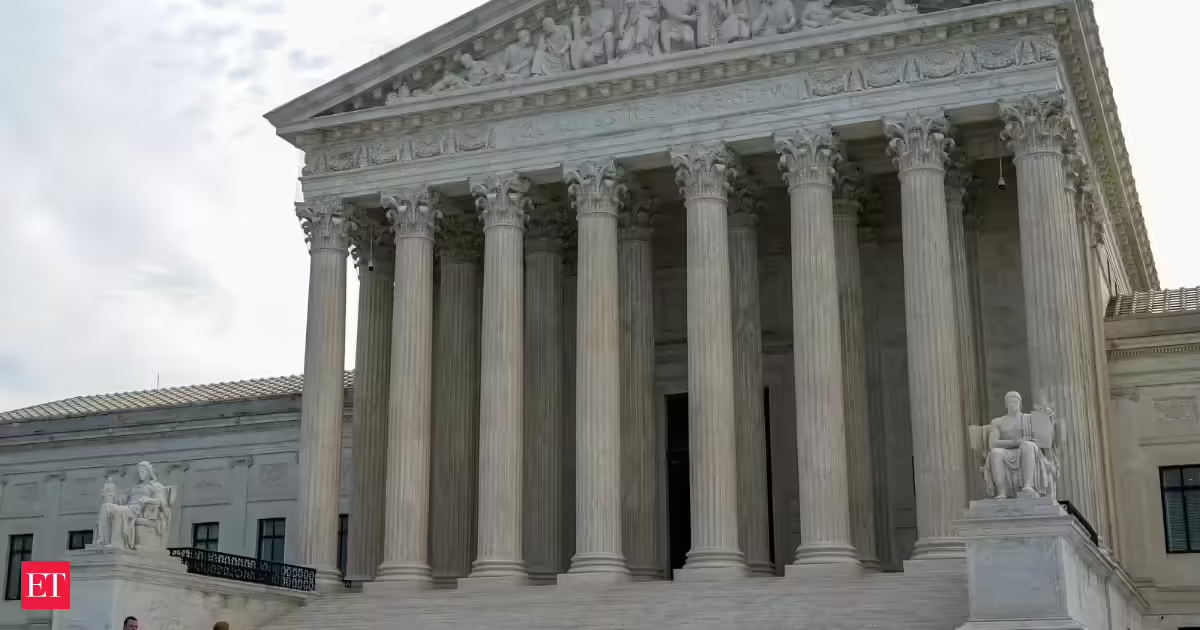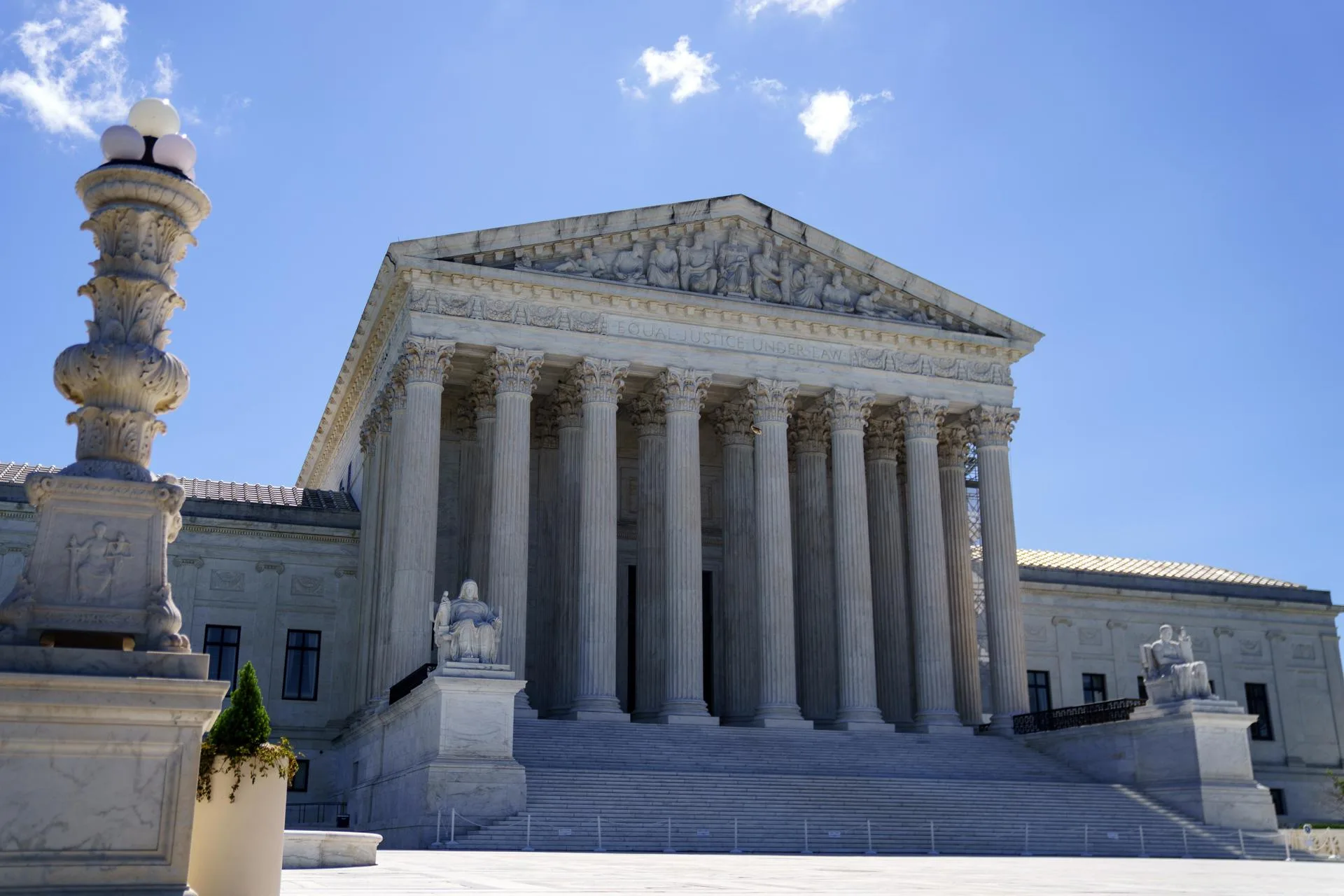
WorldThe U.S. Supreme Court cleared the way on Thursday for President Donald Trump's administration to strip hundreds of thousands of Haitian and Syrian immigrants of a humanitarian status that protects them from deportation, giving another boost to his hardline approach toward immigration.Decision on Haitians, Syrians in TPS programs could have ramifications for migrants from other countriesThomson Reuters · Posted: Jun 25, 2026 11:12 AM EDT | Last Updated: 32 minutes agoListen to this articleEstimated 5 minutesThe audio version of this article is generated by AI-based technology. Mispronunciations can occur. We are working with our partners to continually review and improve the results.Guerline Jozef, co-founder and executive director of Haitian Bridge Alliance, speaks in front of the US Supreme Court in Washington, D.C., on March 16, when the case about Temporary Protected Status was heard. The top court ruling on Thursday could affect the status of hundreds of thousands of U.S. residents. (Roberto Schmidt/AFP/Getty Images)The U.S. Supreme Court cleared the way on Thursday for President Donald Trump's administration to strip hundreds of thousands of Haitian and Syrian immigrants of a humanitarian status that protects them from deportation, giving another boost to his hardline approach to immigration.The justices in a 6-3 ruling overturned decisions by federal judges in New York and Washington, D.C., that had halted the administration's actions terminating Temporary Protected Status, or TPS, for more than 350,000 people from Haiti and 6,100 from Syria.The State Department currently warns against travelling to either Haiti or Syria, citing widespread violence, crime, terrorism and kidnapping.TPS was the result of bipartisan legislation passed during the presidency of George H.W. Bush in the early 1990s. It is a designation that allows migrants from countries stricken by war, natural disaster or other catastrophes to live and work in the United States while it is unsafe for them to return to their home countries. The United States first provided TPS to Haitians after a major earthquake in 2010 and to Syrians after their country descended into civil war in 2012.Trump's move to deport Haitian, Syrian immigrants heard by Supreme Court, with possible wider implicationsThe court decision raises the prospect that, after the lower courts reconsider their rulings, that residents who have lived in the U.S. for years or even decades will be forced to leave the country. There are 1.3 million immigrants from all 17 countries currently designated under TPS.Trump had long sought to rescind TPS protections, and while running for reelection in 2024 vowed to revoke TPS for Haitian immigrants after making false and derogatory and unproven about Haitians in Ohio.Lower courts found administration officials failed to follow mandatory protocols to assess conditions in a country before revoking the designation. The administration said it followed proper procedures, and also argued that courts cannot second-guess its TPS determinations.WATCH | Activists, detainees raise alarms about conditions at facilities:The business of Trump’s immigration crackdownJune 17|Duration 3:54CBC’s Jonathan Montpetit breaks down how U.S. President Donald Trump’s mass deportation plan became big business, and what that means for the people who find themselves locked up.Kristi Noem, then-homeland security secretary, revoked the the TPS designations for Syria and Haiti last year, stating that providing this status to them was contrary to U.S. national interests. Groups of Syrian and Haitian TPS holders filed class-action lawsuits separately in response, asserting it was a preordained effort to eliminate the TPS program.Also at issue in the Haitian case was a finding by Washington-based U.S. District Judge Ana Reyes that the administration's action likely was motivated in part by "racial animus," violating the Constitution's Fifth Amendment. Reyes said it was likely that Noem preordained her termination decision "because of hostility to nonwhite immigrants."2nd ruling entrenches controversial practice at borderThe Supreme Court has backed Trump in several immigration-related rulings issued on an emergency basis since his return to the presidency, including allowing him to deport migrants to countries other than their own and to revoke temporary legal status for hundreds of thousands of Venezuelan immigrants.The top court on Thursday also sided with the Trump administration on its controversial "metering," approach, which sees officials deem U.S.-Mexico border crossings too overburdened to handle additional claims.LISTEN | Imminent Supreme Court decision on birthright citizenship will be momentous:Two Blocks from the White House32:48How far will the U.S. Supreme Court allow Trump to go?America’s top court is set to deliver decisions on more than a dozen major cases in the coming days. And with rulings on birthright citizenship, transgender athletes and the Federal Reserve on the docket, there’s a lot at stake as the U.S. president’s agenda is tested by the justice system. This week, Washington correspondents Katie Simpson, Willy Lowry and Paul Hunter ask: How far will the Supreme Court allow Donald Trump to go? The court, in a 6-3 ruling powered by its conservative justices, overturned a lower court's finding that the policy violated federal law.The metering policy allowed U.S. immigration officials to stop asylum seekers at the border and indefinitely decline to process their claims. It is separate from a sweeping policy to deny entry to asylum seekers at the border that Trump announced after returning to the presidency last year. That policy also faces an ongoing legal challenge. Under U.S. law, a migrant who "arrives in the United States" may apply for asylum and must be inspected by a federal immigration official. The legal issue in the current case is whether asylum seekers who are stopped on the Mexican side of the border have arrived in the United States.U.S. immigration officials began turning away asylum seekers at the border in 2016 under Democratic former president Barack Obama amid a migrant surge. The metering policy was formalized in 2018 during Trump's first term in office, with border officials authorized to decline processing asylum claims when the government decides it is unable to handle additional applications. President Joe Biden rescinded the policy in 2021.Trump vows to clamp down on migration from developing nations after D.C. attack The San Francisco-based 9th U.S. Circuit Court of Appeals in 2024 ruled that federal law requires border agents to inspect all asylum seekers who "arrive" at designated border crossings, even if they have not yet crossed into the United States, and the metering policy violated that obligation.The Trump administration, in its legal defence of the policy, argued that the words "arrive in" refer to "entering a specified place, not just coming close to it."During arguments in the case in March, Vivek Suri, the Justice Department lawyer who argued on behalf of the Trump administration, said, "You can't 'arrive in the United States' while you're still standing in Mexico. That should be the end of this case."
Supreme Court rules for Trump on TPS migrant program, exposing many U.S. residents for possible deportation | CBC News
The U.S. Supreme Court cleared the way on Thursday for President Donald Trump's administration to strip hundreds of thousands of Haitian and Syrian immigrants of a humanitarian status that protects them from deportation, giving another boost to his hardline approach toward immigration.
1,101 words~5 min read