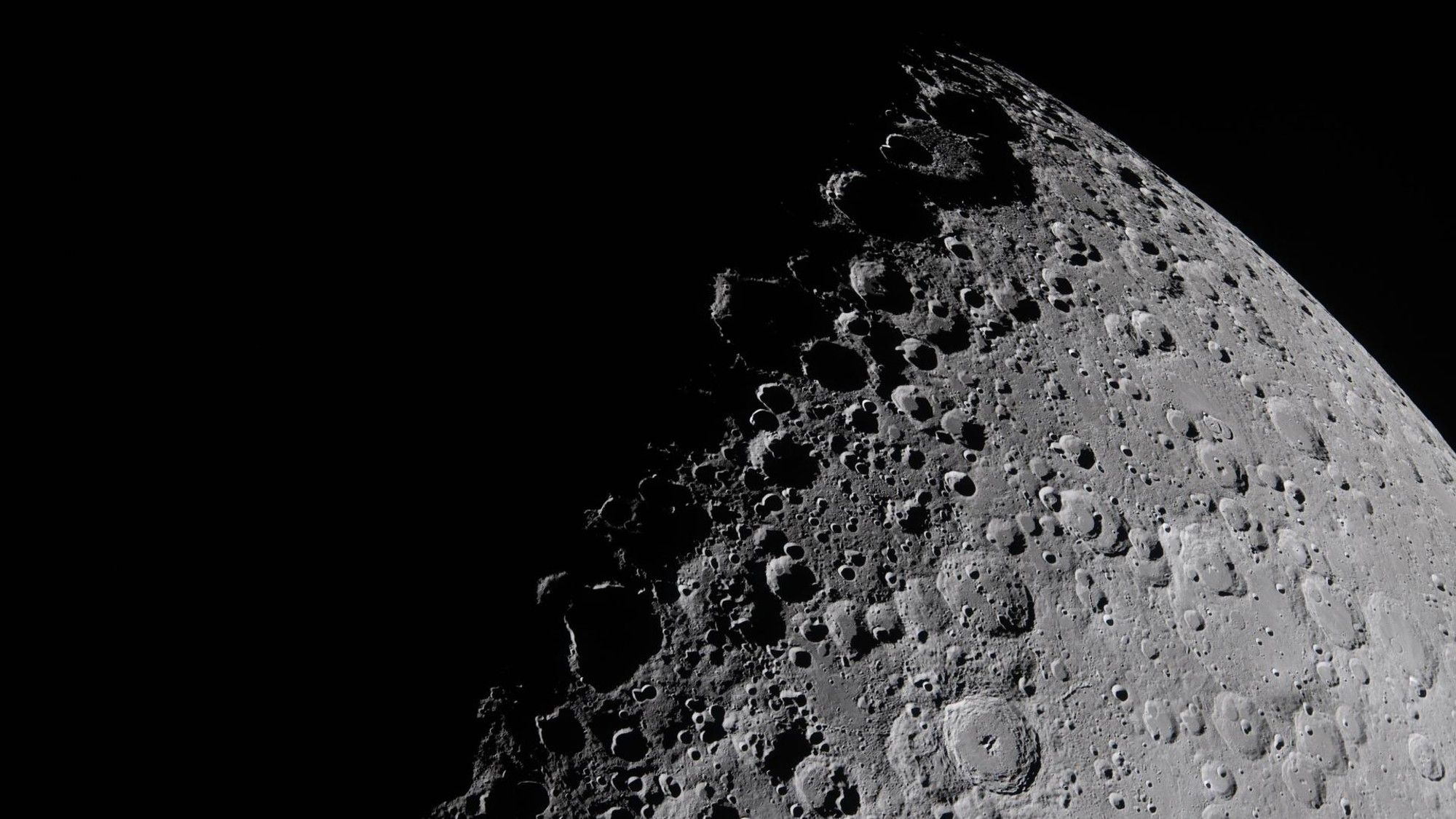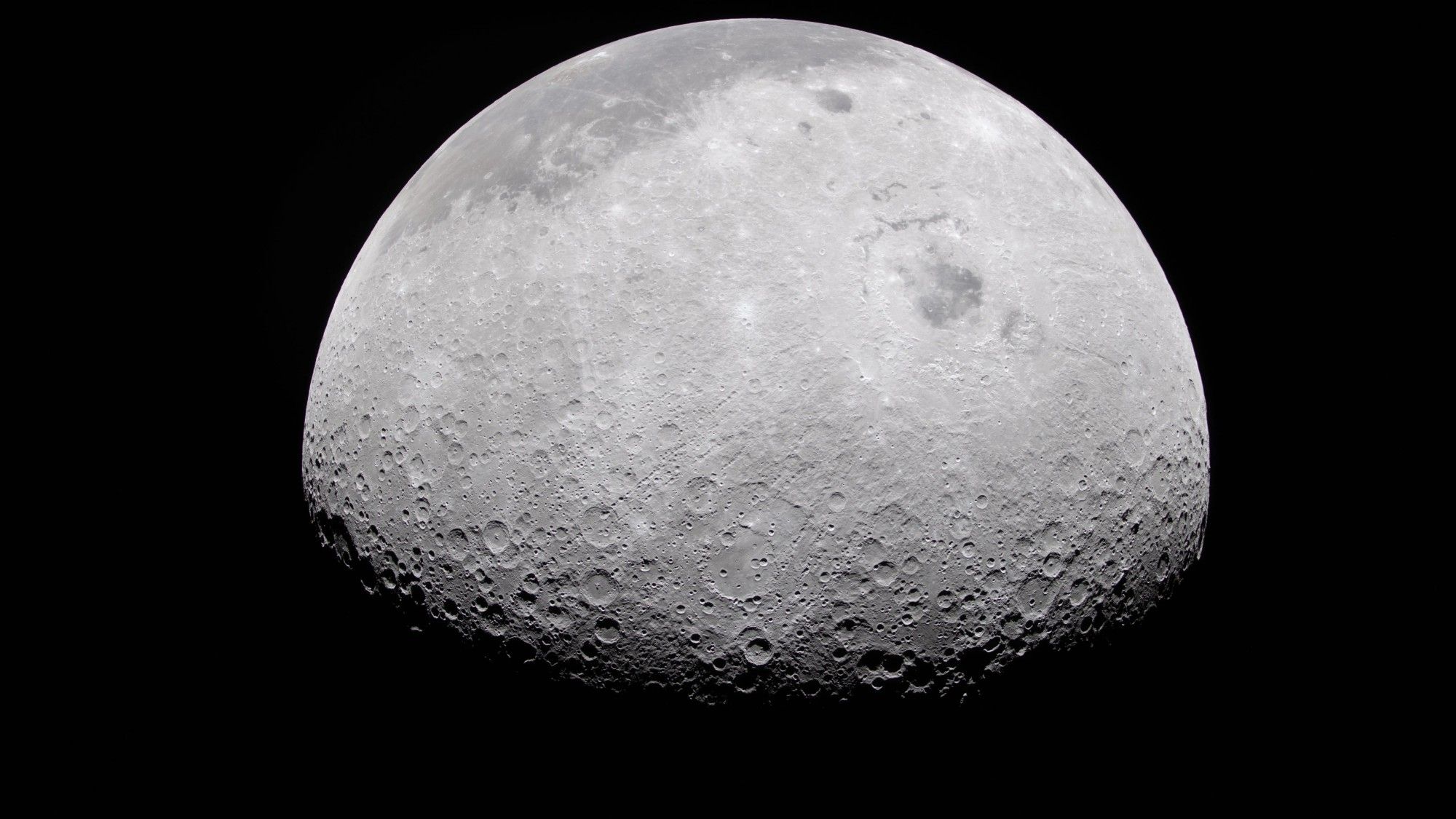
The moon appears half-illuminated in this photo captured by the Artemis 2 crew on day six of their mission in April 2026.
(Image credit: NASA)
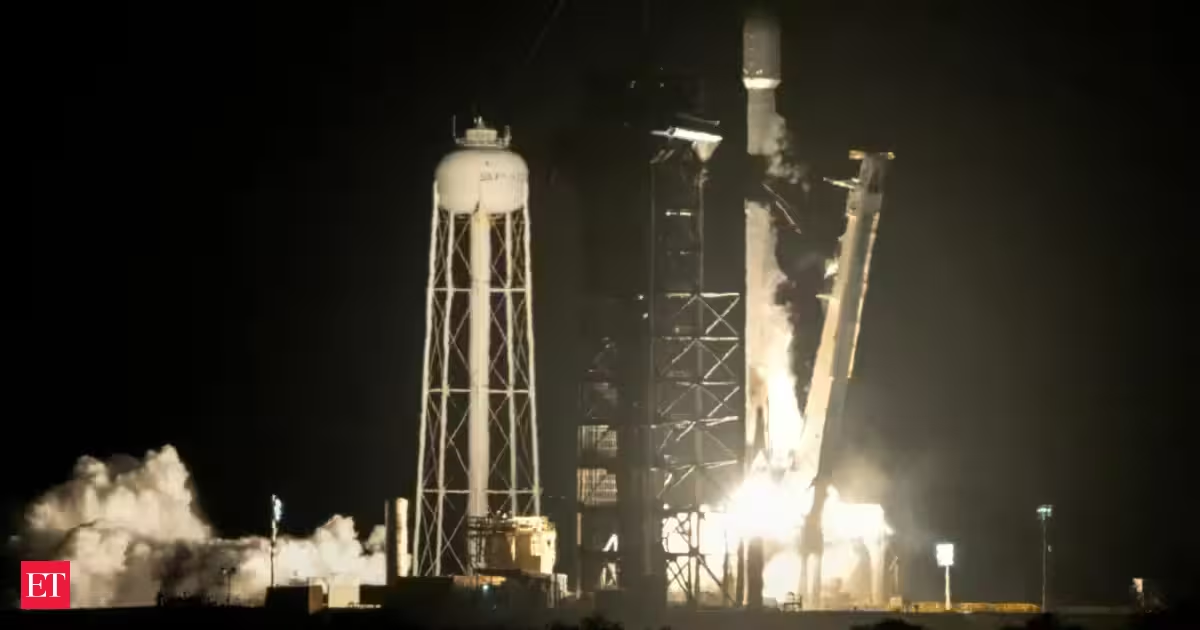
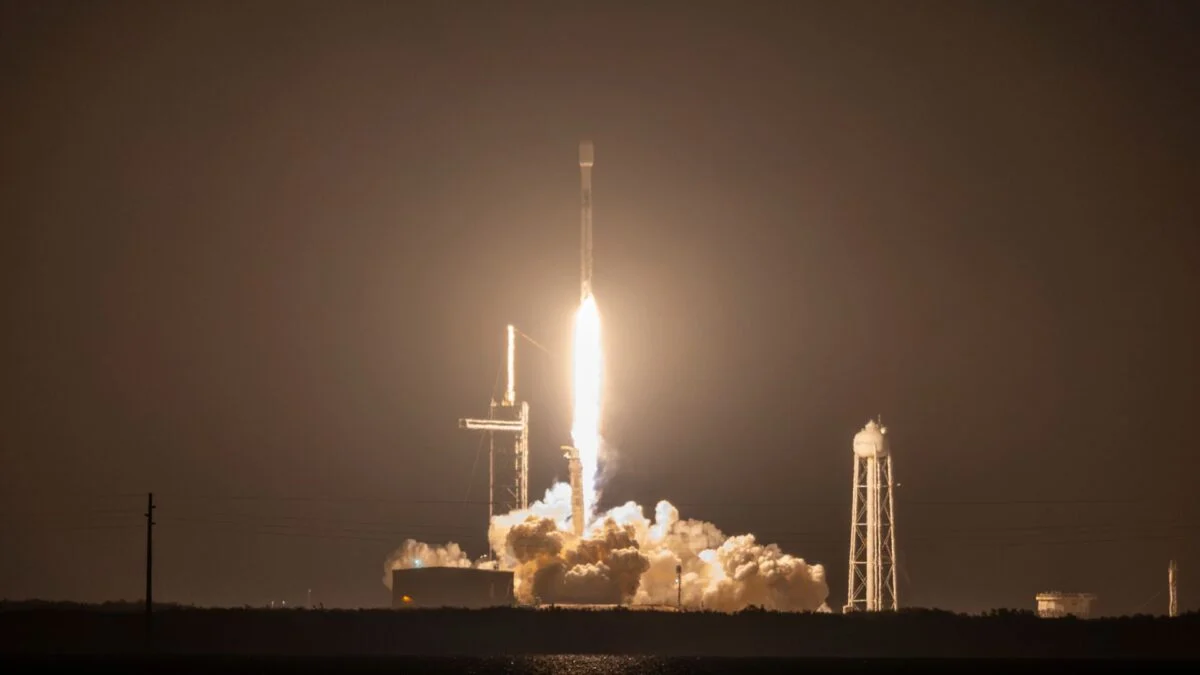
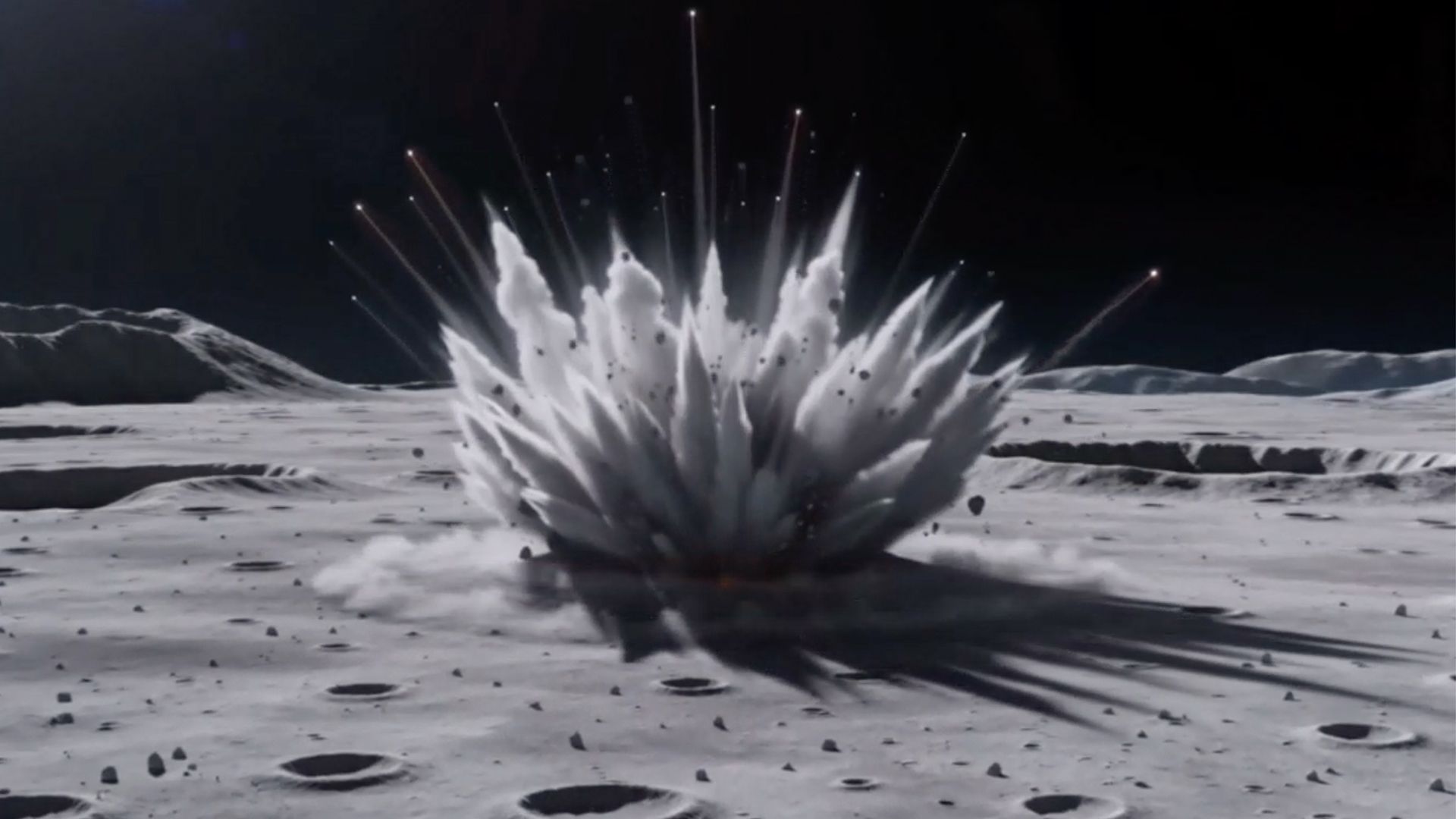
Earth's moon is due for a human-made impact this August courtesy of a spent SpaceX Falcon 9 upper stage.The Falcon 9 upper stage is left over from the launch that sent Firefly's Blue Ghost-1 lander to the moon on Jan. 15, 2025 by way of NASA's Commercial Lunar Payload Services (CLPS) initiative. Also sent moonward on that flight was the Hakuto-R Mission 2, called Resilience, a robotic lunar lander developed by the Japanese company ispace.This striking event is expected to occur close to Einstein Crater near the moon's western limb and could be visible by ground and space-based telescopes. Varying forecasts have sparked debate on whether or not we'll be able to see the rocket body slam into the moon on Aug. 5, and, if so, how both citizen scientists and astronomers can best observe it it.'This wonderful environment of the moon'The consequences of this rocket mission's leftover hardware is on target for a "limb shot," meaning it could strike the far western edge of the moon. Another possible impact site is Bell Crater, just out of sight on the moon's far side.Earlier this month, NASA's Solar System Exploration Research Virtual Institute (SSERVI) hosted a discussion with experts regarding the approaching impact. Taking part in the meeting of moon-watching specialists was Brian Day, SSERVI's lead for citizen science and community development."One of the things that is really important here with this impact that is coming up is it serves as a reminder to us that the moon is a dynamic environment. We think of it as being static. It is not. It is being whacked. It is changing," Day said.Citizen scientists can actually get involved to help understand the dynamic environment of the moon thanks to the Impact Flash! program, said Day."And that can be done either with instrumentation you have in your own backyard or you can use ours in orbit around the moon," Day added. "This impact is a great reminder of this wonderful environment of the moon."