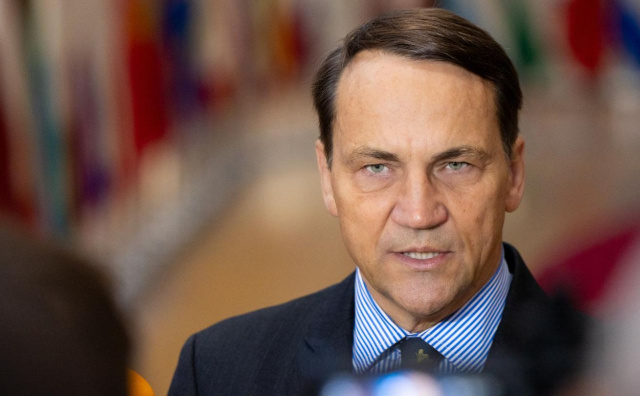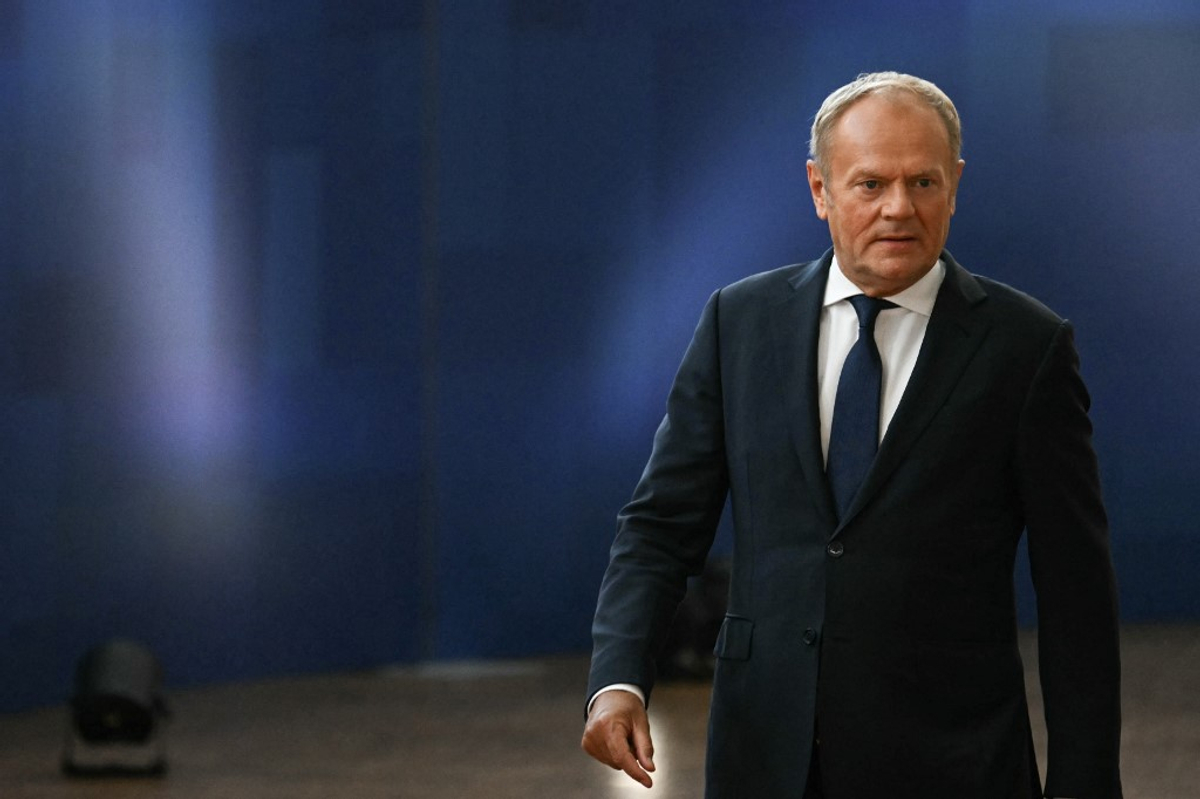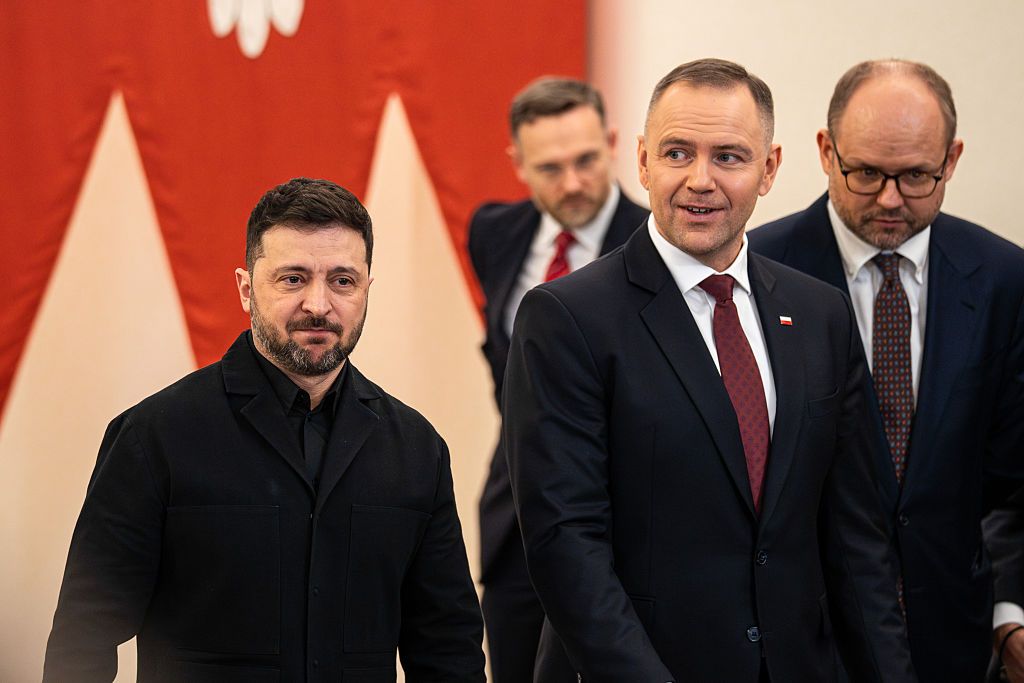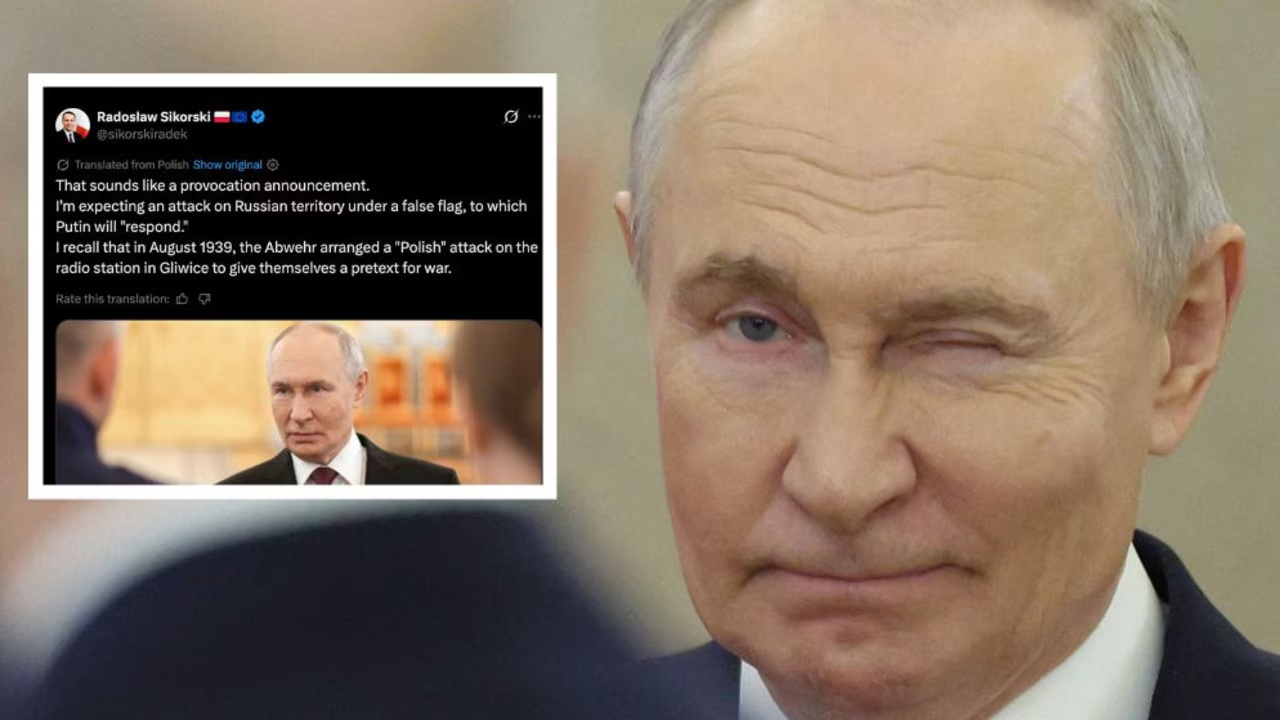
A warning from one of Europe’s most senior diplomats has turned heads everywhere, once again reigniting fears that the war in Ukraine is entering a dangerous new phase of escalation.In a post that has since grabbed global attention, Polish Foreign Minister and deputy to the Prime Minister Radosław Sikorski suggested Russia may be preparing a staged attack on its own territory to justify further escalation, drawing a direct comparison to one of the most infamous deceptions in modern history.Mr Sikorski was responding directly to an article published by The Moscow Times that quoted President Vladimir Putin in his latest speech concerning drone attacks on his nation’s capital city.Putin said “everyone should understand” that if drones over Moscow are found to have been launched from Europe, there “will be a retaliatory attack” from Russia.“I think everyone understands this, or should understand it. That’s why they’re trying to distance themselves from it in every possible way,” Putin reportedly said during an informal conversation with military academy graduates.“With such a powerful influence, with the entire West helping them and a wave of drones arriving, their goal is to create uncertainty about the actions of the Russian armed forces,” Putin said, accusing NATO of openly preparing for war against Russia and claimed Western nations were using a supposed Russian threat to justify a massive military build-up.After several years of hearing Putin and the Kremlin’s cabal of media mouthpieces threaten Europe, Mr Sikorski claims these latest comments from the autocrat are a little different.“This sounds like an announcement of a provocation. I expect an attack on Russian territory under a false flag, to which Putin will ‘respond’,” Sikorski wrote on X, drawing a particularly bleak historical parallel to make his point.“I remind you that in August 1939, the Abwehr (Nazi militray intelligence) staged a ‘Polish’ attack on a radio station in (the then German city of) Gleiwitz in order to give itself a pretext for war.”The Gleiwitz incident is widely regarded as one of the most notorious false-flag operations in history. Nazi Germany staged an attack on a German radio station near the Polish border and blamed Warsaw, helping create a pretext for Adolf Hitler’s invasion of Poland days later.For many countries, invoking 1939 would be dramatic rhetoric. For Poland, it is something else entirely.Poland was the first nation invaded in World War II and spent decades trapped between Nazi Germany and the Soviet Union. Few European countries watch developments in Moscow more closely, or view Russian security claims with greater scepticism.Now, a term once reserved for fringe conspiracists is being touted by one of the most powerful men in Poland.Putin doubling down against ‘illegal’ regime It all comes as tensions between Russia and NATO continue to rise.Putin continues to play a familiar card when discussing Ukraine, insisting the “regime” is illegal and that Western governments are using it as a proxy to weaken Russia without openly launching conflict.“If earlier NATO countries limited themselves to supporting the Kyiv regime, which came to power illegally by armed means through a coup, now they are openly saying in the West that they are preparing for war with us, increasing military and offensive budgets,” he said.The Russian leader argued that European governments were using a false Russian threat to justify what he described as the “radical militarisation” of their societies.He also accused the West of manufacturing threats against Russia and then blaming Moscow for the resulting escalation, invoking his own WWII comparison by likening the West’s tactics to Hitler’s Nazis.“The scheme of actions of the so-called democratic West is very simple: first, they create threats to our country, force us to take actions necessary for self-defence and self-protection, and then they immediately accuse us of all mortal sins to justify continuing their aggressive policy and their aggressive actions against Russia.“Even after the treacherous attack on the Soviet Union on June 22, 1941, precisely a treacherous attack, Hitler’s Germany tried to accuse the USSR and Stalin of aggression against, as we say today, the collective West.”The increasingly apocalyptic rhetoric is a constant topic of discussion European capitals, while think tanks around the globe remain transfixed on the issue of de-escalation.Analysts at the Washington-based Institute for the Study of War have repeatedly argued that the Kremlin is attempting to frame the conflict as a broader confrontation between Russia and the West rather than a war centred on Ukraine.The language marks a continuation of a trend that has accelerated since Russia’s full-scale invasion in 2022. While Moscow has long accused NATO of threatening Russian security, recent speeches have increasingly portrayed the alliance as an active participant in a wider struggle against Russia itself.‘Hybrid attacks’ enter the conversationThe concern among European officials is not necessarily that Russia is preparing to launch a conventional attack on NATO territory tomorrow. Instead, intelligence agencies are more focused on the possibility of so-called hybrid operations.By nature, they are much harder to track than conventional methods of warfare, but can have similarly devastating blow-on effects.Latvian intelligence officials recently warned that Russia may be preparing provocations against the Baltic states or Poland designed to intimidate NATO members and weaken support for Ukraine.“We see indications that Russia is preparing military provocations against the Baltic countries or Poland – not a conventional war… but hybrid attacks, such as missiles, drones or other actions designed to send a signal: stop supporting Ukraine, or you will have your own problems,” intelligence officials told Fox News Digital.Officials stressed there is currently no indication of an imminent invasion, but simultaneously warned the greatest danger could be a miscalculation.“The biggest concern is miscalculation. Russian institutions are telling Putin what he wants to hear…”That concern has gained attention following claims from a former editor of Russia’s Vesti television program that Putin has been receiving separate, off-air news briefings since 2011 designed to present a curated version of events.According to the former state television insider, the system expanded significantly following anti-government protests in Moscow and has increasingly filtered information about the war in Ukraine.The claims have not been independently verified, but they touch on a longstanding concern among Russia watchers — that authoritarian systems can become vulnerable to information bubbles where leaders hear only what subordinates believe they want to hear.There is currently little evidence to suggest a major military confrontation between Russia and NATO is imminent.Even Latvian intelligence estimates Russia would require three to five years to rebuild enough military capability for a large-scale attack, even if the war in Ukraine ended immediately.But as the conflict grinds deep into its fifth year, European officials appear increasingly worried about the prospect of perpetual war and the constantly evolving strategies at play that are proving to be harder to predict.
Politician’s post sends shiver through Europe
A warning from one of Europe’s most senior diplomats has turned heads everywhere, once again reigniting fears that the war in Ukraine is entering a dangerous new phase of escalation.
1,112 words~5 min read