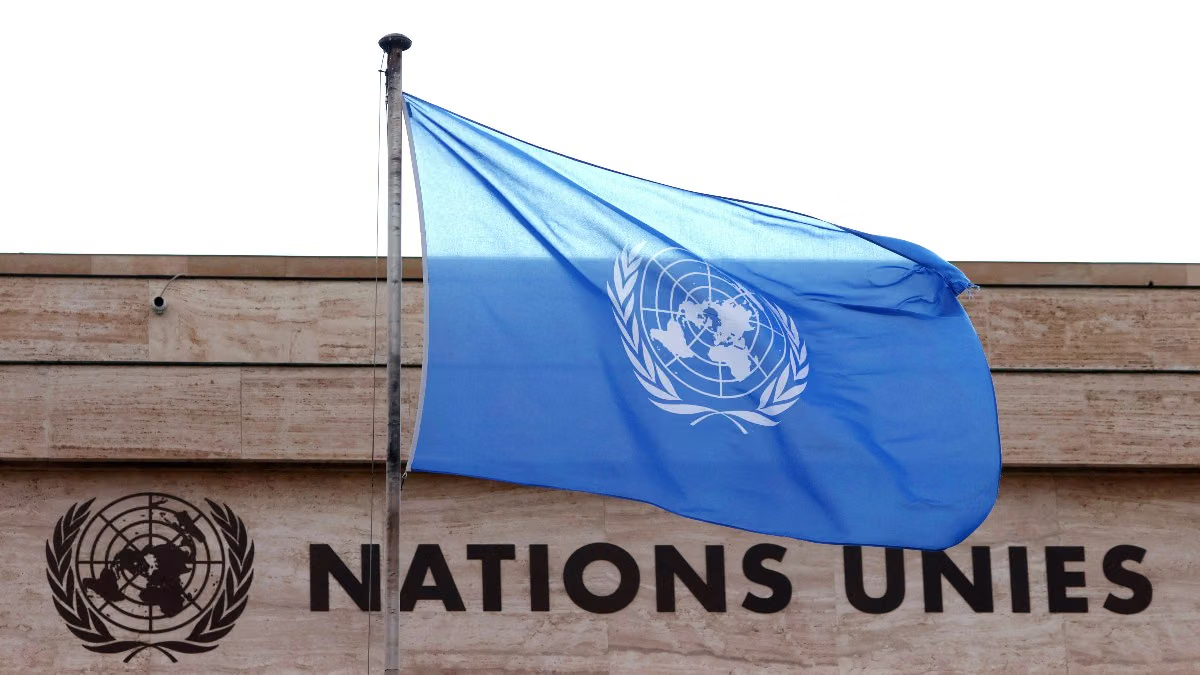
The international legal order that was created after the second world war is no longer fit for purpose. Its response to urgent global problems like climate, poverty and pandemics is inadequate. Its key institutions like the United Nations are incapable of restoring peace in Ukraine, Iran, Sudan or the Democratic Republic of Congo or stopping genocides in places like Myanmar or Palestine.
The World Trade Organization is paralysed because its most powerful member states have lost confidence in the trading system that they created. The international community is unable to reform the global financial system so that it provides adequate development finance to Africa and other parts of the global south.
These developments lead many people to conclude that international law is merely nice-sounding words that hide a more cynical truth: the only effective international legal rule is (and has always been) that “the strong do what they can and the weak suffer what they must”, as the ancient Greek historian Thucydides put it.
There is indeed a history of international law being used by the strong for evil purposes. For example, international law was used to justify slavery and colonialism. It was also used to force newly liberated Haiti to compensate its French colonisers for the loss of their slaves.