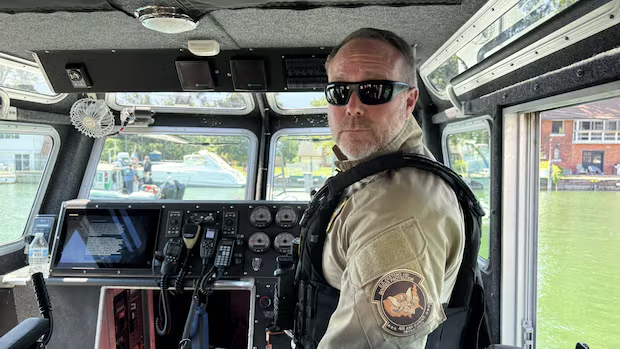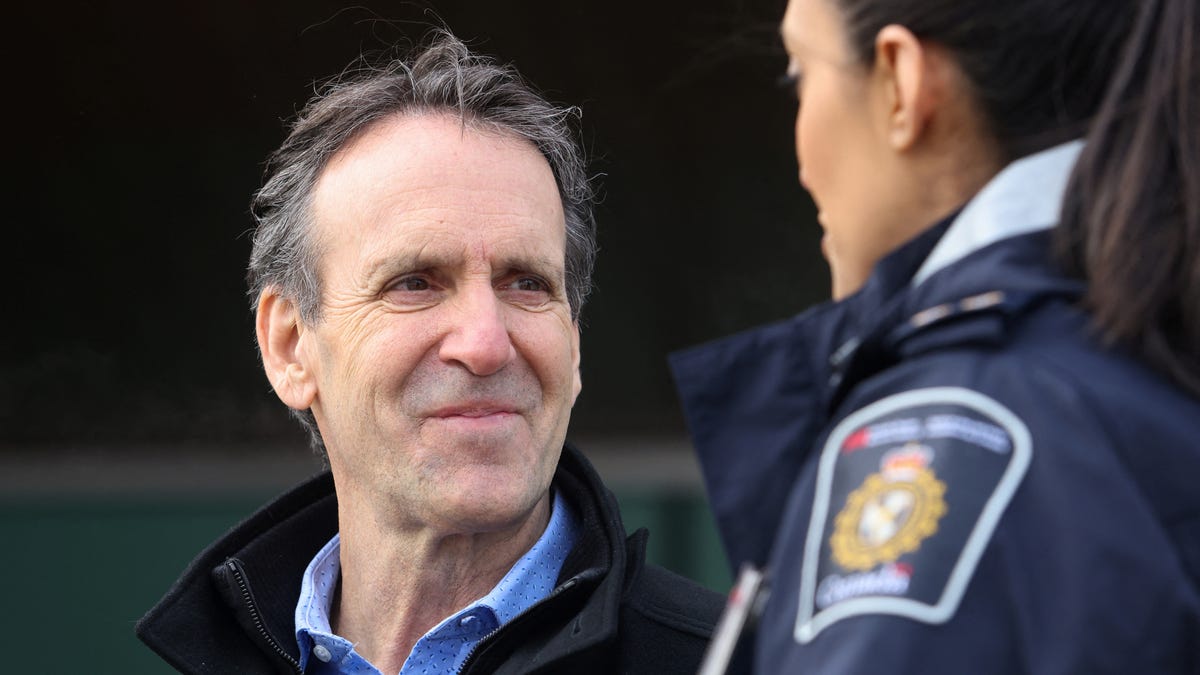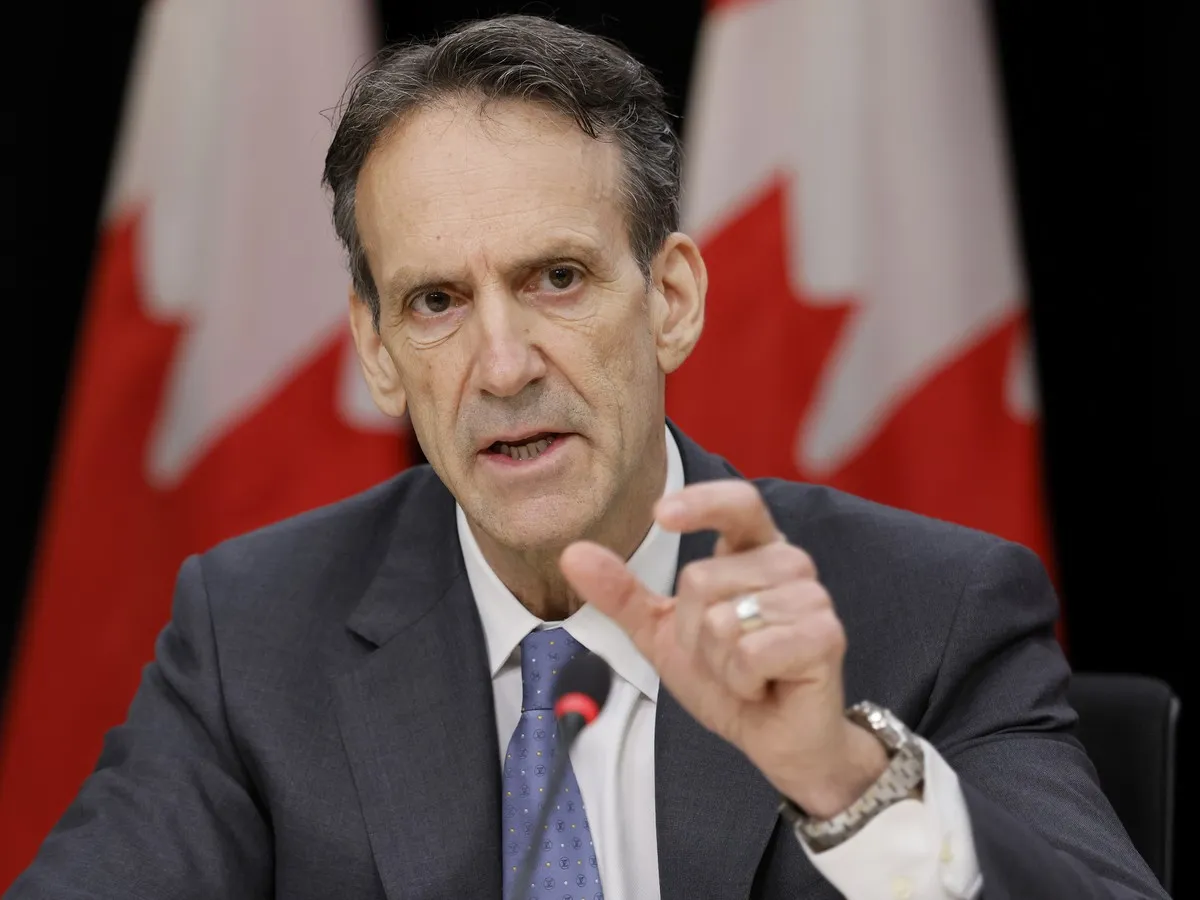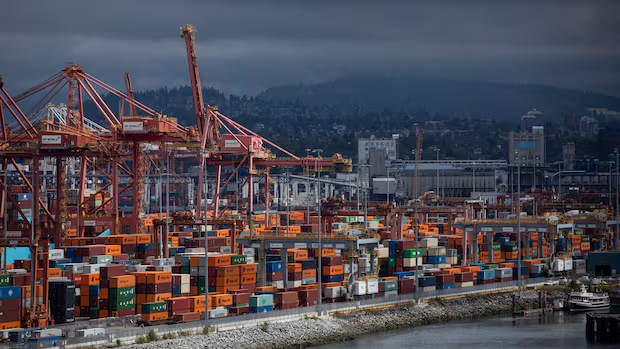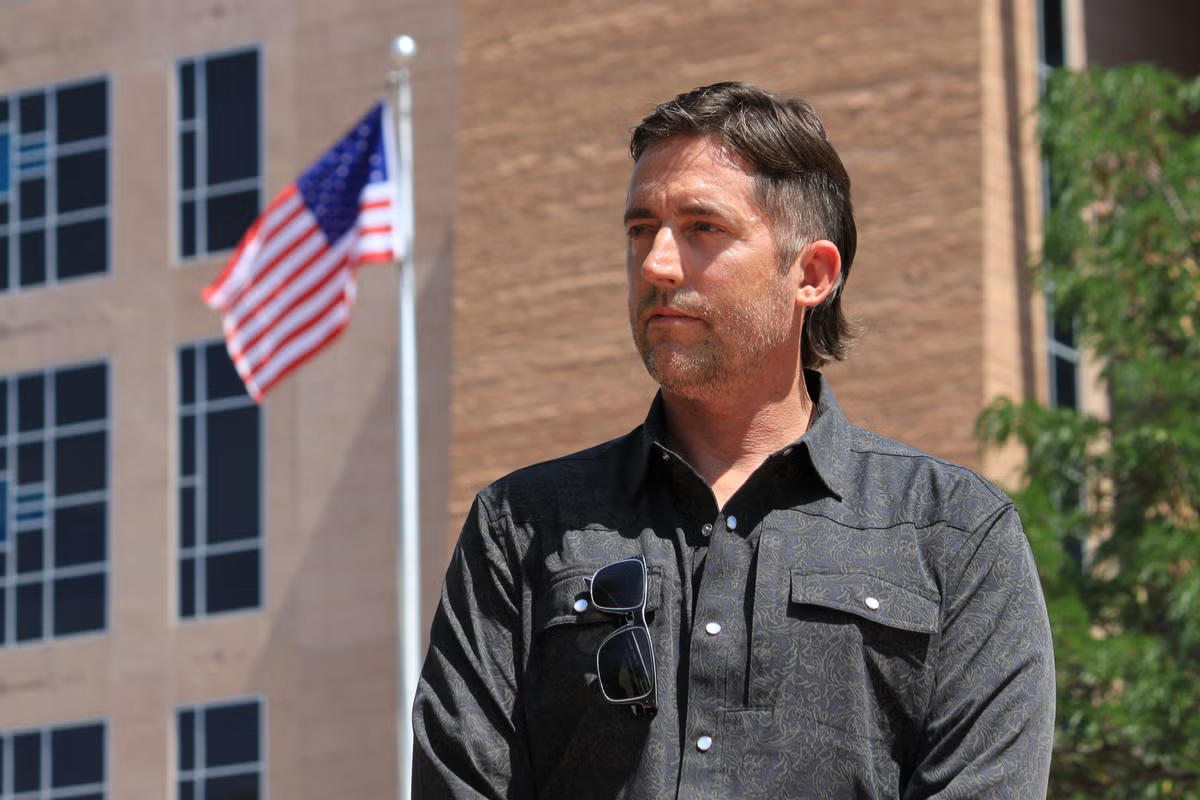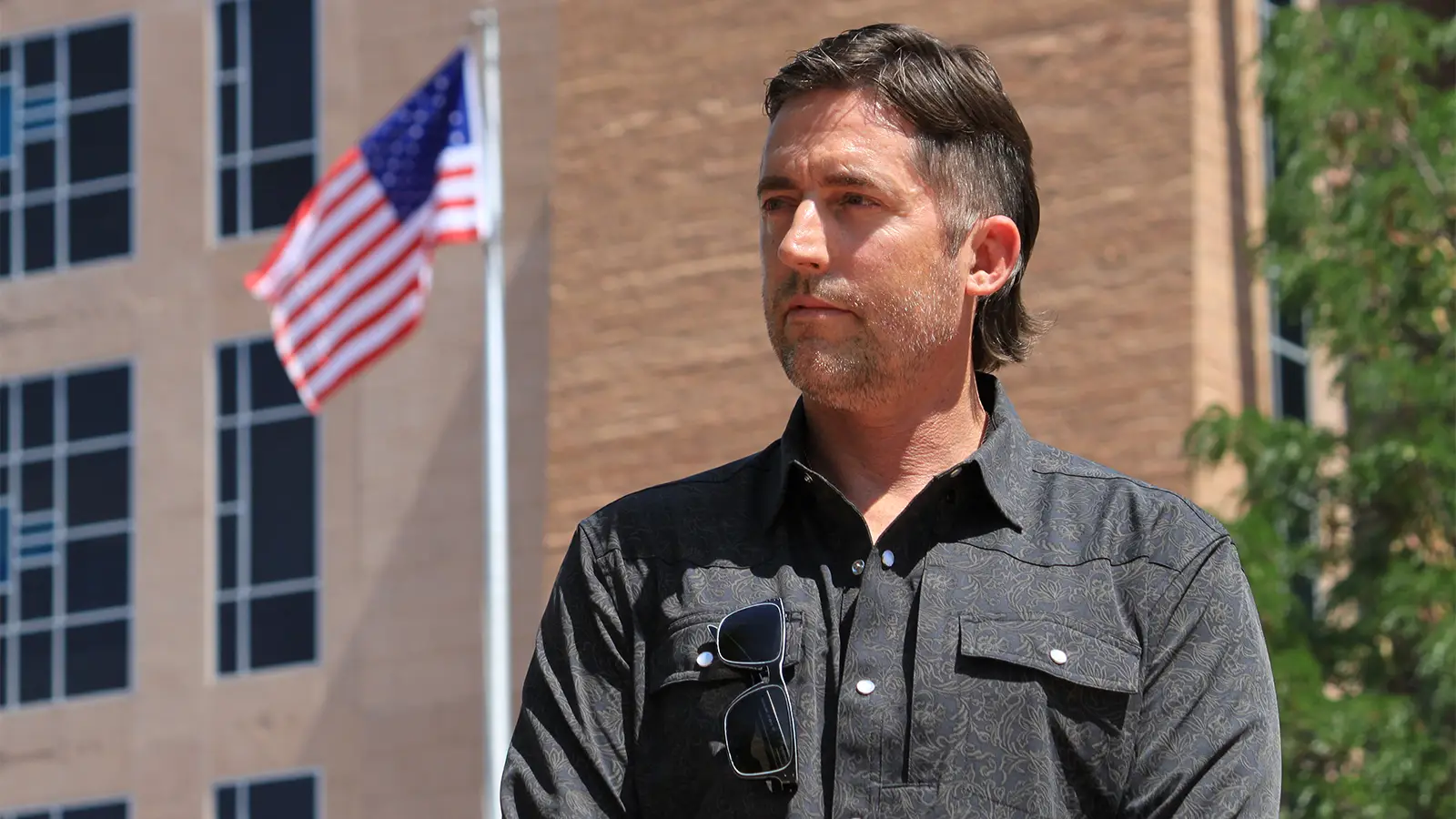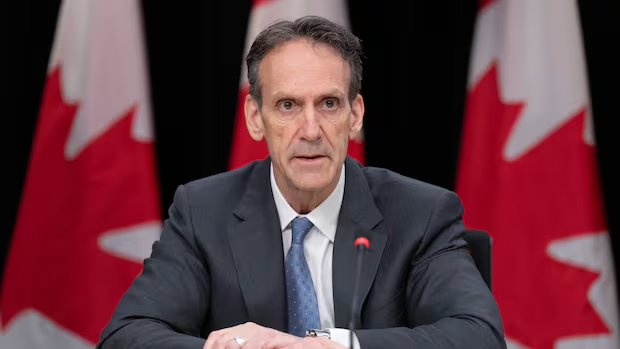
PoliticsAs the U.S. claims its crackdown on drug trafficking at the border with Mexico is triggering more criminal activity from Canada, fentanyl czar Kevin Brosseau is pushing back — saying the numbers "really haven't borne that out."U.S. border officials seized 0.45 kg of fentanyl at Canada border last monthListen to this articleEstimated 4 minutesThe audio version of this article is generated by AI-based technology. Mispronunciations can occur. We are working with our partners to continually review and improve the results.Kevin Brosseau, Canada's fentanyl czar, says his goal is to eliminate all fentanyl in the country. 'It's killing kids every day and destroying families,' he said. (Adrian Wyld/The Canadian Press)As the U.S. claims its crackdown on drug trafficking at the border with Mexico is triggering more criminal activity from Canada, fentanyl czar Kevin Brosseau is pushing back — saying the numbers "really haven't borne that out."In an interview with CBC's The House, Brosseau pointed to new data from U.S. Customs and Border Protection, which shows less than half a kilogram of fentanyl was seized at the Canada-U.S. border in May, compared to 358 kilograms at the Mexico-U.S. border.The total amount of fentanyl seized by U.S. officials so far this year at the Canadian border is approximately three kilograms. At the Mexican border, it's approximately 3,221 kilograms.Brosseau acknowledged organized crime is effective at pivoting operations and his worry is "we cannot let up.""That work has to be carried out and we have to watch very, very closely across Canada at ports, at the border, et cetera, to make sure that those cartels aren't moving from Mexico to Canada," Brosseau said.Nevertheless, Canada's work — and the official data — does not appear to be swaying American officials, at least publicly.U.S. Homeland Security Secretary Markwayne Mullin said this week that more fentanyl is coming into the U.S. from Canada, which is not reflected in the latest data from U.S. border officials (Manuel Balce Ceneta/The Associated Press)Earlier this week in Washington, Markwayne Mullin, the U.S. secretary of homeland security, said law enforcement officials are seeing an increase in fentanyl trafficking from Canada, which he attributed to U.S. efforts against Mexican cartels.Mullin said the cartels "don't just go away. Their business models still exist. The demand still exists, and so they start pushing and looking for other areas."Trump's homeland security chief says pressure on Mexican cartels pushing crime to Canadian borderU.S. authorities arrest someone on the country's terrorist watchlist "almost weekly" at the northern border, Mullin said. He said law enforcement is seeing "lots more" drug trafficking from Canada, particularly fentanyl, over the past year.The Trump administration's concerns about border security are among its key irritants with Canada.Brosseau said he's had positive meetings with the U.S. government, which is "very interested in hearing directly from me about what Canada is doing. They see the results, they're obviously paying very, very close attention to our work."WATCH | 'No secret' Trump isn't the 'biggest fan' of CUSMA, says Carney:Carney: 'No secret' Trump has not been the 'biggest fan' of CUSMAJune 18|Duration 1:27Prime Minister Mark Carney says he had 'a number of conversations' with U.S. President Donald Trump about the Canada-U.S. trade deal during the G7 summit. 'It's no secret the president in recent years has not been the biggest fan of CUSMA,' said Carney, but there are specific trade issues the two countries 'can work together on.'When asked whether the White House is listening to Canada after months of back-and-forth exchanges, Brosseau said his view is there should be no fentanyl flowing across the Canada-U.S. border."There should be zero in our communities because it's killing kids every day and destroying families. So that's the mantra and that's energy that I bring to this issue and what I try to instill upon all the others that are involved in this as well," Brosseau said.The fentanyl czar also said he doesn't know if fentanyl has appeared as an irritant during the ongoing review of the Canada-U.S. Mexico Agreement, and highlighted the need to address fentanyl regardless of its bearing on trade talks.Opioid deaths dropped last yearEarlier this week, Canadian health officials expressed "cautious optimism" about new data that shows opioid overdose deaths dropped by 23 per cent from 2024.Officials attributed the decline to a range of factors, including to changes in the illegal drug supply and broader access and use of naloxone, a medication to reverse the effects of an opioid overdose.Last year 5,630 people died from opioid overdoses in Canada.Data also shows in 2025, the Canada Border Services Agency seized 2.8 kilograms of fentanyl, a 43 per cent drop from the 4.9 kilograms seized in 2024.WATCH | Canada's top doctor expresses 'cautious optimism':Overdose deaths remain 'unacceptably high' despite 2025 decrease, Canada's top doctor saysJune 15|Duration 2:07Canada's Chief Public Health Officer Dr. Joss Reimer says bringing overdose deaths down 'even further' will take co-ordinated action, particularly as emergency medical services are called on to deal with 'polysubstance overdoses' that require more complex interventions.Brosseau said it's difficult to make a causal link between specific efforts and results, but said the drug trade is an ecosystem with "obvious supply and demand dimensions" that can be disrupted by actions to eradicate supply or educate people on risks."I think a lot of work has gone on, and to me the big challenge is bringing the various parts of the ecosystem together," he said.Opioid deaths dropped 23% in 2025 — bringing 'cautious optimism' from Canada's top doctorBut as for where things stand now, Brosseau said it's a glimmer of hope as he pushes ahead with more efforts."We've got a long way to go, but we've been in it for a long time, too," Brosseau said.ABOUT THE AUTHORBenjamin Lopez Steven is an associate producer for CBC's The House and a digital writer with CBC Politics. He was also a 2024 Joan Donaldson Scholar and a graduate of Carleton University. You can reach him at benjamin.steven@cbc.ca or find him on X at @bensteven_s.Follow Ben on BlueskyFollow Ben on XWith files from Mike Crawley
U.S. claims about higher drug trafficking from Canada don't match the data: fentanyl czar | CBC News
As the U.S. claims its crackdown on drug trafficking at the border with Mexico is triggering more criminal activity from Canada, fentanyl czar Kevin Brosseau is pushing back — saying the numbers "really haven't borne that out."
996 words~5 min read