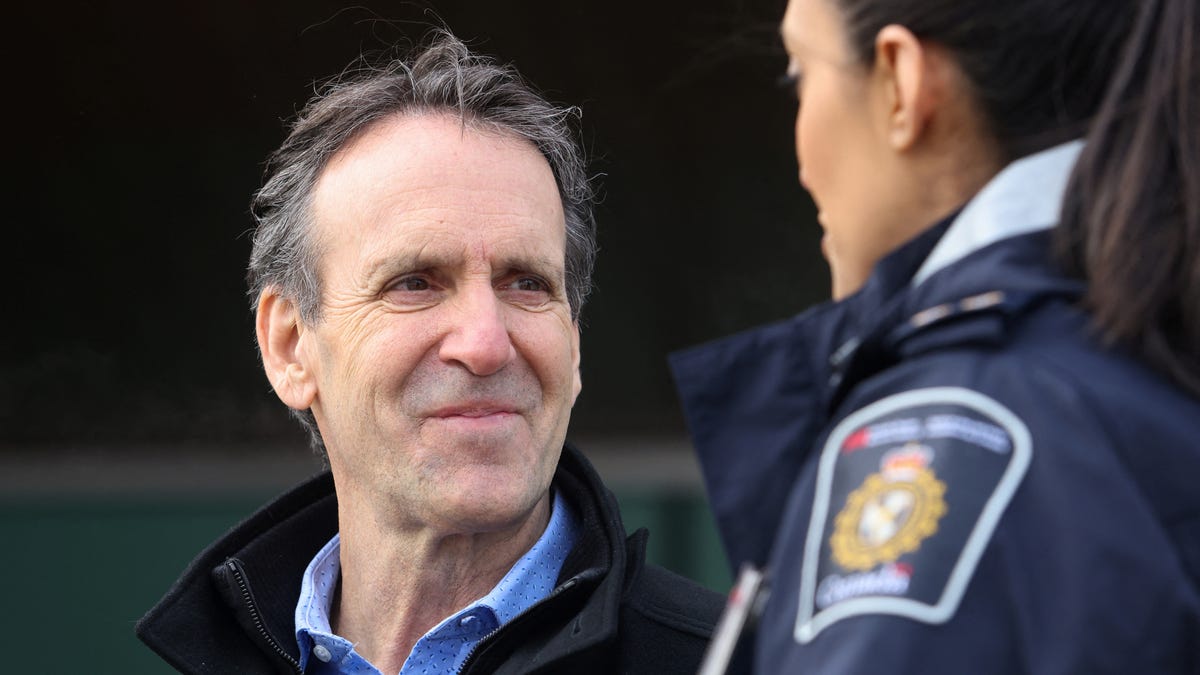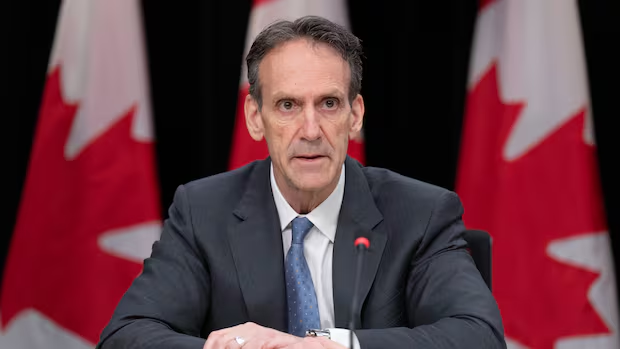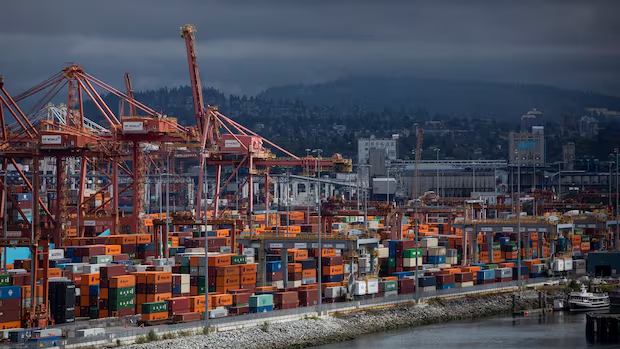
WorldChemicals used to make fentanyl are streaming into the Port of Vancouver on their way to drug labs run by Mexican cartels on Canadian soil, the head of the U.S. Drug Enforcement Administration told senators in Washington, D.C., on Tuesday.Terrance Cole names Port of Vancouver as key entry point for ingredients of illicit drugsMike Crawley · CBC News · Posted: May 13, 2026 4:00 AM EDT | Last Updated: May 13Listen to this articleEstimated 4 minutesThe audio version of this article is generated by AI-based technology. Mispronunciations can occur. We are working with our partners to continually review and improve the results.The head of the U.S. Drug Enforcement Agency says the Port of Vancouver is a key entry point for the chemical precursors of fentanyl destined for manufacture in Canada before being shipped across the border. (Ben Nelms/CBC)Chemicals used to make fentanyl are streaming into the Port of Vancouver on their way to drug labs run by Mexican cartels on Canadian soil, the head of the U.S. Drug Enforcement Administration told senators in Washington, D.C., on Tuesday. DEA administrator Terrance Cole said U.S. law enforcement officials are "very conscious" of fentanyl being manufactured in Canada for export across the border and that there have been "significant seizures" of the drug in Canada over the past two months. Cole made his comments during a U.S. Senate appropriations committee hearing into the annual budget requests by the DEA, the FBI and other federal law enforcement agencies. When asked by Republican Sen. Deb Fischer what changes he has seen in the drug trade, Cole spoke briefly about fentanyl trafficking from Mexico, then quickly pivoted to Canada. "We need to make sure that we keep an eye on the northern border as well. We see more precursors coming into the Port of Vancouver, coming into Canada," Cole said. Canadian traffickers then ship the precursors — the chemical ingredients of illicit drugs — to locations around the country for manufacturing and have started producing fentanyl in Canada "with the Mexican cartels," Cole said.Terrance Cole, the administrator of the U.S. Drug Enforcement Administration, pictured in the Oval Office on Sept. 15, 2025. (Alex Brandon/The Associated Press)"And then it comes across our northern border. It's something that everybody at this table is worried about," he said while seated beside the directors of the FBI, the U.S. Marshals Service and the Bureau of Alcohol, Tobacco, Firearms and Explosives.Fentanyl trafficking from Canada has been a top irritant for U.S. President Donald Trump since his return to the White House last year. It was the trigger for the first set of tariffs Trump slapped on Canadian goods, despite evidence suggesting Canada is the source of only a fraction of the fentanyl entering the U.S., and promises from Ottawa to crack down on cross-border trafficking. DEA to open 2 new offices in CanadaThe DEA currently has two offices in Canada — at the U.S. Embassy in Ottawa and at the U.S. Consulate in Vancouver — and Cole said the agency intends to open two more in 2027. "From a DEA perspective, we're keeping our eye on Canada," he told the Senate committee hearing. During the 2025 fiscal year, U.S. officials seized 77 pounds (35 kilograms) of fentanyl along the northern border, compared with 11,500 pounds (5,215 kilograms) at the border with Mexico, according to U.S. Customs and Border Protection statistics. WATCH | Cartels make fentanyl in Canada, Cole says:U.S. DEA head says agency 'very conscious' of border with CanadaMay 12|Duration 0:58During a hearing of the U.S. Senate appropriations committee in Washington on Tuesday, the head of the U.S. Drug Enforcement Administration made some allegations about fentanyl trafficking from Canada.The latest statistics suggest that vast disparity in seizures only appears to be widening. In the first six months of the 2026 fiscal year, which began in October, U.S. Border Patrol officers have seized just six pounds (2.7 kilograms) of fentanyl along the Canadian border, and nearly 1,000 times as much along the border with Mexico (5,800 pounds, or 2,630 kilograms). Arpen Rana, senior communications advisor for the Vancouver Fraser Port Authority, responded to Cole's comments by saying the authority works together with local police forces, the RCMP, Canada Border Services Agency (CBSA) and terminal operators on ensuring secure trade through the port. "While we do not operate any of the container terminals at the port, we routinely co-ordinate security efforts with multiple law enforcement and regulatory agencies," Rana said in an email to CBC News. "We have also partnered with CBSA on state-of-the-art container inspection facilities to support national safety and security." A spokesperson for CBSA pointed to the federal government's commitment to hire an additional 1,000 border officers. "Canada is not a significant source of fentanyl, be it for the U.S. or abroad," said CBSA media relations manager Guillaume Bérubé in an email to CBC News. "Canada's border is strong and we are making it stronger." Canada stepped up efforts to deal with illicit drug production in 2025 — here’s what an expert wants nextFentanyl seizures are up at the U.S. northern border — but Canada is still a very small playerFollowing Trump's initial complaints about cross-border fentanyl trafficking, Canada's federal government launched a $1.3 billion border security plan — including stepped-up law enforcement patrols — and appointed a fentanyl czar. None of that stopped Trump from hitting Canada with tariffs last year, based on his declaration that the flow of drugs across the northern border constituted a national emergency. The tariff of 35 per cent applied to all Canadian goods that didn't comply with the rules of origin of the Canada-U.S.-Mexico trade agreement — until the U.S. Supreme Court struck down the tariff regime in February, ruling Trump had overstepped his powers as president. ABOUT THE AUTHORMike Crawley is a correspondent for CBC News, based in Washington. He began his career as a newspaper reporter in B.C., spent six years as a freelance journalist in various parts of Africa, then joined the CBC in 2005. Mike reported on Ontario politics for 15 years. He was born and raised in Saint John, N.B.Follow Mike Crawley on X
U.S. Drug Enforcement Administration has its eyes on Canada over fentanyl | CBC News
Chemicals used to make fentanyl are streaming into the Port of Vancouver on their way to drug labs run by Mexican cartels on Canadian soil, the head of the U.S. Drug Enforcement Administration told senators in Washington, D.C., on Tuesday.
1,016 words~5 min read