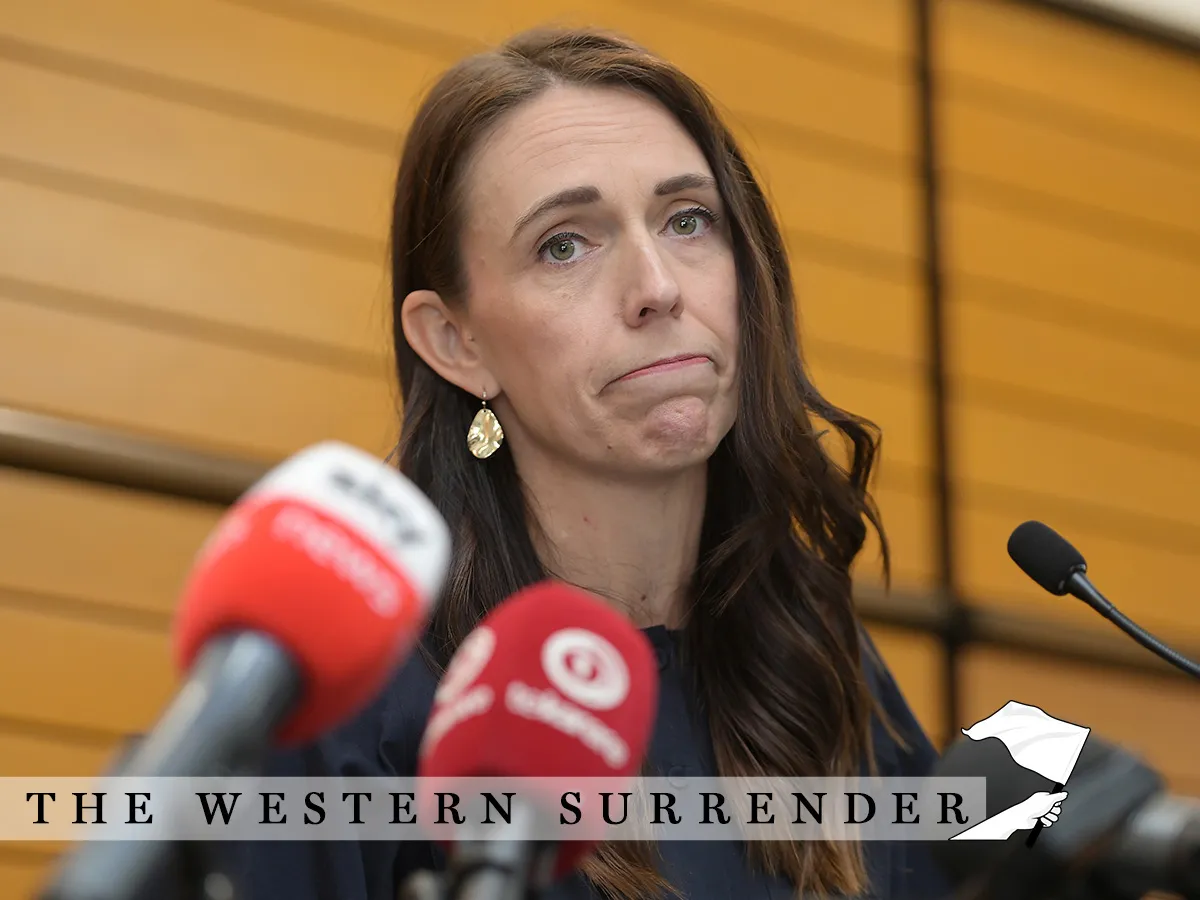
Skip to Content Subscribe Our Offers My Account Manage My Subscriptions FAQ Newsletters Canada Canadian True Crime Canadian Politics Health World Israel & Middle East Financial Post NP Comment Longreads Puzzmo Diversions Comics NP News Quiz New York Times Crossword Horoscopes Life Eating & Drinking Style Sponsored Play for Ontario Travel Travel Canada Travel USA Travel International Cruises Travel Essentials Culture Books Celebrity Movies Music Theatre Television Business Essentials Advice Lives Told Tails Told Shopping Buy Canadian Home Living Outdoor Living Kitchen & Dining Tech Style & Beauty Personal Care Entertainment & Hobbies Gift Guide Travel Guide Amazon Prime Day Deals Savings National Post Store More Sports Hockey Baseball Basketball Football Soccer Golf Tennis Driving Vehicle Research Reviews News Gear Guide Obituaries Place an Obituary Place an In Memoriam Classifieds Place an Ad Celebrations Working Business Ads Archives Healthing Epaper Manage Print Subscription Profile Settings My Subscriptions Saved Articles My Offers Newsletters Customer Service FAQ Newsletters Canada World Financial Post NP Comment Longreads Puzzmo Diversions Life Shopping Epaper Manage Print Subscription HomeNP CommentThe Western Surrender: How New Zealand's Jacinda Ardern aped Trudeau's nation shamingLast updated 13 hours ago You can save this article by registering for free here. Or sign-in if you have an account.Former New Zealand Prime Minister Jacinda Ardern announced her resignation on January 19, 2023. (Photo by Kerry Marshall/Getty Images) All that is great about western civilization is being undermined by a progressive political and cultural project that aims to reject and rewrite our history, prioritize group identity above the individual and embed this agenda into our laws and institutions. Welcome to The Western Surrender, an NP Comment series ranking the five Anglosphere countries by their adoption of these ideas. Today we feature No. 2, New Zealand.Enjoy the latest local, national and international news.Exclusive articles by Conrad Black, Barbara Kay and others. Plus, special edition NP Platformed and First Reading newsletters and virtual events.Unlimited online access to National Post.National Post ePaper, an electronic replica of the print edition to view on any device, share and comment on.Daily puzzles including the New York Times Crossword.Support local journalism.Enjoy the latest local, national and international news.Exclusive articles by Conrad Black, Barbara Kay and others. Plus, special edition NP Platformed and First Reading newsletters and virtual events.Unlimited online access to National Post.National Post ePaper, an electronic replica of the print edition to view on any device, share and comment on.Daily puzzles including the New York Times Crossword.Support local journalism.Create an account or sign in to continue with your reading experience.Access articles from across Canada with one account.Share your thoughts and join the conversation in the comments.Enjoy additional articles per month.Get email updates from your favourite authors.Create an account or sign in to continue with your reading experience.Access articles from across Canada with one accountShare your thoughts and join the conversation in the commentsEnjoy additional articles per monthGet email updates from your favourite authorsSign In or Create an AccountorWELLINGTON — When news reports first tumbled out about the “unmarked graves” of 215 youngsters that were said to have been found at the former Kamloops residential school in British Columbia, the story ricocheted far beyond Canada.This newsletter from NP Comment tackles the topics you care about. (Subscriber-exclusive edition on Fridays)By signing up you consent to receive the above newsletter from Postmedia Network Inc.We encountered an issue signing you up. Please try againHere in New Zealand, which is about as geographically far-flung as you can get, the still-unconfirmed details landed with understandable force.Small wonder. In 2021, this nation of 5.3 million was in the throes of a royal commission of inquiry into the historical abuse of children in state care, many of them Māori, with much of the attention given to the same era.While few New Zealanders disputed the inquiry’s essential facts, the Canadian story helped turbocharge the debate through the same megaphone of woke politics.For many New Zealanders, the Kamloops story sounded eerily familiar. Versions of these ideas had been circulating around the Anglosphere for years; by that point, they were familiar enough to feel almost settled. New Zealand, a great exporter of agricultural products, is nothing if not a big importer of North American cultural signposts.If voices in Canada were invoking colonial genocide, mentioning The Hague, and effectively putting their own country on trial — and if Prime Minister Justin Trudeau found the “dark and shameful” claims sufficiently compelling to keep federal flags at half-mast for nearly six months — then the least that the Kiwi gatekeepers could do was follow ideological suit.It was, undeniably, a shocking story, and worth every bit of attention it received — if only it were true. Yet even as the claims around Kamloops became increasingly dubious, the certainty underpinning them did not.During the same period, New Zealand had also developed its own set of similar assumptions about the meaning of the nation’s life and history, usually gathered under the slightly cartoonish label “woke.”You could see New Zealand’s version of the same moral panic in fairly obvious places: endless battles over language, fringe causes blown up to look central on social media, and the by-now familiar fixation on “gender” (a term, incidentally, first popularized back in the 1950s by New Zealand-born sexologist John Money). All gathered together under the algorithmic imperative of combatting “racism” at all costs.But while some of the new emphasis has been familiar to observers, other parts were shaped by the country’s own bicultural constitutional arrangements.New Zealand is also different because of the size of the local political culture. In a small country such as this, new ideas have a way of galloping through the institutions of government, higher learning and the news media.The Antipodean version also had a toothily telegenic face of its own. Coincidentally or not, Jacinda Ardern — a pupil and teacher of the Trudeau style — served as the country’s energetic prime minister from 2017 to 2023, becoming a byword for this style during some of its biggest excesses.The past may be a foreign country, as L.P. Hartley famously wrote in the opening line of The Go-Between, but under Ardern the present started to feel a bit like one too.In particular, Ardern’s government applied this new thinking to New Zealand’s foundational relationship between its predominantly Anglo majority and the descendants of its original East Polynesian inhabitants, the Māori, who probably first arrived here in the 1200s, around 100 years after Britain’s University of Oxford was founded. About one in nine Kiwi adults claim some Māori heritage.Relations between the two groups have not always been hunky dory. Today, the Māori still lag behind the rest on measures such as health, life expectancy and educational attainment. Successive governments have struggled to fix these disparities.Ardern’s government opted for an expansive policy agenda aimed at radically reshaping the broader culture. The idea was to ensure that almost every official outlet gave equal or greater billing to Māori language and motifs.As Ardern put it, the nation would no longer be “the same place it was 10 years ago.”Anyone familiar with New Zealand who wasn’t physically resident in the South Seas during the late 2010s and early 2020s was certainly in for a surprise.Suddenly, or so it seemed, almost every population centre of any note now had a new Māori name or at least an alternative one the government plainly preferred people to be using.The Garden City of Christchurch — where Ardern’s distinct style of leadership was again on global display in the aftermath of the Christchurch mosque murders in 2019 — found itself rechristened Otautahi.That way too went the southernmost city of Dunedin (or rather, Otepoti) while the wider South Island itself became officially known as Te Waipounamu. Meanwhile in the north, Auckland got swapped out for Tamaki Makaurau.Your writer’s hometown, the political capital of Wellington, picked up not one but two new names — depending on who you asked, either Te Whanganui-a-Tara or else Poneke.A similarly expansive shift was taking place across the New Zealand Government, or Te Kāwanatanga o Aotearoa. Most publicly funded agencies were rebranded with Māori names, while email, briefing papers and mission statements increasingly reflected the new style. Not so much in the bilingual fashion of a Quebec, as it transpired, but rather in weaving Māori words and expressions into any ostensibly English communication.Often this new creole included newly minted terms from the Māori Language Commission — words like Pukamata, presented as the Māori word for Facebook. Even loanwords (miki for milk, for example) were expected to be pronounced in a Māori style.Outsiders were often left scratching their heads. The eminent British evolutionary biologist Richard Dawkins, after a fact-finding visit, testily wrote in The Spectator about how figuring out official intentions in New Zealand “requires a little work, because every third word of the relevant documents is in Māori.”Given that only a small percentage of the nation speaks the language in the first place, Dawkins added, the bureaucratic exercise smacked of “self-righteous virtue-signalling, bending a knee to that modish version of Original Sin which is white guilt.”An exasperated conservation minister of the time, Kiri Allan, agreed, telling officials to quit sending her mish-mashed briefing papers. A Māori herself and fluent in the language, Allan said the style was “tokenistic.”In the meantime, the country’s eight universities — all of them now bilingually rebranded — were doing their fashionable part.Like Canada, New Zealand spends well below the OECD average on research and development, and governments of every stripe have wrestled with the question of how to make scholarship yield commercial returns for the wider economy.Under Ardern, however, the government turned to the Marsden Fund — previously focused only on science and medicine — to funnel millions into social-science projects that double-clicked the prevailing woke nostrums.That included CAD$300,000 to examine whether it is “benevolently sexist” to believe that “men ought to protect and cherish women,” and $700,000 for a university department to investigate the prima facie meaningless question of why so few Asian people appear on New Zealand television.Marsden also coughed up $250,000 for a study on the “shifting intimacies” of people who use dating apps, with a particular emphasis on “non-binary” users. Another nearly $1 million went to research on the “reimagination of anti-racism theory in the health sector.”Another project examined “intersecting stories of place, identity, and erasure through large roadside sculptures.”Most memorably — in a decision that may have been the final straw for the subsequent government that canned the scheme altogether — an additional $300,000 was given for researchers to determine whether the statue of a carrot in the farming town of Ohakune constitutes a “critical gaze to the privileging of (white)-centred narratives.”No doubt, any one of these projects might have been shrugged off as an eccentric call. Taken together, it looked like a publicly bankrolled worldview.Where was the local media while all this was going on? Out to lunch, as it turned out; rather an expensive lunch at that, on the government’s tab.The government here supports local news through a mix of direct funding and grants for civic coverage in underserved communities, with funding supposedly being dispensed without any perception of official meddling. Sort of.The concept became something of a problem during Ardern’s premiership, when news organizations seeking support from the $45 million Public Interest Journalism Fund were required to affirm their commitment to ethnic “partnership” as the concept had come to be known — in effect, throwing their weight behind some of the most contentious aspects of her government.That meant less scrutiny of some important changes than there should have been. It also appeared to encourage cash-strapped news outlets to chase the fund by leaning even harder into stories about historical racism and the government’s supposedly admirable efforts to remedy it.Among the most notable examples was the country’s largest newspaper group, Stuff, which in 2020 commissioned a six-month “investigation” by 20 journalists into its own publishing history. The company’s stable includes a lion’s share of the country’s mastheads and has, at one time or another, employed most local print journalists.The project purported to uncover “centuries” of hateful racist journalism — a problem that, by remarkable coincidence, only seemed to end after Stuff’s current owner took over that same year.The evidence, spread across several instalments in its mastheads and on its central website, was said to show that much of what it had ever published on race “ranged from racist to blinkered,” as an editorial note by Stuff’s chief news officer, Mark Stevens, put it.Stuff accordingly issued an “unreserved apology” for its portrayal of Māori subjects over the past 160 years. As if to signify this was not merely a correction but also a moral achievement, the company threw in an apology to Muslims and recent migrants.Ardern’s minister for Māori development, Willie Jackson, called it “one of the most wonderful things I’ve ever seen in terms of mainstream media.”The company unveiled a new charter, in English and Māori, and promised to hire more Māori journalists, which it later did after receiving $4 million in public money.Unfortunately for many of those same hires, their jobs didn’t last much longer than their organization’s taxpayer-funded support.The journalism fund has subsequently been wound down, along with the Marsden Fund’s ill-starred foray into the social sciences. Under the current centre-right government of the austerity-minded Prime Minister Christopher Luxon, neither is likely to be resuscitated.Luxon himself has said the previous Labour-led New Zealand administration’s style saw it spending too much time on what he recently told this writer were “solutions looking for problems.”And what about ordinary New Zealanders, most of whom have no real hostility to Māori culture or nostalgia for a supposedly pre-woke golden age? They, too, appear to have grown weary of symbolic overreach and crypto-religious gatekeepers.Critics might also note that the underlying justifications for the previous Labour government’s cultural heavy-handedness, whether framed in terms of health or economic well-being, do not appear to have produced much measurable improvement.And people have wearied of the language, according to David Rozado, a local associate professor of data science at Otago Polytechnic and a leading researcher on trends in terminology.After analyzing more than six million news and opinion articles having to do with prejudice-denouncing and social justice jargon, he says the numbers for the familiar buzzwords like racism and transphobia are well down on where they were in the last decade.That mood may outlast any single election result, perhaps even another one if Luxon wins again later this year.Or perhaps New Zealand is simply following a broader shift and beginning to move away from the conventions of the unconventional, or what the country’s foreign minister, Winston Peters, these days calls “peak madness.”Funny, that. New Zealand was once quick to pick up the moral fashions blowing through the wider English-speaking world, and Kamloops was easily treated as proof of convictions that were already taking hold here. Now, in 2026, the country may be catching a different breeze as opinion elsewhere starts to taper off.The recent past already feels like another country.David Cohen is a New Zealand journalist and the author of a best-selling unauthorized political biography, Jacinda: The Untold Stories (Centrist Publishing), and a social history of institutional residential care for young people in New Zealand, Little Criminals (Penguin Random House).To ensure you catch every entry in The Western Surrender series, sign up for our NP Platformed newsletter at nationalpost.com/platformed. Send any feedback and questions to npplatformed@postmedia.com. Join the Conversation This website uses cookies to personalize your content (including ads), and allows us to analyze our traffic. Read more about cookies here. By continuing to use our site, you agree to our Terms of Use and Privacy Policy.
The Western Surrender: How New Zealand's Jacinda Ardern aped Trudeau's nation shaming
The former prime minister renamed her entire country out of 'shame'
2,591 words~12 min read